Field mission, Médecins Sans Frontières, Operational Center Brussels, Shatila, Beirut, Lebanon.
Lebanon branch office, Médecins Sans Frontières, Beirut, Lebanon.
PLoS One. 2021 May 10;16(5):e0251316. doi: 10.1371/journal.pone.0251316. eCollection 2021.
Low adherence to medications, specifically in patients with Diabetes (DM) and Hypertension (HTN), and more so in refugee settings, remains a major challenge to achieving optimum clinical control in these patients. We aimed at determining the self-reported medication adherence prevalence and its predictors and exploring reasons for low adherence among these patients.
A mixed-methods study was conducted at Médecins Sans Frontières non-communicable diseases primary care center in the Shatila refugee camp in Beirut, Lebanon in October 2018. Data were collected using the validated Arabic version of the 8-items Morisky Medication Adherence Scale (MMAS-8) concurrently followed by in-depth interviews to explore barriers to adherence in patients with DM and/or HTN. Predictors of adherence were separately assessed using logistic regression with SPSS© version 20. Manual thematic content analysis was used to analyze the qualitative data.
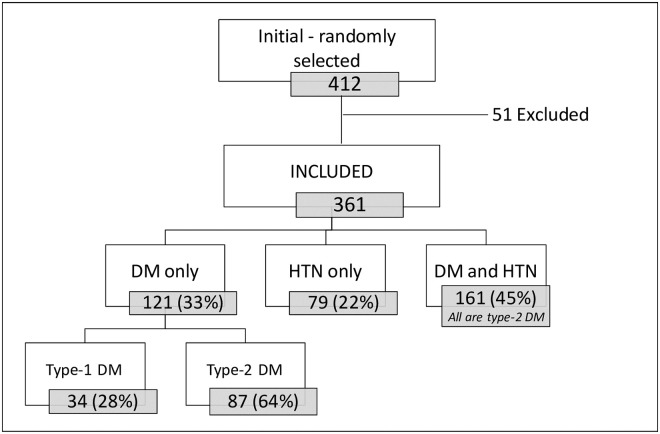
Of the 361 patients included completing the MMAS, 70% (n = 251) were moderately to highly adherent (MMAS-8 score = 6 to 8), while 30% (n = 110) were low-adherent (MMAS-8 score<6). Patients with DM-1 were the most likely to be moderately to highly adherent (85%; n = 29). Logistic regression analysis showed that patients with a lower HbA1C were 75% more likely to be moderately to highly adherent [(OR = 0.75 (95%CI 0.63-0.89), p-value 0.001]. Factors influencing self-reported moderate and high adherence were related to the burden of the disease and its treatment, specifically insulin, the self-perception of the disease outcomes and the level of patient's knowledge about the disease and other factors like supportive family and healthcare team.
Adherence to DM and HTN was good, likely due to a patient-centered approach along with educational interventions. Future studies identifying additional factors and means addressing the barriers to adherence specific to the refugee population are needed to allow reaching optimal levels of adherence and design well-informed intervention programs.
在患有糖尿病(DM)和高血压(HTN)的患者中,尤其是在难民环境中,药物治疗的依从性较低仍然是实现这些患者最佳临床控制的主要挑战。我们旨在确定自我报告的药物依从性流行率及其预测因素,并探索这些患者药物依从性低的原因。
2018 年 10 月,在黎巴嫩贝鲁特 Shatila 难民营的无国界医生非传染性疾病初级保健中心进行了一项混合方法研究。使用经过验证的阿拉伯语版 8 项 Morisky 药物依从性量表(MMAS-8)同时收集数据,并对患有 DM 和/或 HTN 的患者进行深入访谈,以探讨其依从性的障碍。使用 SPSS©版本 20 分别使用逻辑回归评估依从性的预测因素。使用手动主题内容分析对定性数据进行分析。
在完成 MMAS 的 361 名患者中,70%(n=251)为中度至高度依从(MMAS-8 评分=6 至 8),而 30%(n=110)为低依从(MMAS-8 评分<6)。1 型 DM 患者最有可能中度至高度依从(85%;n=29)。逻辑回归分析显示,HbA1C 较低的患者更有可能中度至高度依从[(OR=0.75(95%CI 0.63-0.89),p 值<0.001]。影响自我报告的中度和高度依从的因素与疾病负担及其治疗有关,特别是胰岛素、对疾病结果的自我感知以及患者对疾病的了解程度和其他因素,如支持性家庭和医疗保健团队。
DM 和 HTN 的依从性良好,这可能是由于以患者为中心的方法以及教育干预措施。需要进一步研究确定针对难民群体的额外因素和解决依从性障碍的方法,以达到最佳的依从水平,并设计明智的干预计划。