Quinn Patrick D, Pettersson Erik, Lundström Sebastian, Anckarsäter Henrik, Långström Niklas, Gumpert Clara Hellner, Larsson Henrik, Lichtenstein Paul, D'Onofrio Brian M
Department of Psychological and Brain Sciences, Indiana University, Bloomington, Indiana.
Department of Medical Epidemiology and Biostatistics, Karolinska Institutet, Stockholm, Sweden.
Am J Med Genet B Neuropsychiatr Genet. 2016 Oct;171(7):958-70. doi: 10.1002/ajmg.b.32412. Epub 2015 Dec 30.
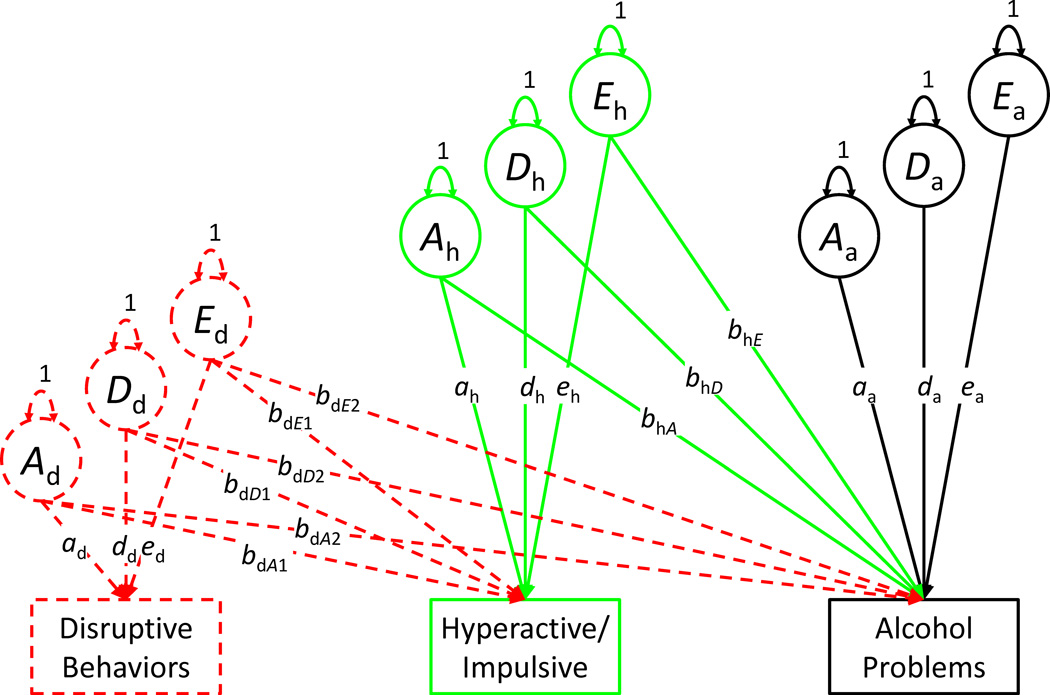
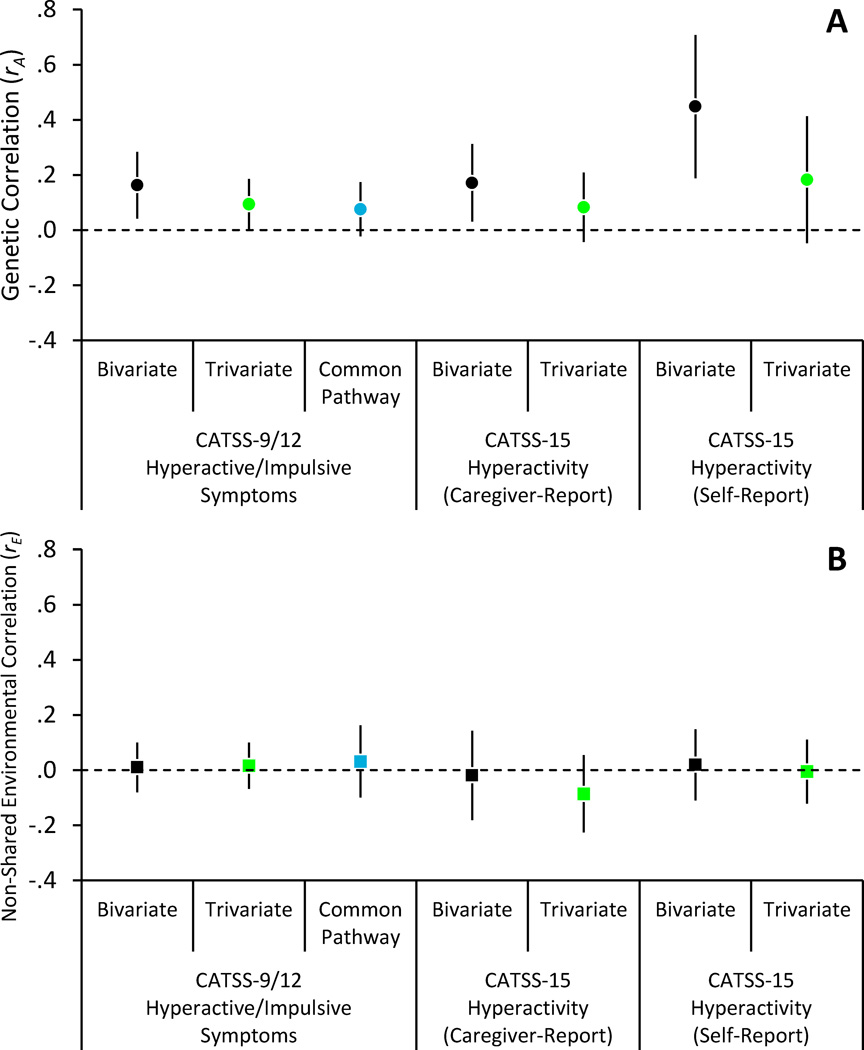
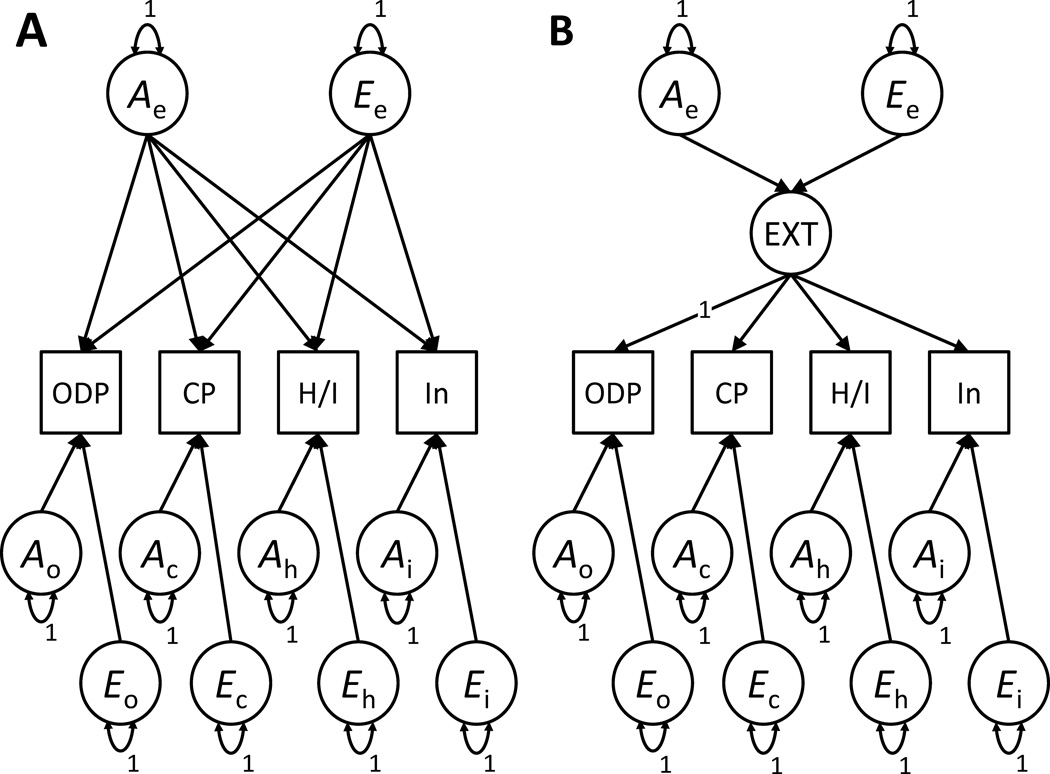
Children with attention-deficit/hyperactivity disorder (ADHD) are at increased risk of problematic alcohol and other substance use in adolescence. This study used data from an ongoing, prospective, population-based twin study of Swedish children and adolescents to evaluate the extent to which the association between ADHD symptoms and alcohol problems reflects a unique source of genetic or environmental risk related to ADHD versus a broader predisposition to youth externalizing behavior. We used all available data from same-sex monozygotic (MZ) and dizygotic (DZ) twins on ADHD symptoms in childhood (age 9/12; N = 15,549) and alcohol problems in late adolescence (age 18; N = 2,564). Consistent with prior longitudinal studies, the phenotypic association between hyperactive/impulsive ADHD symptoms and alcohol problems was small in magnitude, whereas the association for inattentive symptoms was even weaker. Additive genetic influences explained 99.8% of the association between hyperactive/impulsive symptoms and alcohol problems. Furthermore, we found that the genetic risk specifically associated with hyperactive/impulsive symptoms was attenuated when estimated in the context of externalizing behavior liability during childhood, of which ADHD symptoms were specific expressions. In sensitivity analyses exploring hyperactivity in mid-adolescence, we found a similar pattern of genetic associations. These results are consistent with previous findings of genetically driven overlap in the etiology of ADHD and problematic alcohol use. At least some of this co-occurrence may result from a general predisposition to externalizing behaviors in youth. © 2015 Wiley Periodicals, Inc.
患有注意力缺陷/多动障碍(ADHD)的儿童在青春期出现酒精及其他物质使用问题的风险更高。本研究使用了一项正在进行的、基于瑞典儿童和青少年人群的前瞻性双胞胎研究的数据,以评估ADHD症状与酒精问题之间的关联在多大程度上反映了与ADHD相关的独特遗传或环境风险来源,而非更广泛的青少年外化行为易感性。我们使用了来自同性单卵(MZ)和双卵(DZ)双胞胎的所有可用数据,这些数据涉及童年期(9/12岁;N = 15,549)的ADHD症状和青春期后期(18岁;N = 2,564)的酒精问题。与先前的纵向研究一致,多动/冲动型ADHD症状与酒精问题之间的表型关联程度较小,而注意力不集中症状的关联则更弱。加性遗传影响解释了多动/冲动症状与酒精问题之间99.8%的关联。此外,我们发现,当在童年期外化行为易感性的背景下进行估计时,与多动/冲动症状特异性相关的遗传风险会减弱,而ADHD症状是外化行为易感性的具体表现。在探索青少年中期多动情况的敏感性分析中,我们发现了类似的遗传关联模式。这些结果与先前关于ADHD和酒精使用问题病因中遗传驱动重叠的研究结果一致。这种共现现象至少部分可能是由于青少年普遍存在的外化行为易感性所致。© 2015威利期刊公司