Guo Ailin, Lu Pin, Galanina Natalie, Nabhan Chadi, Smith Sonali M, Coleman Morton, Wang Y Lynn
Division of Genomic and Molecular Pathology, Department of Pathology, University of Chicago, Chicago, IL, USA.
Department of Medicine, Section of Hematology and Oncology, University of Chicago, Chicago, IL, USA.
Oncotarget. 2016 Jan 26;7(4):4598-610. doi: 10.18632/oncotarget.6727.
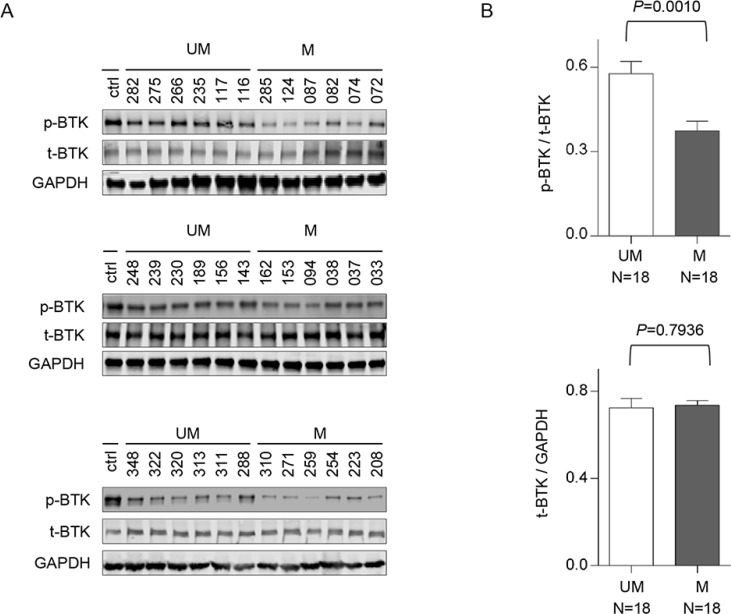
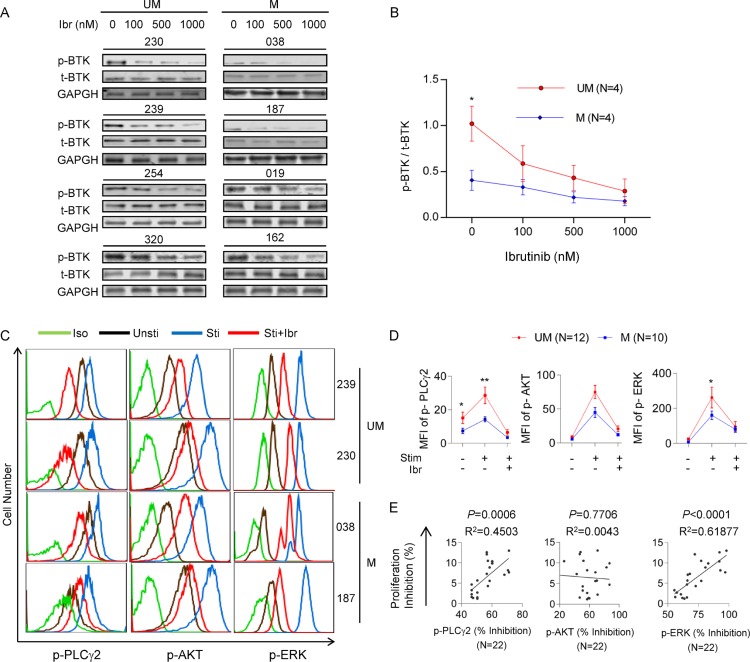
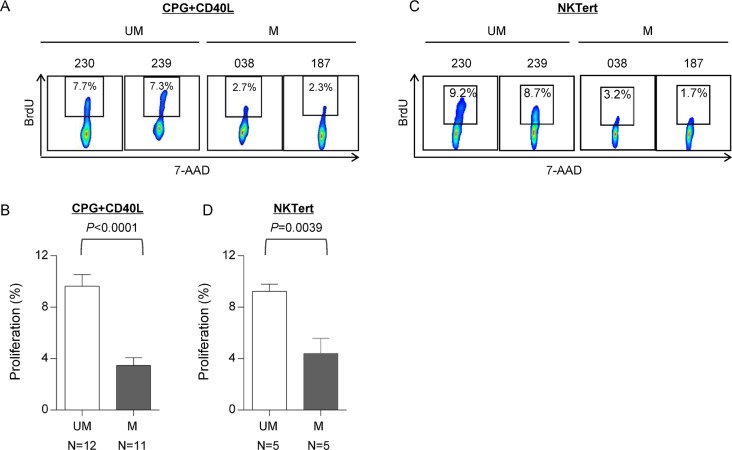
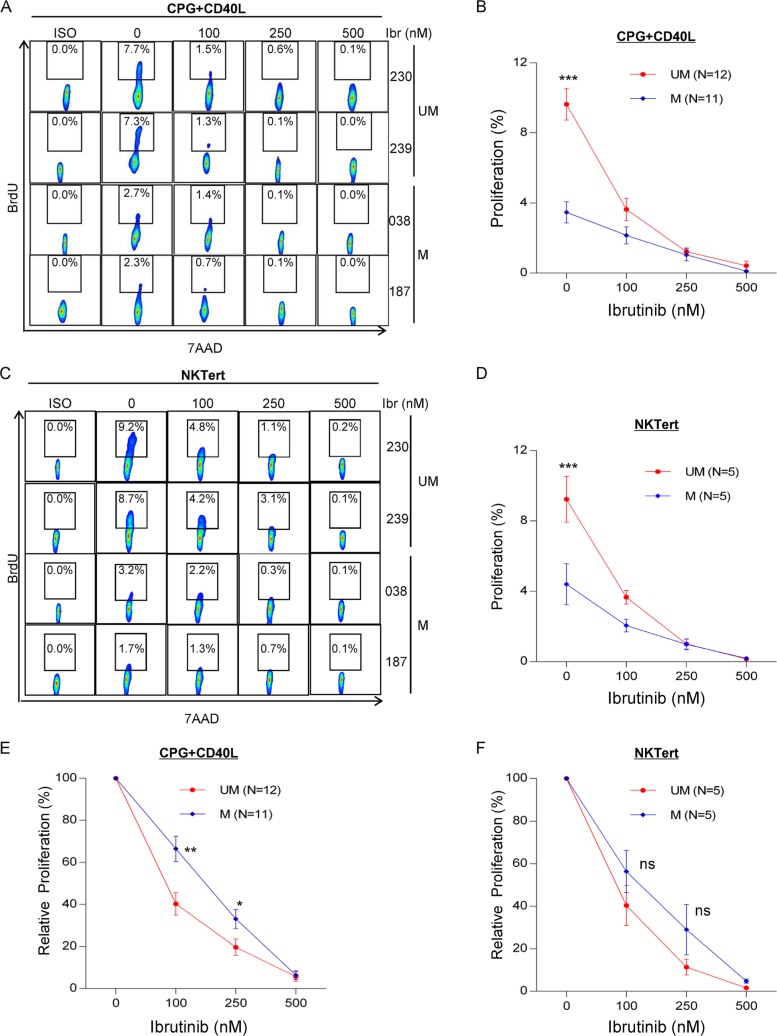
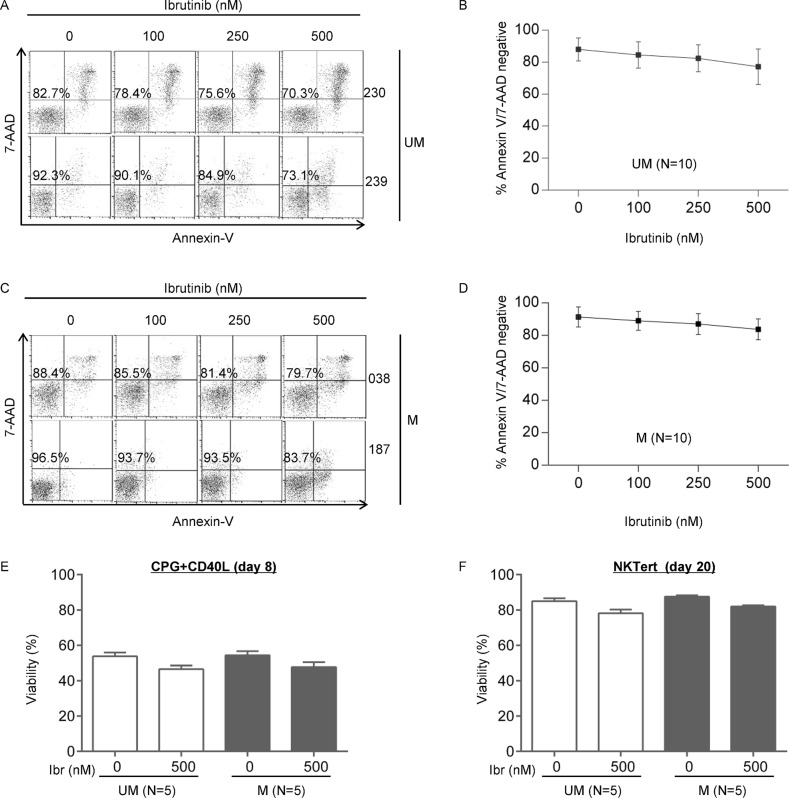
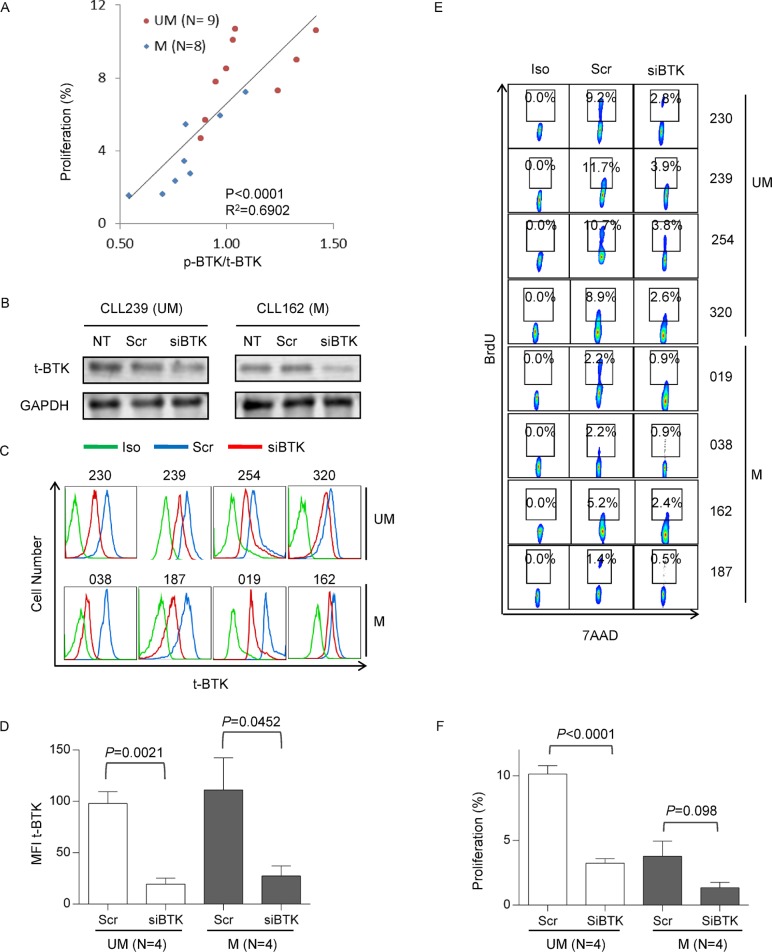
In chronic lymphocytic leukemia (CLL), patients with unmutated immunoglobulin heavy chain variable region gene (UM-CLL) have worse outcomes than mutated CLL (M-CLL) following chemotherapy or chemoimmunotherapy. However, in the era of BCR-targeted therapies, the adverse prognostic impact of unmutated IGHV seems to be diminishing, and there are clinical datasets showing unexpected improved responses in UM-CLL. We investigated the biological differences of BTK activity between these subgroups and further compared the impact of ibrutinib on molecular and cellular behaviors. Immunoblotting analysis revealed that phosphorylated active BTK is significantly higher in UM-CLL. Moreover, UM-CLL, compared to M-CLL, displayed a much higher proliferative capacity that was correlated with higher phospho-BTK and greater sensitivity to ibrutinib. In addition, BTK depletion with siRNA led to a more prominent reduction in the proliferation of UM-CLL, suggesting that elevated BTK activity is responsible for increased cell proliferation. Further, cell signaling activity by multiple measurements was consistently higher in UM-CLL accompanied by a higher sensitivity to ibrutinib. These studies link UM-CLL to elevated BCR signaling, heightened BTK-dependent cell proliferation and increased sensitivity to ibrutinib. The prognostic significance of IGHV mutation should be reevaluated in the era of new therapies targeting BCR signaling.
在慢性淋巴细胞白血病(CLL)中,免疫球蛋白重链可变区基因未突变的患者(UM-CLL)在化疗或化疗免疫治疗后的预后比免疫球蛋白重链可变区基因突变的CLL患者(M-CLL)更差。然而,在BCR靶向治疗时代,IGHV未突变的不良预后影响似乎正在减弱,并且有临床数据集显示UM-CLL患者的反应意外改善。我们研究了这些亚组之间BTK活性的生物学差异,并进一步比较了伊布替尼对分子和细胞行为的影响。免疫印迹分析显示UM-CLL中磷酸化的活性BTK明显更高。此外,与M-CLL相比,UM-CLL表现出更高的增殖能力,这与更高的磷酸化BTK水平和对伊布替尼更高的敏感性相关。此外,用siRNA敲低BTK导致UM-CLL的增殖更显著降低,表明BTK活性升高是细胞增殖增加的原因。此外,通过多次测量,UM-CLL中的细胞信号活性始终更高,同时对伊布替尼的敏感性也更高。这些研究将UM-CLL与BCR信号升高、BTK依赖性细胞增殖增强以及对伊布替尼敏感性增加联系起来。在针对BCR信号的新疗法时代,应重新评估IGHV突变的预后意义。