Haselager Marco V, van Driel Bianca F, Perelaer Eduard, de Rooij Dennis, Lashgari Danial, Loos Remco, Kater Arnon P, Moerland Perry D, Eldering Eric
Department of Experimental Immunology, Amsterdam UMC Location University of Amsterdam, Meibergdreef, The Netherlands.
Lymphoma and Myeloma Center Amsterdam, LYMMCARE, Amsterdam, The Netherlands.
Hemasphere. 2023 Aug 23;7(9):e938. doi: 10.1097/HS9.0000000000000938. eCollection 2023 Sep.
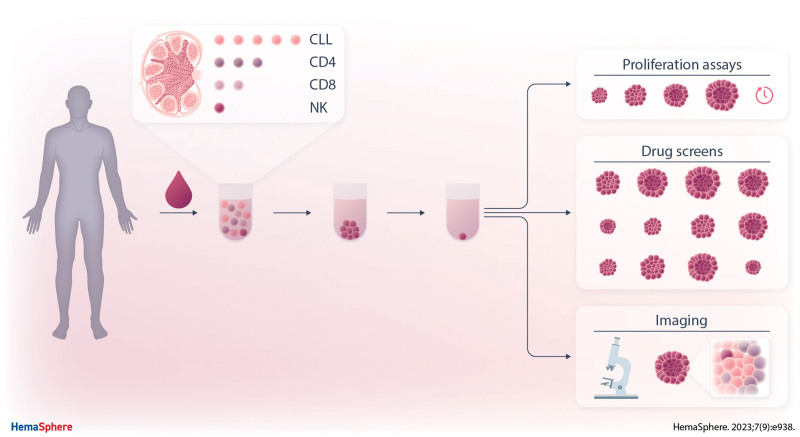
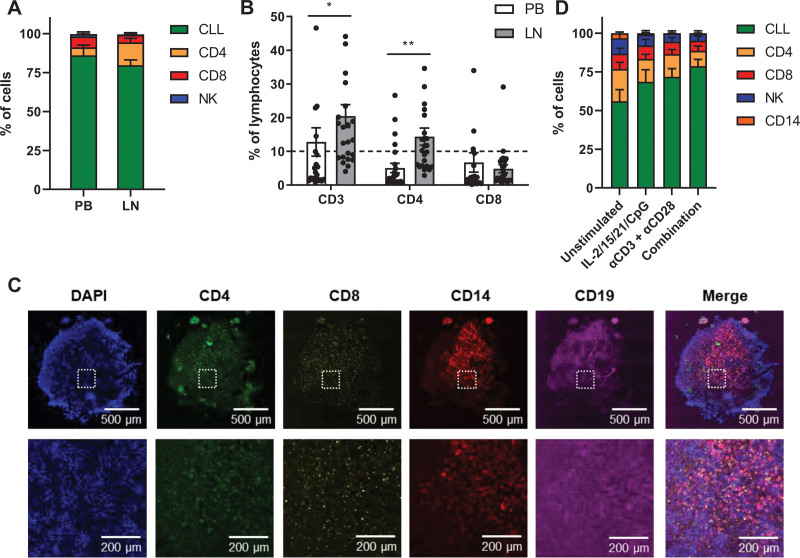
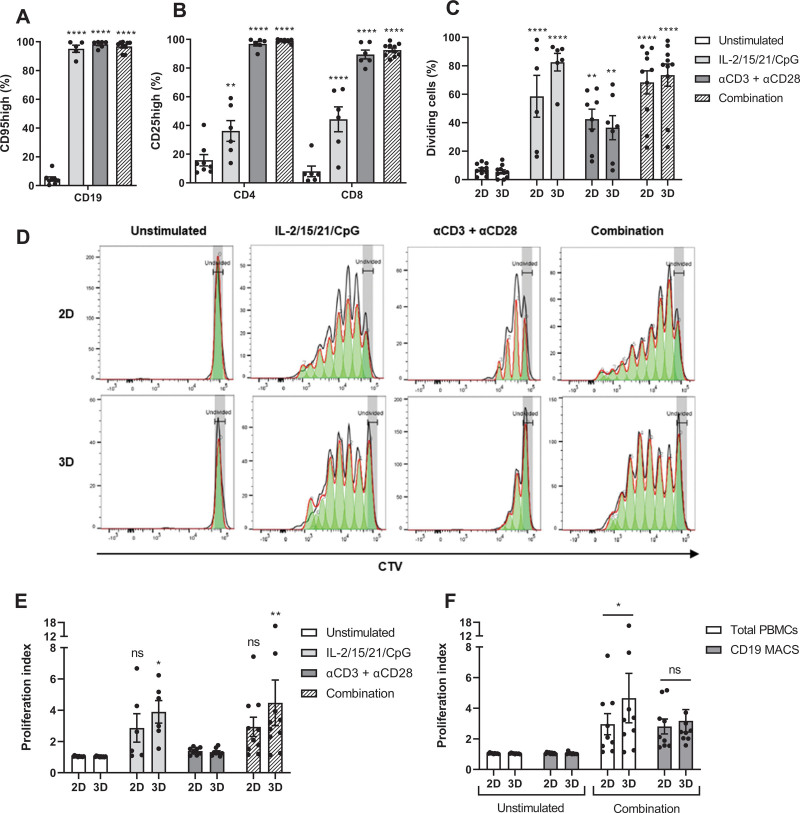
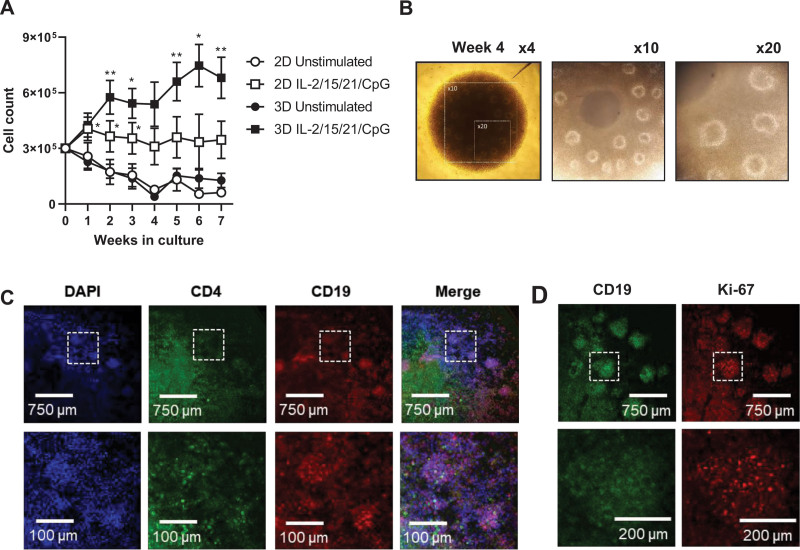
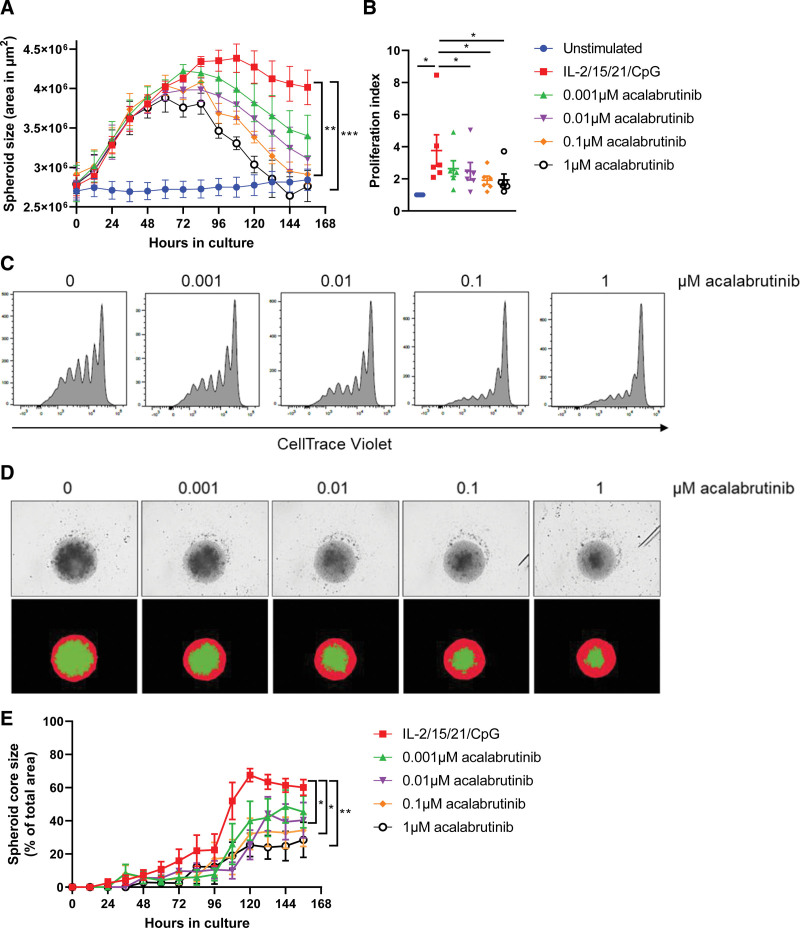
Chronic lymphocytic leukemia (CLL) cells are highly dependent on microenvironmental cells and signals. The lymph node (LN) is the critical site of in vivo CLL proliferation and development of resistance to both chemotherapy and targeted agents. We present a new model that incorporates key aspects of the CLL LN, which enables investigation of CLL cells in the context of a protective niche. We describe a three-dimensional (3D) in vitro culture system using ultra-low attachment plates to create spheroids of CLL cells derived from peripheral blood. Starting from CLL:T cell ratios as observed in LN samples, CLL activation was induced by either direct stimulation and/or indirectly via T cells. Compared with two-dimensional cultures, 3D cultures promoted CLL proliferation in a T cell-dependent manner, and enabled expansion for up to 7 weeks, including the formation of follicle-like structures after several weeks of culture. This model enables high-throughput drug screening, of which we describe response to Btk inhibition, venetoclax resistance, and T cell-mediated cytotoxicity as examples. In summary, we present the first LN-mimicking in vitro 3D culture for primary CLL, which enables readouts such as real-time drug screens, kinetic growth assays, and spatial localization. This is the first in vitro CLL system that allows testing of response and resistance to venetoclax and Bruton's tyrosine kinase inhibitors in the context of the tumor microenvironment, thereby opening up new possibilities for clinically useful applications.
慢性淋巴细胞白血病(CLL)细胞高度依赖于微环境细胞和信号。淋巴结(LN)是体内CLL增殖以及对化疗和靶向药物产生耐药性的关键部位。我们提出了一种新模型,该模型纳入了CLL淋巴结的关键方面,能够在保护性微环境中研究CLL细胞。我们描述了一种三维(3D)体外培养系统,使用超低附着板来创建源自外周血的CLL细胞球体。从在淋巴结样本中观察到的CLL与T细胞比例开始,通过直接刺激和/或经由T细胞间接诱导CLL激活。与二维培养相比,3D培养以T细胞依赖的方式促进CLL增殖,并能够扩增长达7周,包括在培养数周后形成滤泡样结构。该模型能够进行高通量药物筛选,我们以对布鲁顿酪氨酸激酶(Btk)抑制的反应、维奈托克耐药性和T细胞介导的细胞毒性为例进行了描述。总之,我们展示了首个用于原发性CLL的模拟淋巴结的体外3D培养,它能够实现实时药物筛选、动力学生长测定和空间定位等检测。这是首个体外CLL系统,能够在肿瘤微环境背景下测试对维奈托克和布鲁顿酪氨酸激酶抑制剂的反应及耐药性,从而为临床有用的应用开辟了新的可能性。