Sun Yan Ping, Gu Jun Fei, Tan Xiao Bin, Wang Chun Fei, Jia Xiao Bin, Feng Liang, Liu Ji Ping
Department of Pharmacognosy, Xi'an Medical University, Xi'an, Shaanxi 710021, P.R. China.
Key Laboratory of New Drug Delivery System of Chinese Materia Medica, Affiliated Hospital of Integrated Traditional Chinese and Western Medicine, Nanjing University of Chinese Medicine, Nanjing, Jiangsu 210028, P.R. China.
Mol Med Rep. 2016 Feb;13(2):1475-86. doi: 10.3892/mmr.2015.4725. Epub 2015 Dec 28.
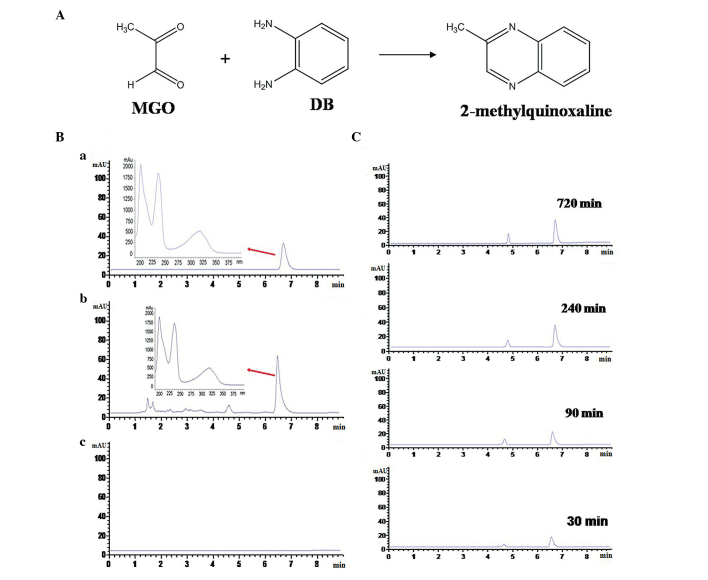
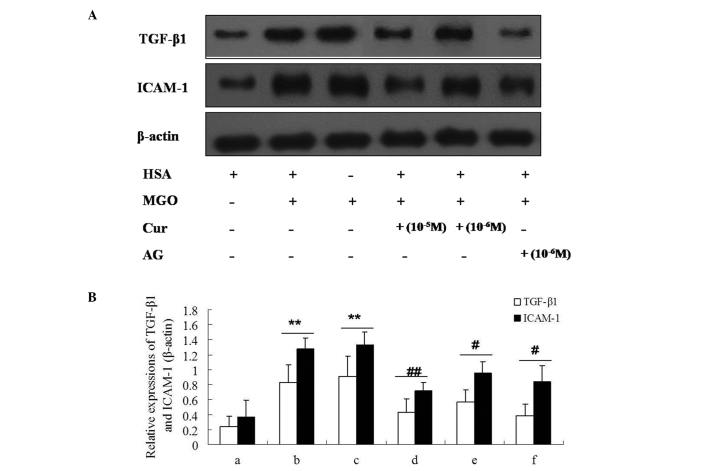
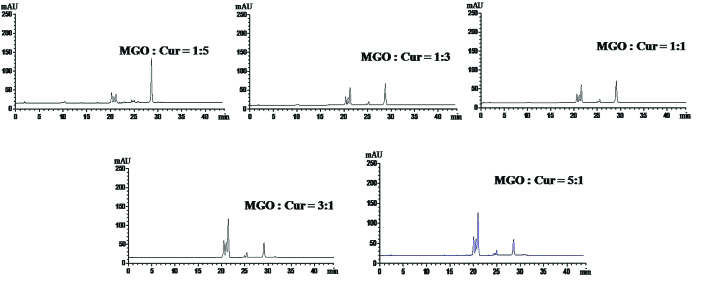
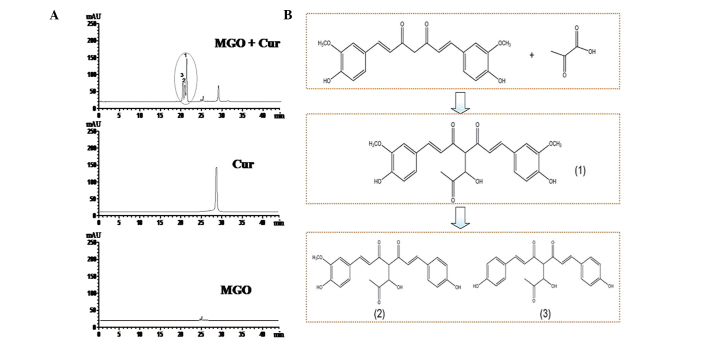
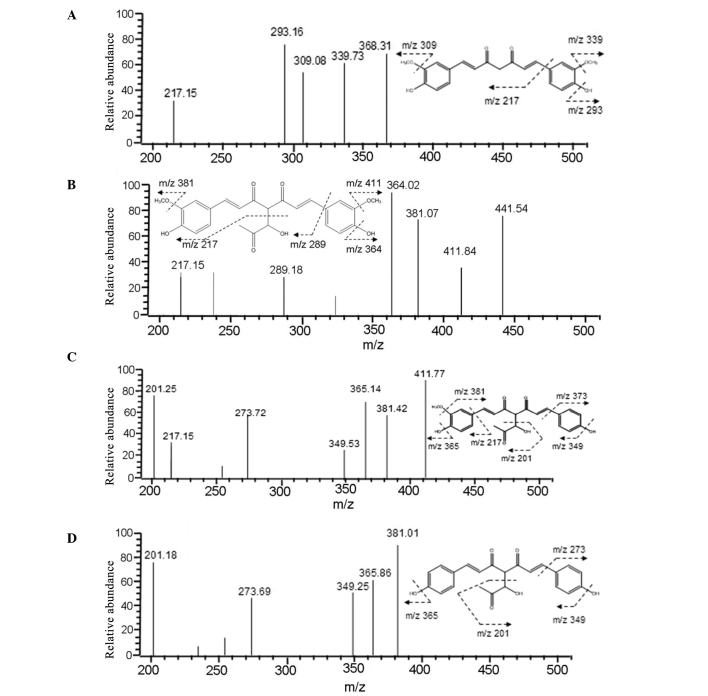
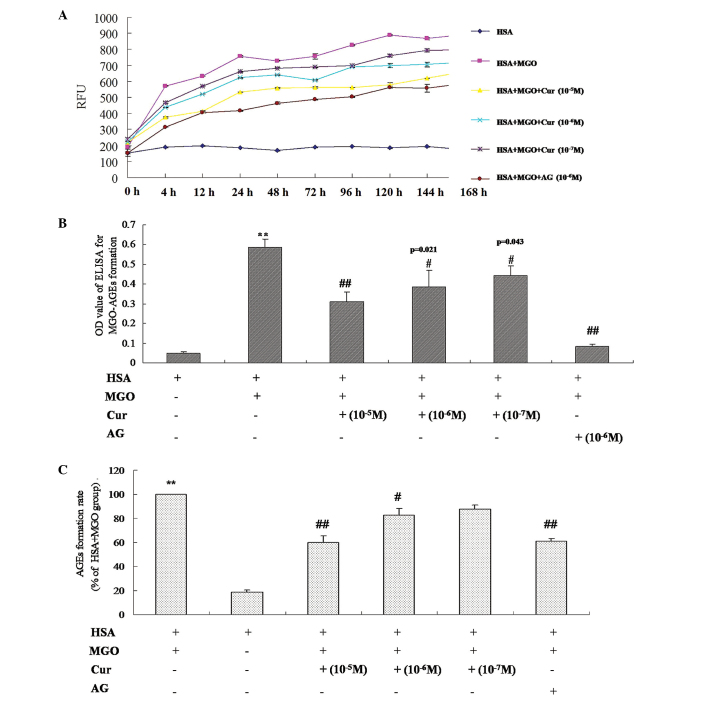
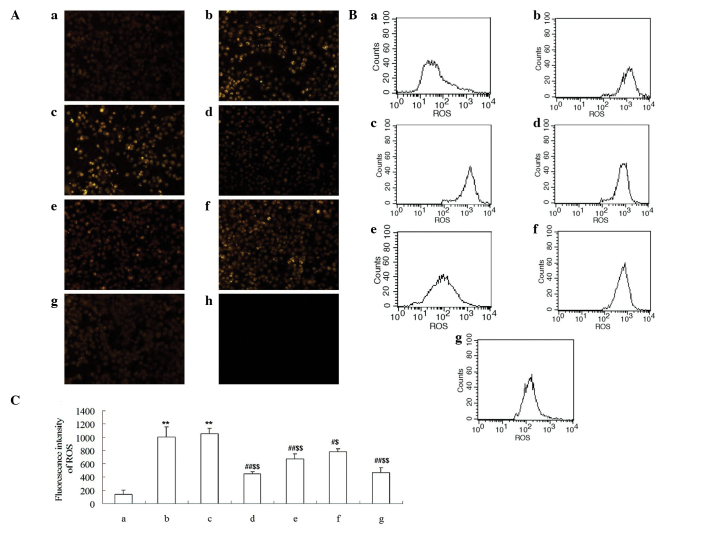
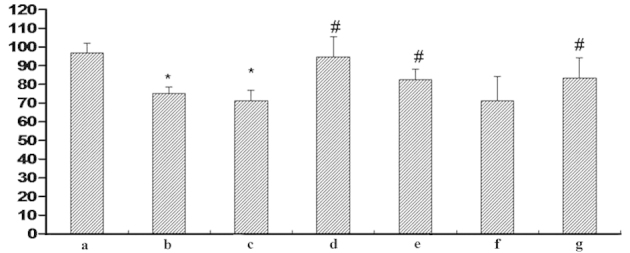
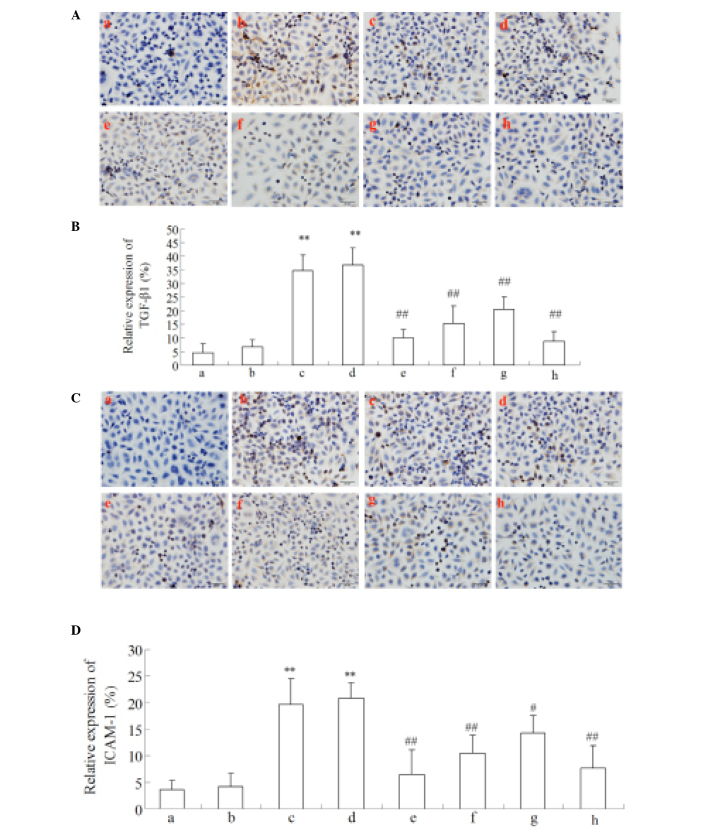
Methylglyoxal (MGO)-induced carbonyl stress and pro-inflammatory responses have been suggested to contribute to endothelial dysfunction. Curcumin (Cur), a polyphenolic compound from Curcuma longa L., may protect endothelial cells against carbonyl stress-induced damage by trapping dicarbonyl compounds such as MGO. However, Cur-MGO adducts have not been studied in depth to date and it remains to be known whether Cur-MGO adducts are able to attenuate endothelial damage by trapping MGO. In the present study, 1,2-diaminobenzene was reacted with MGO to ensure the reliability of the reaction system. Cur was demonstrated to trap MGO at a 1:1 ratio to form adducts 1, 2 and 3 within 720 min. The structures of these adducts were identified by high-performance liquid chromatography/electrospray ionization tandem mass spectrometry. The kinetic curves of Cur (10(-7), 10(-6) and 10(-5) M) were measured from 0-168 h by fluorescent intensity. Cur significantly inhibited the formation of advanced glycation end products (AGEs). The differences in oxidative damage and the levels of pro-inflammatory cytokines following MGO + HSA or Cur-MGO treatment were investigated in human umbilical vein endothelial cells (HUVECs). Exposure of HUVECs to the Cur-MGO reaction adducts significantly reduced the intracellular ROS levels and improved cell viability compared with MGO alone. Furthermore, there was a significant reduction in the expression levels of transforming growth factor-β1 and intercellular adhesion molecule(-1) following treatment with Cur-MGO adducts compared with MGO alone. These results provide further evidence that the trapping of MGO by Cur inhibits the formation of AGEs. The current study indicates that the protective effect of Cur on carbonyl stress and pro-inflammatory responses in endothelial damage occurs via the trapping of MGO.
甲基乙二醛(MGO)诱导的羰基应激和促炎反应被认为与内皮功能障碍有关。姜黄素(Cur)是一种从姜黄中提取的多酚化合物,它可以通过捕获二羰基化合物(如MGO)来保护内皮细胞免受羰基应激诱导的损伤。然而,迄今为止,Cur-MGO加合物尚未得到深入研究,Cur-MGO加合物是否能够通过捕获MGO来减轻内皮损伤仍有待确定。在本研究中,1,2-二氨基苯与MGO反应以确保反应体系的可靠性。结果表明,Cur能以1:1的比例捕获MGO,并在720分钟内形成加合物1、2和3。这些加合物的结构通过高效液相色谱/电喷雾电离串联质谱进行鉴定。通过荧光强度测定了Cur(10⁻⁷、10⁻⁶和10⁻⁵M)在0-168小时内的动力学曲线。Cur显著抑制了晚期糖基化终产物(AGEs)的形成。在人脐静脉内皮细胞(HUVECs)中研究了MGO+HSA或Cur-MGO处理后氧化损伤和促炎细胞因子水平的差异。与单独使用MGO相比,将HUVECs暴露于Cur-MGO反应加合物中可显著降低细胞内活性氧水平并提高细胞活力。此外,与单独使用MGO相比,用Cur-MGO加合物处理后,转化生长因子-β1和细胞间黏附分子-1的表达水平显著降低。这些结果进一步证明Cur捕获MGO可抑制AGEs的形成。当前研究表明,Cur对内皮损伤中羰基应激和促炎反应的保护作用是通过捕获MGO实现的。