Lin Peter Ping
Cytelligen, San Diego, CA, 92121, USA.
Clin Transl Med. 2015 Dec;4(1):38. doi: 10.1186/s40169-015-0081-2. Epub 2015 Dec 30.
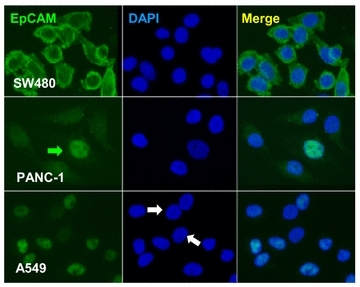
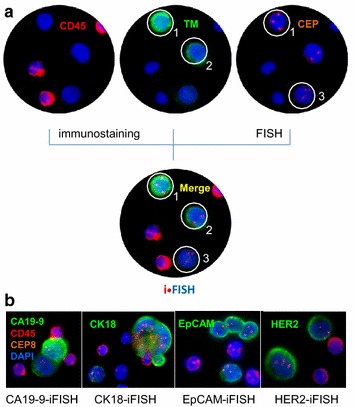
Application of tumor cell surface adhesion molecule Anti-epithelial cell adhesion molecule (EpCAM)-dependent antibody capture, and intracellular cytokeratins (CKs)-dependent immunostaining strategies to detect disseminated or circulating tumor cells (DTCs or CTCs), is limited by highly heterogeneous and dynamic expression or absence of EpCAM and/or CKs in CTCs and DTCs, particularly in their capturing and identifying CTCs/DTCs shed from diverse types of solid tumor, thus being biased and restricted to the only both EpCAM and CK positive cancer cells. Moreover, heterogeneity of chromosome and tumor biomarker of CTCs/DTCs cannot be co-examined by conventional CK/EpCAM-dependent techniques. Accordingly, a novel integrated cellular and molecular approach of EpCAM-independent subtraction enrichment (SE) and immunostaining-FISH (iFISH(®)) has recently been successfully developed. SE-iFISH(®) is able to effectively enrich, comprehensively identify and characterize both large and small size non-hematopoietic heteroploid CTCs, DTCs and circulating tumor microemboli in various biofluid specimens of either cancer patients or patient-derived-xenograft mice. Obtained tumor cells, free of anti-EpCAM perturbing and hypotonic damage, are eligible for primary tumor cell culture as well as a series of downstream analyses. Highly heterogeneous CTCs and DTCs could be classified into subtypes by in situ phenotyping protein expression of various tumor biomarkers and karyotyping of chromosome aneuploidy performed by iFISH(®). Each CTC subtype may correlate with distinct clinical significance in terms of tumor metastasis, relapse, therapeutic drug sensitivity or resistance, respectively.
应用肿瘤细胞表面黏附分子依赖抗上皮细胞黏附分子(EpCAM)的抗体捕获以及细胞内角蛋白(CKs)依赖的免疫染色策略来检测播散性或循环肿瘤细胞(DTCs或CTCs),受到CTCs和DTCs中EpCAM和/或CKs高度异质性、动态表达或缺失的限制,尤其是在捕获和识别源自不同类型实体瘤的CTCs/DTCs时,因此存在偏差且仅限于EpCAM和CK均阳性的癌细胞。此外,传统的依赖CK/EpCAM的技术无法同时检测CTCs/DTCs的染色体和肿瘤生物标志物的异质性。因此,一种新的不依赖EpCAM的减法富集(SE)与免疫染色-荧光原位杂交(iFISH(®))相结合的细胞和分子方法最近已成功开发出来。SE-iFISH(®)能够有效地富集、全面鉴定和表征癌症患者或患者来源异种移植小鼠各种生物流体标本中的大小不一的非造血异倍体CTCs、DTCs和循环肿瘤微栓子。获得的肿瘤细胞不受抗EpCAM干扰和低渗损伤的影响,适合进行原代肿瘤细胞培养以及一系列下游分析。高度异质性的CTCs和DTCs可以通过iFISH(®)对各种肿瘤生物标志物的原位表型蛋白表达和染色体非整倍体核型分析分为不同亚型。每种CTCs亚型在肿瘤转移、复发、治疗药物敏感性或耐药性方面可能分别具有不同的临床意义。