Jackson Matthew A, Goodrich Julia K, Maxan Maria-Emanuela, Freedberg Daniel E, Abrams Julian A, Poole Angela C, Sutter Jessica L, Welter Daphne, Ley Ruth E, Bell Jordana T, Spector Tim D, Steves Claire J
Department of Twin Research and Genetic Epidemiology, King's College London, London, UK.
Department of Molecular Biology and Genetics, Cornell University, Ithaca, New York, USA Department of Microbiology, Cornell University, Ithaca, New York, USA.
Gut. 2016 May;65(5):749-56. doi: 10.1136/gutjnl-2015-310861. Epub 2015 Dec 30.
Proton pump inhibitors (PPIs) are drugs used to suppress gastric acid production and treat GI disorders such as peptic ulcers and gastro-oesophageal reflux. They have been considered low risk, have been widely adopted, and are often over-prescribed. Recent studies have identified an increased risk of enteric and other infections with their use. Small studies have identified possible associations between PPI use and GI microbiota, but this has yet to be carried out on a large population-based cohort.
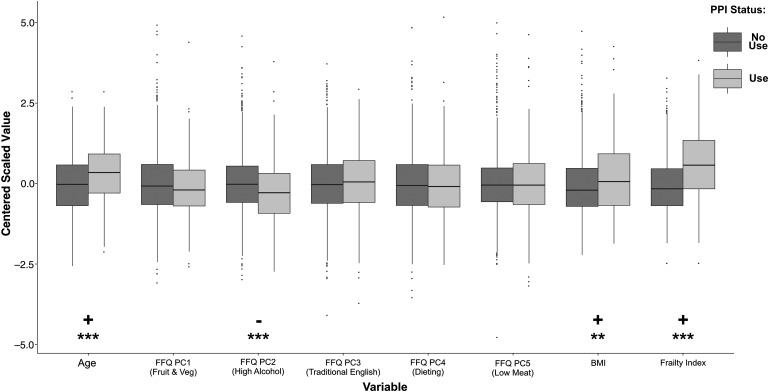
We investigated the association between PPI usage and the gut microbiome using 16S ribosomal RNA amplification from faecal samples of 1827 healthy twins, replicating results within unpublished data from an interventional study.
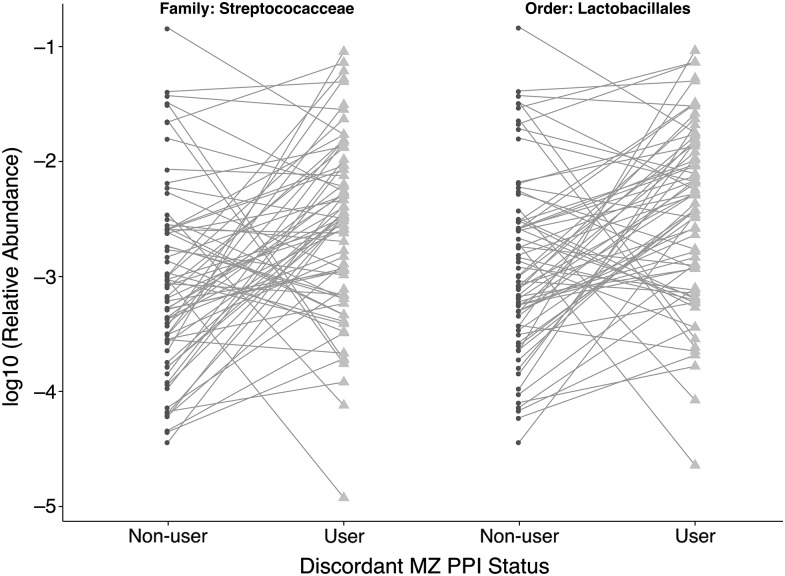
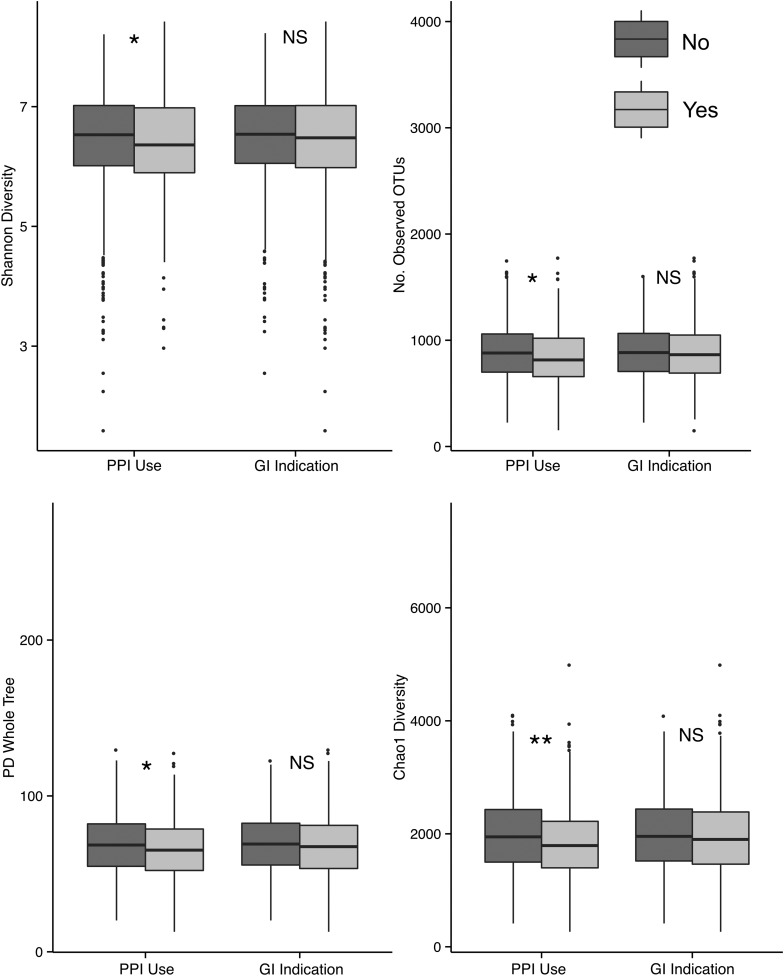
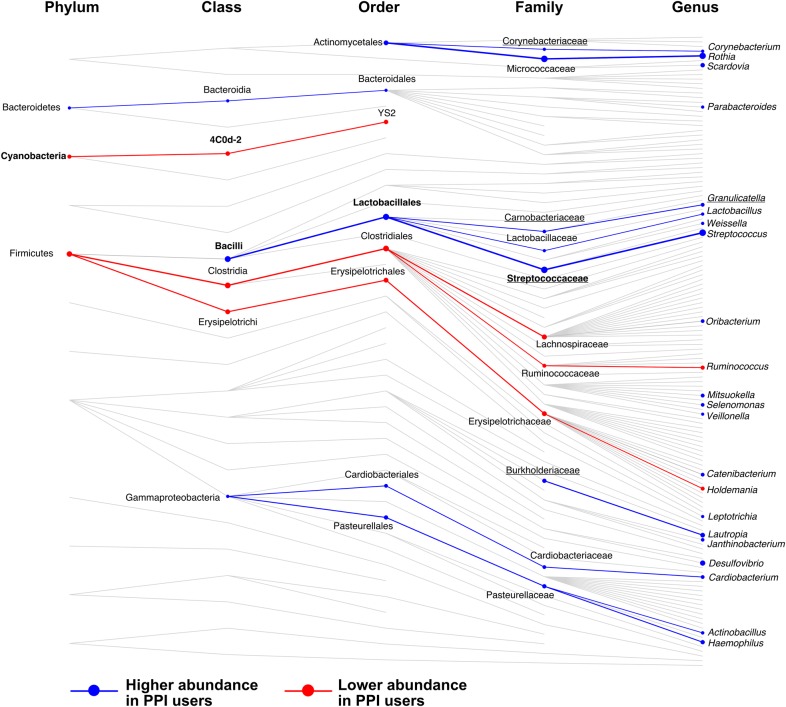
We identified a significantly lower abundance in gut commensals and lower microbial diversity in PPI users, with an associated significant increase in the abundance of oral and upper GI tract commensals. In particular, significant increases were observed in Streptococcaceae. These associations were replicated in an independent interventional study and in a paired analysis between 70 monozygotic twin pairs who were discordant for PPI use. We propose that the observed changes result from the removal of the low pH barrier between upper GI tract bacteria and the lower gut.
Our findings describe a significant impact of PPIs on the gut microbiome and should caution over-use of PPIs, and warrant further investigation into the mechanisms and their clinical consequences.
质子泵抑制剂(PPIs)是用于抑制胃酸分泌和治疗诸如消化性溃疡及胃食管反流等胃肠道疾病的药物。它们曾被认为风险较低,已被广泛应用,且常常存在过度处方的情况。近期研究已发现使用这些药物会增加肠道及其他感染的风险。小型研究已确定PPI使用与胃肠道微生物群之间可能存在关联,但这尚未在大规模人群队列中进行。
我们使用来自1827名健康双胞胎粪便样本的16S核糖体RNA扩增技术,研究PPI使用与肠道微生物组之间的关联,并在一项干预性研究的未发表数据中重复结果。
我们发现PPI使用者的肠道共生菌丰度显著降低,微生物多样性也较低,同时口腔和上胃肠道共生菌的丰度显著增加。特别是,链球菌科的丰度显著增加。这些关联在一项独立的干预性研究以及70对PPI使用情况不一致的同卵双胞胎的配对分析中得到了重复。我们认为观察到的变化是由于上胃肠道细菌与下肠道之间低pH屏障的消除所致。
我们的研究结果描述了PPI对肠道微生物组的重大影响,应警示PPI的过度使用,并需要对其机制及其临床后果进行进一步研究。