Department of Gastroenterology and Hepatology, Institute of Digestive Diseases, Chinese PLA General Hospital, Beijing 100853, China.
Department of Gastroenterology and Hepatology, Institute of Digestive Diseases, Chinese PLA General Hospital, Beijing 100853, China; School of Medicine, Nankai University, Tianjin 30071, China.
Genomics Proteomics Bioinformatics. 2019 Feb;17(1):52-63. doi: 10.1016/j.gpb.2018.12.004. Epub 2019 Apr 25.
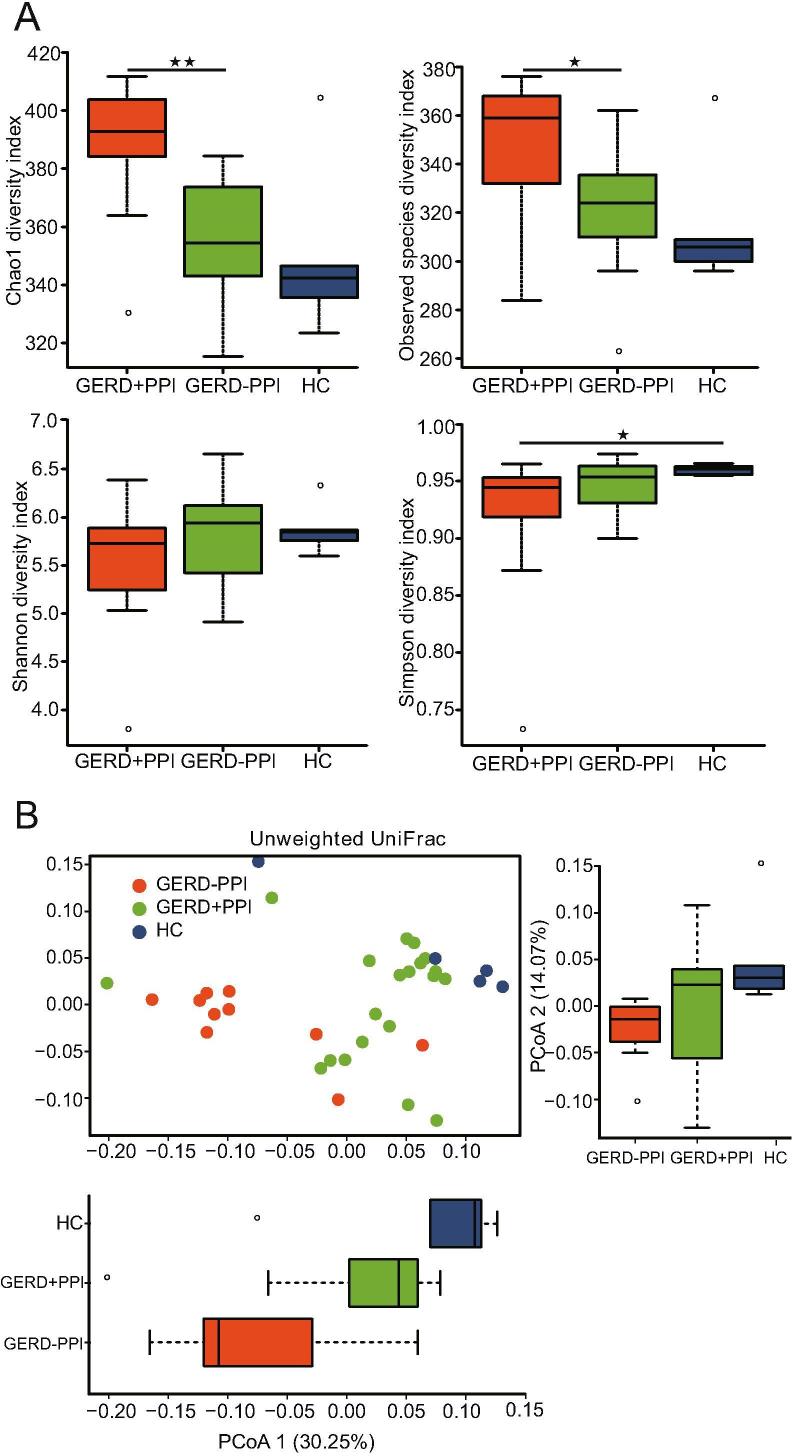
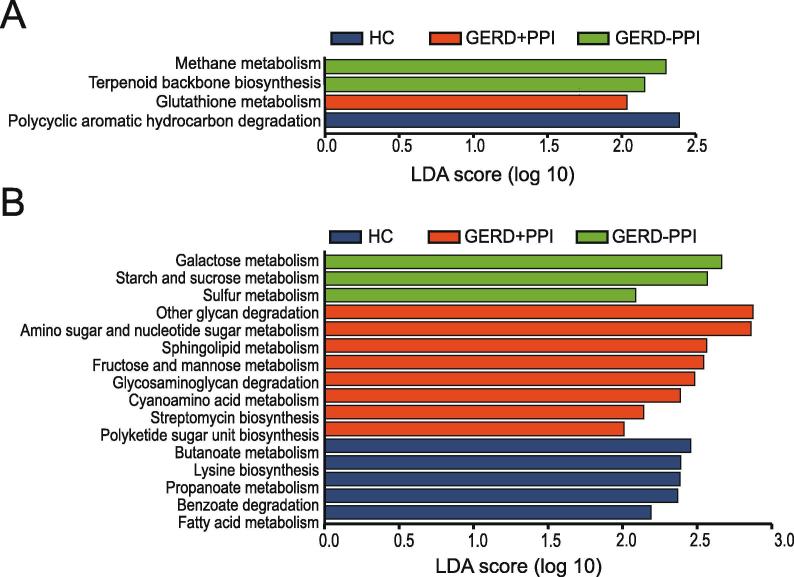
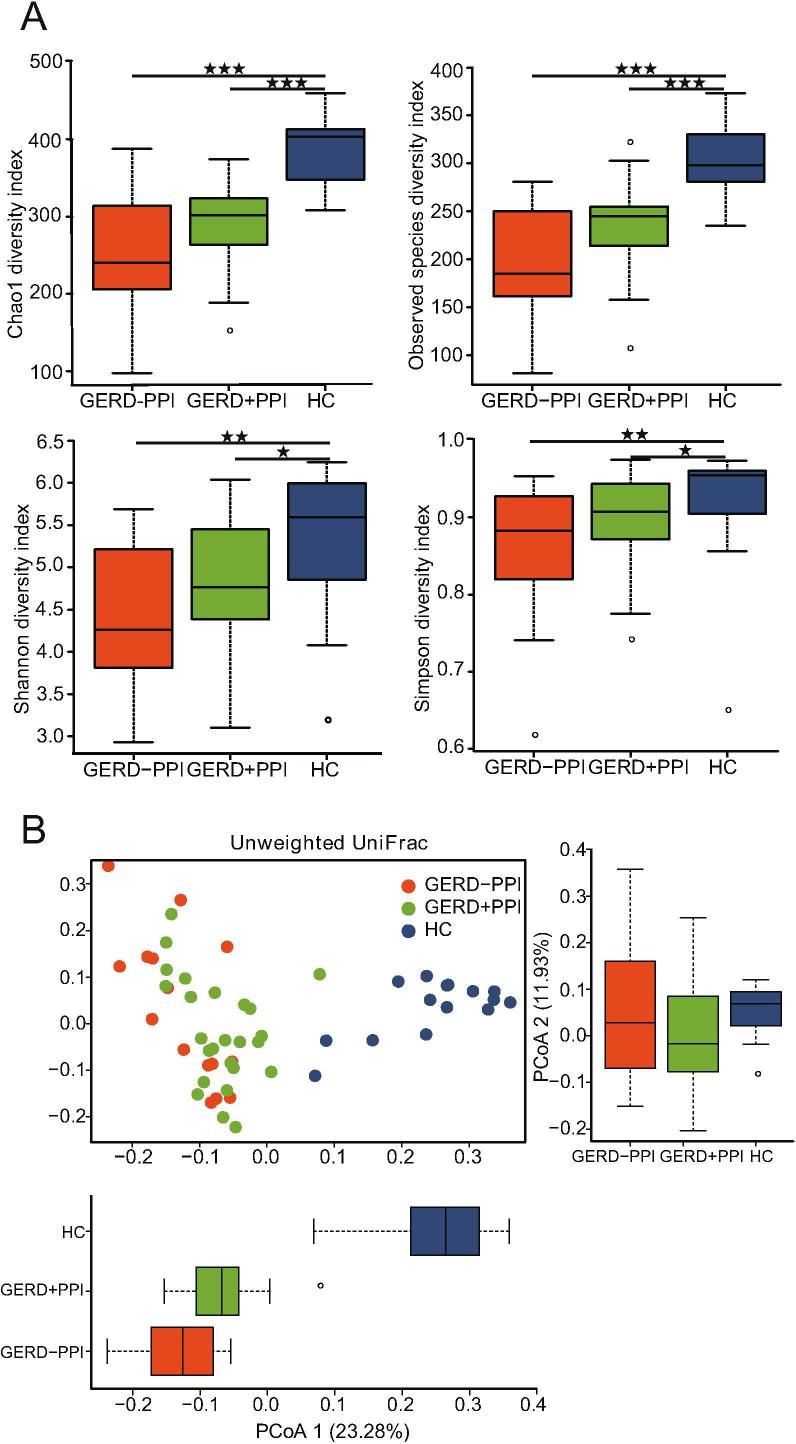
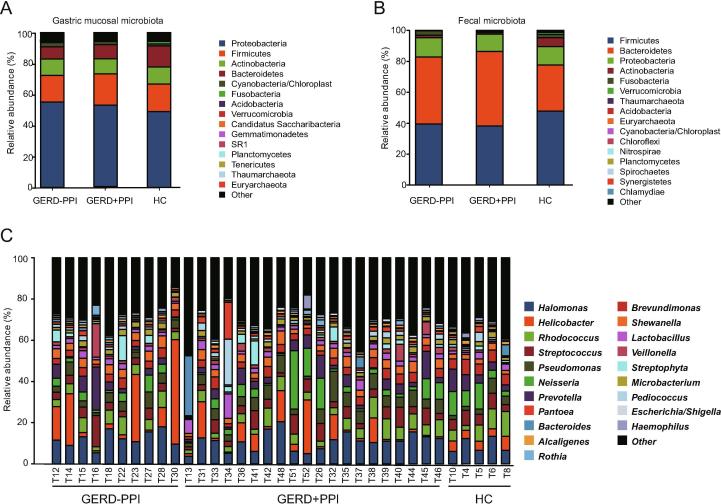
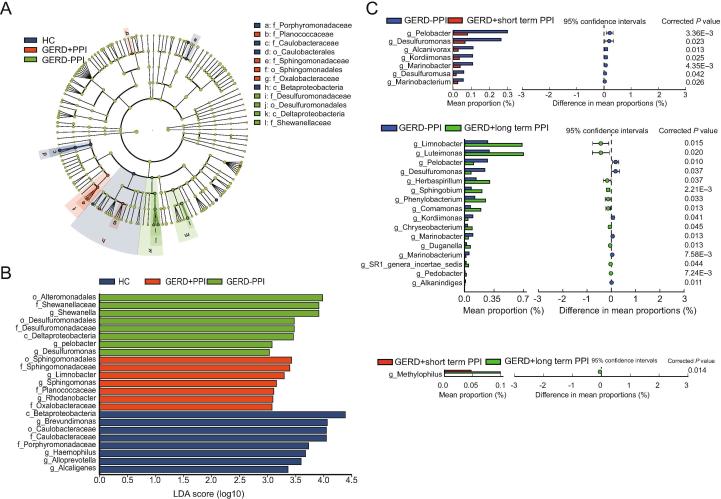
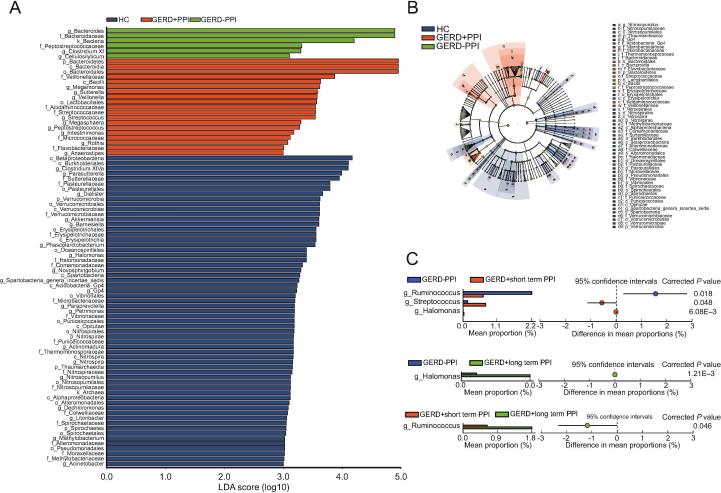
Proton pump inhibitors (PPIs) are commonly used to lessen symptoms in patients with gastroesophageal reflux disease (GERD). However, the effects of PPI therapy on the gastrointestinal microbiota in GERD patients remain unclear. We examined the association between the PPI usage and the microbiota present in gastric mucosal and fecal samples from GERD patients and healthy controls (HCs) using 16S rRNA gene sequencing. GERD patients taking PPIs were further divided into short-term and long-term PPI user groups. We showed that PPI administration lowered the relative bacterial diversity of the gastric microbiota in GERD patients. Compared to the non-PPI-user and HC groups, higher abundances of Planococcaceae, Oxalobacteraceae, and Sphingomonadaceae were found in the gastric microbiota from the PPI-user group. In addition, the Methylophilus genus was more highly abundant in the long-term PPI user group than in the short-term PPI-user group. Despite the absence of differences in alpha diversity, there were significant differences in the fecal bacterial composition of between GERD patients taking PPIs and those not taking PPIs. There was a higher abundance of Streptococcaceae, Veillonellaceae, Acidaminococcaceae, Micrococcaceae, and Flavobacteriaceae present in the fecal microbiota from the PPI-user group than those from the non-PPI-user and HC groups. Additionally, a significantly higher abundance of Ruminococcus was found in GERD patients on long-term PPI medication than that on short-term PPI medication. Our study indicates that PPI administration in patients with GERD has a significant effect on the abundance and structure of the gastric mucosal microbiota but only on the composition of the fecal microbiota.
质子泵抑制剂 (PPIs) 常用于减轻胃食管反流病 (GERD) 患者的症状。然而,PPI 治疗对 GERD 患者胃肠道微生物群的影响尚不清楚。我们使用 16S rRNA 基因测序检查了 PPI 使用与 GERD 患者和健康对照者 (HC) 的胃黏膜和粪便样本中微生物群之间的关联。进一步将接受 PPI 治疗的 GERD 患者分为短期和长期 PPI 用户组。我们表明,PPI 给药降低了 GERD 患者胃微生物群的相对细菌多样性。与非 PPI 用户和 HC 组相比,PPI 用户组的胃微生物群中 Planococcaceae、Oxalobacteraceae 和 Sphingomonadaceae 的丰度更高。此外,Methylophilus 属在长期 PPI 用户组中的丰度高于短期 PPI 用户组。尽管 alpha 多样性没有差异,但接受 PPI 和不接受 PPI 的 GERD 患者的粪便细菌组成存在显著差异。PPI 用户组的粪便微生物群中 Streptococcaceae、Veillonellaceae、Acidaminococcaceae、Micrococcaceae 和 Flavobacteriaceae 的丰度更高,而非 PPI 用户和 HC 组。此外,长期接受 PPI 治疗的 GERD 患者的 Ruminococcus 丰度明显高于短期接受 PPI 治疗的患者。我们的研究表明,PPI 给药在 GERD 患者中对胃黏膜微生物群的丰度和结构有显著影响,但仅对粪便微生物群的组成有影响。