Waldemer-Streyer R J, Chen J
Department of Cell and Developmental Biology, University of Illinois at Urbana-Champaign, Urbana, IL, USA.
Cell Death Dis. 2015 Dec 31;6(12):e2026. doi: 10.1038/cddis.2015.375.
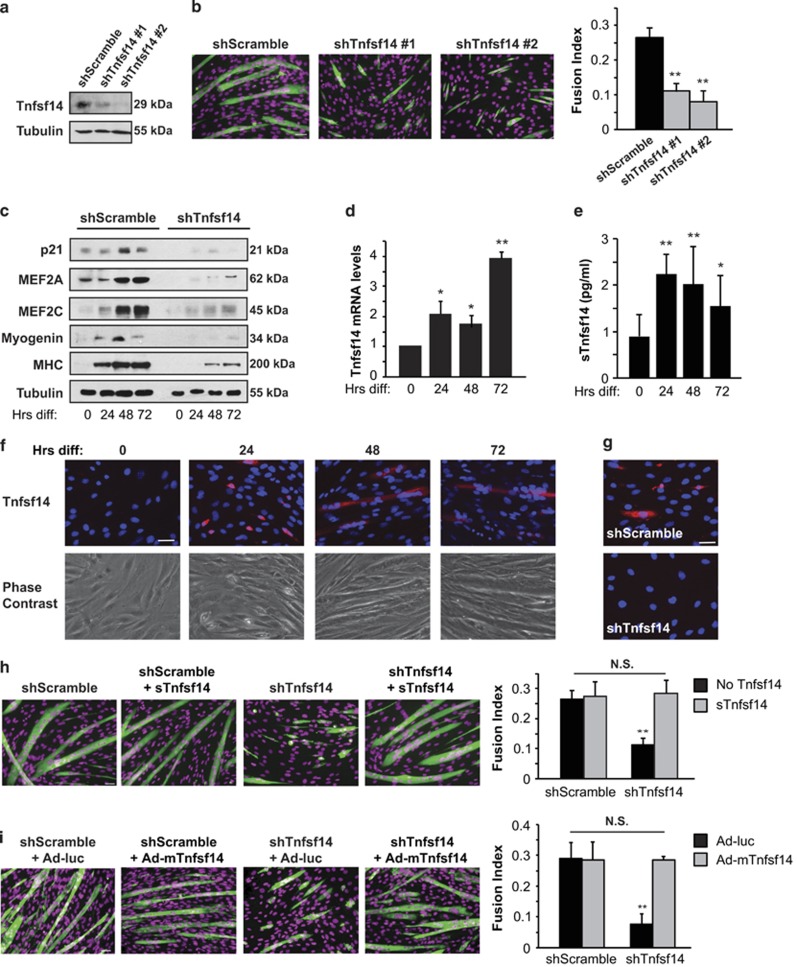
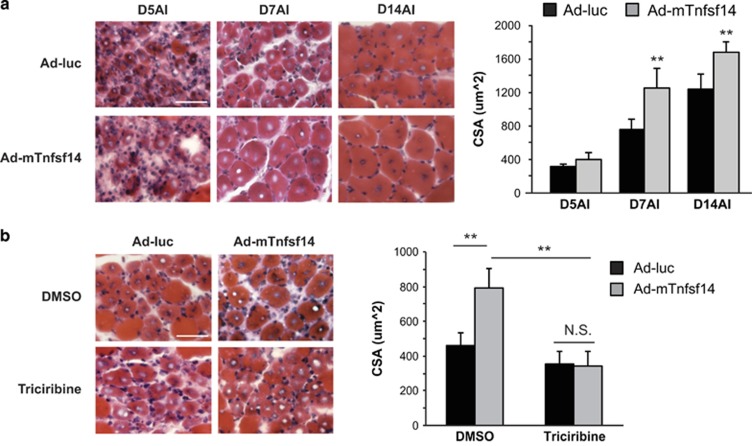
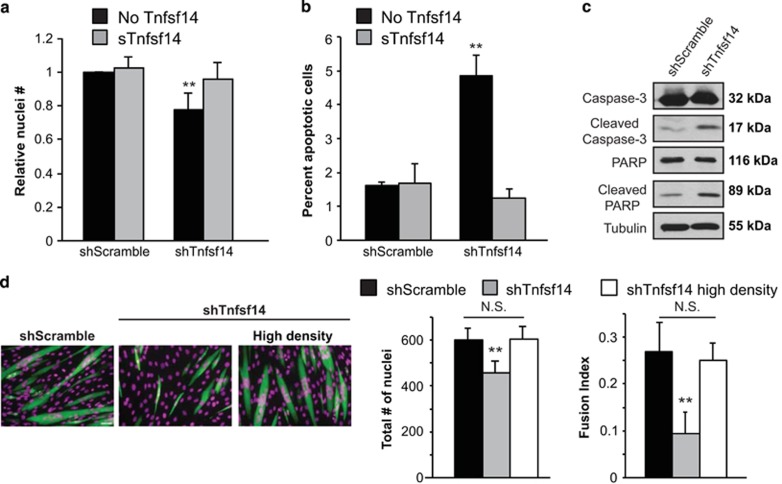
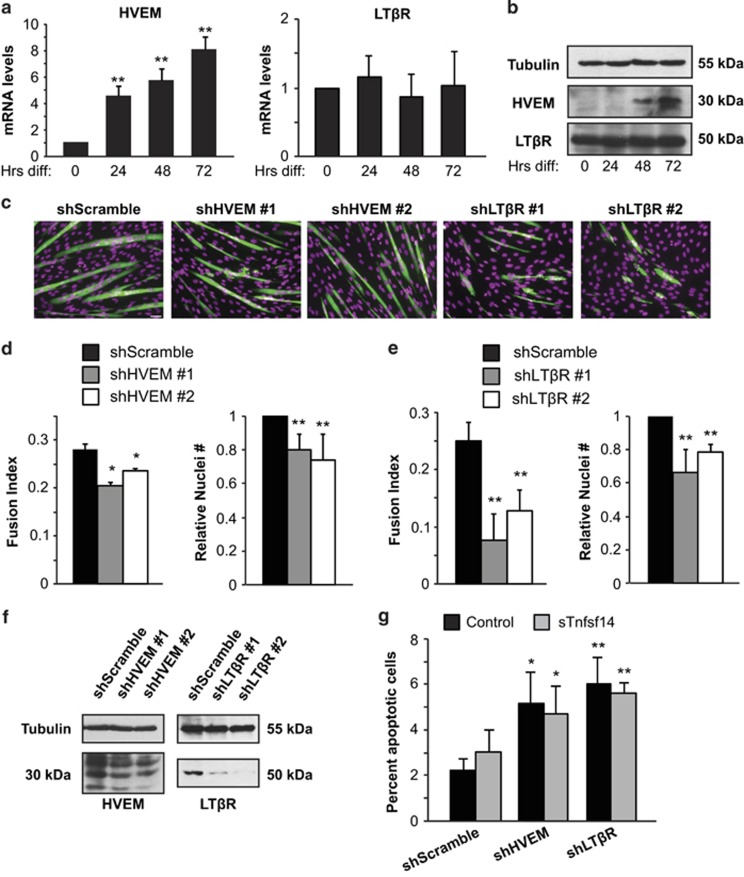
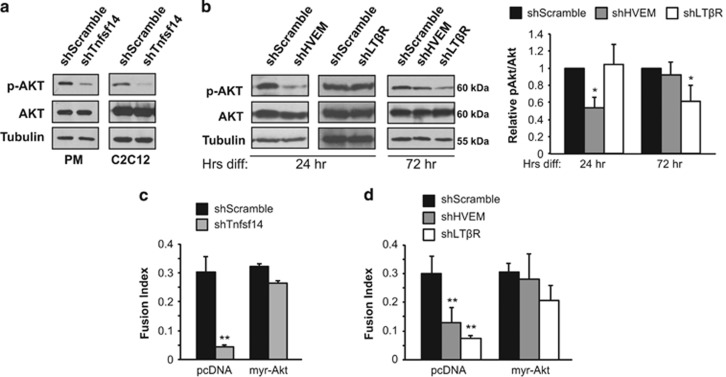
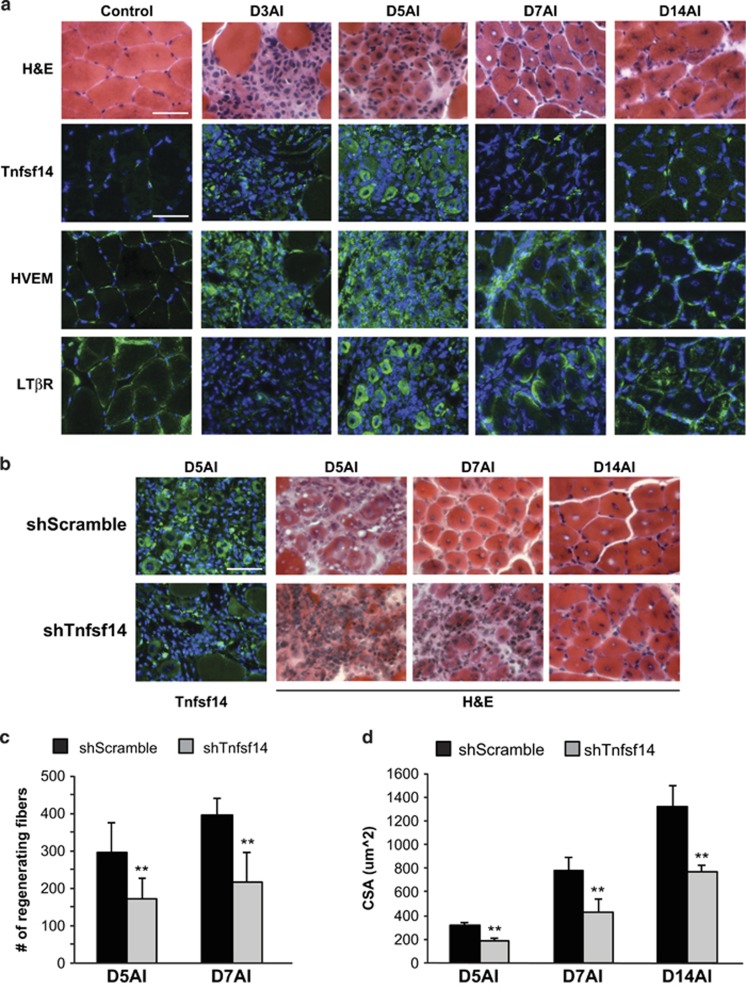
Adult skeletal muscle tissue has a uniquely robust capacity for regeneration, which gradually declines with aging or is compromised in muscle diseases. The cellular mechanisms regulating adult myogenesis remain incompletely understood. Here we identify the cytokine tumor necrosis factor superfamily member 14 (Tnfsf14) as a positive regulator of myoblast differentiation in culture and muscle regeneration in vivo. We find that Tnfsf14, as well as its cognate receptors herpes virus entry mediator (HVEM) and lymphotoxin β receptor (LTβR), are expressed in both differentiating myocytes and regenerating myofibers. Depletion of Tnfsf14 or either receptor inhibits myoblast differentiation and promotes apoptosis. Our results also suggest that Tnfsf14 regulates myogenesis by supporting cell survival and maintaining a sufficient pool of cells for fusion. In addition, we show that Akt mediates the survival and myogenic function of Tnfsf14. Importantly, local knockdown of Tnfsf14 is found to impair injury-induced muscle regeneration in a mouse model, affirming an important physiological role for Tnfsf14 in myogenesis in vivo. Furthermore, we demonstrate that localized overexpression of Tnfsf14 potently enhances muscle regeneration, and that this regenerative capacity of Tnfsf14 is dependent on Akt signaling. Taken together, our findings reveal a novel regulator of skeletal myogenesis and implicate Tnfsf14 in future therapeutic development.
成年骨骼肌组织具有独特且强大的再生能力,这种能力会随着衰老而逐渐衰退,或在肌肉疾病中受损。调节成年期肌生成的细胞机制仍未完全明确。在此,我们确定细胞因子肿瘤坏死因子超家族成员14(Tnfsf14)是体外培养中成肌细胞分化及体内肌肉再生的正向调节因子。我们发现,Tnfsf14及其同源受体疱疹病毒侵入介质(HVEM)和淋巴毒素β受体(LTβR)在分化的肌细胞和再生的肌纤维中均有表达。敲除Tnfsf14或任一受体可抑制成肌细胞分化并促进细胞凋亡。我们的结果还表明,Tnfsf14通过支持细胞存活和维持足够数量的用于融合的细胞来调节肌生成。此外,我们发现Akt介导了Tnfsf14的存活和生肌功能。重要的是,在小鼠模型中发现局部敲低Tnfsf14会损害损伤诱导的肌肉再生, 这证实了Tnfsf14在体内肌生成中具有重要的生理作用。此外,我们证明局部过表达Tnfsf14可有效增强肌肉再生,且Tnfsf14的这种再生能力依赖于Akt信号传导。综上所述,我们的研究结果揭示了一种骨骼肌生成的新型调节因子,并表明Tnfsf14在未来治疗开发中具有潜在应用价值。