Kumar Nathella Pavan, Banurekha Vaithilingam V, Nair Dina, Babu Subash
National Institutes of Health-NIRT-International Center for Excellence in Research, Chennai, India.
National Institute for Research in Tuberculosis, Chennai, India.
PLoS One. 2016 Jan 4;11(1):e0146318. doi: 10.1371/journal.pone.0146318. eCollection 2016.
Angiogenesis and lymphangiogenesis are classical features of granuloma formation in pulmonary tuberculosis (PTB). In addition, the angiogenic factor--VEGF-A is a known biomarker for PTB.
AIMS/METHODOLOGY: To examine the association of circulating angiogenic factors with PTB, we examined the systemic levels of VEGF-A, VEGF-C, VEGF-D, VEGF-R1, VEGF-R2 and VEGF-R3in individuals with PTB, latent TB (LTB) or no TB infection (NTB).
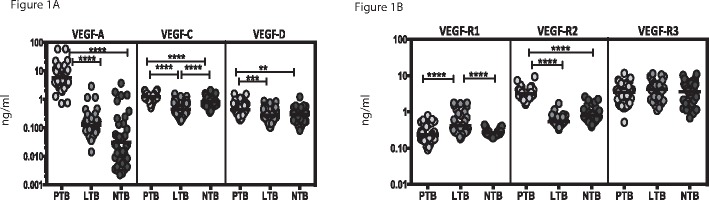
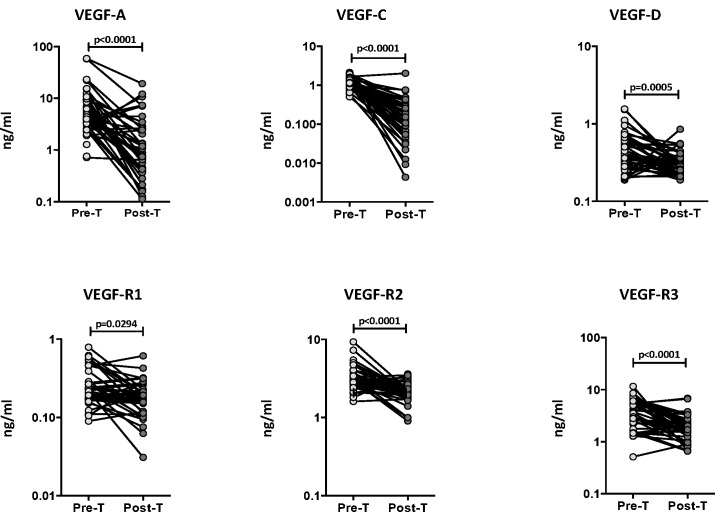
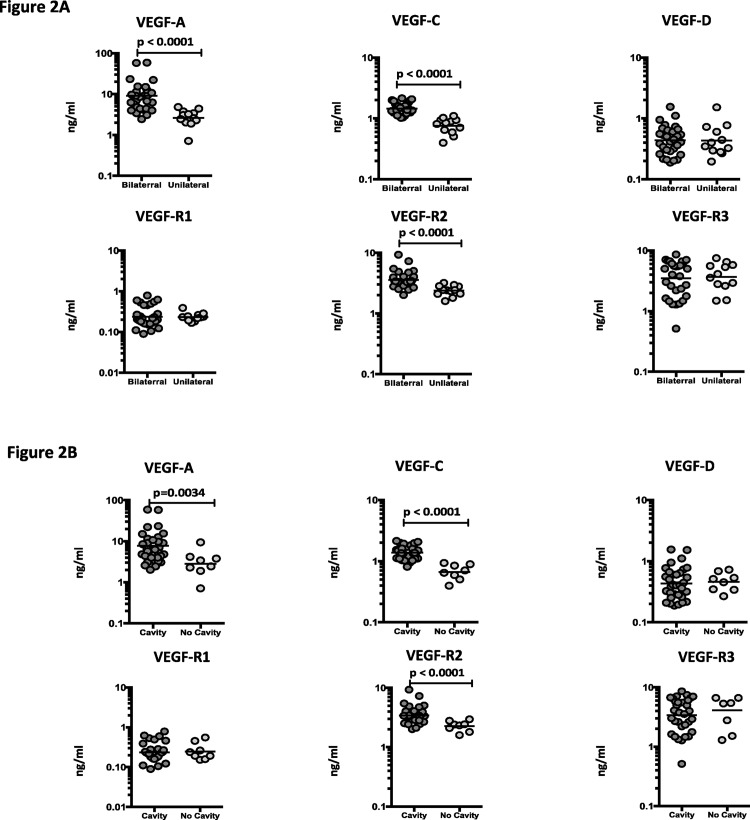
Circulating levels of VEGF-A, VEGF-C andVEGF-R2 were significantly higher in PTB compared to LTB or NTB individuals. Moreover, the levels of VEGF-A, VEGF-C and VEGF-R2 were significantly higher in PTB with bilateral and/or cavitary disease. The levels of these factors also exhibited a significant positive relationship with bacterial burdens in PTB. ROC analysis revealed VEGF-A and VEGF-R2 as markers distinguishing PTB from LTB or NTB. Finally, the circulating levels of all the angiogenic factors examined were significantly reduced following successful chemotherapy.
Therefore, our data demonstrate that PTB is associated with elevated levels of circulating angiogenic factors, possibly reflecting vascular and endothelial dysfunction. In addition, some of these circulating angiogenic factors could prove useful as biomarkers to monitor disease severity, bacterial burden and therapeutic responses.
血管生成和淋巴管生成是肺结核(PTB)肉芽肿形成的典型特征。此外,血管生成因子——血管内皮生长因子A(VEGF-A)是已知的肺结核生物标志物。
目的/方法:为了研究循环血管生成因子与肺结核的关联,我们检测了肺结核患者、潜伏性结核(LTB)患者或无结核感染(NTB)个体中VEGF-A、VEGF-C、VEGF-D、VEGF-R1、VEGF-R2和VEGF-R3的全身水平。
与LTB或NTB个体相比,PTB患者中VEGF-A、VEGF-C和VEGF-R2的循环水平显著更高。此外,双侧和/或有空洞病变的PTB患者中VEGF-A、VEGF-C和VEGF-R2的水平显著更高。这些因子的水平在PTB中也与细菌负荷呈显著正相关。ROC分析显示VEGF-A和VEGF-R2可作为区分PTB与LTB或NTB的标志物。最后,成功化疗后,所有检测的血管生成因子的循环水平均显著降低。
因此,我们的数据表明,PTB与循环血管生成因子水平升高有关,这可能反映了血管和内皮功能障碍。此外,这些循环血管生成因子中的一些可能被证明是监测疾病严重程度、细菌负荷和治疗反应的有用生物标志物。