Zhu Ye, Blum Maximilian, Hoff Uwe, Wesser Tim, Fechner Mandy, Westphal Christina, Gürgen Dennis, Catar Rusan Ali, Philippe Aurelie, Wu Kaiyin, Bubalo Gordana, Rothe Michael, Weldon Steven M, Dragun Duska, Schunck Wolf-Hagen
Nephrology and Intensive Care Medicine, Campus Virchow and Center for Cardiovascular Research, Charité Medical Faculty, Berlin, Germany.
The fifth affiliated hospital of Sun Yat-sen University, Guangdong Province, Zhuhai, China.
PLoS One. 2016 Jan 4;11(1):e0145645. doi: 10.1371/journal.pone.0145645. eCollection 2016.
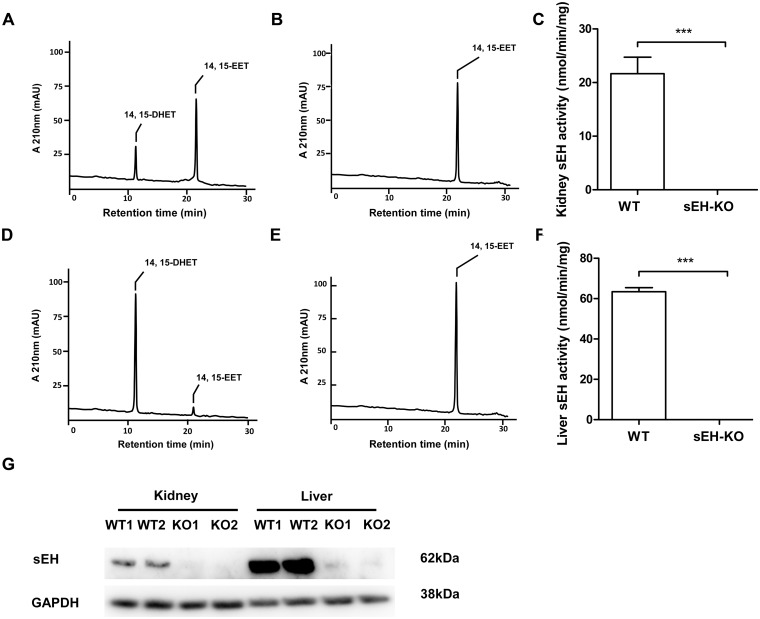
20-hydroxyeicosatetraenoic acid (20-HETE) and epoxyeicosatrienoic acids (EETs) are cytochrome P450 (CYP)-dependent eicosanoids that play opposite roles in the regulation of vascular tone, inflammation, and apoptosis. 20-HETE aggravates, whereas EETs ameliorate ischemia/reperfusion (I/R)-induced organ damage. EETs are rapidly metabolized to dihydroxyeicosatrienoic acids (DHETs) by the soluble epoxide hydrolase (sEH). We hypothesized that sEH gene (EPHX2) deletion would increase endogenous EET levels and thereby protect against I/R-induced acute kidney injury (AKI).
Kidney damage was evaluated in male wildtype (WT) and sEH-knockout (KO)-mice that underwent 22-min renal ischemia followed by two days of reperfusion. CYP-eicosanoids were analyzed by liquid chromatography tandem mass spectrometry.
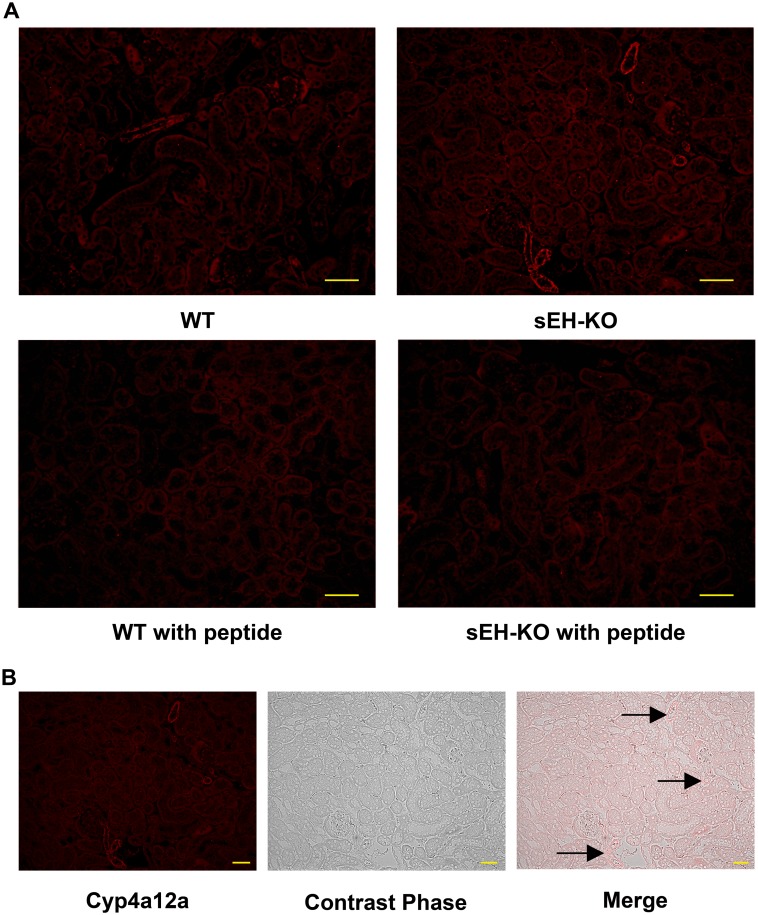
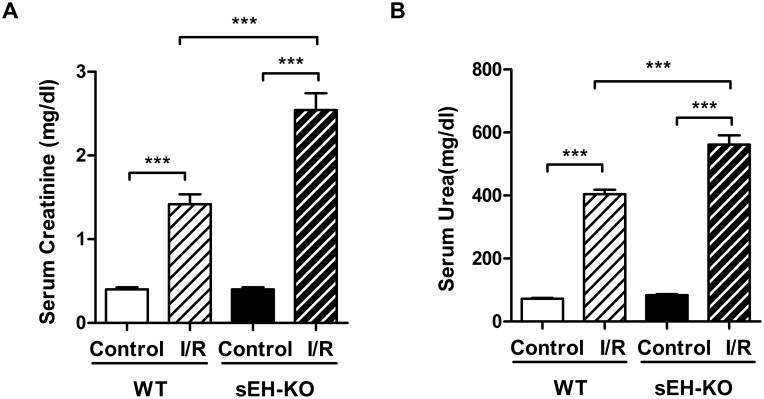
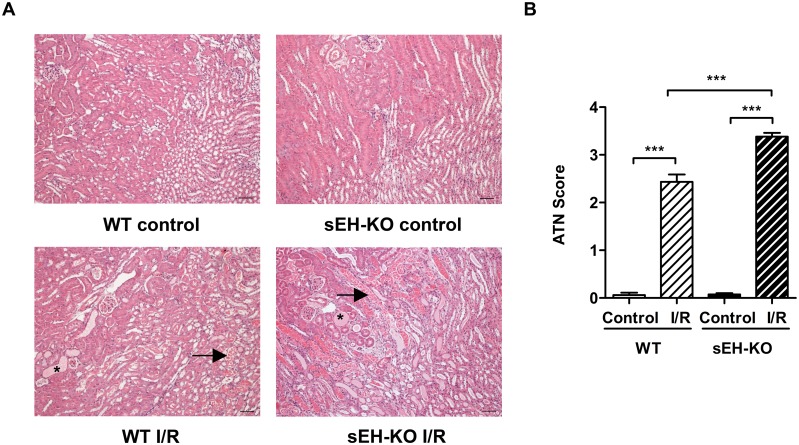
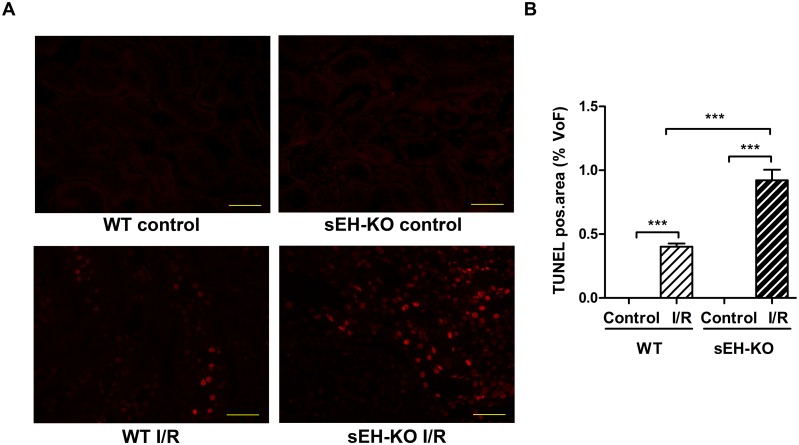
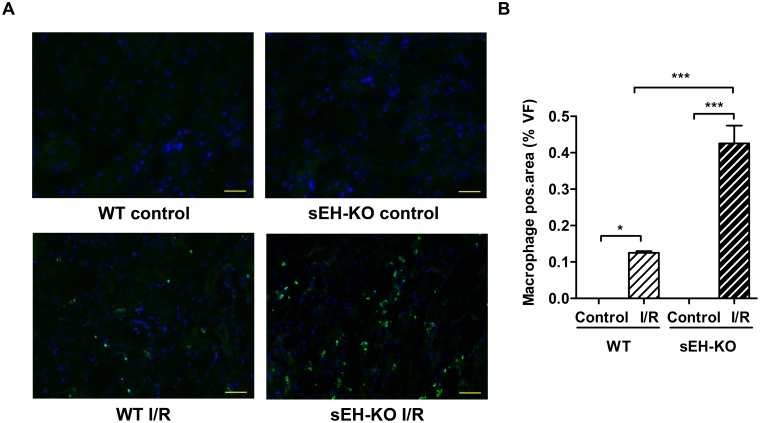
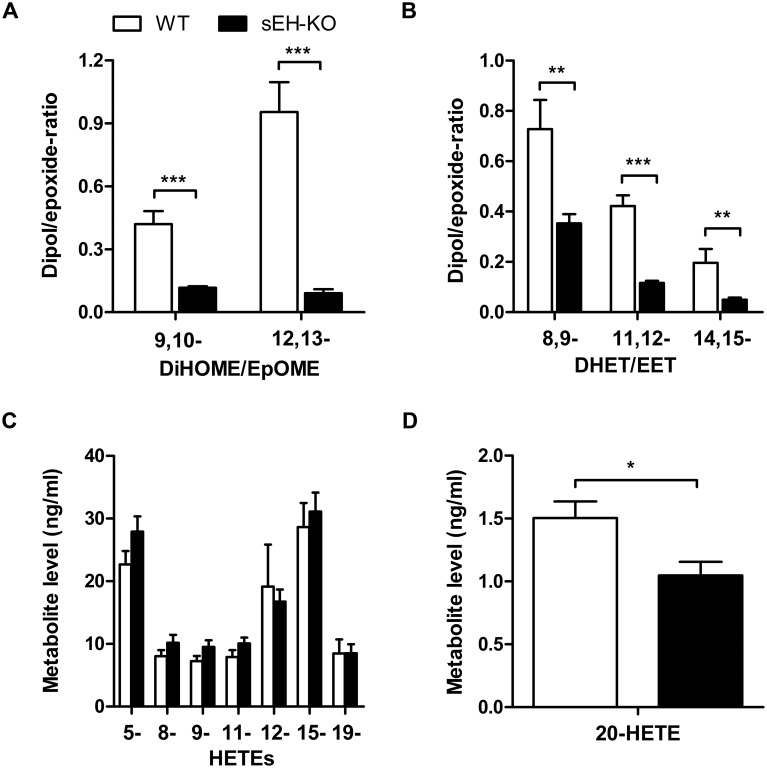
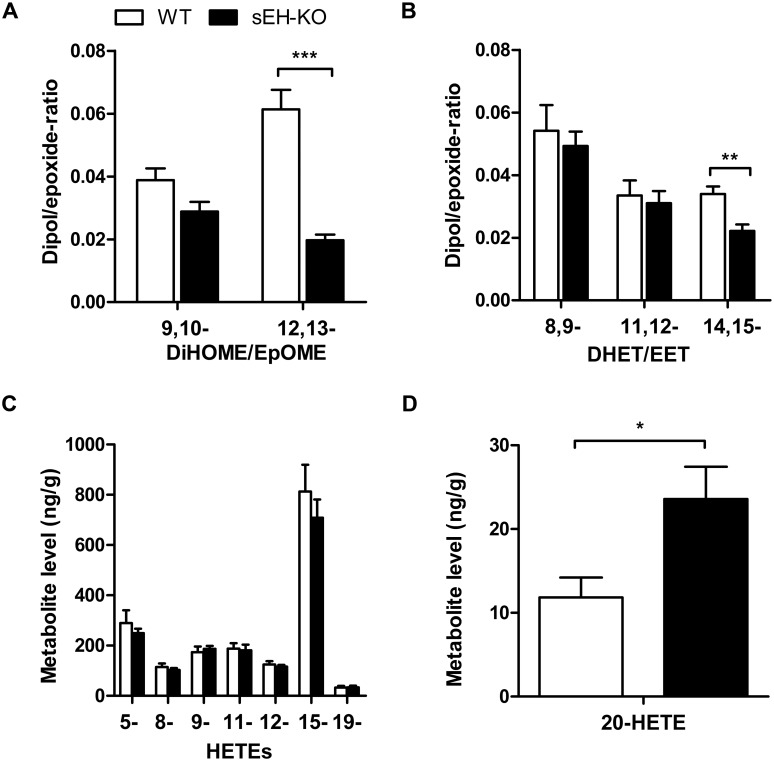
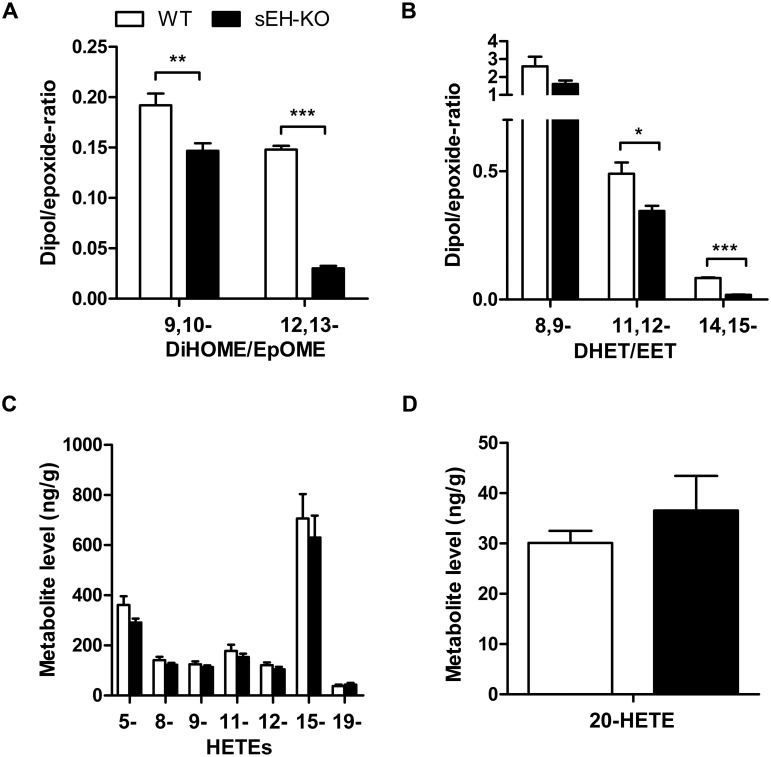
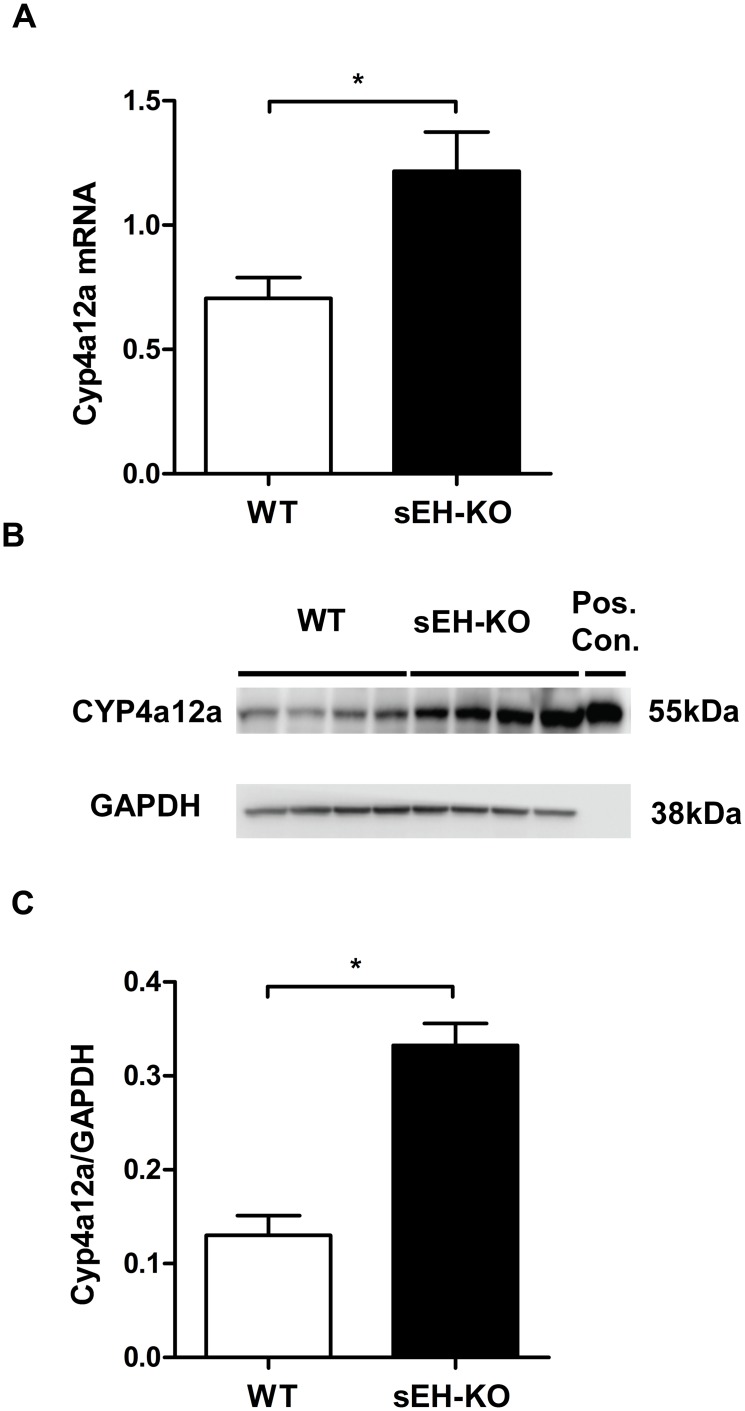
Contrary to our initial hypothesis, renal function declined more severely in sEH-KO mice as indicated by higher serum creatinine and urea levels. The sEH-KO-mice also featured stronger tubular lesion scores, tubular apoptosis, and inflammatory cell infiltration. Plasma and renal EET/DHET-ratios were higher in sEH-KO than WT mice, thus confirming the expected metabolic consequences of sEH deficiency. However, CYP-eicosanoid profiling also revealed that renal, but not plasma and hepatic, 20-HETE levels were significantly increased in sEH-KO compared to WT mice. In line with this finding, renal expression of Cyp4a12a, the murine 20-HETE-generating CYP-enzyme, was up-regulated both at the mRNA and protein level, and Cyp4a12a immunostaining was more intense in the renal arterioles of sEH-KO compared with WT mice.
These results indicate that the potential beneficial effects of reducing EET degradation were obliterated by a thus far unknown mechanism leading to kidney-specific up-regulation of 20-HETE formation in sEH-KO-mice.
20-羟基二十碳四烯酸(20-HETE)和环氧二十碳三烯酸(EETs)是细胞色素P450(CYP)依赖性类花生酸,在血管张力、炎症和细胞凋亡的调节中发挥相反作用。20-HETE会加重缺血/再灌注(I/R)诱导的器官损伤,而EETs则可改善这种损伤。EETs可被可溶性环氧化物水解酶(sEH)迅速代谢为二羟基二十碳三烯酸(DHETs)。我们推测,sEH基因(EPHX2)缺失会增加内源性EET水平,从而预防I/R诱导的急性肾损伤(AKI)。
对雄性野生型(WT)和sEH基因敲除(KO)小鼠进行评估,这些小鼠经历了22分钟的肾脏缺血,随后再灌注两天。通过液相色谱串联质谱法分析CYP类花生酸。
与我们最初的假设相反,sEH-KO小鼠的肾功能下降更为严重,血清肌酐和尿素水平更高即表明了这一点。sEH-KO小鼠还表现出更强的肾小管损伤评分、肾小管凋亡和炎症细胞浸润。sEH-KO小鼠的血浆和肾脏EET/DHET比值高于WT小鼠,从而证实了sEH缺乏预期的代谢后果。然而,CYP类花生酸谱分析还显示,与WT小鼠相比,sEH-KO小鼠的肾脏(而非血浆和肝脏)20-HETE水平显著升高。与此发现一致,小鼠产生20-HETE的CYP酶Cyp4a12a在mRNA和蛋白质水平均上调,与WT小鼠相比,sEH-KO小鼠肾小动脉中的Cyp4a12a免疫染色更强。
这些结果表明,减少EET降解的潜在有益作用被一种迄今未知的机制抵消,该机制导致sEH-KO小鼠肾脏中20-HETE生成特异性上调。