Akahori Yukiko, Miyasaka Tomomitsu, Toyama Masahiko, Matsumoto Ikumi, Miyahara Anna, Zong Tong, Ishii Keiko, Kinjo Yuki, Miyazaki Yoshitsugu, Saijo Shinobu, Iwakura Yoichiro, Kawakami Kazuyoshi
Department of Medical Microbiology, Mycology and Immunology, Tohoku University Graduate School of Medicine, Miyagi, Japan.
Present address: Japanese Red Cross Society, Tokyo, Japan.
BMC Immunol. 2016 Jan 5;17:1. doi: 10.1186/s12865-015-0139-3.
Streptococcus pneumoniae, a major causative bacterial pathogen of community-acquired pneumonia, possesses a thick polysaccharide capsule. Host defense against this bacterium is mediated by activation of innate immune cells that sense bacterial components. Recently, C-type lectin receptors (CLRs) have garnered much attention in elucidating the recognition mechanism of pathogen-derived polysaccharides.
In the present study, we first compared the clinical course and neutrophil accumulation in the lungs of Dectin-2 knock-out (KO) and wild type (WT) mice. Mice were infected intratracheally with a serotype 3 strain of S. pneumoniae, and S. pneumoniae bacterial engulfment by neutrophils and inflammatory cytokine and anti-pneumococcal polysaccharide-specific IgG levels were evaluated in bronchoalveolar lavage fluid (BALF). We also examined the effect of Dectin-2 deficiency on interleukin (IL)-12 production by bone marrow-derived dendritic cells (BM-DCs) stimulated with the bacterial components.
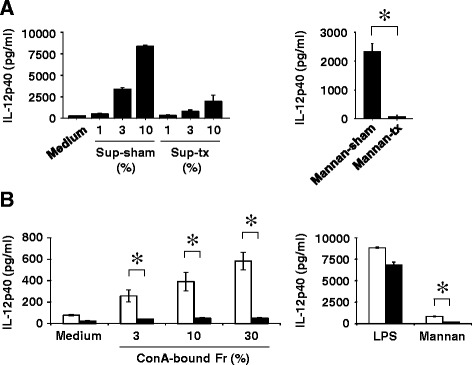
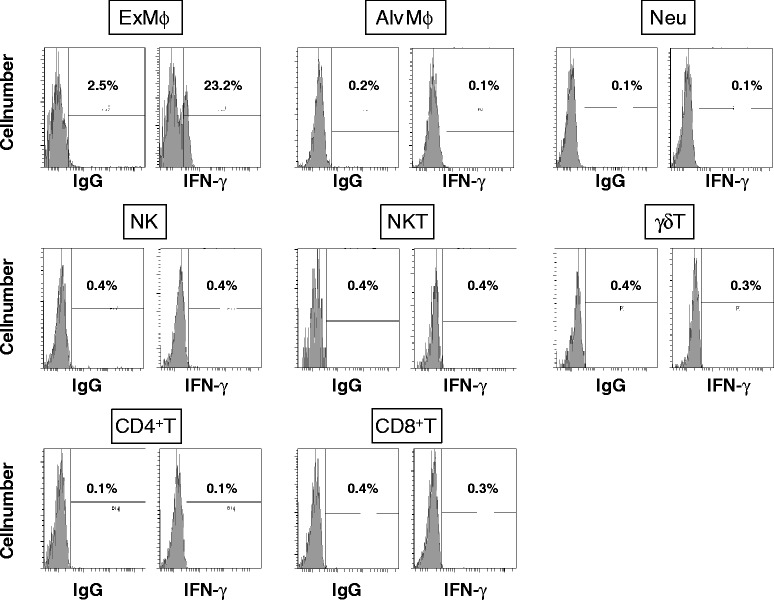
S. pneumonia-infected Dectin-2KO mice had a shorter survival time, larger bacterial burden and lower interferon gamma (IFN-γ) production in the lungs than WT mice. Although neutrophilic infiltration in the lungs was equivalent between Dectin-2KO mice and WT mice, S. pneumonia engulfment by neutrophils was attenuated in Dectin-2KO mice compared to WT mice. The anti-pneumococcal polysaccharide-specific IgG and IgG3 levels in BALF were lower in Dectin-2KO mice than in WT mice. When BM-DCs were stimulated with S. pneumoniae culture supernatant or its Concanavalin A (ConA)-bound fraction, IL-12 production was abrogated in Dectin-2KO mice compared to WT mice.
We demonstrated that Dectin-2 is intimately involved in the host defense against infection with a serotype 3 strain of S. pneumoniae. Dectin-2-dependent IL-12 production may contribute to IFN-γ synthesis and subsequent production of serotype-specific anti-capsular polysaccharide IgG after S. pneumoniae infection, which may promote S. pneumoniae bacterial opsonization for engulfment.
肺炎链球菌是社区获得性肺炎的主要致病细菌病原体,具有厚厚的多糖荚膜。宿主对这种细菌的防御是由感知细菌成分的先天免疫细胞的激活介导的。最近,C型凝集素受体(CLRs)在阐明病原体衍生多糖的识别机制方面备受关注。
在本研究中,我们首先比较了2型树突状细胞敲除(KO)小鼠和野生型(WT)小鼠肺部的临床病程和中性粒细胞聚集情况。小鼠经气管内感染肺炎链球菌3型菌株,并在支气管肺泡灌洗液(BALF)中评估中性粒细胞对肺炎链球菌的吞噬以及炎性细胞因子和抗肺炎球菌多糖特异性IgG水平。我们还研究了2型树突状细胞缺陷对用细菌成分刺激的骨髓来源树突状细胞(BM-DCs)产生白细胞介素(IL)-12的影响。
与WT小鼠相比,感染肺炎链球菌的2型树突状细胞敲除小鼠存活时间更短,肺部细菌载量更大,干扰素γ(IFN-γ)产生更低。虽然2型树突状细胞敲除小鼠和WT小鼠肺部的中性粒细胞浸润相当,但与WT小鼠相比,2型树突状细胞敲除小鼠中中性粒细胞对肺炎链球菌的吞噬减弱。2型树突状细胞敲除小鼠BALF中的抗肺炎球菌多糖特异性IgG和IgG3水平低于WT小鼠。当用肺炎链球菌培养上清液或其伴刀豆球蛋白A(ConA)结合部分刺激BM-DCs时,与WT小鼠相比,2型树突状细胞敲除小鼠中IL-12的产生被消除。
我们证明2型树突状细胞密切参与宿主对肺炎链球菌3型菌株感染的防御。2型树突状细胞依赖性IL-12的产生可能有助于肺炎链球菌感染后IFN-γ的合成以及随后血清型特异性抗荚膜多糖IgG的产生,这可能促进肺炎链球菌的调理吞噬作用。