Mobley Harry L T, Alteri Christopher J
Department of Microbiology and Immunology, University of Michigan Medical School, Ann Arbor, MI 48109, USA.
Pathogens. 2015 Dec 31;5(1):1. doi: 10.3390/pathogens5010001.
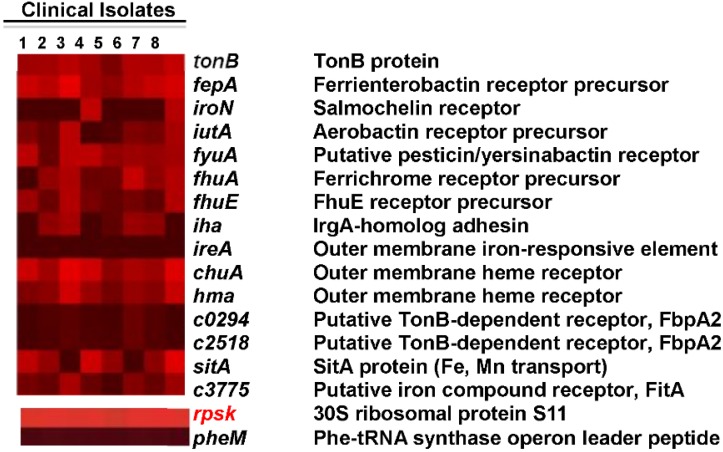
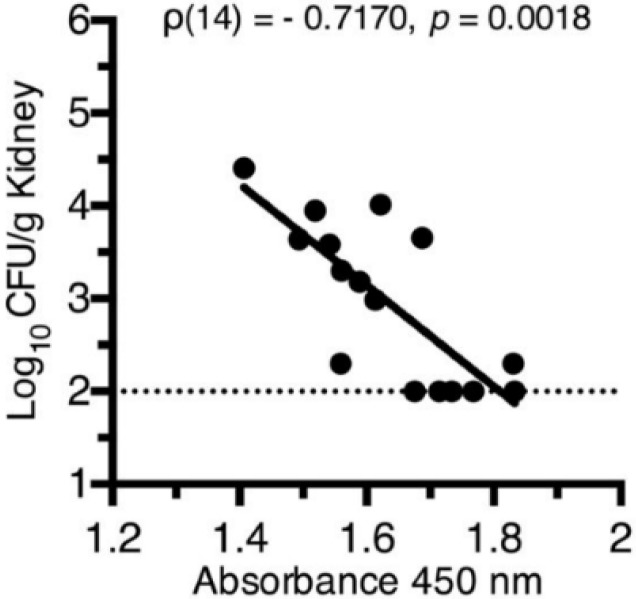
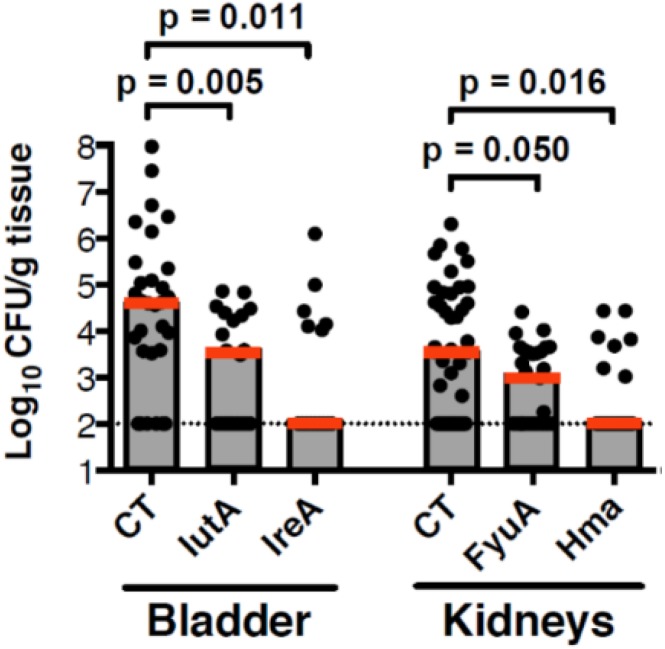
Urinary tract infection (UTI) is the second most common infection in humans after those involving the respiratory tract. This results not only in huge annual economic costs, but in decreased workforce productivity and high patient morbidity. Most infections are caused by uropathogenic Escherichia coli (UPEC). Antibiotic treatment is generally effective for eradication of the infecting strain; however, documentation of increasing antibiotic resistance, allergic reaction to certain pharmaceuticals, alteration of normal gut flora, and failure to prevent recurrent infections represent significant barriers to treatment. As a result, approaches to prevent UTI such as vaccination represent a gap that must be addressed. Our laboratory has made progress toward development of a preventive vaccine against UPEC. The long-term research goal is to prevent UTIs in women with recurrent UTIs. Our objective has been to identify the optimal combination of protective antigens for inclusion in an effective UTI vaccine, optimal adjuvant, optimal dose, and optimal route of delivery. We hypothesized that a multi-subunit vaccine elicits antibody that protects against experimental challenge with UPEC strains. We have systematically identified four antigens that can individually protect experimentally infected mice from colonization of the bladder and/or kidneys by UPEC when administered intranasally with cholera toxin (CT) as an adjuvant. To advance the vaccine for utility in humans, we will group the individual antigens, all associated with iron acquisition (IreA, Hma, IutA, FyuA), into an effective combination to establish a multi-subunit vaccine. We demonstrated for all four vaccine antigens that antigen-specific serum IgG represents a strong correlate of protection in vaccinated mice. High antibody titers correlate with low colony forming units (CFUs) of UPEC following transurethral challenge of vaccinated mice. However, the contribution of cell-mediated immunity cannot be ruled out and must be investigated experimentally. We have demonstrated that antibodies bind to the surface of UPEC expressing the antigens. Sera from women with and without histories of UTI have been tested for antibody levels to vaccine antigens. Our results validate iron acquisition as a target for vaccination against UTI.
尿路感染(UTI)是人类第二常见的感染,仅次于呼吸道感染。这不仅导致每年巨大的经济成本,还会降低劳动力生产率并使患者发病率升高。大多数感染由尿路致病性大肠杆菌(UPEC)引起。抗生素治疗通常对根除感染菌株有效;然而,抗生素耐药性增加、对某些药物的过敏反应、正常肠道菌群的改变以及预防复发性感染失败等问题,成为治疗的重大障碍。因此,诸如接种疫苗等预防UTI的方法存在必须填补的空白。我们的实验室在开发针对UPEC的预防性疫苗方面取得了进展。长期研究目标是预防复发性UTI女性的UTI。我们的目标是确定有效UTI疫苗中包含的保护性抗原的最佳组合、最佳佐剂、最佳剂量和最佳给药途径。我们假设多亚基疫苗能引发抗体,保护机体免受UPEC菌株的实验性攻击。我们系统地鉴定了四种抗原,当与霍乱毒素(CT)作为佐剂经鼻内给药时,它们能分别保护实验感染的小鼠免受UPEC在膀胱和/或肾脏的定植。为了推进该疫苗在人类中的应用,我们将所有与铁摄取相关的单个抗原(IreA、Hma、IutA、FyuA)组合成一种有效的组合,以建立一种多亚基疫苗。我们证明,对于所有四种疫苗抗原,抗原特异性血清IgG是接种疫苗小鼠中保护作用的强相关指标。高抗体滴度与接种疫苗小鼠经尿道攻击后UPEC的低菌落形成单位(CFU)相关。然而,细胞介导免疫的作用不能排除,必须通过实验进行研究。我们已经证明抗体与表达这些抗原的UPEC表面结合。对有和没有UTI病史的女性血清进行了针对疫苗抗原的抗体水平检测。我们的结果证实铁摄取是UTI疫苗接种的一个靶点。