Carbonari Caio A, Latorre Débora O, Gomes Giovanna L G C, Velini Edivaldo D, Owens Daniel K, Pan Zhiqiang, Dayan Franck E
Faculty of Agronomic Sciences, São Paulo State University, Botucatu, SP, Brazil.
USDA-ARS Natural Products Utilization Research Unit, University, MS, 38677, USA.
Planta. 2016 Apr;243(4):925-33. doi: 10.1007/s00425-015-2457-3. Epub 2016 Jan 5.
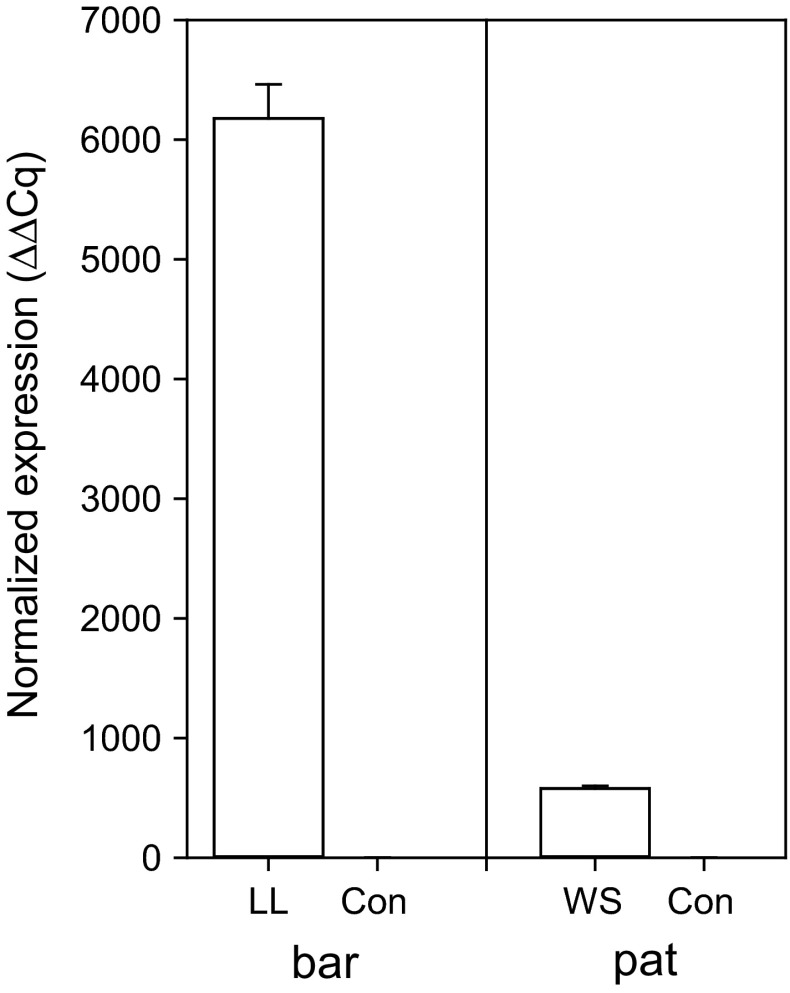
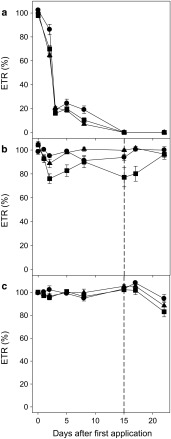
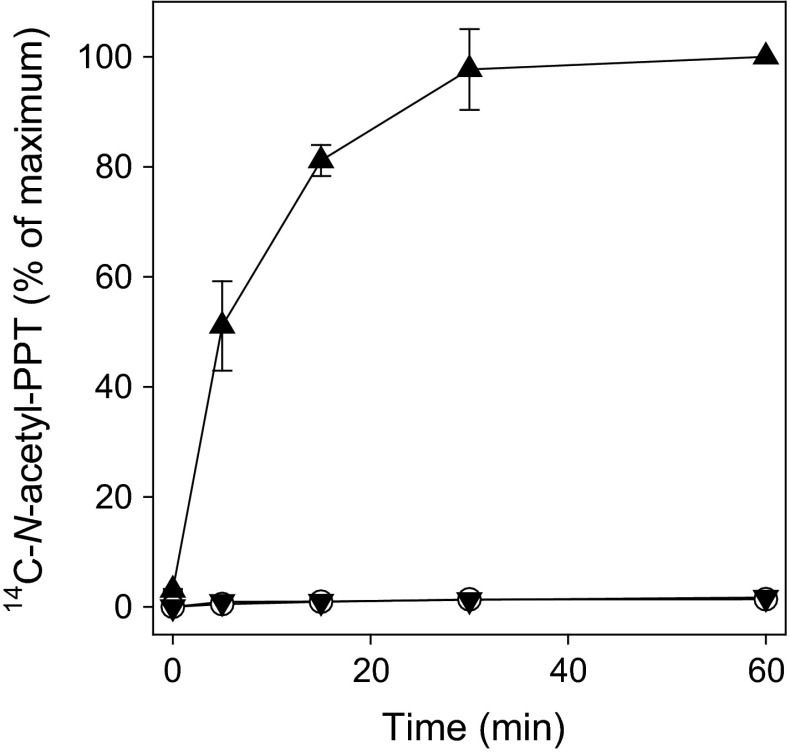
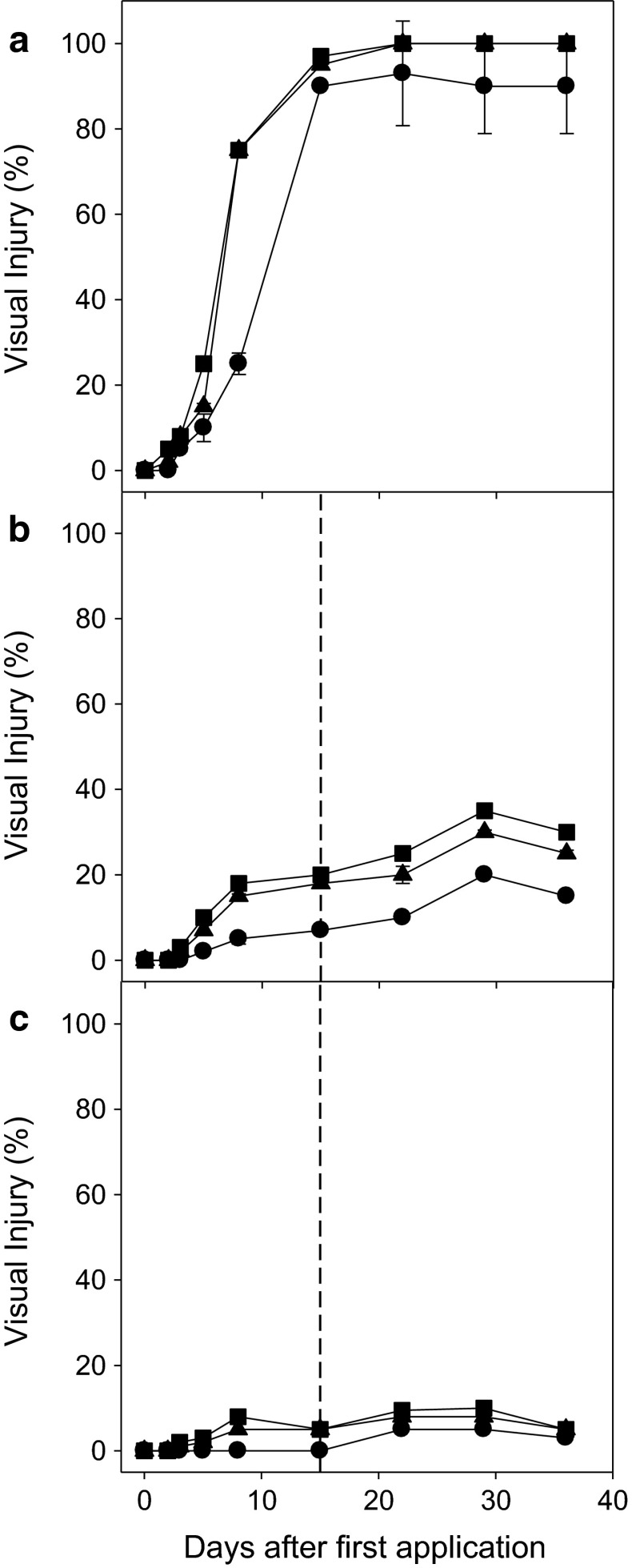
Insertion of the gene encoding phosphinothricin acetyltransferase (PAT) has resulted in cotton plants resistant to the herbicide glufosinate. However, the lower expression and commensurate reduction in PAT activity is a key factor in the low level of injury observed in the WideStrike(®) cotton and relatively high level of resistance observed in LibertyLink(®) cotton. LibertyLink(®) cotton cultivars are engineered for glufosinate resistance by overexpressing the bar gene that encodes phosphinothricin acetyltransferase (PAT), whereas the insect-resistant WideStrike(®) cultivars were obtained using the similar pat gene as a selectable marker. The latter cultivars carry some level of resistance to glufosinate which enticed certain farmers to select this herbicide for weed control with WideStrike(®) cotton. The potency of glufosinate on conventional FM 993, insect-resistant FM 975WS, and glufosinate-resistant IMACD 6001LL cotton cultivars was evaluated and contrasted to the relative levels of PAT expression and activity. Conventional cotton was sensitive to glufosinate. The single copy of the pat gene present in the insect-resistant cultivar resulted in very low RNA expression of the gene and undetectable PAT activity in in vitro assays. Nonetheless, the presence of this gene provided a good level of resistance to glufosinate in terms of visual injury and effect on photosynthetic electron transport. The injury is proportional to the amount of ammonia accumulation. The strong promoter associated with bar expression in the glufosinate-resistant cultivar led to high RNA expression levels and PAT activity which protected this cultivar from glufosinate injury. While the insect-resistant cultivar demonstrated a good level of resistance to glufosinate, its safety margin is lower than that of the glufosinate-resistant cultivar. Therefore, farmers should be extremely careful in using glufosinate on cultivars not expressly designed and commercialized as resistant to this herbicide.
插入编码草丁膦乙酰转移酶(PAT)的基因已培育出对除草剂草铵膦具有抗性的棉花植株。然而,PAT表达水平较低以及相应的活性降低是在WideStrike®棉花中观察到低水平损伤以及在LibertyLink®棉花中观察到相对较高抗性水平的关键因素。LibertyLink®棉花品种通过过量表达编码草丁膦乙酰转移酶(PAT)的bar基因来设计抗草铵膦特性,而抗虫的WideStrike®品种则使用类似的pat基因作为选择标记。后一类品种对草铵膦具有一定程度的抗性,这促使一些农民选择使用这种除草剂来控制WideStrike®棉花田中的杂草。评估了草铵膦对常规FM 993、抗虫FM 975WS和抗草铵膦IMACD 6001LL棉花品种的效力,并与PAT表达和活性的相对水平进行了对比。常规棉花对草铵膦敏感。抗虫品种中存在的单拷贝pat基因导致该基因的RNA表达水平非常低,并且在体外试验中检测不到PAT活性。尽管如此,就视觉损伤和对光合电子传递的影响而言,该基因的存在赋予了对草铵膦良好的抗性水平。损伤程度与氨积累量成正比。抗草铵膦品种中与bar表达相关的强启动子导致高RNA表达水平和PAT活性,从而保护该品种免受草铵膦损伤。虽然抗虫品种对草铵膦表现出良好的抗性水平,但其安全边际低于抗草铵膦品种。因此,农民在未明确设计和商业化用于抗这种除草剂的品种上使用草铵膦时应格外小心。