Sahtoe Danny D, van Dijk Willem J, Ekkebus Reggy, Ovaa Huib, Sixma Titia K
Division of Biochemistry and Cancer Genomics Center, Netherlands Cancer Institute, Plesmanlaan 121, 1066 CX Amsterdam, The Netherlands.
Division of Cell Biology II, Netherlands Cancer Institute, Plesmanlaan 121, 1066CX Amsterdam, The Netherlands.
Nat Commun. 2016 Jan 7;7:10292. doi: 10.1038/ncomms10292.
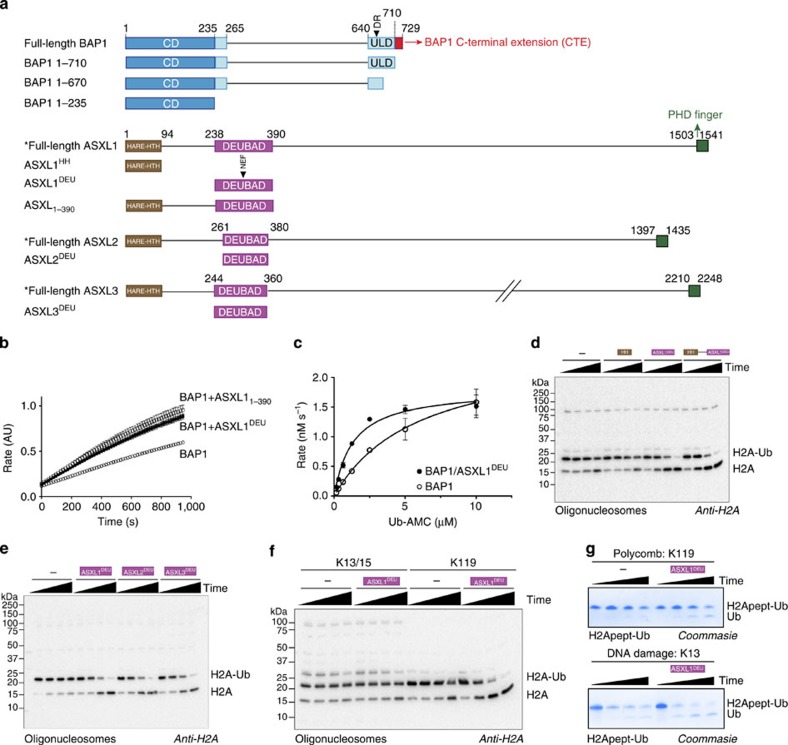
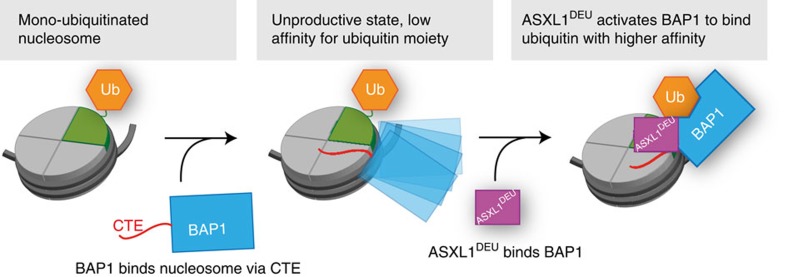
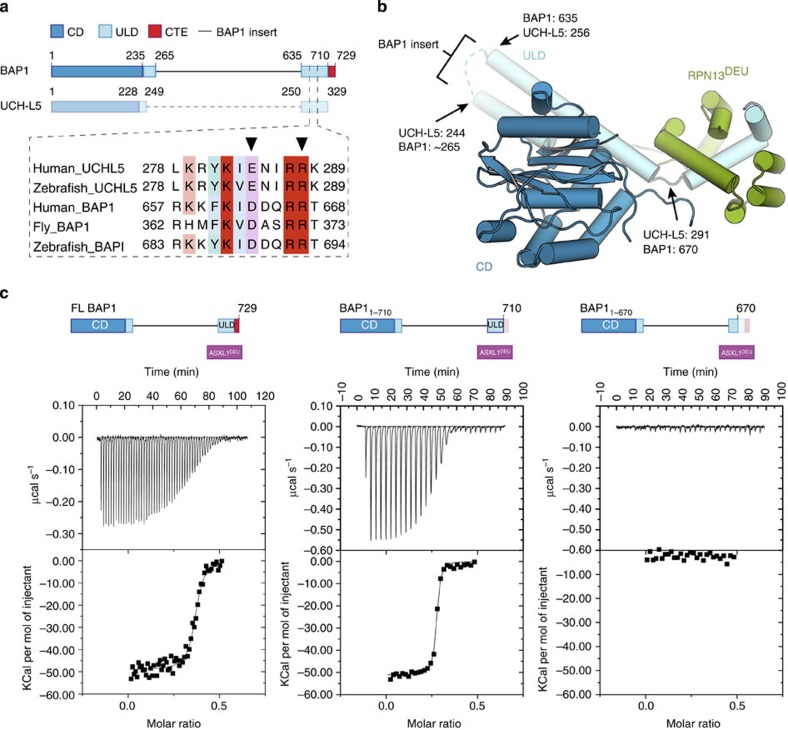
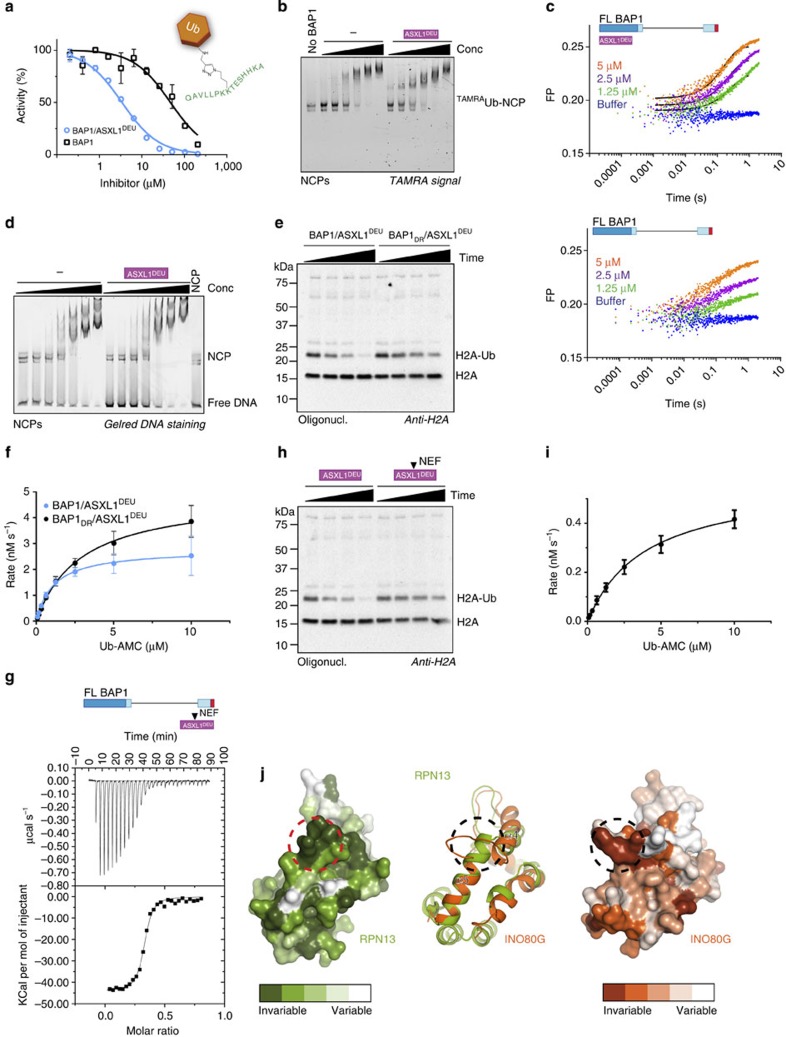
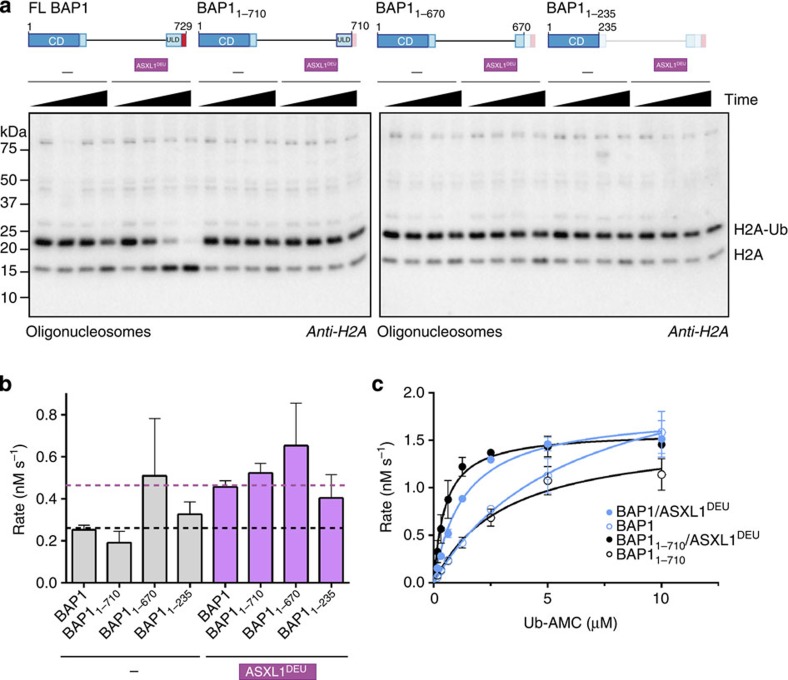
The deubiquitinating enzyme BAP1 is an important tumor suppressor that has drawn attention in the clinic since its loss leads to a variety of cancers. BAP1 is activated by ASXL1 to deubiquitinate mono-ubiquitinated H2A at K119 in Polycomb gene repression, but the mechanism of this reaction remains poorly defined. Here we show that the BAP1 C-terminal extension is important for H2A deubiquitination by auto-recruiting BAP1 to nucleosomes in a process that does not require the nucleosome acidic patch. This initial encounter-like complex is unproductive and needs to be activated by the DEUBAD domains of ASXL1, ASXL2 or ASXL3 to increase BAP1's affinity for ubiquitin on H2A, to drive the deubiquitination reaction. The reaction is specific for Polycomb modifications of H2A as the complex cannot deubiquitinate the DNA damage-dependent ubiquitination at H2A K13/15. Our results contribute to the molecular understanding of this important tumor suppressor.
去泛素化酶BAP1是一种重要的肿瘤抑制因子,自其缺失会导致多种癌症以来,它在临床上受到了关注。在多梳基因抑制过程中,BAP1被ASXL1激活,以去除K119处单泛素化的H2A上的泛素,但该反应的机制仍不清楚。在这里,我们表明BAP1的C末端延伸对于H2A去泛素化很重要,它通过在一个不需要核小体酸性补丁的过程中自动将BAP1招募到核小体上。这种初始的类似相遇的复合物是无活性的,需要被ASXL1、ASXL2或ASXL3的DEUBAD结构域激活,以增加BAP1对H2A上泛素的亲和力,从而驱动去泛素化反应。该反应对H2A的多梳修饰具有特异性,因为该复合物不能去除H2A K13/15处依赖DNA损伤的泛素化。我们的结果有助于从分子层面理解这种重要的肿瘤抑制因子。