Molfino Nestor A, Kuna Piotr, Leff Jonathan A, Oh Chad K, Singh Dave, Chernow Marlene, Sutton Brian, Yarranton Geoffrey
Drug Development Consultant, San Francisco, California, USA.
Barlicki University Hospital, Medical University of Lodz, Lodz, Poland.
BMJ Open. 2016 Jan 6;6(1):e007709. doi: 10.1136/bmjopen-2015-007709.
We wished to evaluate the effects of an antigranulocyte-macrophage colony-stimulating factor monoclonal antibody (KB003) on forced expiratory volume in 1 s (FEV1), asthma control and asthma exacerbations in adult asthmatics inadequately controlled by long-acting bronchodilators and inhaled/oral corticosteroids.
47 ambulatory asthma care centres globally.
Change in FEV1 at week 24.
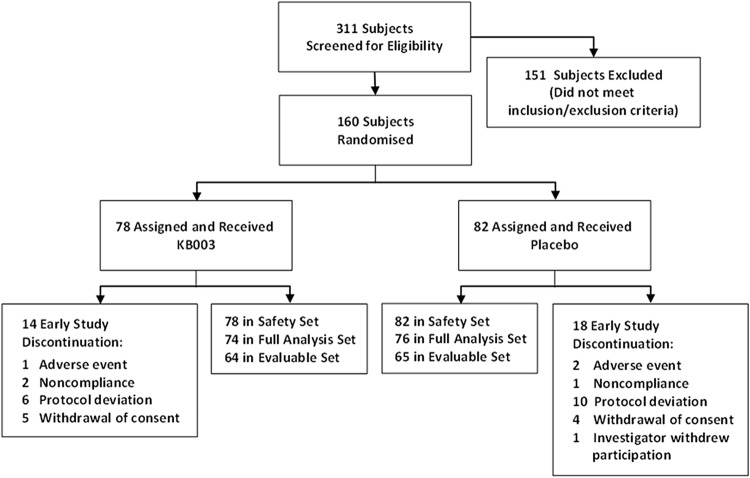
311 were screened, 160 were randomised and 129 completed the study.
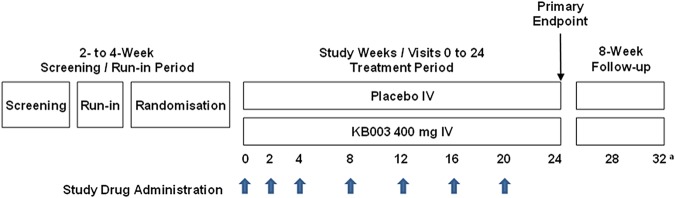
7 intravenous infusions of either 400 mg KB003 or placebo at baseline and weeks 2, 4, 8, 12, 16 and 20.
FEV1 at week 24, asthma control, exacerbation rates and safety in all participants as well as prespecified subgroups.
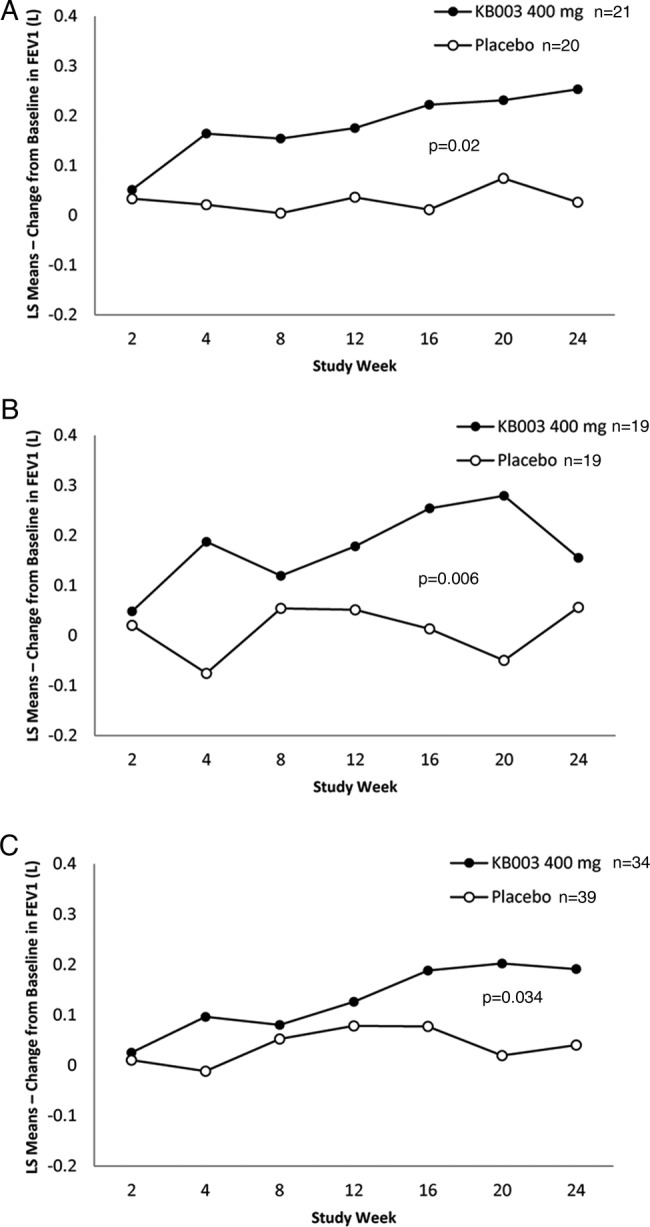
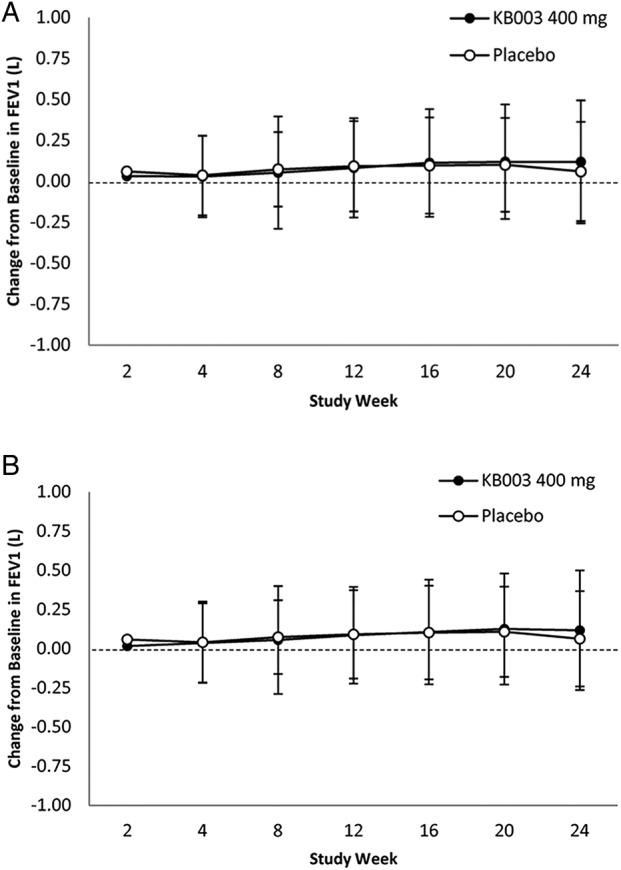
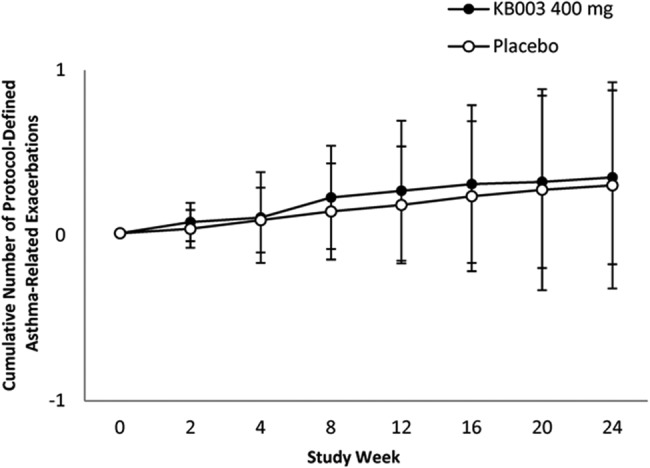
In the KB003 treated group, FEV1 at week 24 improved to 118 mL compared with 54 mL in the placebo group (p=0.224). However, FEV1 improved to 253 vs 26 mL at week 24 (p=0.02) in eosinophilic asthmatics (defined as >300 peripheral blood eosinophils/mL at baseline) and comparable improvements were seen at weeks 20 (p=0.034) and 24 (p=0.077) in patients with FEV1 reversibility ≥ 20% at baseline and at weeks 4 (p=0.029), 16 (p=0.018) and 20 (p=0.006) in patients with prebronchodilator FEV1 ≤ 50% predicted at baseline. There were no effects on asthma control or exacerbation rates. The most frequent adverse events in the KB003 group were rhinosinusitis and headache. There was no significant difference in antidrug antibody response between placebo and treated groups. There were no excess infections or changes in biomarkers known to be associated with the development of pulmonary alveolar proteinosis.
Higher doses and/or further asthma phenotyping may be required in future studies with KB003.
NCT01603277; Results.
我们希望评估抗粒细胞巨噬细胞集落刺激因子单克隆抗体(KB003)对长效支气管扩张剂和吸入/口服皮质类固醇治疗效果欠佳的成年哮喘患者一秒用力呼气量(FEV1)、哮喘控制情况及哮喘急性发作的影响。
全球47个门诊哮喘护理中心。
第24周时FEV1的变化。
311人接受筛查,160人随机分组,129人完成研究。
在基线期及第2、4、8、12、16和20周静脉输注7次,每次输注400mg KB003或安慰剂。
所有参与者以及预先指定亚组在第24周时的FEV1、哮喘控制情况、急性发作率和安全性。
在KB003治疗组中,第24周时FEV1改善至118mL,而安慰剂组为54mL(p=0.224)。然而,嗜酸性粒细胞性哮喘患者(定义为基线时外周血嗜酸性粒细胞>300/mL)在第24周时FEV1改善至253mL,而安慰剂组为26mL(p=0.02);基线时FEV1可逆性≥20%的患者在第20周(p=0.034)和第24周(p=0.077)有类似改善;基线时支气管扩张剂前FEV1≤预测值50%的患者在第4周(p=0.029)、第16周(p=0.018)和第20周(p=0.006)有类似改善。对哮喘控制情况或急性发作率无影响。KB003组最常见的不良事件是鼻窦炎和头痛。安慰剂组与治疗组之间抗药抗体反应无显著差异。未出现额外感染,也未出现已知与肺泡蛋白沉积症发生相关的生物标志物变化。
未来使用KB003进行研究可能需要更高剂量和/或进一步的哮喘表型分析。
NCT01603277;结果。