Xu Min-Juan, Wang Jia-Hua, Bu Xu-Liang, Yu He-Lin, Li Peng, Ou Hong-Yu, He Ying, Xu Fang-Di, Hu Xiao-Yan, Zhu Xiao-Mei, Ao Ping, Xu Jun
Ministry of Education Key Laboratory of Systems Biomedicine, Shanghai Centre for Systems Biomedicine, Shanghai Jiao Tong University, Shanghai 200240, China.
State Key Laboratory of Microbial Metabolism and School of Life Sciences and Biotechnology, Shanghai Jiao Tong University, Shanghai 200240, China.
Sci Rep. 2016 Jan 8;6:18977. doi: 10.1038/srep18977.
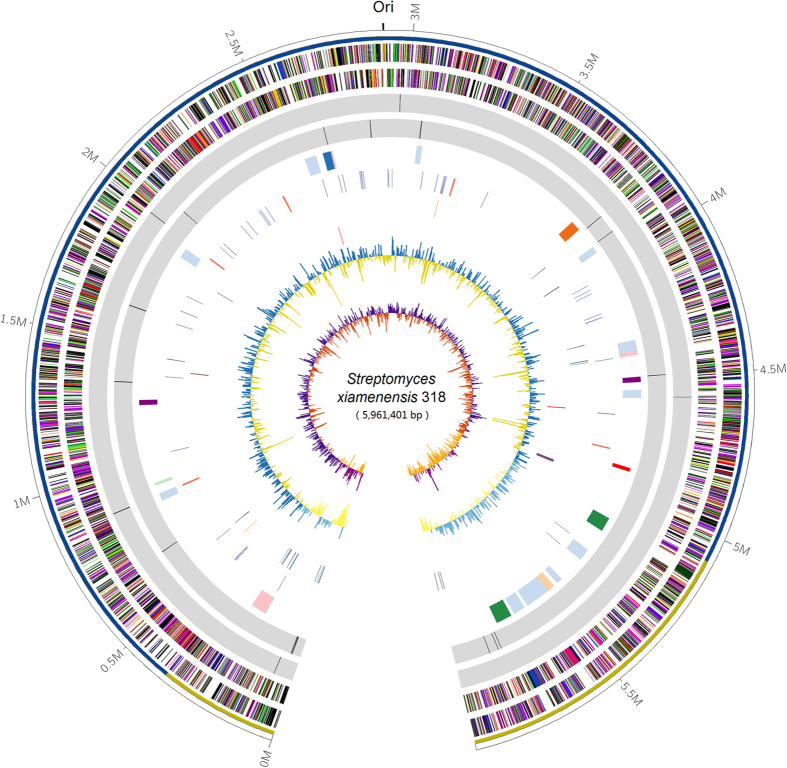
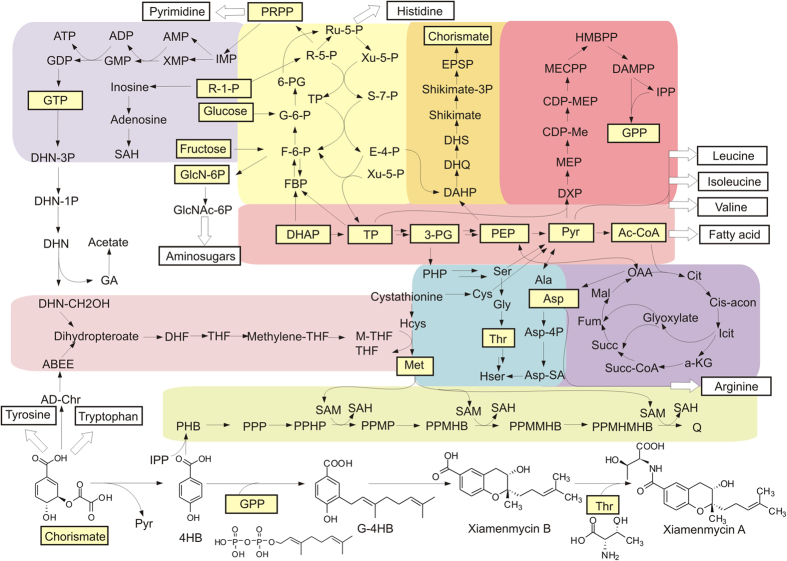
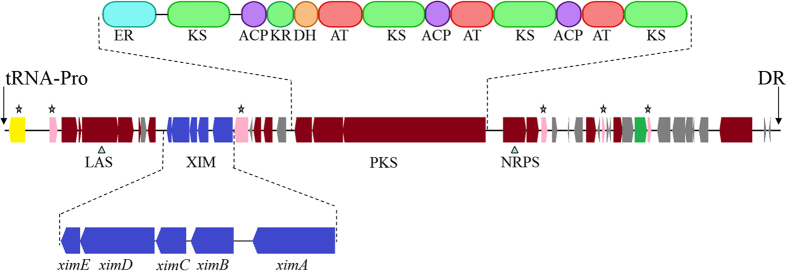
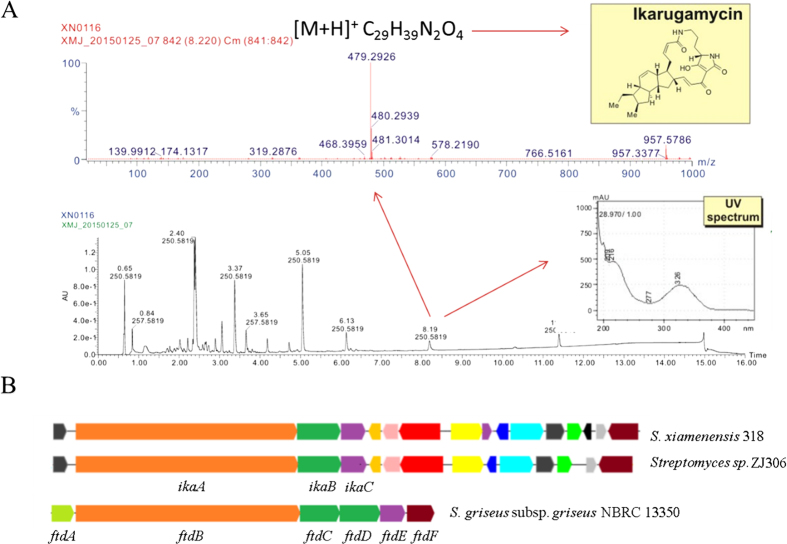
Streptomyces xiamenensis 318, a moderate halophile isolated from a mangrove sediment, produces the anti-fibrotic compound xiamenmycin. The whole genome sequence of strain 318 was obtained through long-read single-molecule real-time (SMRT) sequencing, high-throughput Illumina HiSeq and 454 pyrosequencing technologies. The assembled genome comprises a linear chromosome as a single contig of 5,961,401-bp, which is considerably smaller than other reported complete genomes of the genus Streptomyces. Based on the antiSMASH pipeline, a total of 21 gene clusters were predicted to be involved in secondary metabolism. The gene cluster responsible for the biosynthesis of xiamenmycin resides in a strain-specific 61,387-bp genomic island belonging to the left-arm region. A core metabolic network consisting of 104 reactions that supports xiamenmycin biosynthesis was constructed to illustrate the necessary precursors derived from the central metabolic pathway. In accordance with the finding of a putative ikarugamycin gene cluster in the genome, the targeted chemical profiling of polycyclic tetramate macrolactams (PTMs) resulted in the identification of ikarugamycin. A successful genome mining for bioactive molecules with different skeletons suggests that the naturally minimized genome of S. xiamenensis 318 could be used as a blueprint for constructing a chassis cell with versatile biosynthetic capabilities for the production of secondary metabolites.
厦门链霉菌318是从红树林沉积物中分离出的中度嗜盐菌,可产生抗纤维化化合物厦门霉素。通过长读长单分子实时(SMRT)测序、高通量Illumina HiSeq和454焦磷酸测序技术获得了菌株318的全基因组序列。组装后的基因组包含一条线性染色体,作为一个5,961,401 bp的单重叠群,比其他已报道的链霉菌属完整基因组小得多。基于antiSMASH管道,预测共有21个基因簇参与次级代谢。负责厦门霉素生物合成的基因簇位于左臂区域一个61,387 bp的菌株特异性基因组岛中。构建了一个由104个反应组成的核心代谢网络,以支持厦门霉素的生物合成,说明来自中心代谢途径的必要前体。根据基因组中假定的斑鸠霉素基因簇的发现,对多环四胺大环内酯(PTM)进行靶向化学分析,鉴定出了斑鸠霉素。成功地对具有不同骨架的生物活性分子进行基因组挖掘表明,厦门链霉菌318天然最小化的基因组可作为构建具有多功能生物合成能力的底盘细胞以生产次级代谢产物的蓝图。