Van Es Simone L, Kumar Rakesh K, Pryor Wendy M, Salisbury Elizabeth L, Velan Gary M
Department of Pathology, School of Medical Sciences, The University of New South Wales, Sydney, NSW 2052, Australia.
Royal College of Pathologists of Australasia, Surry Hills, 2010, Australia.
Diagn Pathol. 2016 Jan 8;11:1. doi: 10.1186/s13000-016-0452-z.
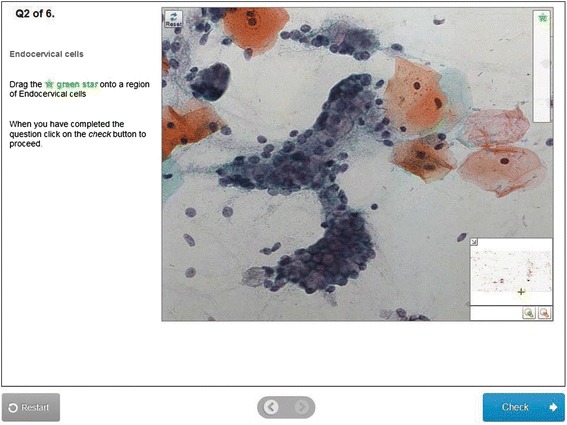
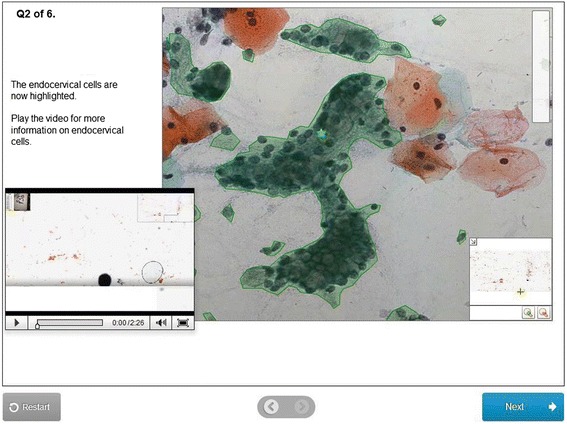
Diagnostic cytopathology is an essential part of clinical decision-making. However, due to a combination of factors including curriculum reform and shortage of pathologists to teach introductory cytopathology, this area of pathology receives little or no formal attention in most medical school curricula. We have previously described the successful use of efficient and effective digital learning resources, including whole slide images (WSI) and virtual microscopy adaptive tutorials (VMATs), to teach cytopathology to pathology specialist trainees - a group that had prior exposure to cytopathology in their day to day practice. Consequently, in the current study we attempted to demonstrate the efficiency and efficacy of this eLearning resource in a cohort of senior medical students that was completely naïve to the subject matter (cytopathology).
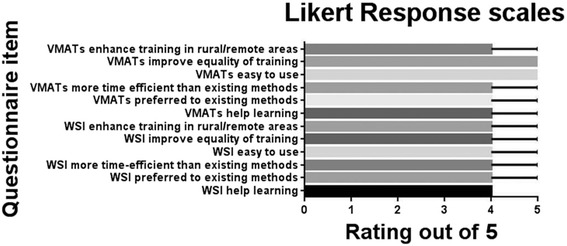
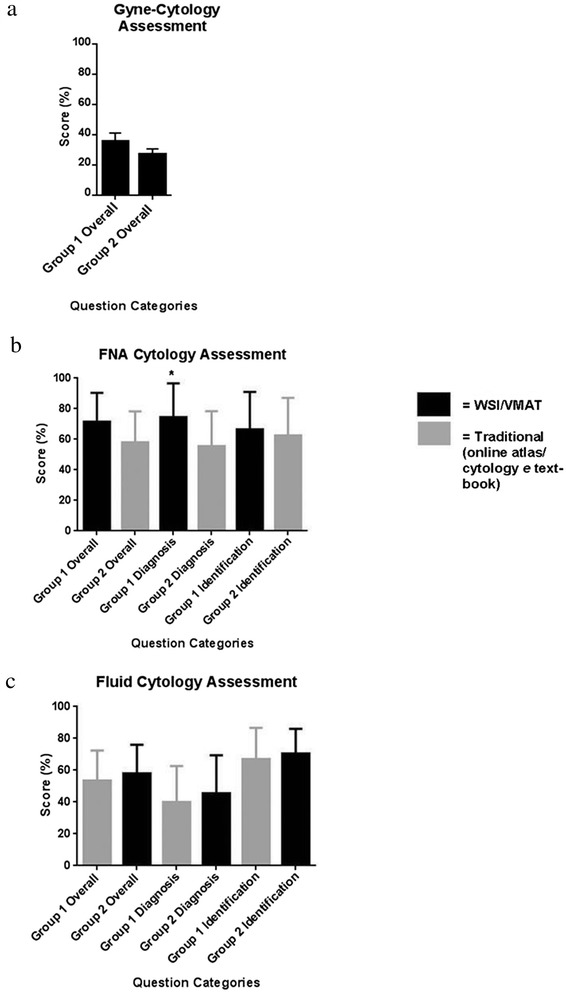
We evaluated both the quantitative and qualitative impact of these digital educational materials for learning cytopathology compared with existing resources (e-textbooks and online atlases). The senior medical students were recruited from The University of New South Wales Australia for a randomized cross-over trial. Online assessments, administered after each arm of the trial, contained questions which related directly to a whole slide image. Two categories of questions in the assessments (focusing on either diagnosis or identification of cellular features) were utilized to determine efficacy. User experience and perceptions of efficiency were evaluated using online questionnaires containing Likert scale items and open-ended questions.
For this cohort of senior medical students, virtual microscopy adaptive tutorials (VMATs) proved to be at least as effective as existing digital resources for learning cytopathology. Importantly, virtual microscopy adaptive tutorials had superior efficacy in facilitating accurate diagnosis on whole slide images. Student perceptions of VMATs were positive, particularly regarding the immediate feedback, interactivity and equity of learning which this learning resource provides.
Virtual microscopy adaptive tutorials have the potential to improve the efficacy of learning microscopic pathology for medical students. The enhanced learning experience provided by these eLearning tools merits further investigation of their utility for other cohorts, including specialist trainees.
诊断性细胞病理学是临床决策的重要组成部分。然而,由于包括课程改革和讲授细胞病理学入门知识的病理学家短缺等多种因素的综合影响,在大多数医学院校课程中,这一病理学领域很少或根本没有得到正式关注。我们之前曾描述过成功使用高效且有效的数字学习资源,包括全切片图像(WSI)和虚拟显微镜自适应教程(VMATs),向病理学专科培训学员教授细胞病理学,这些学员在日常实践中之前已经接触过细胞病理学。因此,在当前研究中,我们试图在一群对该主题(细胞病理学)完全陌生的高年级医学生中证明这种电子学习资源的效率和效果。
与现有资源(电子教科书和在线图谱)相比,我们评估了这些数字教育材料对学习细胞病理学的定量和定性影响。从澳大利亚新南威尔士大学招募高年级医学生进行随机交叉试验。在试验的每个阶段后进行在线评估,评估中包含与全切片图像直接相关的问题。评估中的两类问题(侧重于细胞特征的诊断或识别)用于确定效果。使用包含李克特量表项目和开放式问题的在线问卷评估用户体验和效率感知。
对于这群高年级医学生来说,虚拟显微镜自适应教程(VMATs)在学习细胞病理学方面至少与现有数字资源一样有效。重要的是,虚拟显微镜自适应教程在促进对全切片图像进行准确诊断方面具有更高的效果。学生对VMATs的看法是积极的,特别是关于这种学习资源提供的即时反馈、互动性和学习公平性。
虚拟显微镜自适应教程有潜力提高医学生学习微观病理学的效果。这些电子学习工具提供的增强学习体验值得进一步研究它们对包括专科培训学员在内的其他群体的效用。