Nakamaru Yoshinobu, Akahoshi Fumihiko, Iijima Hiroaki, Hisanaga Noriko, Kume Toshiyuki
Clinical Pharmacology Department, Development Division, Mitsubishi Tanabe Pharma Co, Chuo-ku, Tokyo, Japan.
Research Unit C, Research Division, Mitsubishi Tanabe Pharma Co, Toda, Saitama, Japan.
Biopharm Drug Dispos. 2016 Apr;37(3):142-155. doi: 10.1002/bdd.2003. Epub 2016 Jan 8.
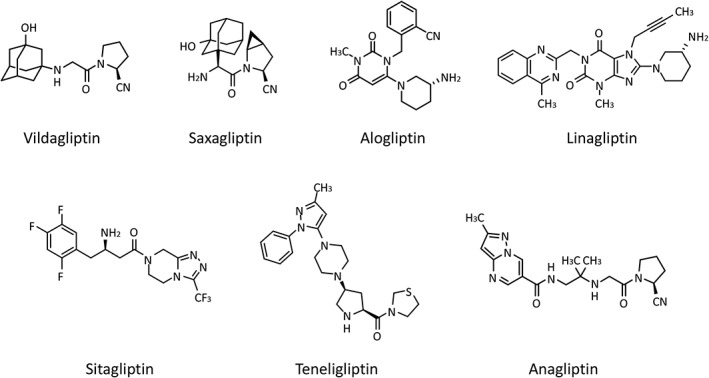
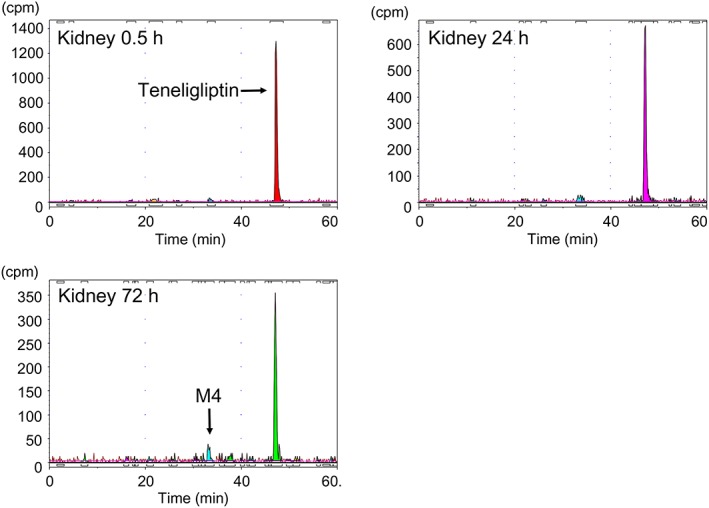
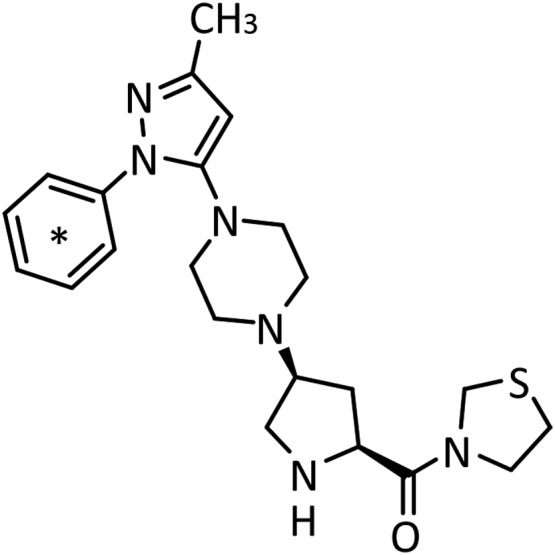
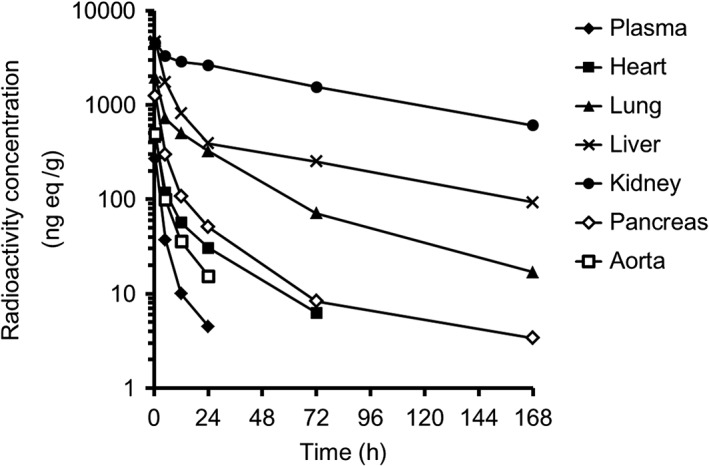
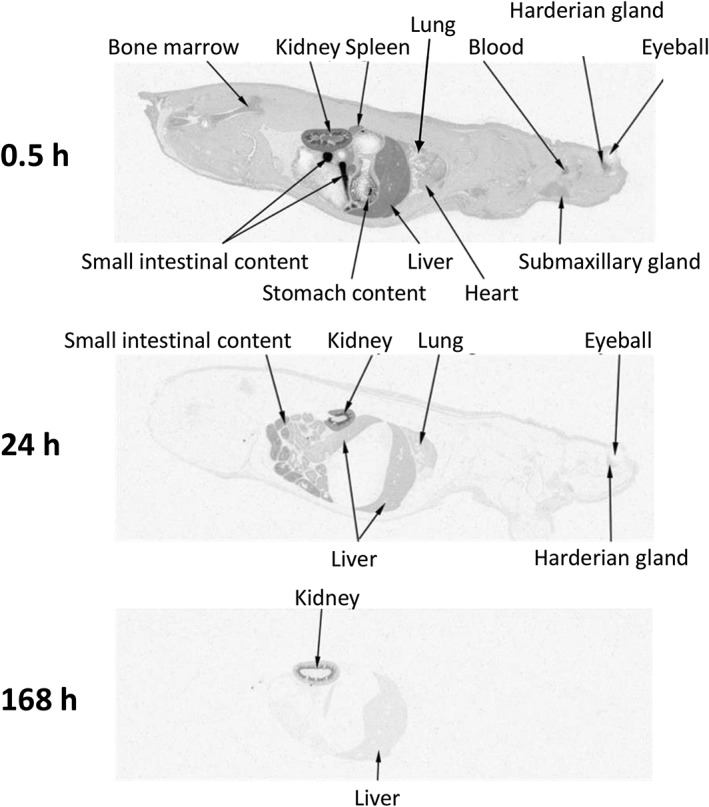
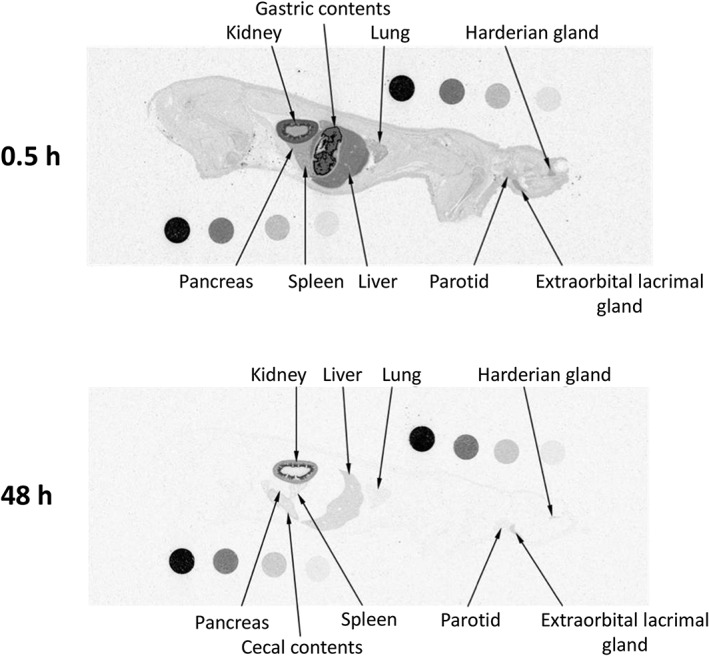
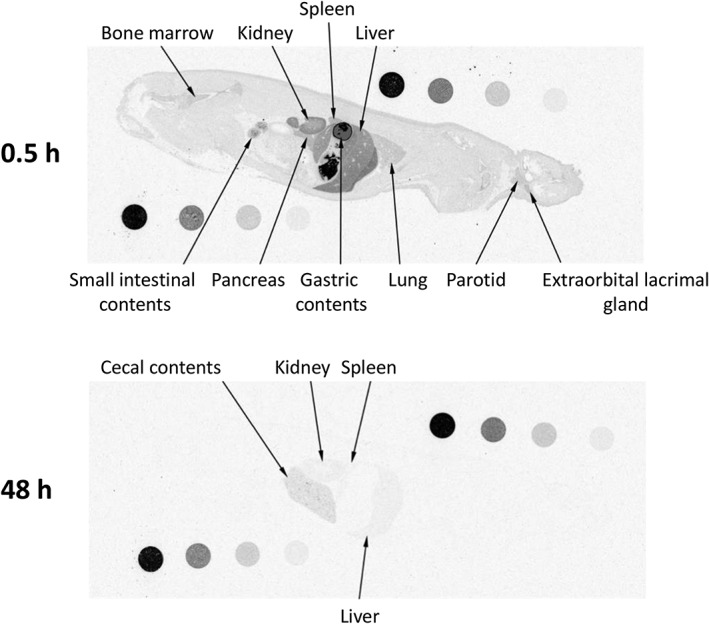
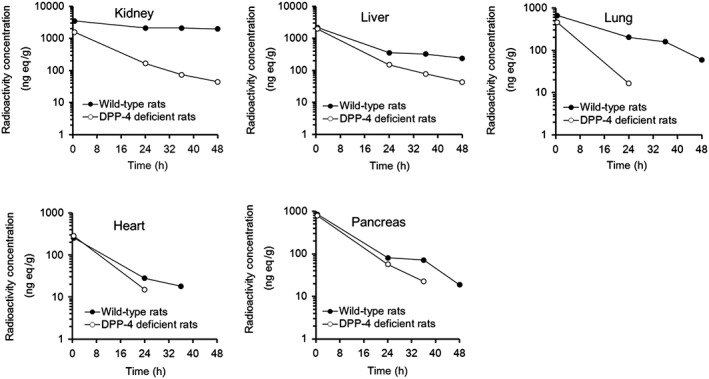
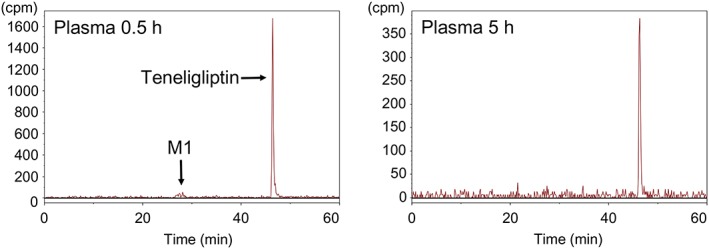
We investigated the tissue distribution of teneligliptin, a dipeptidyl peptidase (DPP)-4 inhibitor, in rats, and compared it with tissue distributions previously reported for other DPP-4 inhibitors. Following the oral administration of [ C]teneligliptin to Sprague-Dawley rats, it was predominantly distributed to the kidney and liver, followed by the lung, spleen, and pituitary gland. The elimination half-life (t ) of [ C]teneligliptin was 68.3 and 69.0 h in the kidney and liver, respectively; these values were about 10 times greater than the plasma t . Of note, the elimination of [ C]teneligliptin from tissues with high DPP-4 activity (kidney, liver, and lung) was slower in wild-type rats than in DPP-4-deficient rats, especially in the kidney. By contrast, in the heart and pancreas, which weakly express DPP-4, we observed no difference in [ C]teneligliptin concentrations between the two animal strains. In the kidney, most radioactivity was attributable to unchanged teneligliptin from 0.5 to 72 h after administration. The marked difference in the distribution of [ C]teneligliptin between the two strains suggests that the high binding affinity of teneligliptin for DPP-4 is involved in its tissue distribution. The currently marketed DPP-4 inhibitors are highly distributed to the liver, kidney, and lung, but the extent of tissue distribution varies greatly among the drugs. The differences in the tissue distributions of DPP-4 inhibitors might be related to differences in their pleiotropic effects. This article is protected by copyright. All rights reserved.
我们研究了二肽基肽酶(DPP)-4抑制剂替格列汀在大鼠体内的组织分布,并将其与先前报道的其他DPP-4抑制剂的组织分布进行了比较。给Sprague-Dawley大鼠口服[ C]替格列汀后,它主要分布于肾脏和肝脏,其次是肺、脾脏和垂体。[ C]替格列汀在肾脏和肝脏中的消除半衰期(t )分别为68.3和69.0小时;这些值比血浆t 大约高10倍。值得注意的是,野生型大鼠体内具有高DPP-4活性的组织(肾脏、肝脏和肺)中[ C]替格列汀的消除速度比DPP-4缺陷型大鼠慢,尤其是在肾脏中。相比之下,在心脏和胰腺中,DPP-4表达较弱,我们观察到两种动物品系之间[ C]替格列汀浓度没有差异。在肾脏中,给药后0.5至72小时内,大部分放射性归因于未变化的替格列汀。两种品系之间[ C]替格列汀分布的显著差异表明,替格列汀对DPP-4的高结合亲和力涉及其组织分布。目前上市的DPP-4抑制剂在肝脏、肾脏和肺中分布较高,但不同药物的组织分布程度差异很大。DPP-4抑制剂组织分布的差异可能与其多效性作用的差异有关。本文受版权保护。保留所有权利。