Li Xiao-Li, Li Heng, Zhang Min, Xu Hua, Yue Long-Tao, Zhang Xin-Xin, Wang Shan, Wang Cong-Cong, Li Yan-Bin, Dou Ying-Chun, Duan Rui-Sheng
Department of Neurology, Shandong Provincial Qianfoshan Hospital, Shandong University, Jinan, 250014, People's Republic of China.
Department of Neurology, The Central Hospital of Taian, Taian, 271000, People's Republic of China.
J Neuroinflammation. 2016 Jan 12;13:8. doi: 10.1186/s12974-016-0475-0.
Previously, we have demonstrated that spleen-derived dendritic cells (DCs) modified with atorvastatin suppressed immune responses of experimental autoimmune myasthenia gravis (EAMG). However, the effects of exosomes derived from atorvastatin-modified bone marrow DCs (BMDCs) (statin-Dex) on EAMG are still unknown.
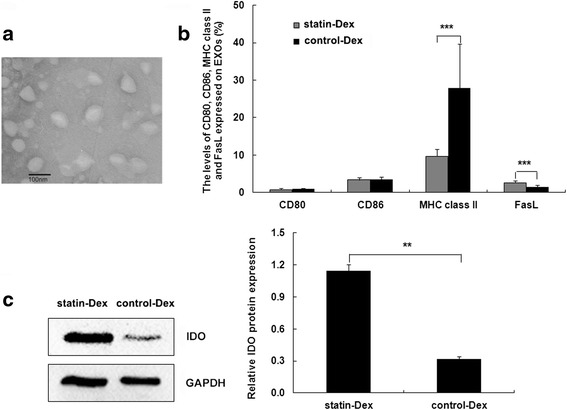
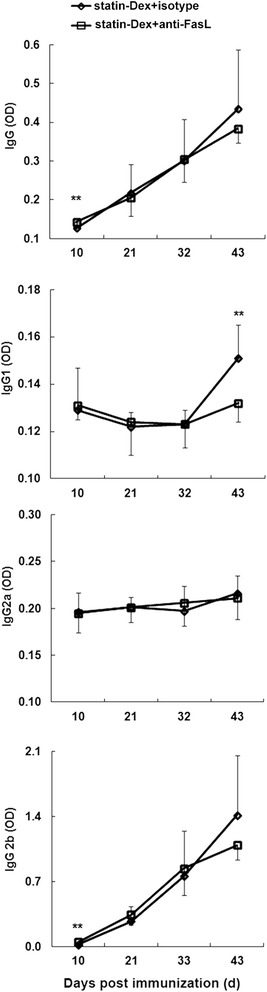
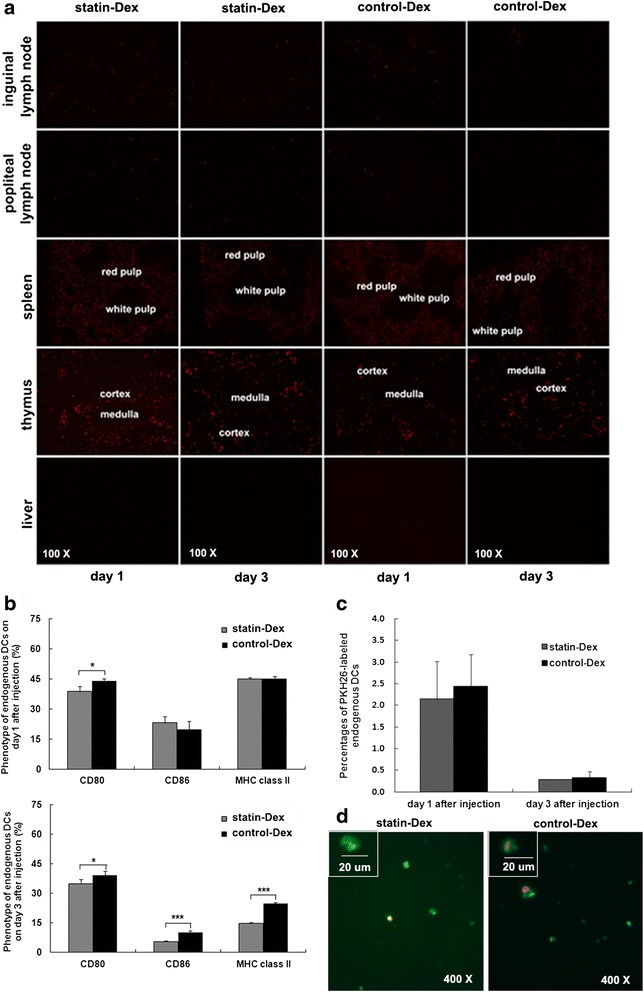
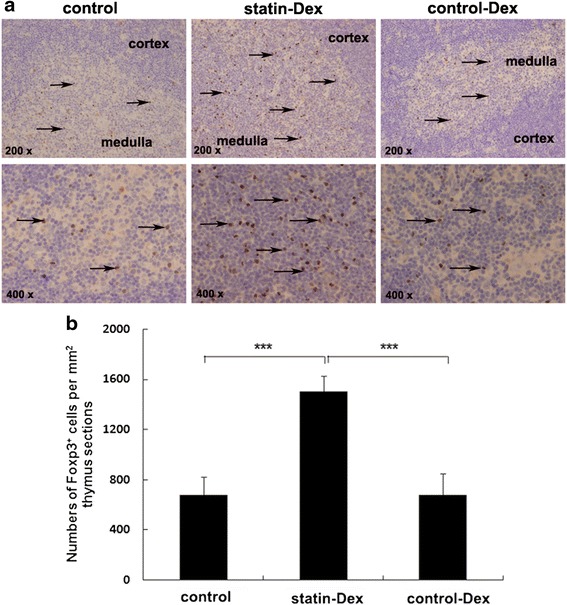
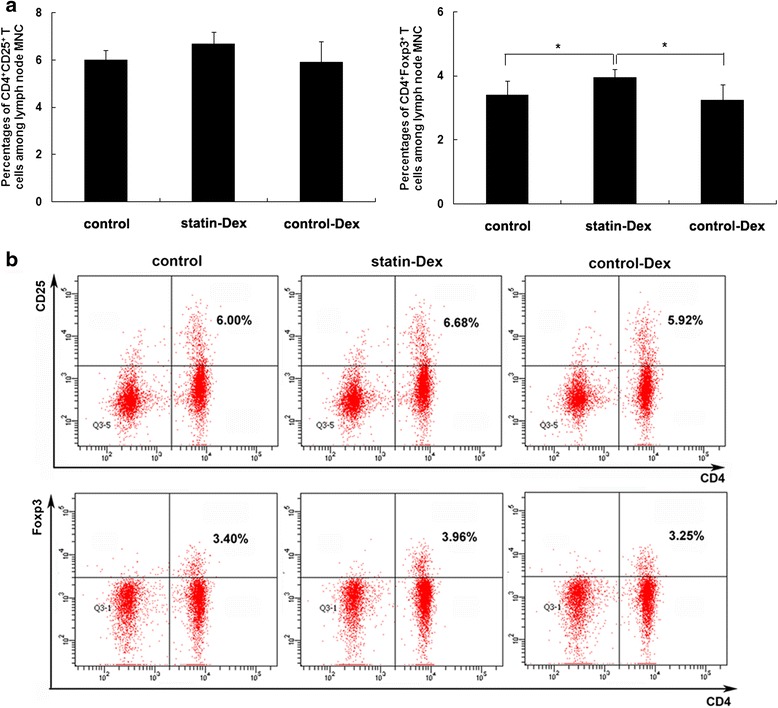
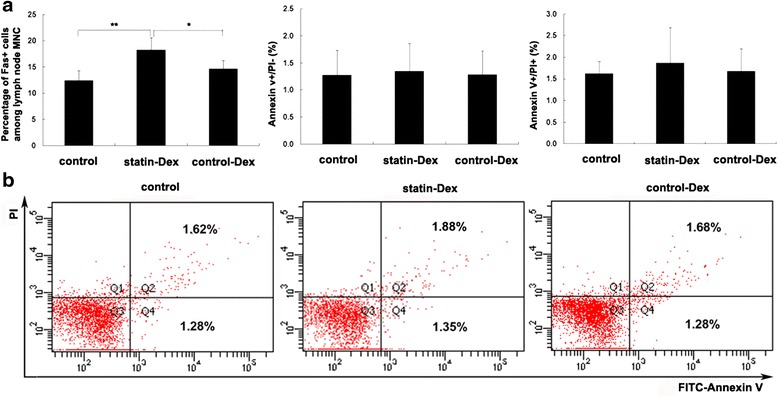
Immunophenotypical characterization of exosomes from atorvastatin- and dimethylsulfoxide (DMSO)-modified BMDCs was performed by electron microscopy, flow cytometry, and western blotting. In order to investigate whether statin-DCs-derived exosomes (Dex) could induce immune tolerance in EAMG, we administrated statin-Dex, control-Dex, or phosphate-buffered saline (PBS) into EAMG rats via tail vein injection. The tracking of injected Dex and the effect of statin-Dex injection on endogenous DCs were performed by immunofluorescence and flow cytometry, respectively. The number of Foxp3(+) cells in thymuses was examined using immunocytochemistry. Treg cells, cytokine secretion, lymphocyte proliferation, cell viability and apoptosis, and the levels of autoantibody were also carried out to evaluate the effect of statin-Dex on EAMG rats. To further investigate the involvement of FasL/Fas in statin-Dex-induced apoptosis, the underlying mechanisms were studied by FasL neutralization assays.
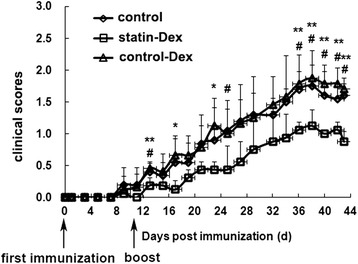
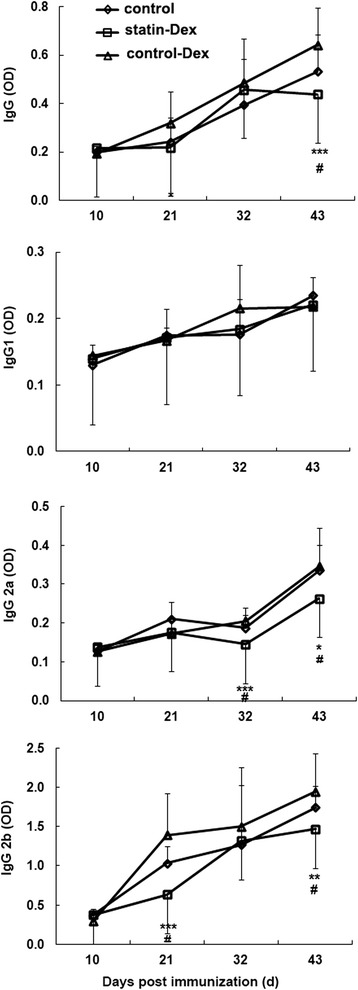
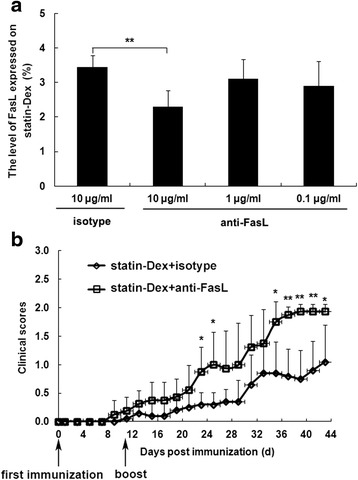
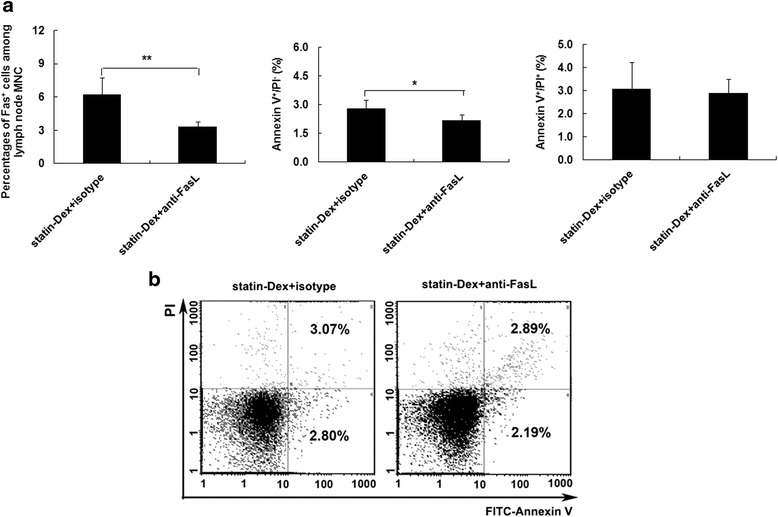
Our data showed that the systemic injection of statin-Dex suppressed the clinical symptoms of EAMG rats. These statin-Dex had immune regulation functions in immune organs, such as the spleen, thymus, and popliteal and inguinal lymph nodes. Furthermore, statin-Dex exerted their immunomodulatory effects in vivo by decreasing the expression of CD80, CD86, and MHC class II on endogenous DCs. Importantly, the therapeutic effects of statin-Dex on EAMG rats were associated with up-regulated levels of indoleamine 2,3-dioxygenase (IDO)/Treg and partly dependent on FasL/Fas pathway, which finally resulted in decreased synthesis of anti-R97-116 IgG, IgG2a, and IgG2b antibodies.
Our data suggest that atorvastatin-induced immature BMDCs are able to secrete tolerogenic Dex, which are involved in the suppression of immune responses in EAMG rats. Importantly, our study provides a novel cell-free approach for the treatment of autoimmune diseases.
此前,我们已证明用阿托伐他汀修饰的脾源性树突状细胞(DCs)可抑制实验性自身免疫性重症肌无力(EAMG)的免疫反应。然而,源自阿托伐他汀修饰的骨髓DCs(BMDCs)的外泌体(他汀-外泌体)对EAMG的影响仍不清楚。
通过电子显微镜、流式细胞术和蛋白质免疫印迹法对阿托伐他汀和二甲基亚砜(DMSO)修饰的BMDCs的外泌体进行免疫表型特征分析。为了研究他汀-DCs衍生的外泌体(外泌体)是否能诱导EAMG的免疫耐受,我们通过尾静脉注射将他汀-外泌体、对照-外泌体或磷酸盐缓冲盐水(PBS)注入EAMG大鼠体内。分别通过免疫荧光和流式细胞术对注射的外泌体进行追踪以及分析他汀-外泌体注射对内源性DCs的影响。使用免疫细胞化学法检测胸腺中Foxp3(+)细胞的数量。还进行了调节性T细胞、细胞因子分泌、淋巴细胞增殖、细胞活力和凋亡以及自身抗体水平的检测,以评估他汀-外泌体对EAMG大鼠的影响。为了进一步研究FasL/Fas在他汀-外泌体诱导的凋亡中的作用,通过FasL中和试验研究其潜在机制。
我们的数据表明,全身注射他汀-外泌体可减轻EAMG大鼠的临床症状。这些他汀-外泌体在免疫器官如脾脏、胸腺以及腘窝和腹股沟淋巴结中具有免疫调节功能。此外,他汀-外泌体通过降低内源性DCs上CD80、CD86和MHC II类分子的表达在体内发挥免疫调节作用。重要的是,他汀-外泌体对EAMG大鼠的治疗作用与吲哚胺2,3-双加氧酶(IDO)/调节性T细胞水平上调有关,并且部分依赖于FasL/Fas途径,最终导致抗R97-116 IgG、IgG2a和IgG2b抗体的合成减少。
我们的数据表明,阿托伐他汀诱导的未成熟BMDCs能够分泌具有免疫耐受性的外泌体,其参与抑制EAMG大鼠的免疫反应。重要的是,我们的研究为自身免疫性疾病的治疗提供了一种新的无细胞方法。