Wang Kang, Mateos-Aparicio Pedro, Hönigsperger Christoph, Raghuram Vijeta, Wu Wendy W, Ridder Margreet C, Sah Pankaj, Maylie Jim, Storm Johan F, Adelman John P
Vollum Institute, Oregon Health and Science University, Portland, United States.
Department of Physiology, Institute of Basic Medical Sciences, University of Oslo, Oslo, Norway.
Elife. 2016 Jan 14;5:e11206. doi: 10.7554/eLife.11206.
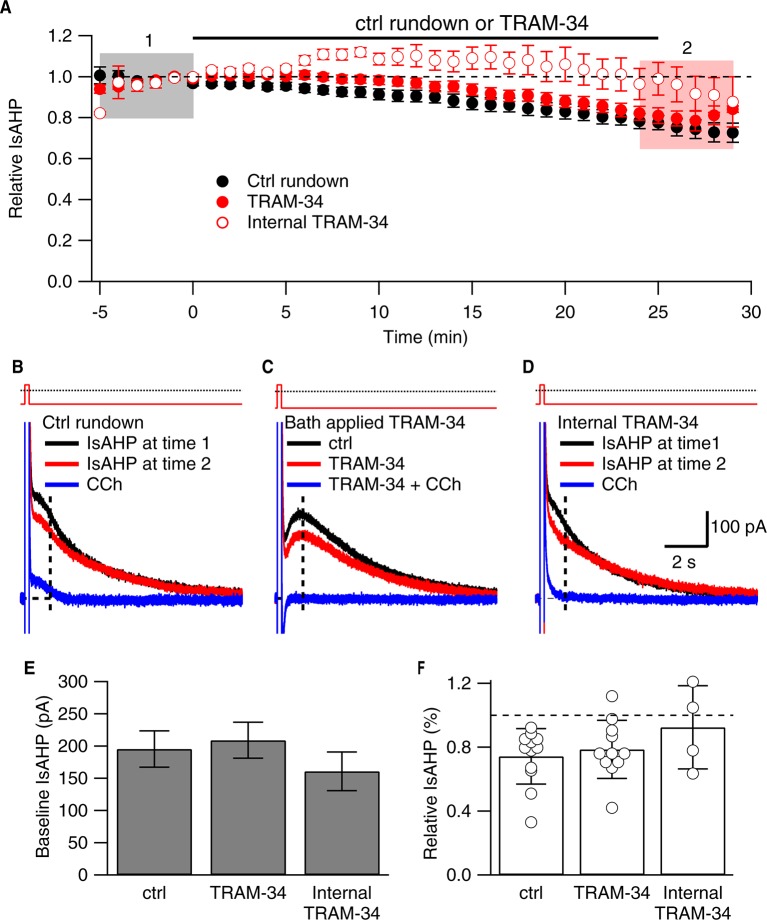
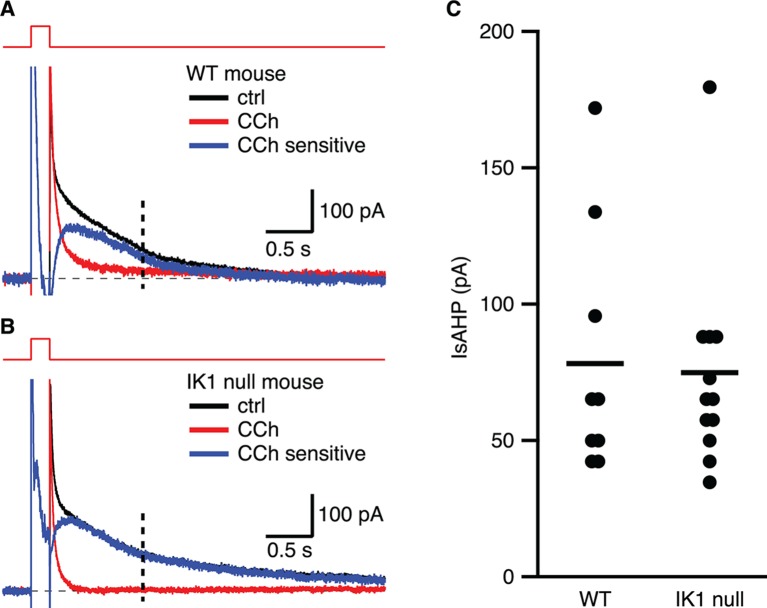
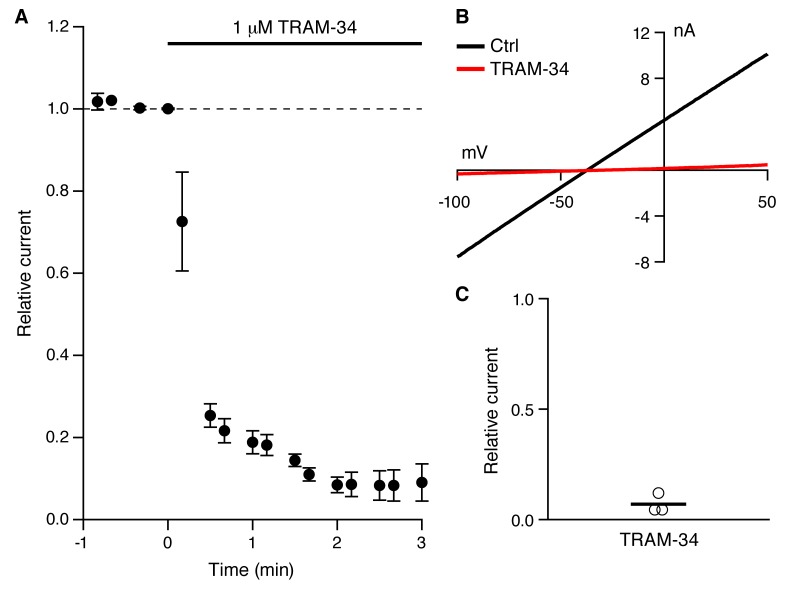
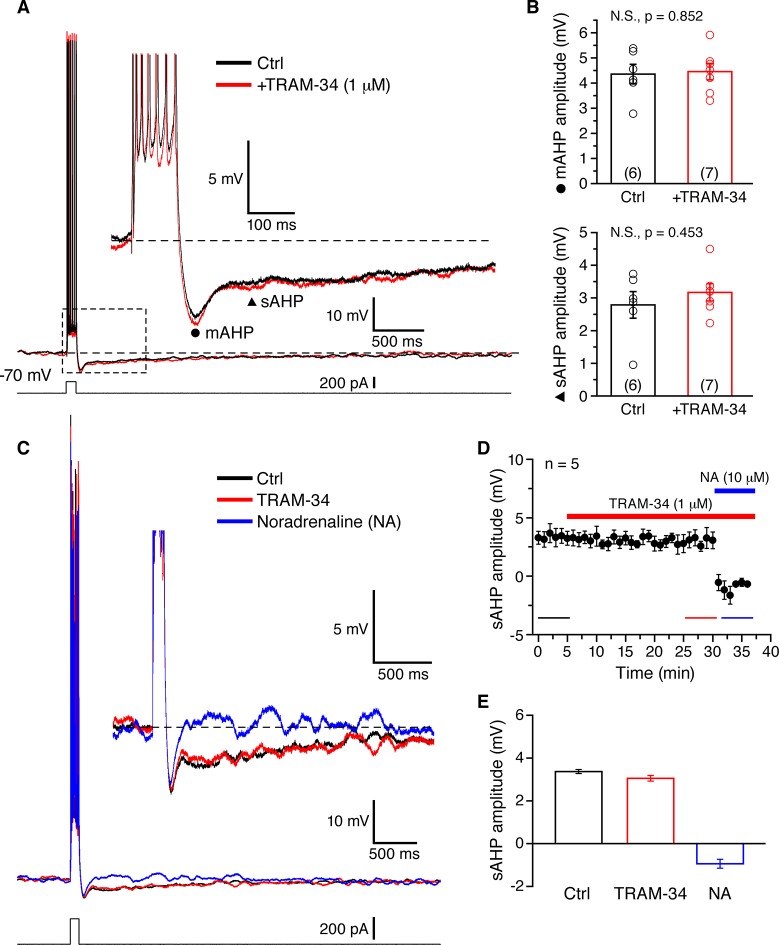
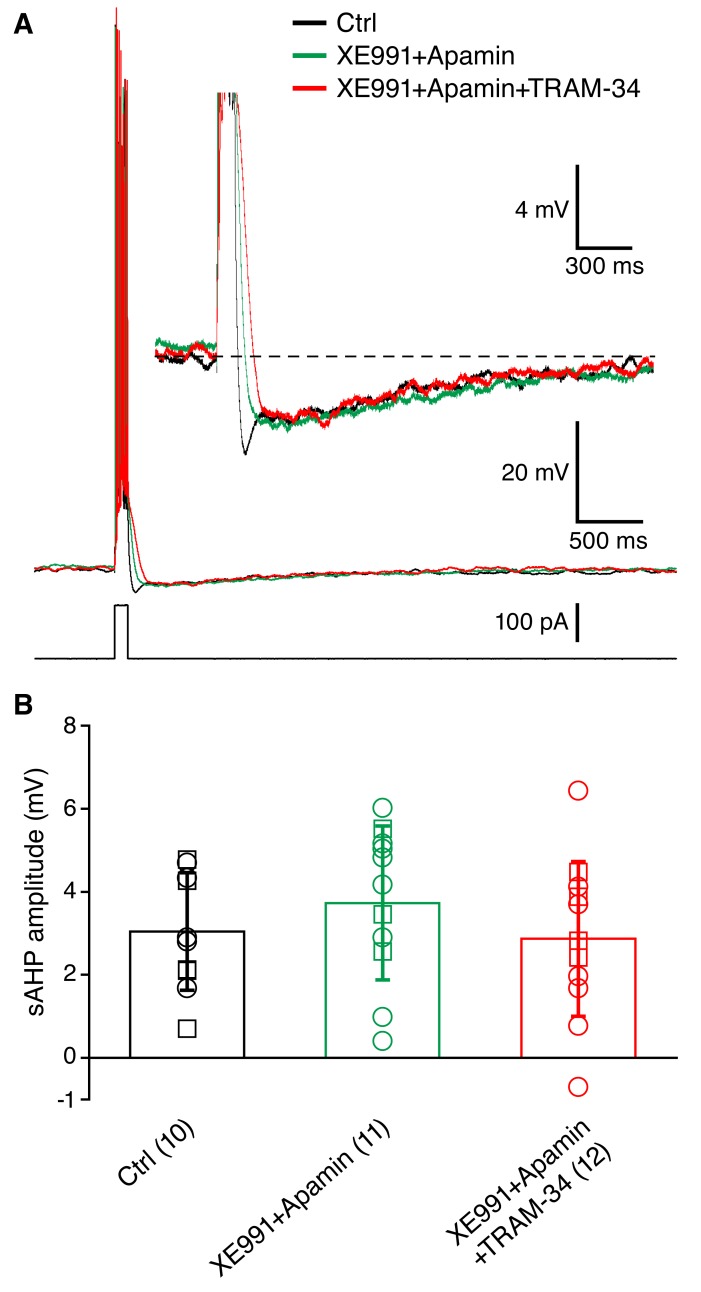
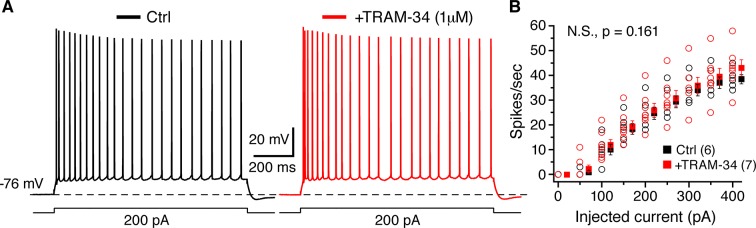
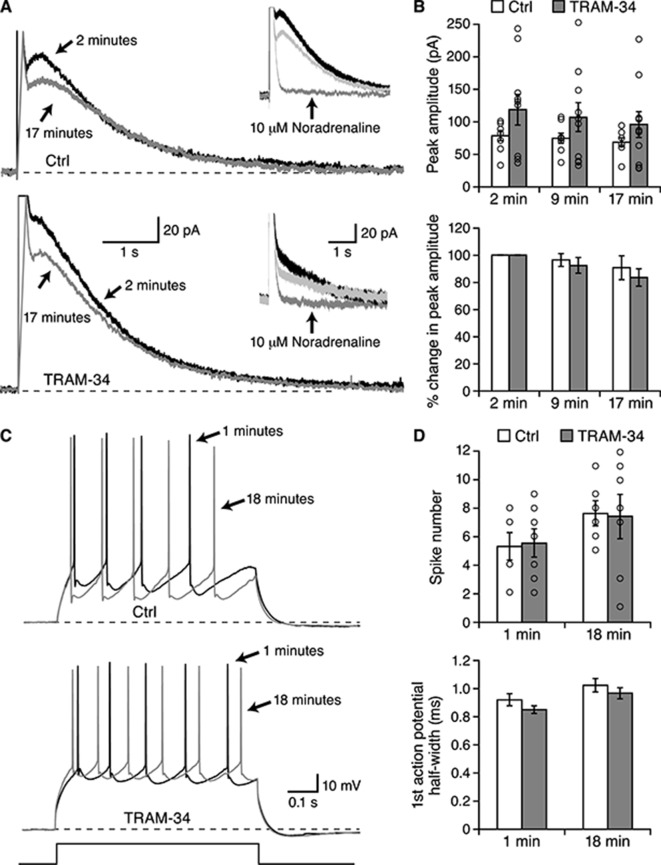
In pyramidal neurons such as hippocampal area CA1 and basolateral amygdala, a slow afterhyperpolarization (sAHP) follows a burst of action potentials, which is a powerful regulator of neuronal excitability. The sAHP amplitude increases with aging and may underlie age related memory decline. The sAHP is due to a Ca(2+)-dependent, voltage-independent K(+) conductance, the molecular identity of which has remained elusive until a recent report suggested the Ca(2+)-activated K(+) channel, IK1 (KCNN4) as the sAHP channel in CA1 pyramidal neurons. The signature pharmacology of IK1, blockade by TRAM-34, was reported for the sAHP and underlying current. We have examined the sAHP and find no evidence that TRAM-34 affects either the current underling the sAHP or excitability of CA1 or basolateral amygdala pyramidal neurons. In addition, CA1 pyramidal neurons from IK1 null mice exhibit a characteristic sAHP current. Our results indicate that IK1 channels do not mediate the sAHP in pyramidal neurons.
在诸如海马体CA1区和基底外侧杏仁核等锥体神经元中,动作电位爆发后会出现缓慢的超极化后电位(sAHP),它是神经元兴奋性的强大调节因子。sAHP的幅度会随着衰老而增加,这可能是与年龄相关的记忆衰退的基础。sAHP是由一种依赖于Ca(2+)、与电压无关的K(+)电导引起的,其分子身份一直难以捉摸,直到最近有报告表明Ca(2+)激活的K(+)通道IK1(KCNN4)是CA1锥体神经元中的sAHP通道。IK1的标志性药理学特征是被TRAM - 34阻断,这一特性也被报道适用于sAHP及其基础电流。我们研究了sAHP,没有发现证据表明TRAM - 34会影响sAHP的基础电流或CA1或基底外侧杏仁核锥体神经元的兴奋性。此外,来自IK1基因敲除小鼠的CA1锥体神经元表现出特征性的sAHP电流。我们的结果表明,IK1通道并不介导锥体神经元中的sAHP。