Yang Yan, Li Wencheng, Hoque Mainul, Hou Liming, Shen Steven, Tian Bin, Dynlacht Brian D
Department of Pathology, New York University (NYU) School of Medicine, New York, New York, United States of America.
Department of Microbiology, Biochemistry and Molecular Genetics, Rutgers New Jersey Medical School, Newark, New Jersey, United States of America.
PLoS Genet. 2016 Jan 14;12(1):e1005794. doi: 10.1371/journal.pgen.1005794. eCollection 2016 Jan.
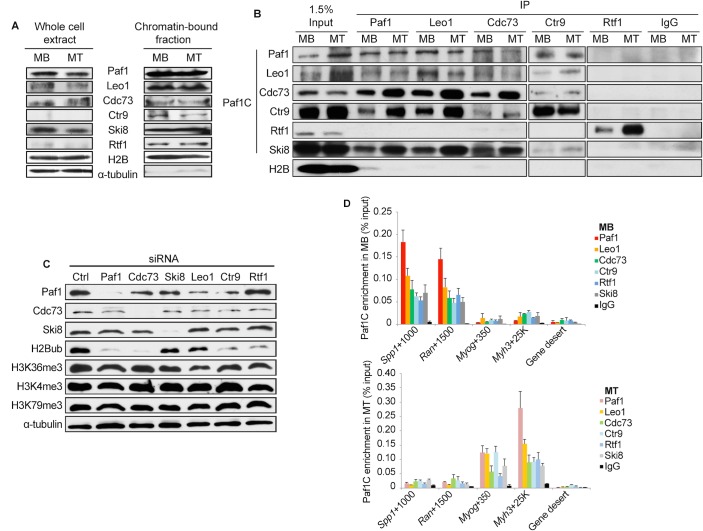
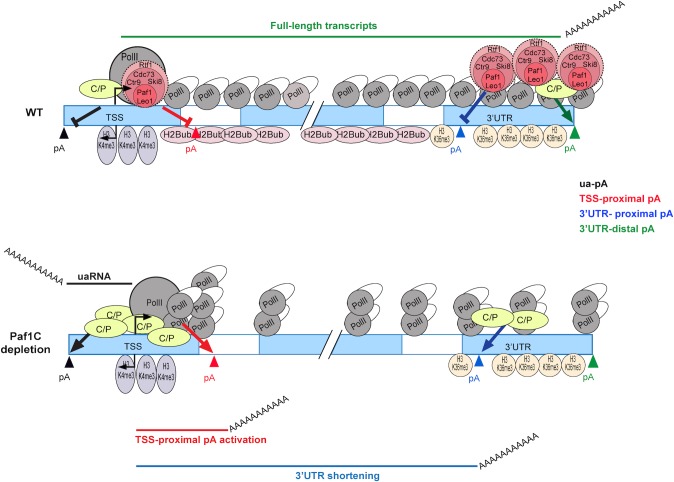
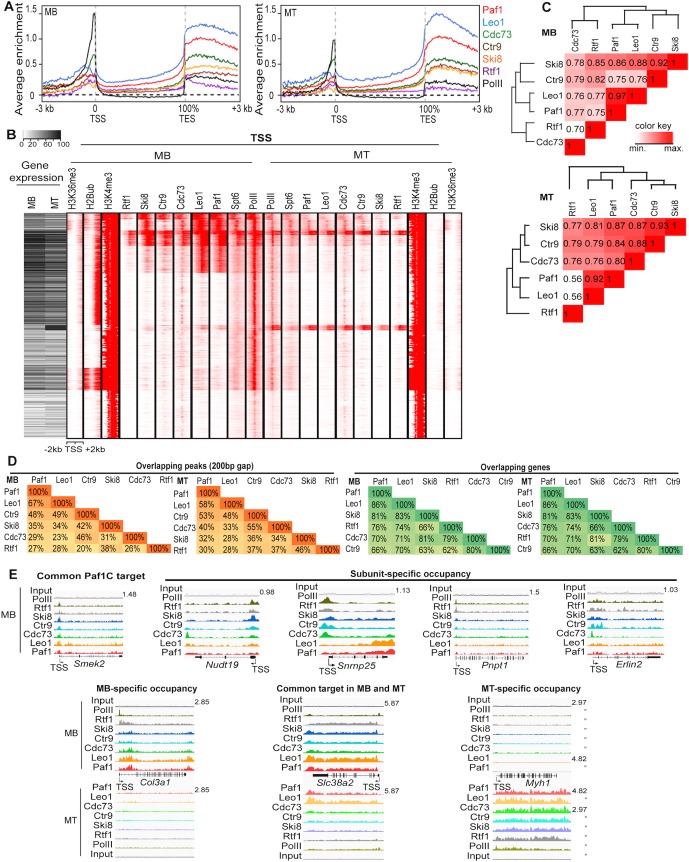
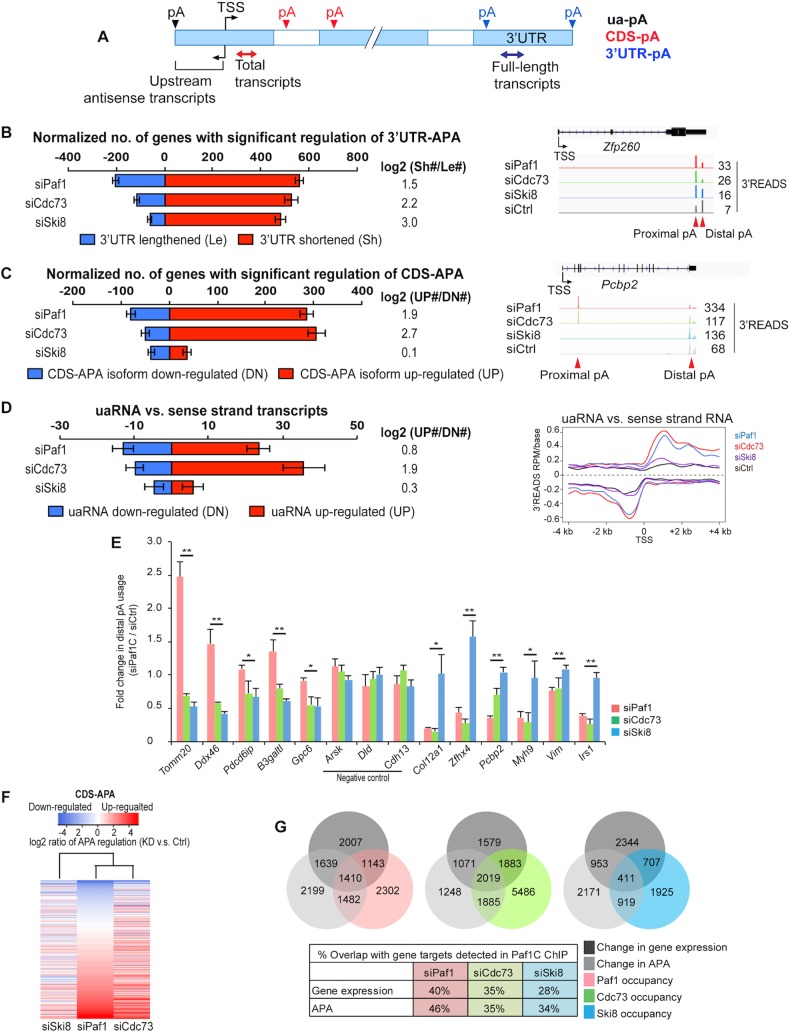
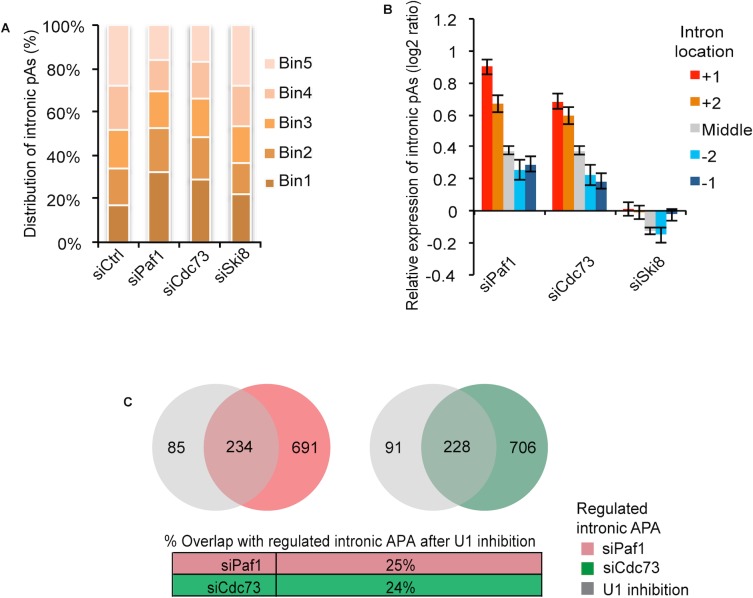
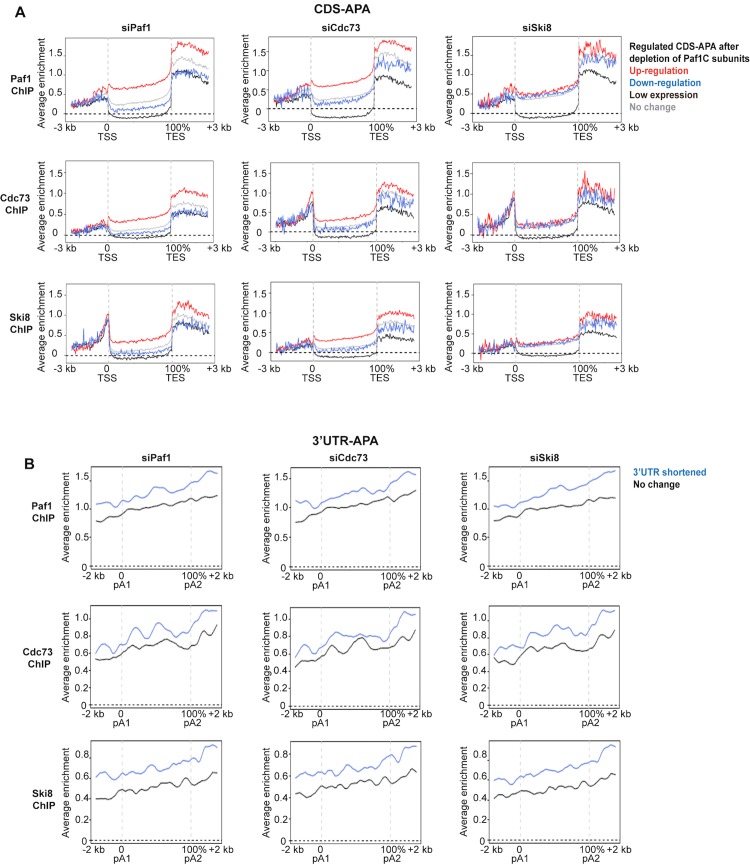
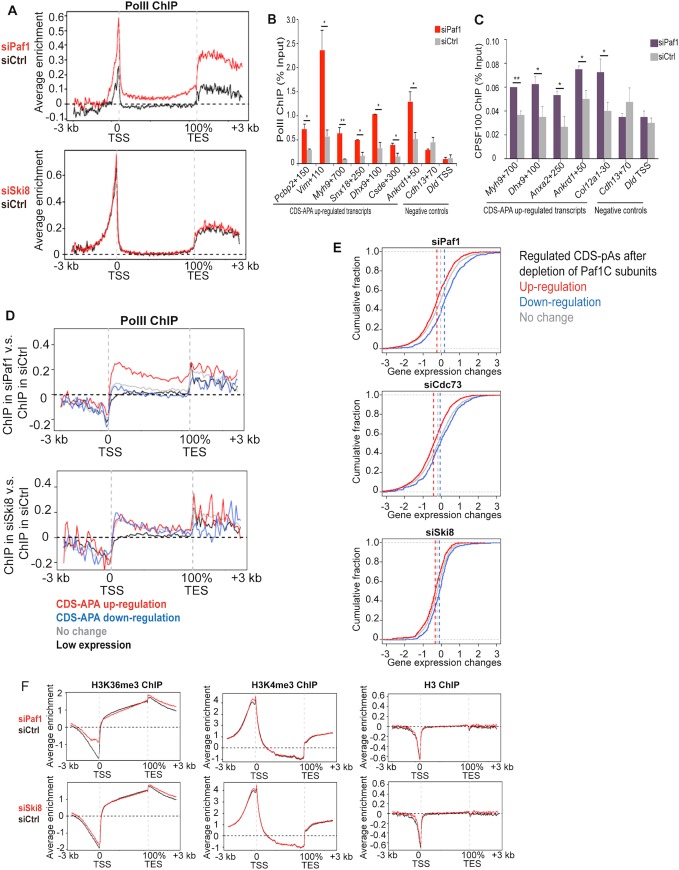
The PAF complex (Paf1C) has been shown to regulate chromatin modifications, gene transcription, and RNA polymerase II (PolII) elongation. Here, we provide the first genome-wide profiles for the distribution of the entire complex in mammalian cells using chromatin immunoprecipitation and high throughput sequencing. We show that Paf1C is recruited not only to promoters and gene bodies, but also to regions downstream of cleavage/polyadenylation (pA) sites at 3' ends, a profile that sharply contrasted with the yeast complex. Remarkably, we identified novel, subunit-specific links between Paf1C and regulation of alternative cleavage and polyadenylation (APA) and upstream antisense transcription using RNAi coupled with deep sequencing of the 3' ends of transcripts. Moreover, we found that depletion of Paf1C subunits resulted in the accumulation of PolII over gene bodies, which coincided with APA. Depletion of specific Paf1C subunits led to global loss of histone H2B ubiquitylation, although there was little impact of Paf1C depletion on other histone modifications, including tri-methylation of histone H3 on lysines 4 and 36 (H3K4me3 and H3K36me3), previously associated with this complex. Our results provide surprising differences with yeast, while unifying observations that link Paf1C with PolII elongation and RNA processing, and indicate that Paf1C subunits could play roles in controlling transcript length through suppression of PolII accumulation at transcription start site (TSS)-proximal pA sites and regulating pA site choice in 3'UTRs.
血小板激活因子复合物(PAF1C)已被证明可调节染色质修饰、基因转录和RNA聚合酶II(PolII)延伸。在此,我们利用染色质免疫沉淀和高通量测序,首次提供了该完整复合物在哺乳动物细胞中分布的全基因组图谱。我们发现,PAF1C不仅被招募到启动子和基因体,还被招募到3'端切割/聚腺苷酸化(pA)位点下游区域,这一图谱与酵母复合物形成鲜明对比。值得注意的是,我们利用RNA干扰结合转录本3'端深度测序,鉴定出PAF1C与可变切割和聚腺苷酸化(APA)调控以及上游反义转录之间新的、亚基特异性的联系。此外,我们发现PAF1C亚基的缺失导致PolII在基因体上积累,这与APA一致。特定PAF1C亚基的缺失导致组蛋白H2B泛素化的整体丧失,尽管PAF1C缺失对其他组蛋白修饰影响很小,包括组蛋白H3赖氨酸4和36的三甲基化(H3K4me3和H3K36me3),这些修饰之前与该复合物相关。我们的结果显示与酵母存在惊人差异,同时统一了将PAF1C与PolII延伸和RNA加工联系起来的观察结果,并表明PAF1C亚基可能通过抑制PolII在转录起始位点(TSS)近端pA位点的积累以及调节3'非翻译区(3'UTR)中pA位点的选择来控制转录本长度。