Sayyad Wasim A, Fabris Paolo, Torre Vincent
Neuroscience Area, International School for Advanced Studies (SISSA), Trieste, Italy.
PLoS One. 2016 Jan 14;11(1):e0146842. doi: 10.1371/journal.pone.0146842. eCollection 2016.
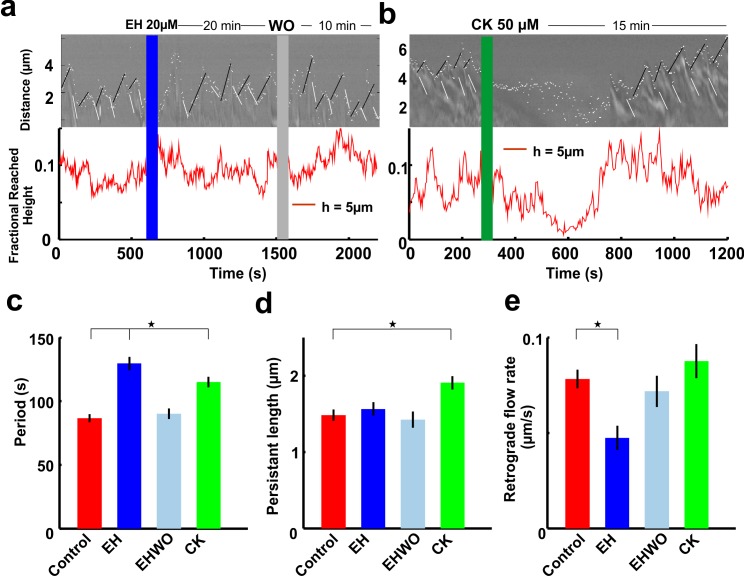
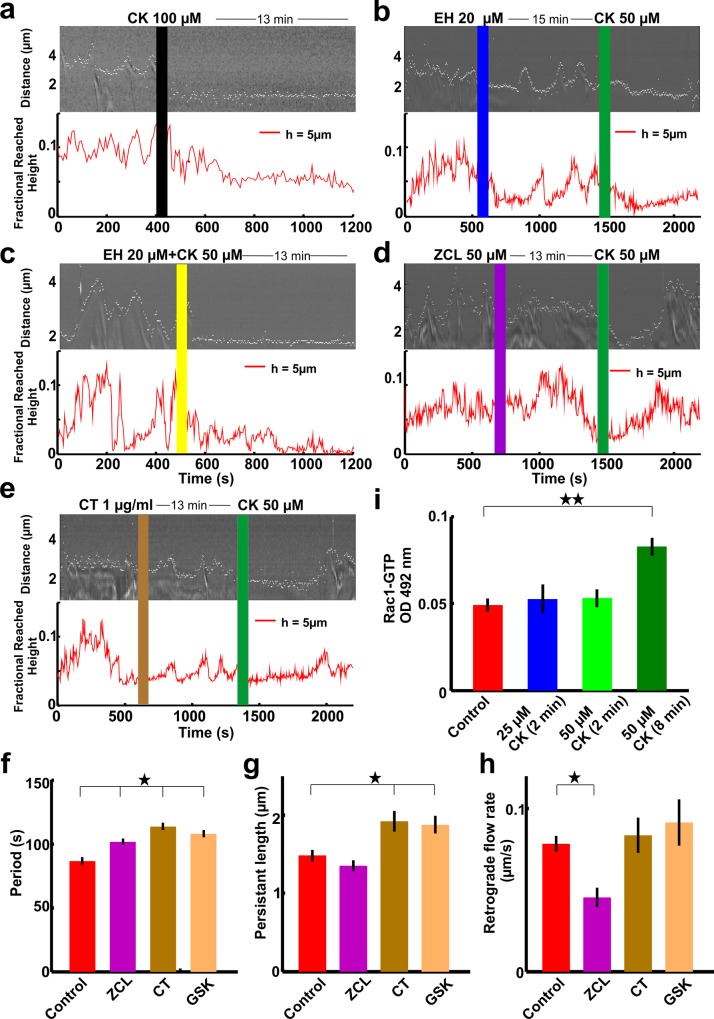
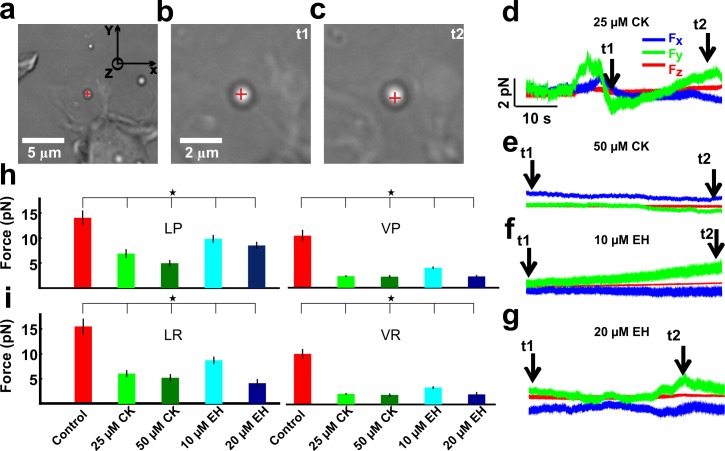
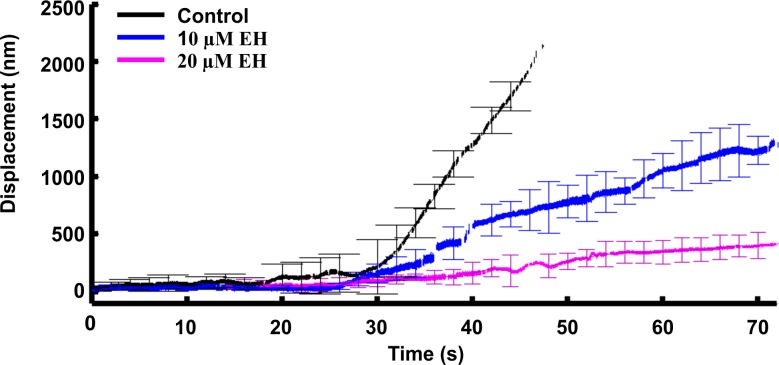
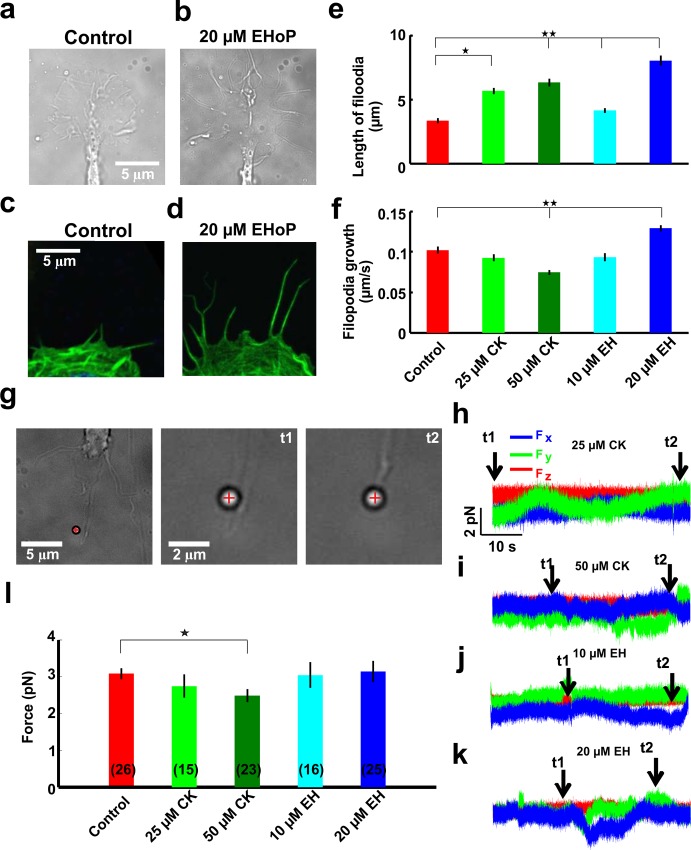
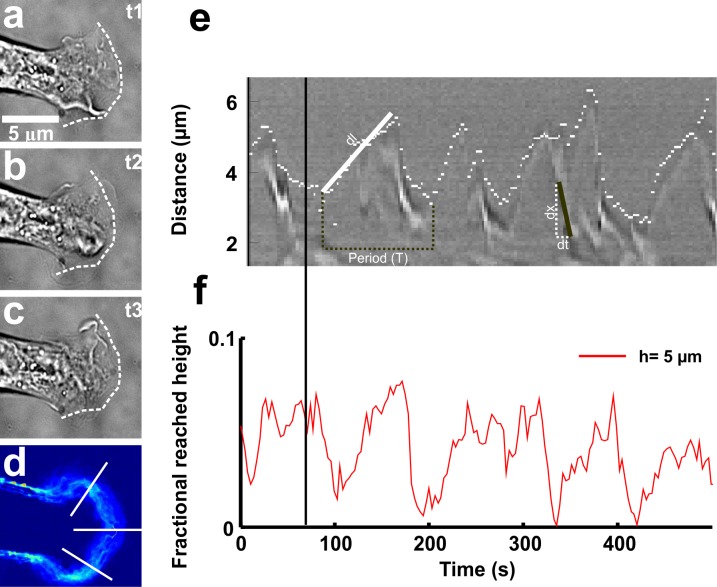
We used optical tweezers, video imaging, immunocytochemistry and a variety of inhibitors to analyze the role of Rac1 in the motility and force generation of lamellipodia and filopodia from developing growth cones of isolated Dorsal Root Ganglia neurons. When the activity of Rac1 was inhibited by the drug EHop-016, the period of lamellipodia protrusion/retraction cycles increased and the lamellipodia retrograde flow rate decreased; moreover, the axial force exerted by lamellipodia was reduced dramatically. Inhibition of Arp2/3 by a moderate amount of the drug CK-548 caused a transient retraction of lamellipodia followed by a complete recovery of their usual motility. This recovery was abolished by the concomitant inhibition of Rac1. The filopodia length increased upon inhibition of both Rac1 and Arp2/3, but the speed of filopodia protrusion increased when Rac1 was inhibited and decreased instead when Arp2/3 was inhibited. These results suggest that Rac1 acts as a switch that activates upon inhibition of Arp2/3. Rac1 also controls the filopodia dynamics necessary to explore the environment.
我们使用光镊、视频成像、免疫细胞化学和多种抑制剂,来分析Rac1在分离的背根神经节神经元发育中的生长锥所形成的片状伪足和丝状伪足的运动及力产生过程中的作用。当用药物EHop-016抑制Rac1的活性时,片状伪足伸出/回缩周期的时长增加,片状伪足逆行流速降低;此外,片状伪足施加的轴向力显著减小。用适量药物CK-548抑制Arp2/3会导致片状伪足短暂回缩,随后其恢复正常运动。同时抑制Rac1会消除这种恢复。抑制Rac1和Arp2/3都会使丝状伪足长度增加,但抑制Rac1时丝状伪足伸出速度增加,而抑制Arp2/3时丝状伪足伸出速度反而降低。这些结果表明,Rac1起到一个在Arp2/3受抑制时被激活的开关的作用。Rac1还控制着探索环境所需的丝状伪足动态变化。