Department of Molecular Pharmacology, Pharmacology Institute, Heidelberg University, Heidelberg, Germany.
Molecular Medicine Partnership Unit (MMPU), European Molecular Biology Laboratory (EMBL), Heidelberg, Germany.
Pain. 2017 Sep;158(9):1765-1779. doi: 10.1097/j.pain.0000000000000971.
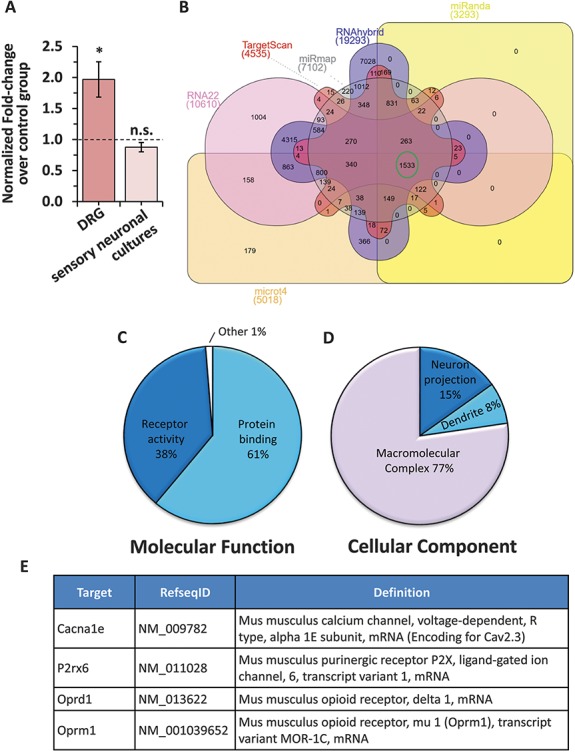
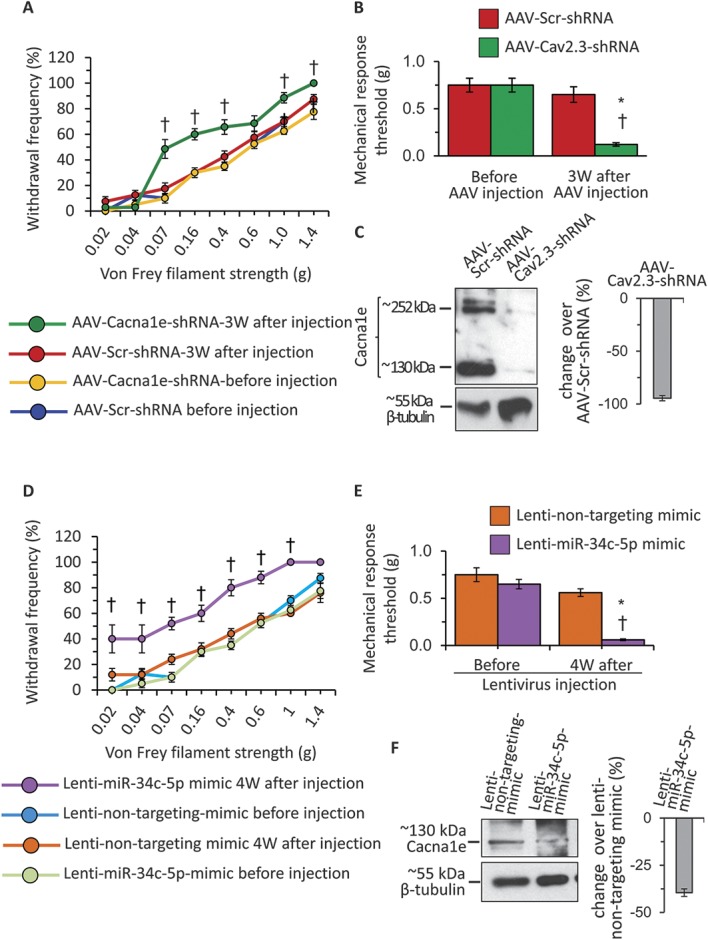
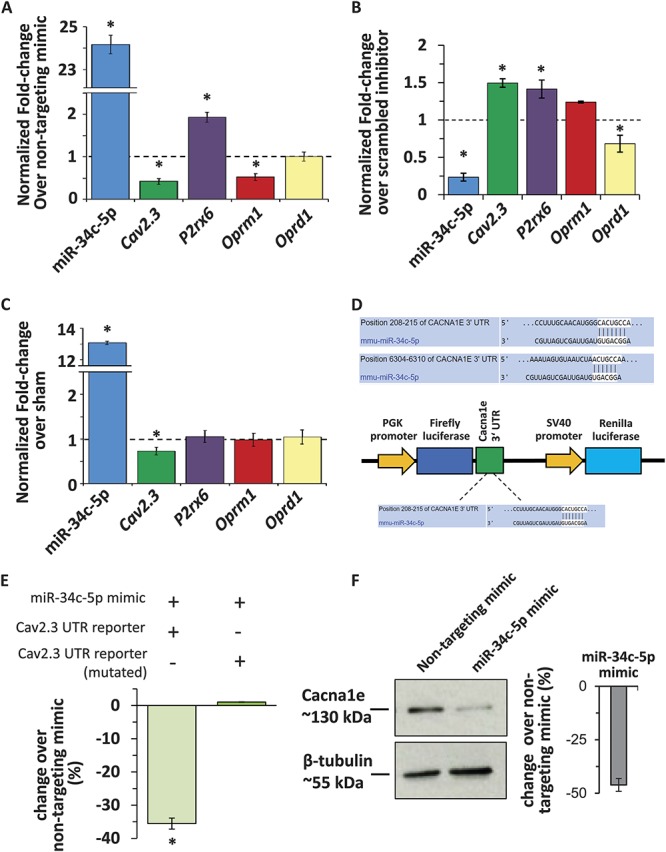
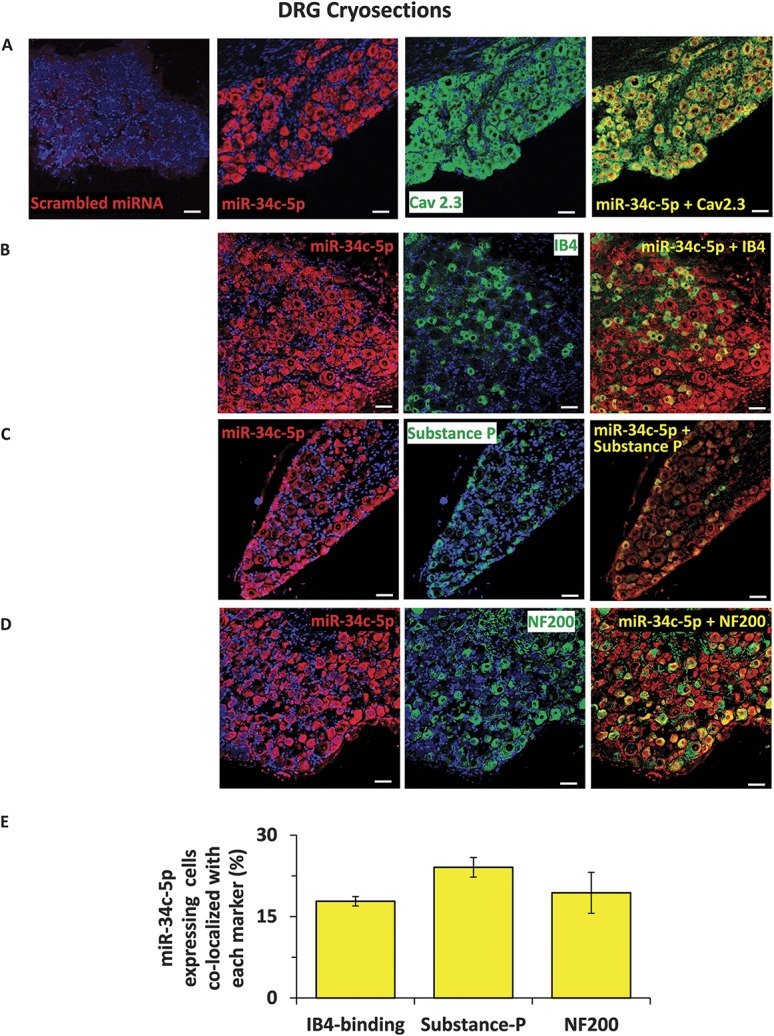
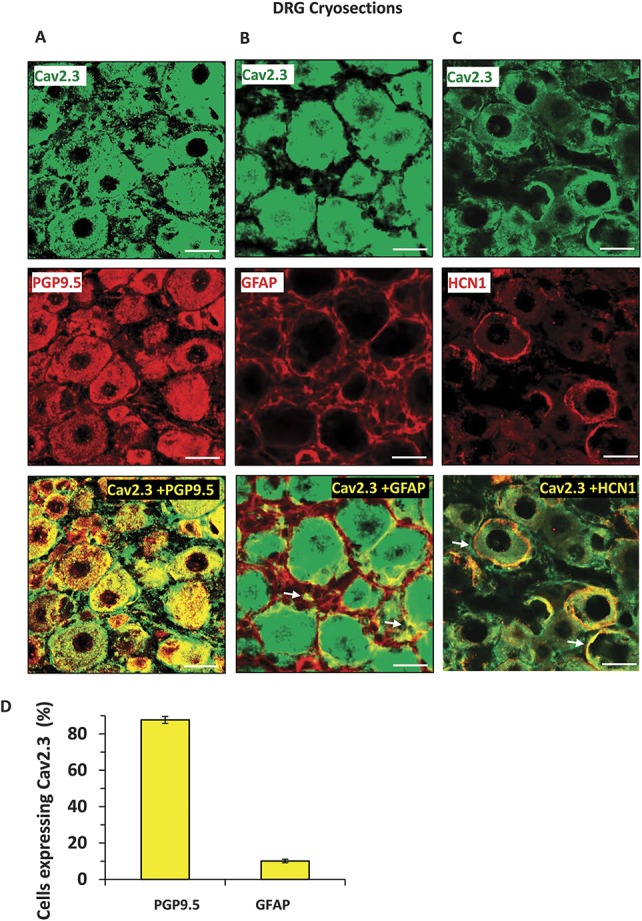
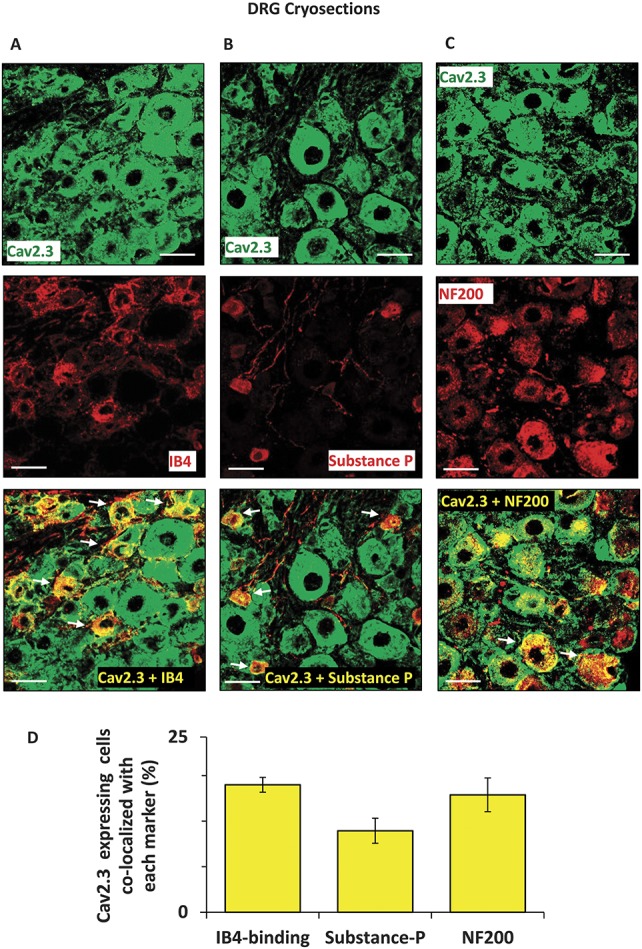
Pathophysiological mechanisms underlying pain associated with cancer are poorly understood. microRNAs (miRNAs) are a class of noncoding RNAs with emerging functional importance in chronic pain. In a genome-wide screen for miRNAs regulated in dorsal root ganglia (DRG) neurons in a mouse model of bone metastatic pain, we identified miR-34c-5p as a functionally important pronociceptive miRNA. Despite these functional insights and therapeutic potential for miR-34c-5p, its molecular mechanism of action in peripheral sensory neurons remains unknown. Here, we report the identification and validation of key target transcripts of miRNA-34c-5p. In-depth bioinformatics analyses revealed Cav2.3, P2rx6, Oprd1, and Oprm1 as high confidence putative targets for miRNA-34c-5p. Of these, canonical and reciprocal regulation of miR-34c-5p and Cav2.3 was observed in cultured sensory neurons as well as in DRG in vivo in mice with cancer pain. Coexpression of miR-34c-5p and Cav2.3 was observed in peptidergic and nonpeptidergic nociceptors, and luciferase reporter assays confirmed functional binding of miR-34c-5p to the 3' UTR of Cav2.3 transcripts. Importantly, knocking down the expression of Cav2.3 specifically in DRG neurons led to hypersensitivity in mice. In summary, these results show that Cav2.3 is a novel mechanistic target for a key pronociceptive miRNA, miR-34c-5p, in the context of cancer pain and indicate an antinociceptive role for Cav2.3 in peripheral sensory neurons. The current study facilitates a deeper understanding of molecular mechanisms underlying cancer pain and suggests a potential for novel therapeutic strategies targeting miR-34c-5p and Cav2.3 in cancer pain.
癌症相关疼痛的病理生理机制尚未完全阐明。microRNAs(miRNAs)是一类具有新兴功能重要性的非编码 RNA,在慢性疼痛中发挥作用。在骨转移痛小鼠模型的背根神经节(DRG)神经元中,进行 miRNA 的全基因组筛选时,我们发现 miR-34c-5p 是一种具有功能重要性的促痛 miRNA。尽管 miR-34c-5p 具有这些功能上的见解和治疗潜力,但它在外周感觉神经元中的作用机制仍不清楚。在这里,我们报告了 miRNA-34c-5p 的关键靶转录物的鉴定和验证。深入的生物信息学分析显示 Cav2.3、P2rx6、Oprd1 和 Oprm1 是 miRNA-34c-5p 的高可信度假定靶标。在培养的感觉神经元以及患有癌症疼痛的小鼠的 DRG 中,观察到 Cav2.3 的典型和相互调节的 miR-34c-5p 调节。miR-34c-5p 和 Cav2.3 的共表达在肽能和非肽能伤害感受器中观察到,荧光素酶报告基因测定证实 miR-34c-5p 与 Cav2.3 转录物的 3'UTR 具有功能结合。重要的是,特异性敲低 DRG 神经元中的 Cav2.3 表达导致小鼠敏感性增加。总之,这些结果表明 Cav2.3 是癌症疼痛中关键促痛 miRNA,miR-34c-5p 的新型机制靶标,并表明 Cav2.3 在周围感觉神经元中具有抗伤害作用。本研究加深了对癌症疼痛分子机制的理解,并为靶向 miR-34c-5p 和 Cav2.3 的新型治疗策略提供了可能性。