Khanabdali Ramin, Saadat Anbarieh, Fazilah Maizatul, Bazli Khairul Fidaa' Khairul, Qazi Rida-e-Maria, Khalid Ramla Sana, Hasan Adli Durriyyah Sharifah, Moghadamtousi Soheil Zorofchian, Naeem Nadia, Khan Irfan, Salim Asmat, Shamsuddin ShamsulAzlin Ahmad, Mohan Gokula
Institute of Biological Sciences, Faculty of Science, University of Malaya, Kuala Lumpur, Malaysia.
Dr Panjwani Center for Molecular Medicine and Drug Research, International Center for Chemical and Biological Sciences, University of Karachi, Karachi, Pakistan.
Drug Des Devel Ther. 2015 Dec 24;10:81-91. doi: 10.2147/DDDT.S89658. eCollection 2016.
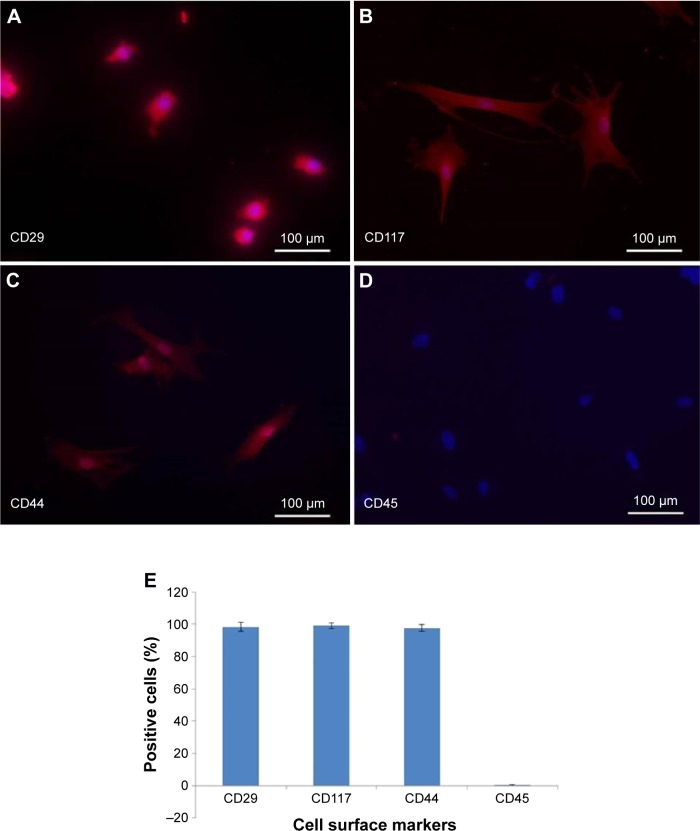
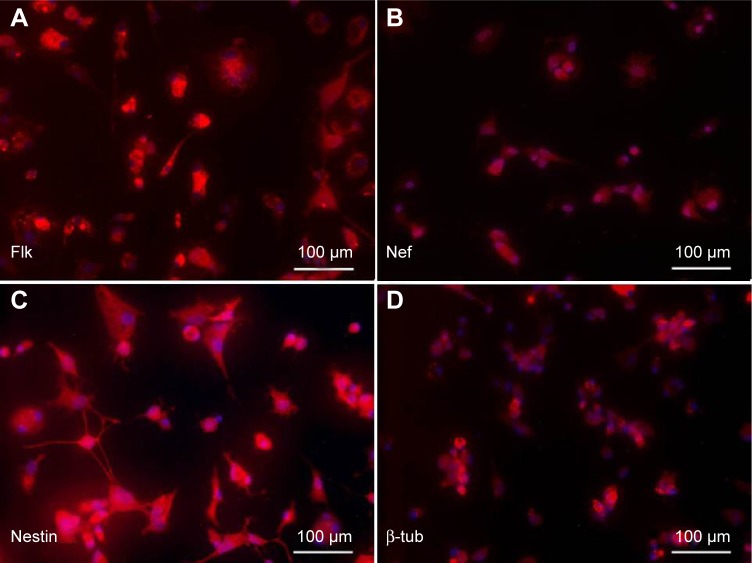
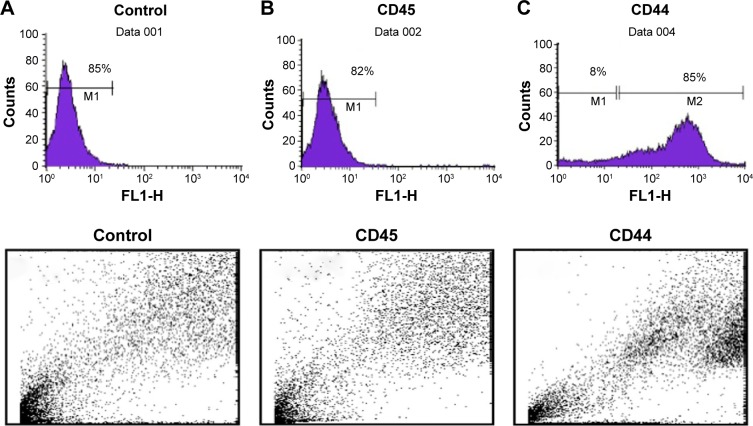
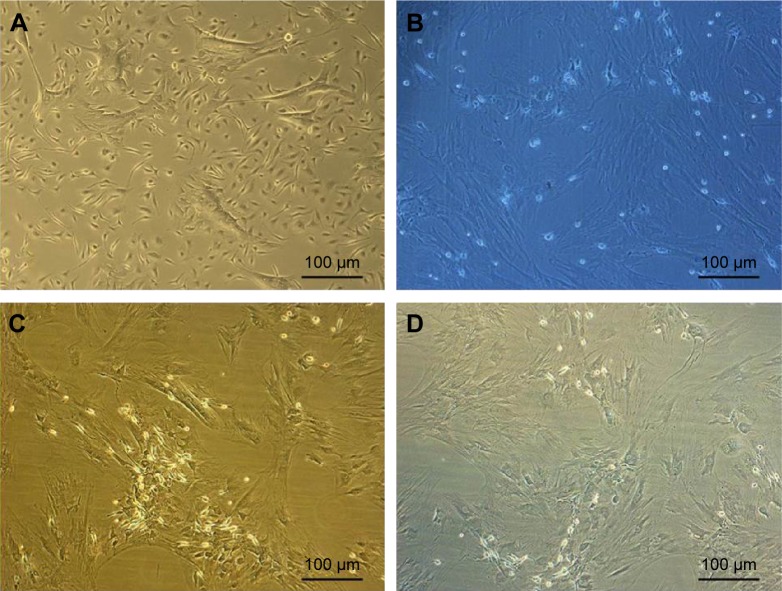
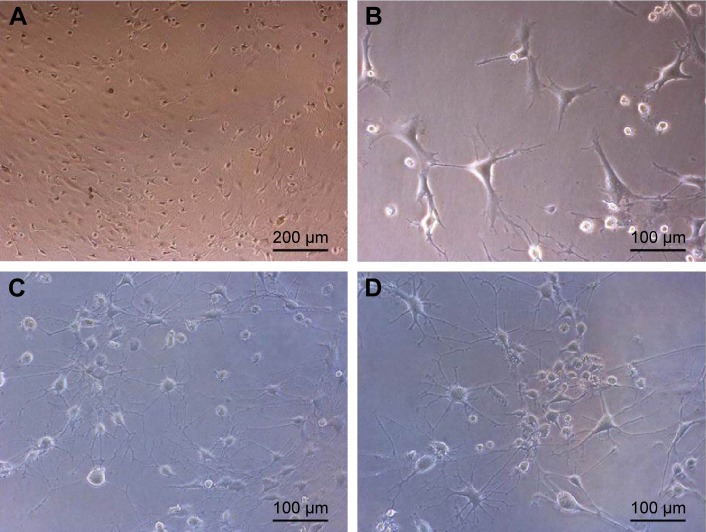
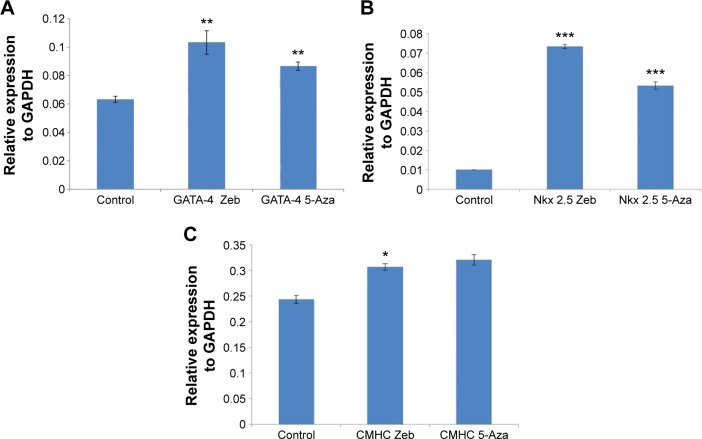
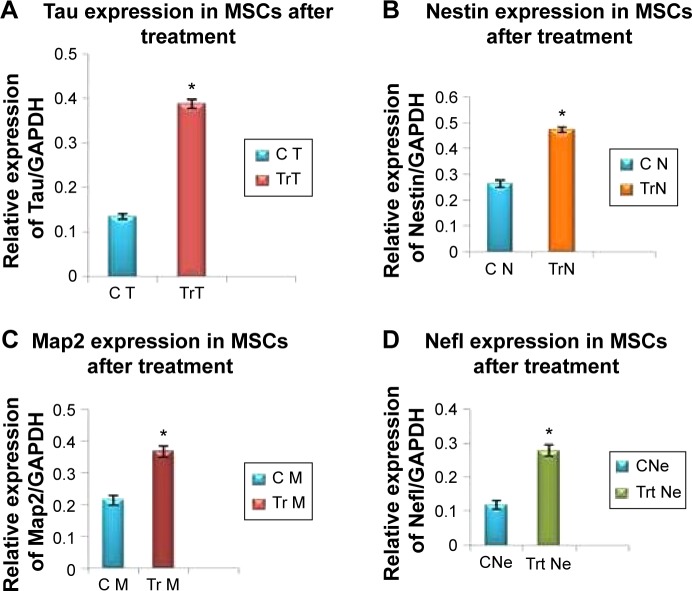
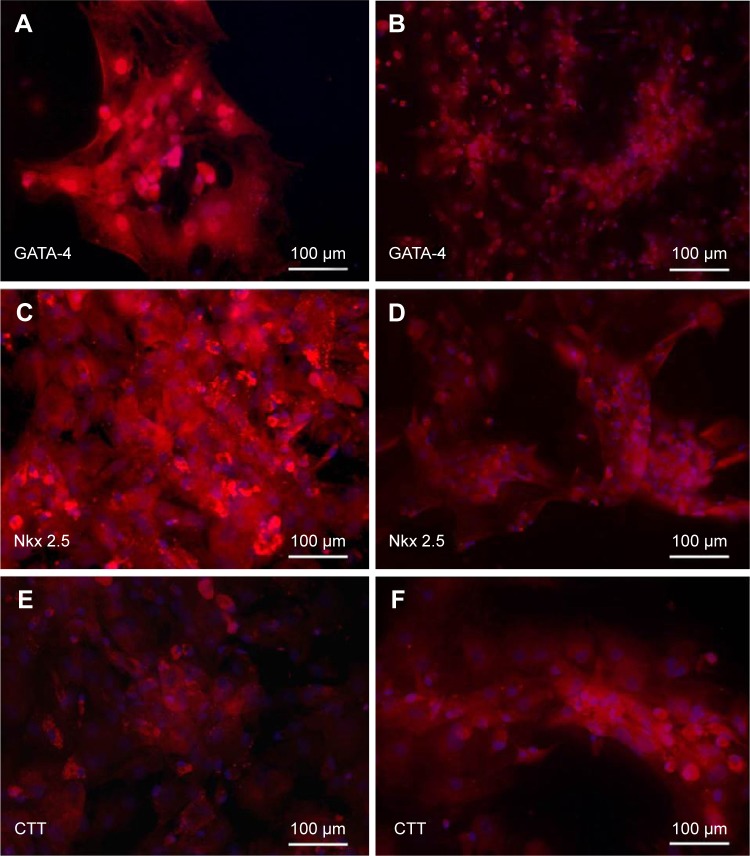
Small molecules, growth factors, and cytokines have been used to induce differentiation of stem cells into different lineages. Similarly, demethylating agents can trigger differentiation in adult stem cells. Here, we investigated the in vitro differentiation of rat bone marrow mesenchymal stem cells (MSCs) into cardiomyocytes by a demethylating agent, zebularine, as well as neuronal-like cells by β-mercaptoethanol in a growth factor or cytokines-free media. Isolated bone marrow-derived MSCs cultured in Dulbecco's Modified Eagle's Medium exhibited a fibroblast-like morphology. These cells expressed positive markers for CD29, CD44, and CD117 and were negative for CD34 and CD45. After treatment with 1 μM zebularine for 24 hours, the MSCs formed myotube-like structures after 10 days in culture. Expression of cardiac-specific genes showed that treated MSCs expressed significantly higher levels of cardiac troponin-T, Nkx2.5, and GATA-4 compared with untreated cells. Immunocytochemical analysis showed that differentiated cells also expressed cardiac proteins, GATA-4, Nkx 2.5, and cardiac troponin-T. For neuronal differentiation, MSCs were treated with 1 and 10 mM β-mercaptoethanol overnight for 3 hours in complete and serum-free Dulbecco's Modified Eagle's Medium, respectively. Following overnight treatment, neuron-like cells with axonal and dendritic-like projections originating from the cell body toward the neighboring cells were observed in the culture. The mRNA expression of neuronal-specific markers, Map2, Nefl, Tau, and Nestin, was significantly higher, indicating that the treated cells differentiated into neuronal-like cells. Immunostaining showed that differentiated cells were positive for the neuronal markers Flk, Nef, Nestin, and β-tubulin.
小分子、生长因子和细胞因子已被用于诱导干细胞分化为不同的细胞谱系。同样,去甲基化剂可触发成体干细胞的分化。在此,我们研究了在无生长因子或细胞因子的培养基中,去甲基化剂zebularine诱导大鼠骨髓间充质干细胞(MSCs)向心肌细胞分化,以及β-巯基乙醇诱导其向神经元样细胞分化的情况。在杜氏改良 Eagle 培养基中培养的分离骨髓来源的 MSCs 呈现出成纤维细胞样形态。这些细胞 CD29、CD44 和 CD117 表达阳性,而 CD34 和 CD45 表达阴性。用 1 μM zebularine 处理 24 小时后,MSCs 在培养 10 天后形成了肌管样结构。心脏特异性基因的表达表明,与未处理的细胞相比,处理后的 MSCs 心脏肌钙蛋白-T、Nkx2.5 和 GATA-4 的表达水平显著更高。免疫细胞化学分析表明,分化细胞也表达心脏蛋白 GATA-4、Nkx 2.5 和心脏肌钙蛋白-T。对于神经元分化,分别在完全和无血清的杜氏改良 Eagle 培养基中,将 MSCs 用 1 和 10 mM β-巯基乙醇过夜处理 3 小时。过夜处理后,在培养物中观察到具有从细胞体向相邻细胞延伸的轴突样和树突样突起的神经元样细胞。神经元特异性标志物 Map2、Nefl、Tau 和 Nestin 的 mRNA 表达显著更高,表明处理后的细胞分化为神经元样细胞。免疫染色表明,分化细胞对神经元标志物 Flk、Nef、Nestin 和β-微管蛋白呈阳性。