Al-Hassnan Zuhair N, Shinwari Zarghuna Ma, Wakil Salma M, Tulbah Sahar, Mohammed Shamayel, Rahbeeni Zuhair, Alghamdi Mohammed, Rababh Monther, Colak Dilek, Kaya Namik, Al-Fayyadh Majid, Alburaiki Jehad
Cardiovascular Genetics Program, King Faisal Specialist Hospital & Research Centre, Riyadh, Saudi Arabia.
Deptartment of Medical Genetics, King Faisal Specialist Hospital & Research Centre, Riyadh, Saudi Arabia.
BMC Med Genet. 2016 Jan 14;17:3. doi: 10.1186/s12881-016-0267-5.
Familial dilated cardiomyopathy (DCM) is genetically heterogeneous. Mutations in more than 40 genes have been identified in familial cases, mostly inherited in an autosomal dominant pattern. DCM due to recessive mutations is rarely observed. In consanguineous families, homozygosity mapping and whole exome sequencing (WES) can be utilized to identify the genetic defects in recessively inherited DCM.
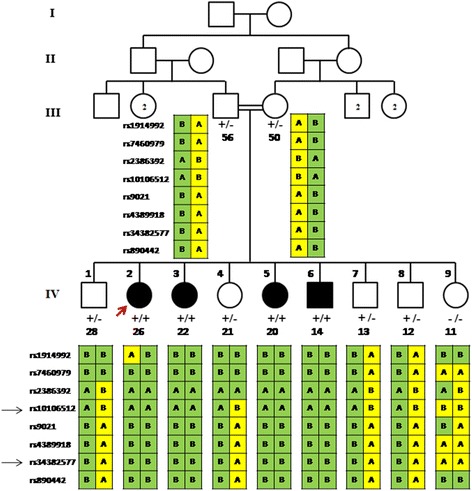
In a consanguineous family with four affected siblings with severe DCM, we combined homozygosity mapping, linkage analysis and WES, to uncover the genetic defect.
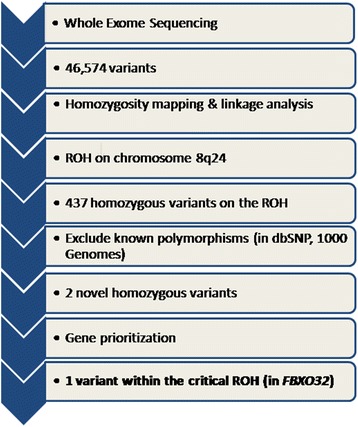
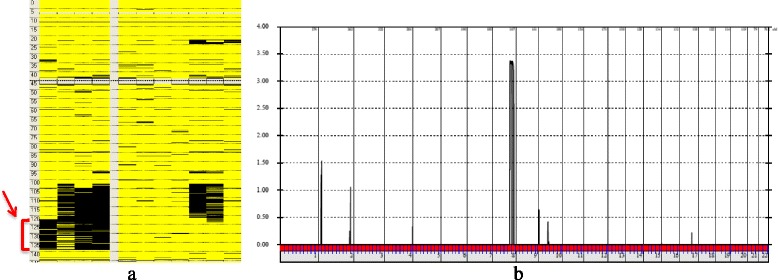
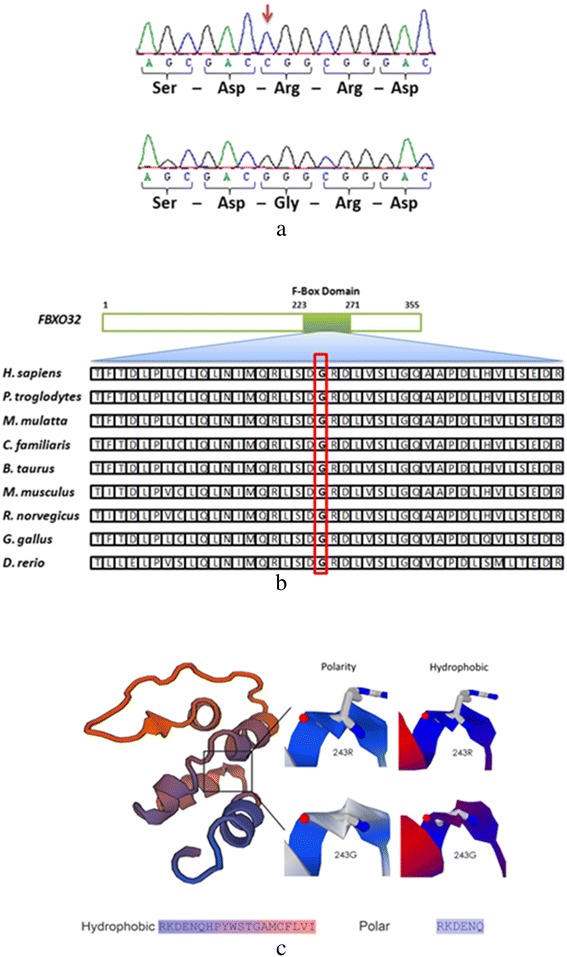
A region of homozygosity (ROH) on chromosome 8q24.13-24.23 was found to be shared by all of the four affected siblings. WES detected ~47,000 variants that were filtered to a homozygous mutation (p.Gly243Arg) in the FBXO32 gene, located within the identified ROH. The mutation segregated with the phenotype, replaced a highly-conserved amino acid, and was not detected in 1986 ethnically-matched chromosomes. FBXO32, which encodes a muscle-specific ubiquitin ligase, has been implicated in the pathogenesis of cardiomyopathy through the ubiquitin proteasome system (UPS). In addition, FBXO32-knockout mice manifest with cardiomyopathy. Screening the index patient for all of the WES variants in 48 genes known to be implicated in hypertrophic and dilated cardiomyopathy was negative.
Our data suggest that FBXO32 is a candidate gene for recessive DCM. Acting as a cardiac ubiquitin ligase, mutated FBXO32 could perturb the degradation of target proteins in the UPS, the impairment of which has been observed in cardiomyopathy. Our work proposes that genes encoding other ubiquitin ligases could also be implicated in familial cardiomyopathy.
家族性扩张型心肌病(DCM)具有遗传异质性。在家族性病例中已鉴定出40多个基因的突变,大多呈常染色体显性模式遗传。由隐性突变导致的DCM很少见。在近亲家庭中,纯合子定位和全外显子组测序(WES)可用于识别隐性遗传DCM中的遗传缺陷。
在一个有四名患有严重DCM的患病兄弟姐妹的近亲家庭中,我们结合了纯合子定位、连锁分析和WES来发现遗传缺陷。
发现8号染色体q24.13 - 24.23上的一个纯合子区域(ROH)为所有四名患病兄弟姐妹所共有。WES检测到约47,000个变异,经筛选后在位于已鉴定ROH内的FBXO32基因中发现一个纯合突变(p.Gly243Arg)。该突变与表型共分离,取代了一个高度保守的氨基酸,且在1986条种族匹配的染色体中未检测到。编码肌肉特异性泛素连接酶的FBXO32已通过泛素蛋白酶体系统(UPS)参与心肌病的发病机制。此外,FBXO32基因敲除小鼠表现出心肌病。对索引患者筛查48个已知与肥厚型和扩张型心肌病相关基因的所有WES变异均为阴性。
我们的数据表明FBXO32是隐性DCM的一个候选基因。作为一种心脏泛素连接酶,突变的FBXO32可能扰乱UPS中靶蛋白的降解,而这种降解受损在心肌病中已被观察到。我们的工作表明编码其他泛素连接酶的基因也可能与家族性心肌病有关。