Department of Advanced Medical and Surgical Sciences, University of Campania ''Luigi Vanvitelli'', P.zza L. Miraglia, 2, 80138, Naples, Italy.
Department of Pharmacy, University of Salerno, Fisciano, SA, Italy.
Cardiovasc Diabetol. 2024 Mar 30;23(1):112. doi: 10.1186/s12933-024-02203-4.
Glucagon-like peptide-1 receptor agonists (GLP-1RAs) are effective antidiabetic drugs with potential cardiovascular benefits. Despite their well-established role in reducing the risk of major adverse cardiovascular events (MACE), their impact on heart failure (HF) remains unclear. Therefore, our study examined the cardioprotective effects of tirzepatide (TZT), a novel glucose-dependent insulinotropic polypeptide (GIP) and glucagon-like peptide 1 (GLP-1) receptor agonist.
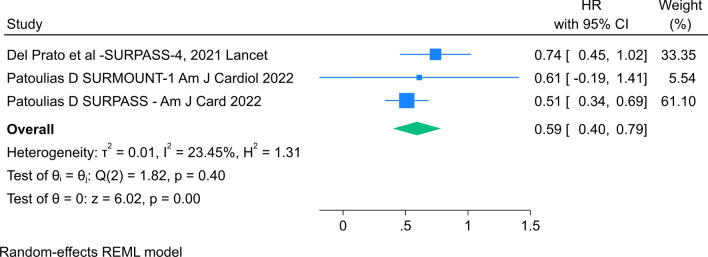
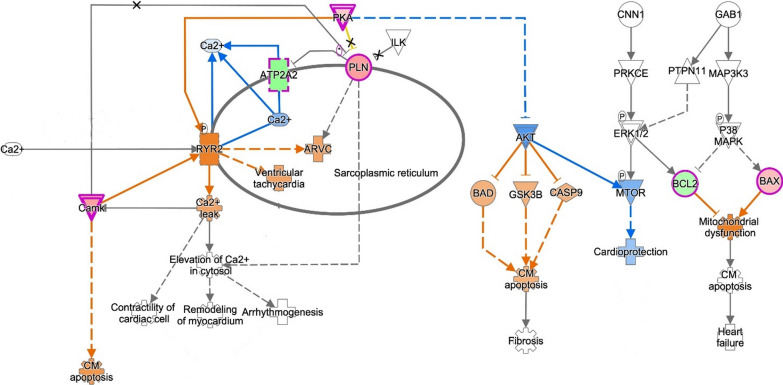
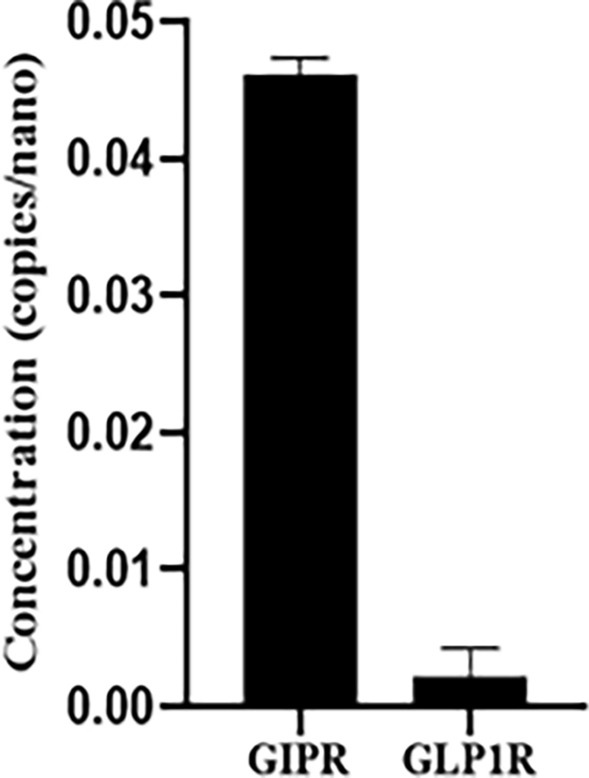
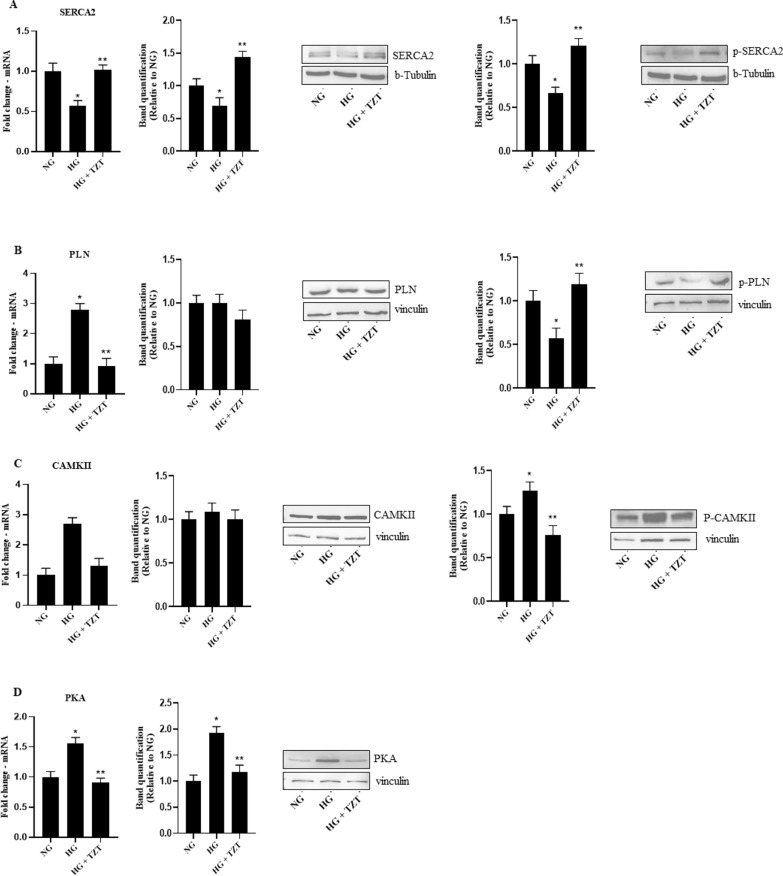
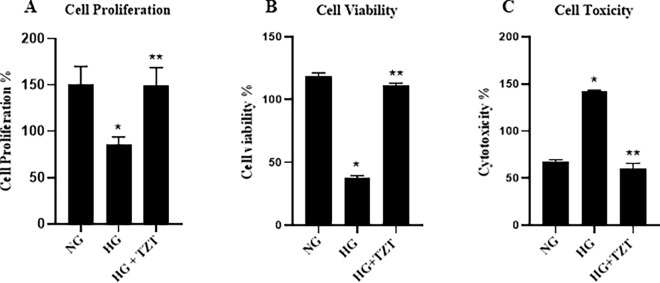
A three-steps approach was designed: (i) Meta-analysis investigation with the primary objective of assessing major adverse cardiovascular events (MACE) occurrence from major randomized clinical trials.; (ii) TZT effects on a human cardiac AC16 cell line exposed to normal (5 mM) and high (33 mM) glucose concentrations for 7 days. The gene expression and protein levels of primary markers related to cardiac fibrosis, hypertrophy, and calcium modulation were evaluated. (iii) In silico data from bioinformatic analyses for generating an interaction map that delineates the potential mechanism of action of TZT.
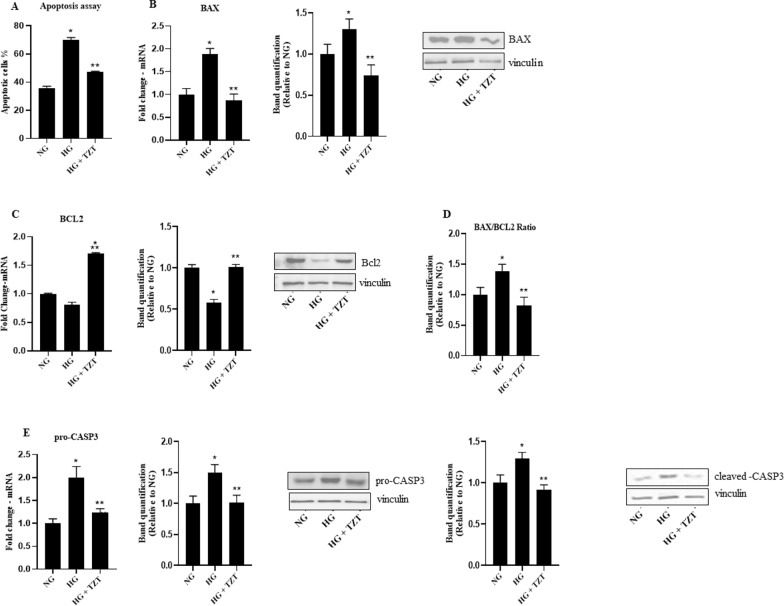
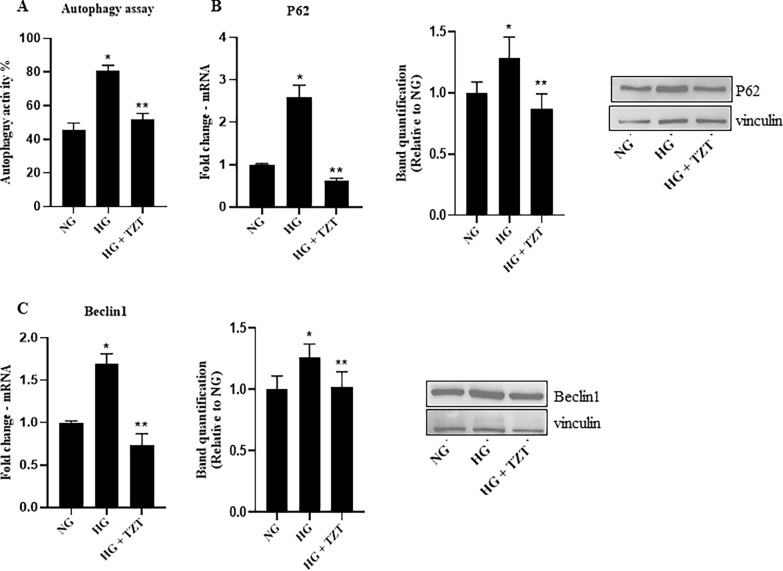
Meta-analysis showed a reduced risk for MACE events by TZT therapy (HR was 0.59 (95% CI 0.40-0.79, Heterogeneity: r = 0.01, I = 23.45%, H = 1.31). In the human AC16 cardiac cell line treatment with 100 nM TZT contrasted high glucose (HG) levels increase in the expression of markers associated with fibrosis, hypertrophy, and cell death (p < 0.05 for all investigated markers). Bioinformatics analysis confirmed the interaction between the analyzed markers and the associated pathways found in AC16 cells by which TZT affects apoptosis, fibrosis, and contractility, thus reducing the risk of heart failure.
Our findings indicate that TZT has beneficial effects on cardiac cells by positively modulating cardiomyocyte death, fibrosis, and hypertrophy in the presence of high glucose concentrations. This suggests that TZT may reduce the risk of diabetes-related cardiac damage, highlighting its potential as a therapeutic option for heart failure management clinical trials. Our study strongly supports the rationale behind the clinical trials currently underway, the results of which will be further investigated to gain insights into the cardiovascular safety and efficacy of TZT.
胰高血糖素样肽-1 受体激动剂(GLP-1RAs)是有效的抗糖尿病药物,具有潜在的心血管益处。尽管它们在降低主要不良心血管事件(MACE)风险方面的作用已得到充分证实,但它们对心力衰竭(HF)的影响仍不清楚。因此,我们的研究检查了新型葡萄糖依赖性胰岛素促分泌多肽(GIP)和胰高血糖素样肽 1(GLP-1)受体激动剂替西帕肽(TZT)的心脏保护作用。
采用三步法设计:(i)荟萃分析研究,主要目的是评估主要随机临床试验中主要不良心血管事件(MACE)的发生情况;(ii)TZT 对暴露于正常(5 mM)和高(33 mM)葡萄糖浓度下 7 天的人心脏 AC16 细胞系的影响。评估与心脏纤维化、肥大和钙调节相关的主要标志物的基因表达和蛋白水平。(iii)生物信息学分析的计算数据,以生成交互图,描绘 TZT 的潜在作用机制。
荟萃分析显示,TZT 治疗降低了 MACE 事件的风险(HR 为 0.59(95%CI 0.40-0.79,异质性:r=0.01,I=23.45%,H=1.31)。在人 AC16 心脏细胞系中,用 100 nM TZT 处理与高葡萄糖(HG)水平相比,与纤维化、肥大和细胞死亡相关的标志物的表达增加(所有研究标志物的 p<0.05)。生物信息学分析证实了分析标记物与 AC16 细胞中发现的相关途径之间的相互作用,通过该途径 TZT 影响细胞凋亡、纤维化和收缩性,从而降低心力衰竭的风险。
我们的研究结果表明,TZT 通过积极调节高葡萄糖浓度下的心肌细胞死亡、纤维化和肥大,对心脏细胞具有有益作用。这表明 TZT 可能降低与糖尿病相关的心脏损伤的风险,凸显了其作为心力衰竭管理临床试验治疗选择的潜力。我们的研究强烈支持目前正在进行的临床试验的基本原理,将进一步研究其结果,以深入了解 TZT 的心血管安全性和疗效。