Haeck J C, Bol K, de Ridder C M A, Brunel L, Fehrentz J A, Martinez J, van Weerden W M, Bernsen M R, de Jong M, Veenland J F
Department of Radiology, Erasmus MC, Rotterdam, the Netherlands.
Department of Medical Informatics, Erasmus MC, Rotterdam, the Netherlands.
EJNMMI Res. 2016 Dec;6(1):3. doi: 10.1186/s13550-016-0160-4. Epub 2016 Jan 14.
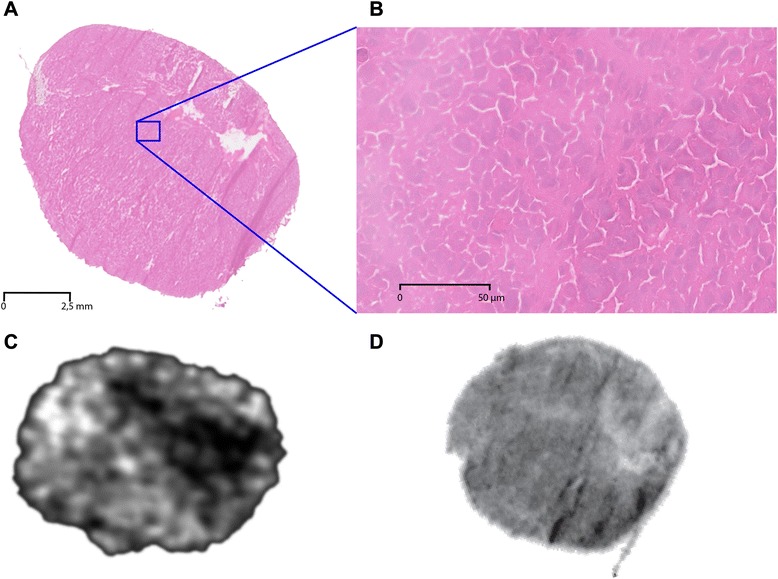
As model system, a solid-tumor patient-derived xenograft (PDX) model characterized by high peptide receptor expression and histological tissue homogeneity was used to study radiopeptide targeting. In this solid-tumor model, high tumor uptake of targeting peptides was expected. However, in vivo SPECT images showed substantial heterogeneous radioactivity accumulation despite homogenous receptor distribution in the tumor xenografts as assessed by in vitro autoradiography. We hypothesized that delivery of peptide to the tumor cells is dictated by adequate local tumor perfusion. To study this relationship, sequential SPECT/CT and MRI were performed to assess the role of vascular functionality in radiopeptide accumulation.
High-resolution SPECT and dynamic contrast-enhanced (DCE)-MRI were acquired in six mice bearing PC295 PDX tumors expressing the gastrin-releasing peptide (GRP) receptor. Two hours prior to SPECT imaging, animals received 25 MBq (111)In(DOTA-(βAla)2-JMV594) (25 pmol). Images were acquired using multipinhole SPECT/CT. Directly after SPECT imaging, MR images were acquired on a 7.0-T dedicated animal scanner. DCE-MR images were quantified using semi-quantitative and quantitative models. The DCE-MR and SPECT images were spatially aligned to compute the correlations between radioactivity and DCE-MRI-derived parameters over the tumor.
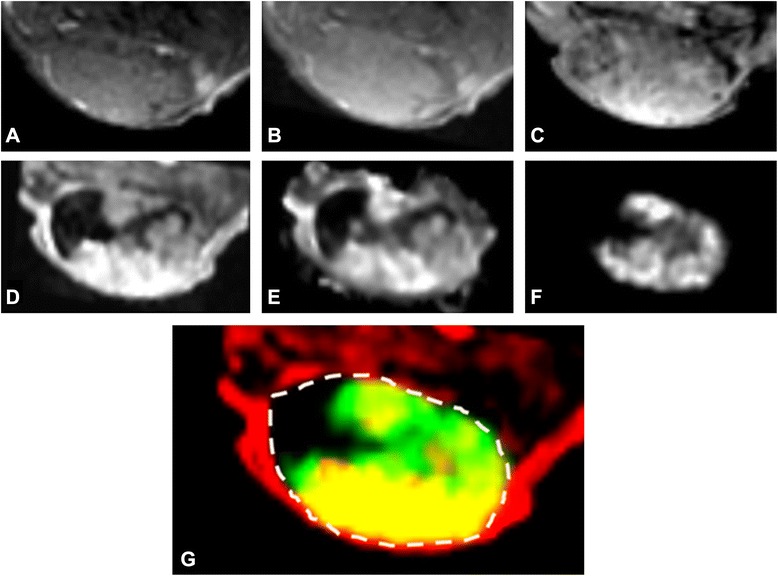
Whereas histology, in vitro autoradiography, and multiple-weighted MRI scans all showed homogenous tissue characteristics, both SPECT and DCE-MRI showed heterogeneous distribution patterns throughout the tumor. The average Spearman's correlation coefficient between SPECT and DCE-MRI ranged from 0.57 to 0.63 for the "exchange-related" DCE-MRI perfusion parameters.
A positive correlation was shown between exchange-related DCE-MRI perfusion parameters and the amount of radioactivity accumulated as measured by SPECT, demonstrating that vascular function was an important aspect of radiopeptide distribution in solid tumors. The combined use of SPECT and MRI added crucial information on the perfusion efficiency versus radiopeptide uptake in solid tumors and showed that functional tumor characteristics varied locally even when the tissue appeared homogenous on current standard assessment techniques.
作为模型系统,使用了一种以高肽受体表达和组织学组织同质性为特征的实体瘤患者来源异种移植(PDX)模型来研究放射性肽靶向。在这个实体瘤模型中,预期靶向肽在肿瘤中有高摄取。然而,体内单光子发射计算机断层扫描(SPECT)图像显示,尽管通过体外放射自显影评估肿瘤异种移植中受体分布均匀,但放射性却有大量异质性积累。我们推测肽向肿瘤细胞的递送取决于局部肿瘤的充分灌注。为了研究这种关系,进行了序贯SPECT/CT和磁共振成像(MRI)以评估血管功能在放射性肽积累中的作用。
对6只携带表达胃泌素释放肽(GRP)受体的PC295 PDX肿瘤的小鼠进行高分辨率SPECT和动态对比增强(DCE)-MRI检查。在SPECT成像前2小时,动物接受25 MBq(111)铟(DOTA-(β丙氨酸)2-JMV594)(25 pmol)。使用多孔针孔SPECT/CT采集图像。SPECT成像后立即在7.0-T专用动物扫描仪上采集MR图像。使用半定量和定量模型对DCE-MR图像进行量化。将DCE-MR和SPECT图像进行空间配准,以计算肿瘤上放射性与DCE-MRI衍生参数之间的相关性。
尽管组织学、体外放射自显影和多重加权MRI扫描均显示组织特征均匀,但SPECT和DCE-MRI均显示肿瘤内分布模式不均匀。对于“交换相关”的DCE-MRI灌注参数,SPECT与DCE-MRI之间的平均斯皮尔曼相关系数在0.57至0.63之间。
“交换相关”的DCE-MRI灌注参数与SPECT测量的放射性积累量之间呈正相关,表明血管功能是实体瘤中放射性肽分布的一个重要方面。SPECT和MRI的联合使用增加了关于实体瘤灌注效率与放射性肽摄取的关键信息,并表明即使在当前标准评估技术下组织看起来均匀时,肿瘤的功能特征在局部也存在差异。