Zong Zhen, Zhou Taicheng, Rao Liangjun, Jiang Zhipeng, Li Yingru, Hou Zehui, Yang Bin, Han Fanghai, Chen Shuang
Department of Gastroenterological Surgery, Sun Yat-sen Memorial hospital, Sun Yat-sen University, Guangzhou, China.
Departments of Gastroenterological Surgery and Hernia Center, The Sixth Affiliated Hospital, Sun Yat-sen University, Guangzhou, China.
Cancer Med. 2016 Apr;5(4):623-30. doi: 10.1002/cam4.624. Epub 2016 Jan 18.
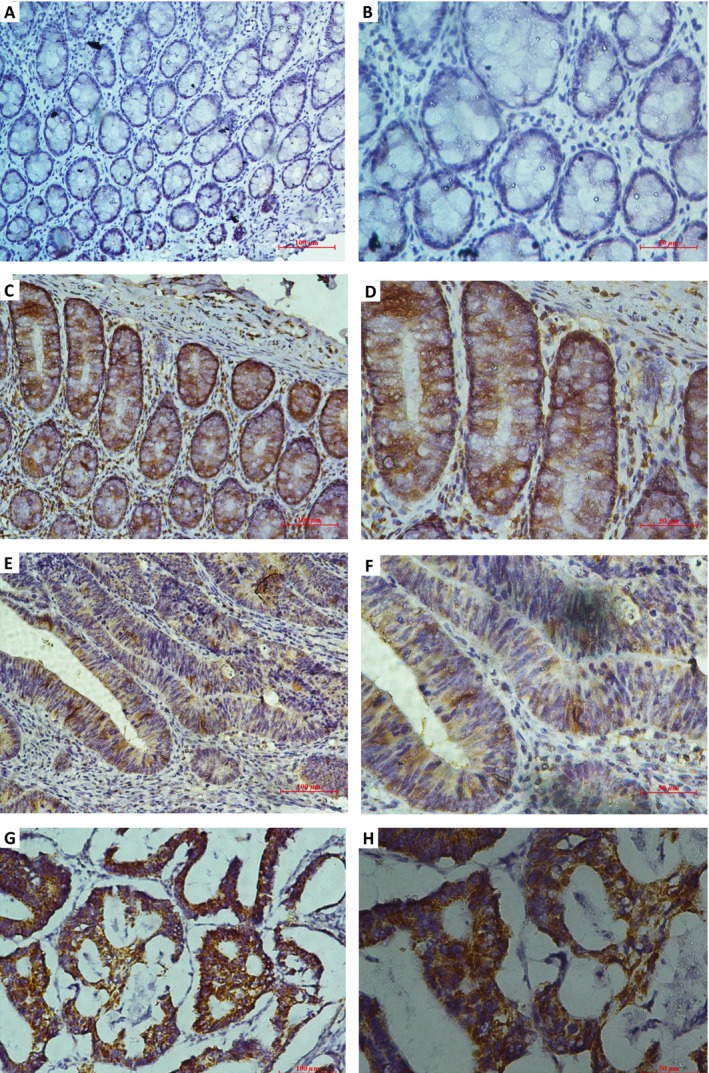
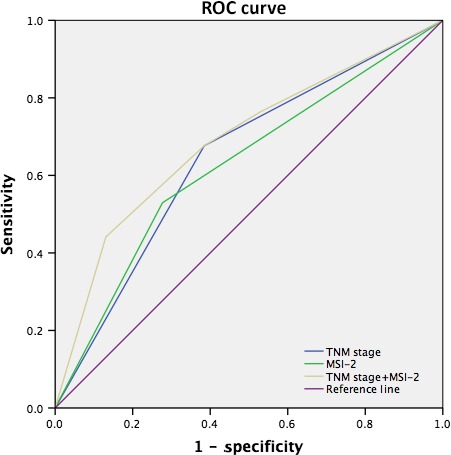
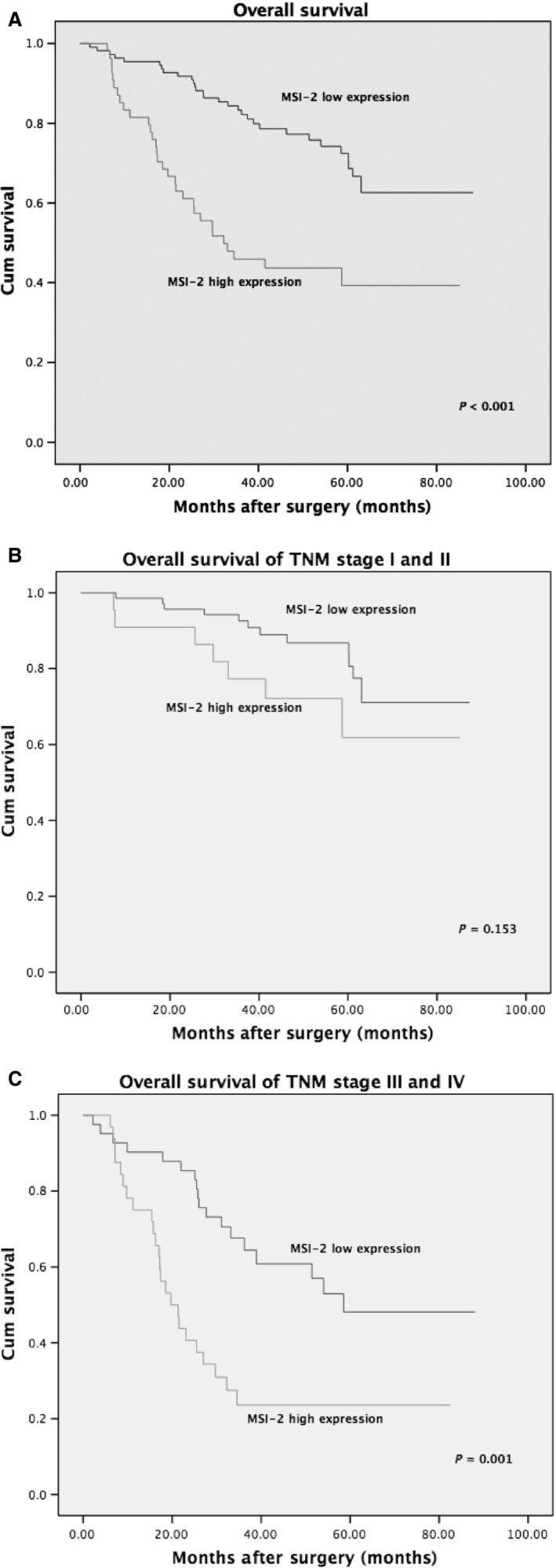
Aberrant expression of musashi2 (MSI-2) has been detected in several malignancies. However, its role in the progression of colorectal cancer (CRC) remains unknown. Our study was designed to investigate the expression and prognostic significance of MSI-2 protein in patients with colorectal cancer. The expression of MSI-2 was detected in 164 patients' colorectal cancer and control specimens by the tissue microarray technique and immunohistochemical staining. The correlations between MSI-2 expression and clinicopathological variables including overall survival were analyzed. The prognostic value of liver metastasis is evaluated by logistic regression and receiver operating characteristic (ROC) analysis. MSI-2 was highly expressed in 32.9% (54/164) of the colorectal cancer. Overexpression of MSI-2 was associated with depth of invasion, lymph node metastasis, distant metastasis, liver metastasis, Tumor Node Metastasis (TNM) clinical stage, and Carcinoembryonicantigen (CEA) level (P = 0.040, 0.014, <0.001, <0.001, 0.003, and 0.002, respectively). In the Cox multivariate test, MSI-2 overexpression, lymph node metastasis, and distant metastasis were found to be the independent prognostic factors (P = 0.027, 0.010, and 0.001, respectively). Further logistic regression suggested that TNM stage and MSI-2 high expression were related to liver metastasis in colorectal cancer patients. Conclusively, our study indicates that MSI-2 overexpression is associated with an unfavorable prognosis and may be a potential biomarker for liver metastasis in colorectal cancer patients.
在多种恶性肿瘤中均检测到了musashi2(MSI - 2)的异常表达。然而,其在结直肠癌(CRC)进展中的作用仍不清楚。我们的研究旨在探讨MSI - 2蛋白在结直肠癌患者中的表达及预后意义。采用组织芯片技术和免疫组化染色检测了164例患者的结直肠癌及对照标本中MSI - 2的表达。分析了MSI - 2表达与包括总生存期在内的临床病理变量之间的相关性。通过逻辑回归和受试者工作特征(ROC)分析评估肝转移的预后价值。MSI - 2在32.9%(54/164)的结直肠癌中高表达。MSI - 2的过表达与浸润深度、淋巴结转移、远处转移、肝转移、肿瘤淋巴结转移(TNM)临床分期及癌胚抗原(CEA)水平相关(P分别为0.040、0.014、<0.001、<0.001、0.003和0.002)。在Cox多因素检验中,发现MSI - 2过表达、淋巴结转移和远处转移是独立的预后因素(P分别为0.027、0.010和0.001)。进一步的逻辑回归表明,TNM分期和MSI - 2高表达与结直肠癌患者的肝转移有关。总之,我们的研究表明,MSI - 2过表达与不良预后相关,可能是结直肠癌患者肝转移的潜在生物标志物。