Arifin Syamsul A, Falasca Marco
Inositide Signalling Group, Centre for Cell Biology and Cutaneous Research, Blizard Institute, Queen Mary University of London, 4 Newark Street, London E1 2AT, UK.
Department of Basic Medical Science for Nursing, Faculty of Nursing, IIUM, Bandar Indera Mahkota, Kuantan Pahang 25200, Malaysia.
Metabolites. 2016 Jan 15;6(1):6. doi: 10.3390/metabo6010006.
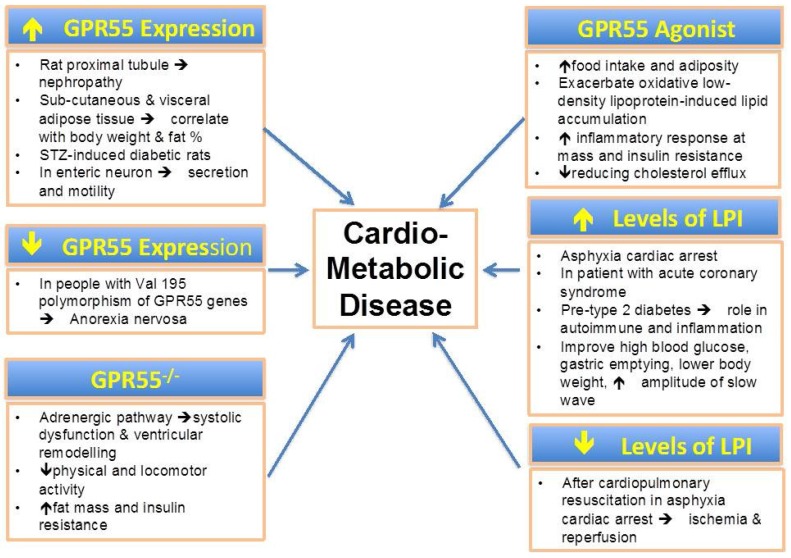
Metabolism is a chemical process used by cells to transform food-derived nutrients, such as proteins, carbohydrates and fats, into chemical and thermal energy. Whenever an alteration of this process occurs, the chemical balance within the cells is impaired and this can affect their growth and response to the environment, leading to the development of a metabolic disease. Metabolic syndrome, a cluster of several metabolic risk factors such as abdominal obesity, insulin resistance, high cholesterol and high blood pressure, and atherogenic dyslipidaemia, is increasingly common in modern society. Metabolic syndrome, as well as other diseases, such as diabetes, obesity, hyperlipidaemia and hypertension, are associated with abnormal lipid metabolism. Cellular lipids are the major component of cell membranes; they represent also a valuable source of energy and therefore play a crucial role for both cellular and physiological energy homeostasis. In this review, we will focus on the physiological and pathophysiological roles of the lysophospholipid mediator lysophosphatidylinositol (LPI) and its receptor G-protein coupled receptor 55 (GPR55) in metabolic diseases. LPI is a bioactive lipid generated by phospholipase A (PLA) family of lipases which is believed to play an important role in several diseases. Indeed LPI can affect various functions such as cell growth, differentiation and motility in a number of cell-types. Recently published data suggest that LPI plays an important role in different physiological and pathological contexts, including a role in metabolism and glucose homeostasis.
新陈代谢是细胞用来将食物衍生的营养物质(如蛋白质、碳水化合物和脂肪)转化为化学能和热能的化学过程。每当这个过程发生改变时,细胞内的化学平衡就会受到损害,这会影响它们的生长和对环境的反应,导致代谢性疾病的发生。代谢综合征是一组多种代谢风险因素,如腹型肥胖、胰岛素抵抗、高胆固醇和高血压以及致动脉粥样硬化血脂异常,在现代社会中越来越常见。代谢综合征以及其他疾病,如糖尿病、肥胖症、高脂血症和高血压,都与脂质代谢异常有关。细胞脂质是细胞膜的主要成分;它们也是宝贵的能量来源,因此对细胞和生理能量稳态都起着至关重要的作用。在这篇综述中,我们将重点关注溶血磷脂介质溶血磷脂酰肌醇(LPI)及其受体G蛋白偶联受体55(GPR55)在代谢性疾病中的生理和病理生理作用。LPI是一种由磷脂酶A(PLA)家族的脂肪酶产生的生物活性脂质,据信在多种疾病中起重要作用。事实上,LPI可以影响多种细胞类型中的各种功能,如细胞生长、分化和运动。最近发表的数据表明,LPI在不同的生理和病理环境中发挥重要作用,包括在代谢和葡萄糖稳态中的作用。