Leo-Macias Alejandra, Agullo-Pascual Esperanza, Sanchez-Alonso Jose L, Keegan Sarah, Lin Xianming, Arcos Tatiana, Korchev Yuri E, Gorelik Julia, Fenyö David, Rothenberg Eli, Rothenberg Eli, Delmar Mario
The Leon H Charney Division of Cardiology, New York University School of Medicine (NYU-SoM), 522 First Avenue, Smilow 805, New York, New York 10016, USA.
Imperial College, National Heart and Lung Institute, Department of Cardiac Medicine, Imperial Center for Translational and Experimental Medicine, Hammersmith Campus, Du Cane Road, London W12 0NN, UK.
Nat Commun. 2016 Jan 20;7:10342. doi: 10.1038/ncomms10342.
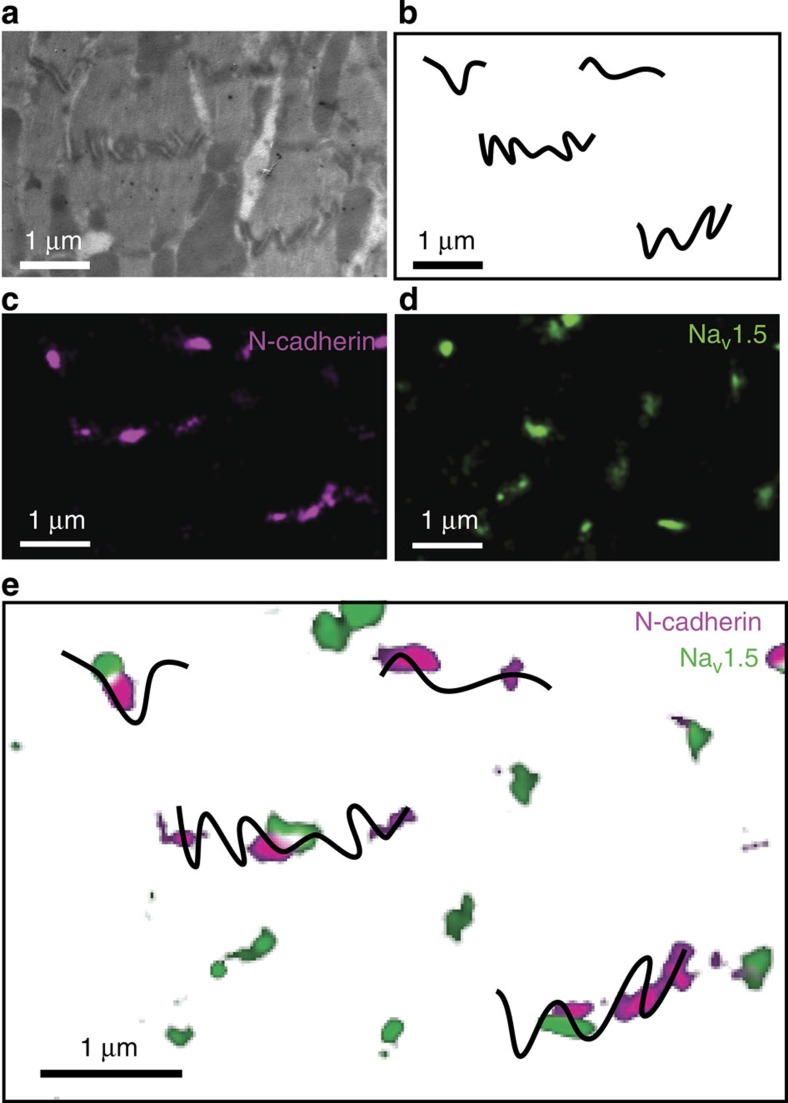
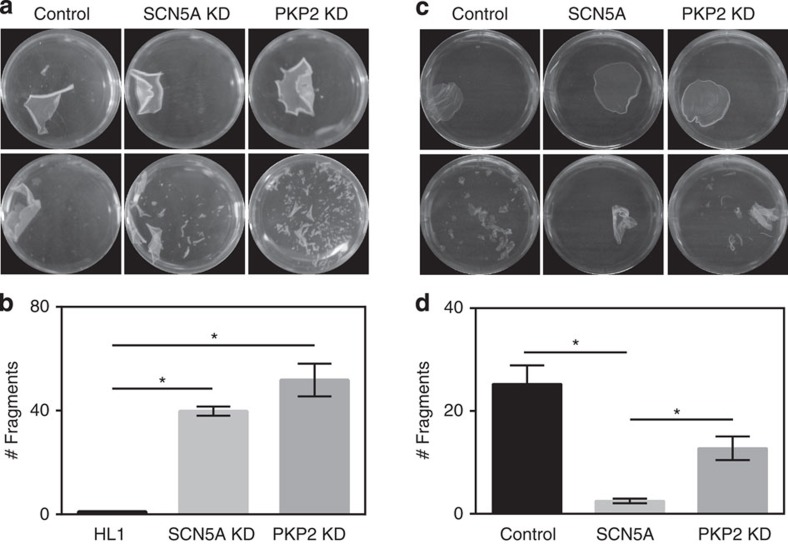
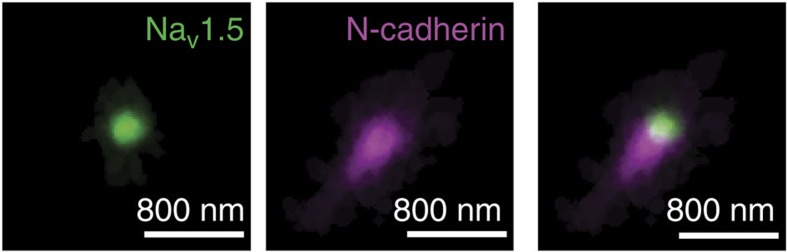
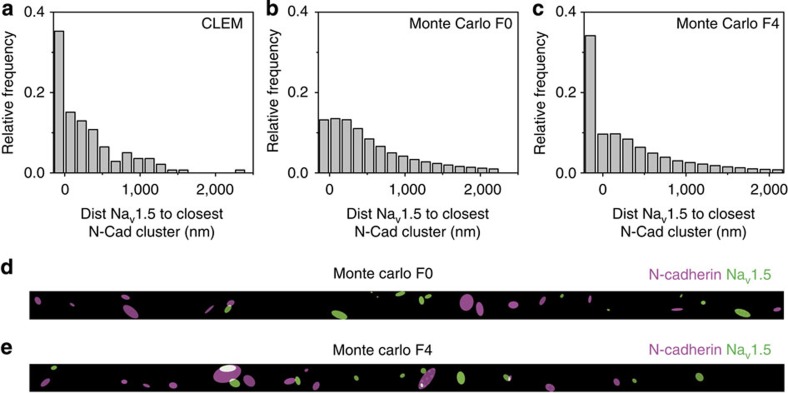
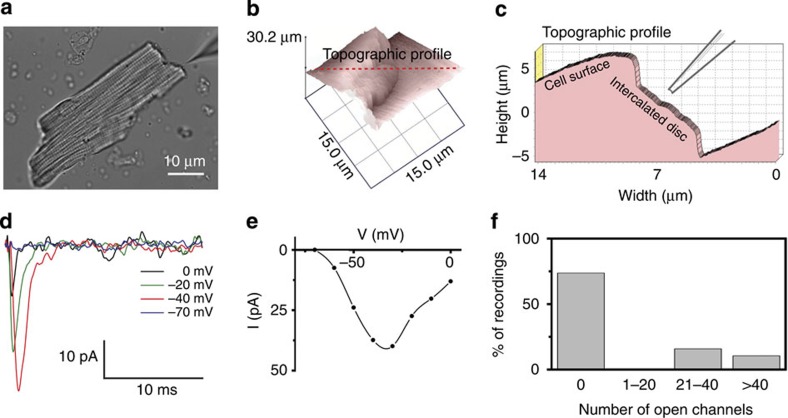
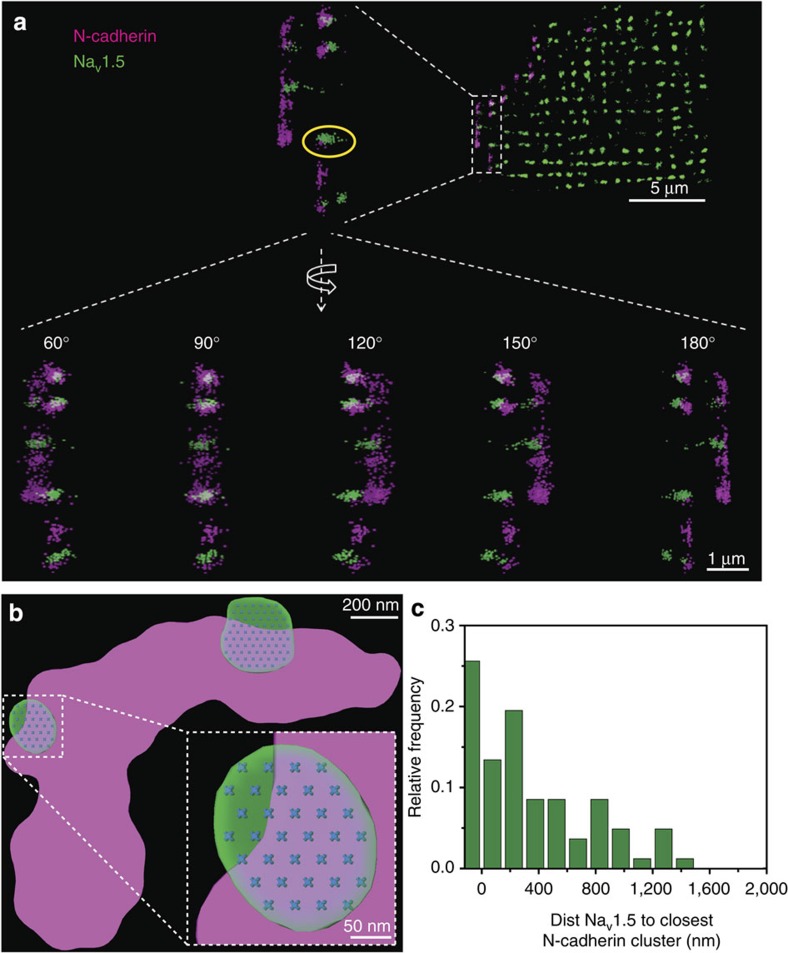
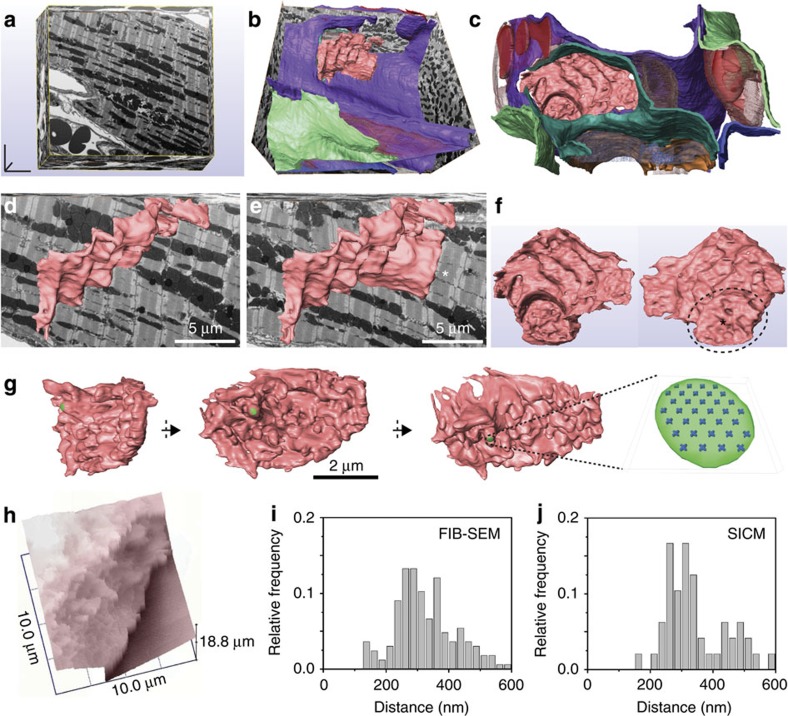
Intercellular adhesion and electrical excitability are considered separate cellular properties. Studies of myelinated fibres, however, show that voltage-gated sodium channels (VGSCs) aggregate with cell adhesion molecules at discrete subcellular locations, such as the nodes of Ranvier. Demonstration of similar macromolecular organization in cardiac muscle is missing. Here we combine nanoscale-imaging (single-molecule localization microscopy; electron microscopy; and 'angle view' scanning patch clamp) with mathematical simulations to demonstrate distinct hubs at the cardiac intercalated disc, populated by clusters of the adhesion molecule N-cadherin and the VGSC NaV1.5. We show that the N-cadherin-NaV1.5 association is not random, that NaV1.5 molecules in these clusters are major contributors to cardiac sodium current, and that loss of NaV1.5 expression reduces intercellular adhesion strength. We speculate that adhesion/excitability nodes are key sites for crosstalk of the contractile and electrical molecular apparatus and may represent the structural substrate of cardiomyopathies in patients with mutations in molecules of the VGSC complex.
细胞间黏附与电兴奋性被认为是不同的细胞特性。然而,对有髓纤维的研究表明,电压门控钠通道(VGSCs)在离散的亚细胞位置,如郎飞结,与细胞黏附分子聚集在一起。目前尚缺乏在心肌中类似大分子组织的证据。在这里,我们将纳米级成像(单分子定位显微镜、电子显微镜和“角度视图”扫描膜片钳)与数学模拟相结合,以证明在心脏闰盘处存在不同的枢纽,这些枢纽由黏附分子N-钙黏蛋白和VGSC NaV1.5的簇组成。我们表明,N-钙黏蛋白与NaV1.5的结合并非随机,这些簇中的NaV1.5分子是心脏钠电流的主要贡献者,并且NaV1.5表达的缺失会降低细胞间黏附强度。我们推测,黏附/兴奋性节点是收缩和电分子装置相互作用的关键位点,可能代表VGSC复合体分子发生突变的患者心肌病的结构基础。