Aketarawong Nidchaya, Isasawin Siriwan, Sojikul Punchapat, Thanaphum Sujinda
Department of Biotechnology, Faculty of Science, Mahidol University, 272 Rama VI Road, Phayathai, Bangkok, 10400 THAILAND.
Department of Biotechnology, Faculty of Science, Mahidol University, 272 Rama VI Road, Phayathai, Bangkok, 10400 THAILAND; equal contribution.
Zookeys. 2015 Nov 26(540):239-72. doi: 10.3897/zookeys.540.10058. eCollection 2015.
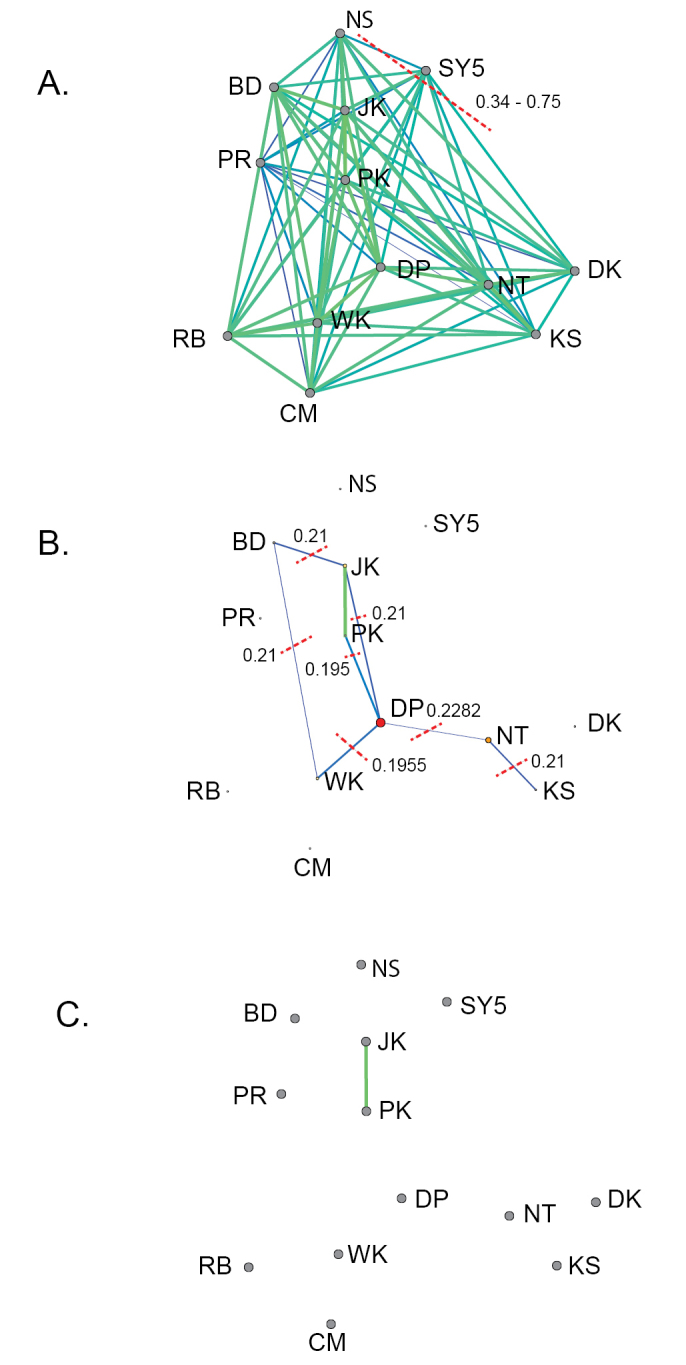
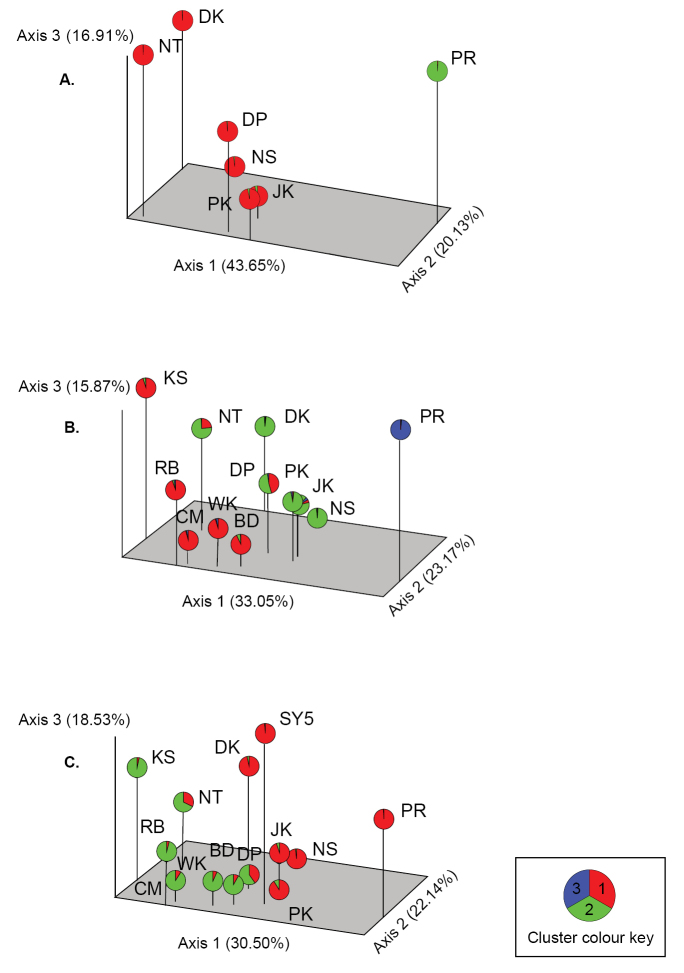
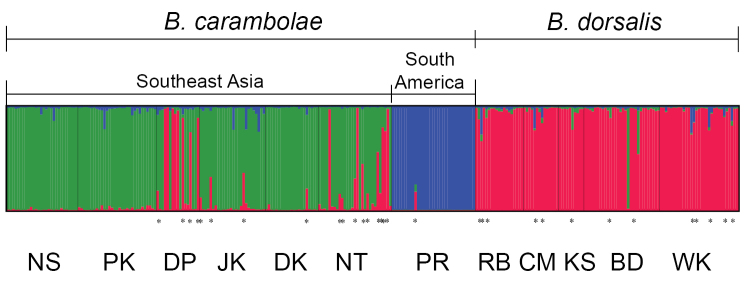
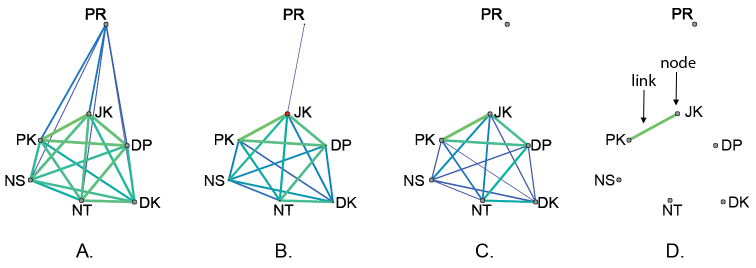
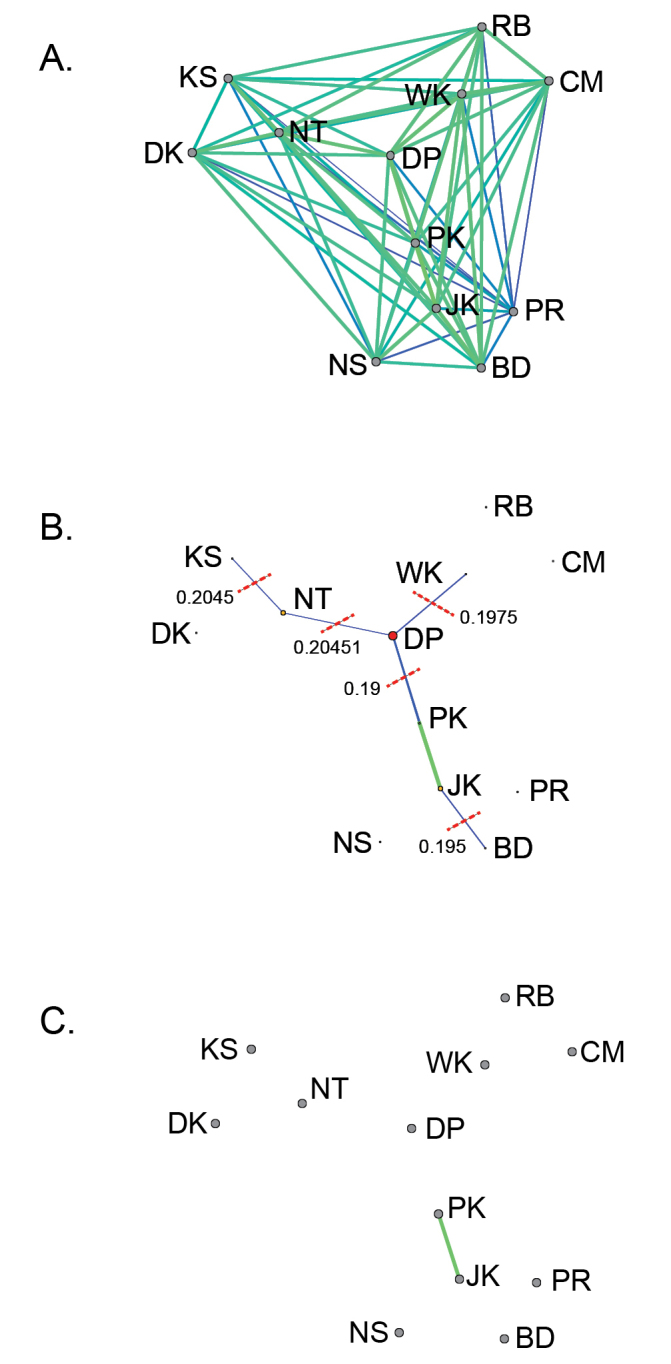
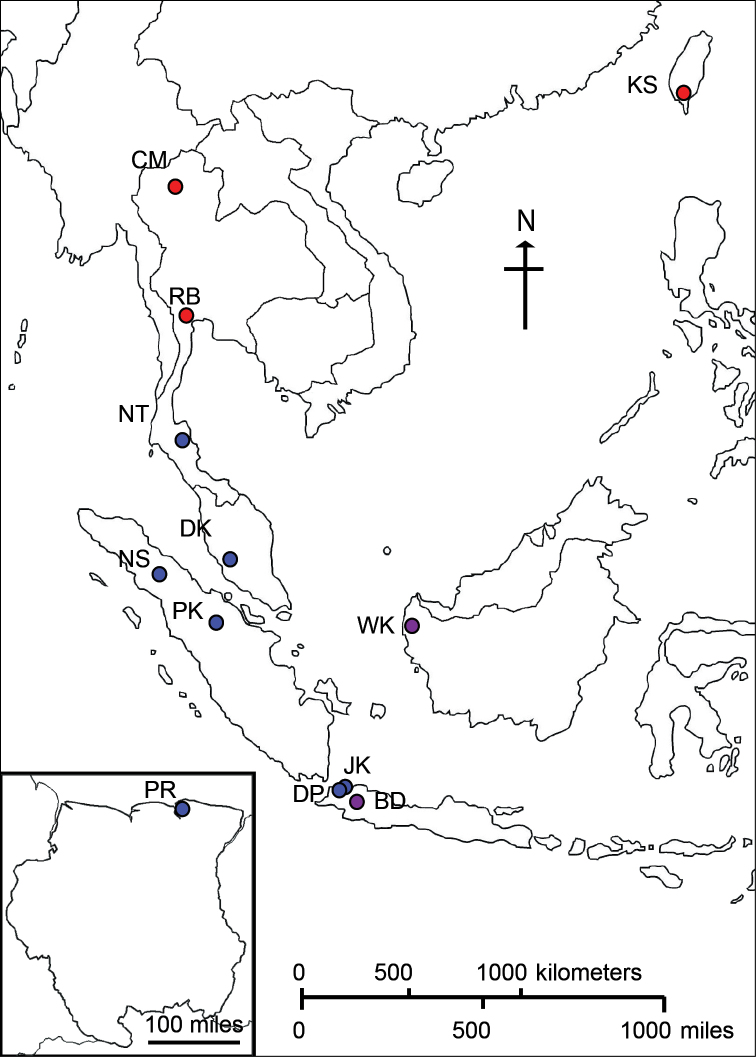
The Carambola fruit fly, Bactrocera carambolae, is an invasive pest in Southeast Asia. It has been introduced into areas in South America such as Suriname and Brazil. Bactrocera carambolae belongs to the Bactrocera dorsalis species complex, and seems to be separated from Bactrocera dorsalis based on morphological and multilocus phylogenetic studies. Even though the Carambola fruit fly is an important quarantine species and has an impact on international trade, knowledge of the molecular ecology of Bactrocera carambolae, concerning species status and pest management aspects, is lacking. Seven populations sampled from the known geographical areas of Bactrocera carambolae including Southeast Asia (i.e., Indonesia, Malaysia, Thailand) and South America (i.e., Suriname), were genotyped using eight microsatellite DNA markers. Genetic variation, genetic structure, and genetic network among populations illustrated that the Suriname samples were genetically differentiated from Southeast Asian populations. The genetic network revealed that samples from West Sumatra (Pekanbaru, PK) and Java (Jakarta, JK) were presumably the source populations of Bactrocera carambolae in Suriname, which was congruent with human migration records between the two continents. Additionally, three populations of Bactrocera dorsalis were included to better understand the species boundary. The genetic structure between the two species was significantly separated and approximately 11% of total individuals were detected as admixed (0.100 ≤ Q ≤ 0.900). The genetic network showed connections between Bactrocera carambolae and Bactrocera dorsalis groups throughout Depok (DP), JK, and Nakhon Sri Thammarat (NT) populations. These data supported the hypothesis that the reproductive isolation between the two species may be leaky. Although the morphology and monophyly of nuclear and mitochondrial DNA sequences in previous studies showed discrete entities, the hypothesis of semipermeable boundaries may not be rejected. Alleles at microsatellite loci could be introgressed rather than other nuclear and mitochondrial DNA. Bactrocera carambolae may be an incipient rather than a distinct species of Bactrocera dorsalis. Regarding the pest management aspect, the genetic sexing Salaya5 strain (SY5) was included for comparison with wild populations. The SY5 strain was genetically assigned to the Bactrocera carambolae cluster. Likewise, the genetic network showed that the strain shared greatest genetic similarity to JK, suggesting that SY5 did not divert away from its original genetic makeup. Under laboratory conditions, at least 12 generations apart, selection did not strongly affect genetic compatibility between the strain and wild populations. This knowledge further confirms the potential utilization of the Salaya5 strain in regional programs of area-wide integrated pest management using SIT.
杨桃实蝇(Bactrocera carambolae)是东南亚的一种入侵性害虫。它已被引入南美洲的苏里南和巴西等地区。杨桃实蝇属于橘小实蝇复合种,基于形态学和多位点系统发育研究,似乎与橘小实蝇有所区分。尽管杨桃实蝇是一种重要的检疫性物种,对国际贸易有影响,但在杨桃实蝇的分子生态学方面,关于物种地位和害虫管理的知识仍很缺乏。从杨桃实蝇已知地理区域采集了七个种群,包括东南亚(即印度尼西亚、马来西亚、泰国)和南美洲(即苏里南),使用八个微卫星DNA标记进行基因分型。种群间的遗传变异、遗传结构和遗传网络表明,苏里南的样本在基因上与东南亚种群有所分化。遗传网络显示,西苏门答腊(北干巴鲁,PK)和爪哇(雅加达,JK)的样本可能是苏里南杨桃实蝇的源种群,这与两大洲之间的人类迁移记录一致。此外,还纳入了三个橘小实蝇种群,以更好地理解物种界限。两个物种之间的遗传结构明显分开,约11%的个体被检测为混合个体(0.100≤Q≤0.900)。遗传网络显示,在德波(DP)、JK和那空是贪玛叻(NT)种群中,杨桃实蝇和橘小实蝇群体之间存在联系。这些数据支持了这两个物种之间的生殖隔离可能存在漏洞的假设。尽管先前研究中核DNA和线粒体DNA序列的形态和单系性显示为离散实体,但半透性边界的假设可能无法被否定。微卫星位点的等位基因可能会渗入,而不是其他核DNA和线粒体DNA。杨桃实蝇可能是橘小实蝇的一个初始物种,而非一个独特物种。在害虫管理方面,纳入了遗传性别鉴定的沙拉亚5品系(SY5)与野生种群进行比较。SY5品系在基因上被归类为杨桃实蝇群体。同样,遗传网络显示该品系与JK的遗传相似性最高,表明SY5并未偏离其原始基因组成。在实验室条件下,相隔至少12代,选择并未强烈影响该品系与野生种群之间的遗传相容性。这一知识进一步证实了沙拉亚5品系在使用昆虫不育技术的区域全区域综合害虫管理计划中的潜在利用价值。