Koskela Tuomas, Sandström Saana, Mäkinen Joonas, Liira Helena
University of Tampere, Department of General Practice, Lääkärinkatu 1, 33014, Tampereen yliopisto, Finland.
Duodecim Medical Publications Ltd, PO Box 874, 00101, Helsinki, Finland.
BMC Med Inform Decis Mak. 2016 Jan 22;16:6. doi: 10.1186/s12911-016-0245-z.
Although a number of studies have evaluated the effectiveness of computerized decision-support systems (CDSS), there is lack of data on user perspectives, barriers, and facilitators to the implementation of CDSSs in real-life surroundings. The aim of this study was to assess individually perceived barriers, facilitators and ideas influencing the CDSS implementation and usability.
In this qualitative study, five focus groups were carried out with physicians and nurses separately at the Tampere City Health Center, Finland. The participants were end-users of the EBMeDS computerized decision support system. An explorative data content analysis was applied.
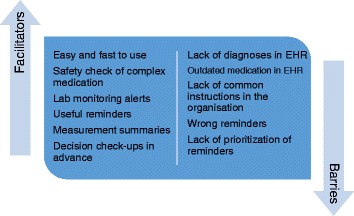
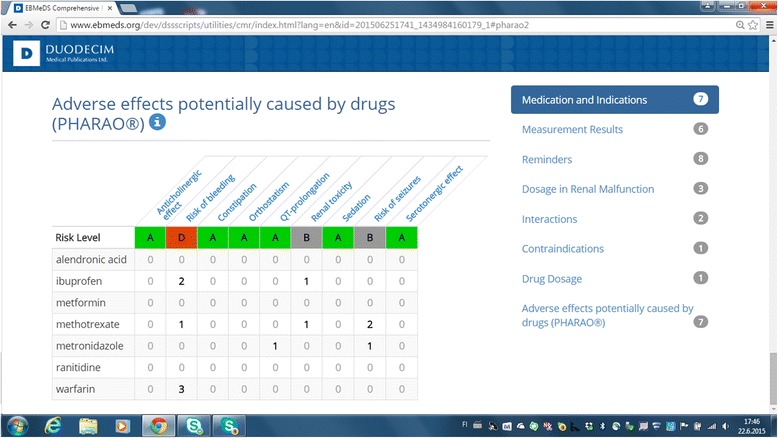
The most important barrier to benefitting from CDSS was the lack of structured and coded diagnosis documentation and outdated medication information in the electronic health records. This led to false alerts and distrust towards the system. Among the major facilitators found were e.g. the beneficial reminders that helped practitioners take into account matters otherwise ignored; automatic glomerular filtration rate (GFR) calculations; medication safety checks; and the summaries in the single medication review at a glance.
Physicians' and nurses' are keen to use the CDSS and it may enhance their inter-professional collaboration. Documenting patient information in a structured, uniform and easy manner is the essential starting point for electronic decision support. When implementing CDSS, managers need to focus on common practices in documenting structured data in their organizations in order to prevent undermining trust in the system.
尽管已有多项研究评估了计算机化决策支持系统(CDSS)的有效性,但缺乏关于用户观点、在现实环境中实施CDSS的障碍和促进因素的数据。本研究的目的是评估个体感知到的影响CDSS实施和可用性的障碍、促进因素及想法。
在这项定性研究中,分别在芬兰坦佩雷市卫生中心与医生和护士进行了5次焦点小组讨论。参与者是EBMeDS计算机化决策支持系统的终端用户。采用探索性数据内容分析。
从CDSS中获益的最重要障碍是电子健康记录中缺乏结构化和编码的诊断文档以及过时的用药信息。这导致了错误警报和对系统的不信任。发现的主要促进因素包括例如有助于从业者考虑到否则会被忽略的事项的有益提醒;自动肾小球滤过率(GFR)计算;用药安全检查;以及单次用药审查中的一目了然的总结。
医生和护士热衷于使用CDSS,它可能会增强他们的跨专业协作。以结构化、统一且简便的方式记录患者信息是电子决策支持的关键起点。在实施CDSS时,管理者需要关注其组织中记录结构化数据的常见做法,以防止破坏对系统的信任。