Dunn Julia C, Turner Hugo C, Tun Aung, Anderson Roy M
London Centre for Neglected Tropical Disease Research, London, UK.
Department of Infectious Disease Epidemiology, School of Public Health, Faculty of Medicine, Imperial College London, London, UK.
Parasit Vectors. 2016 Jan 27;9:31. doi: 10.1186/s13071-016-1310-2.
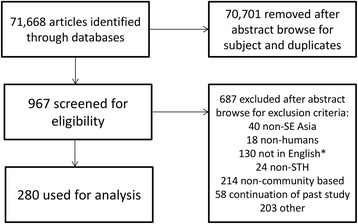
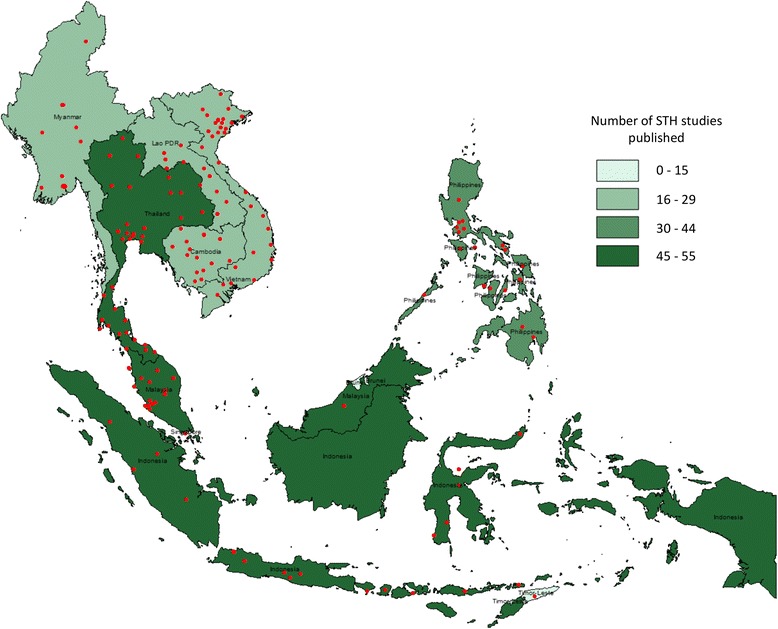
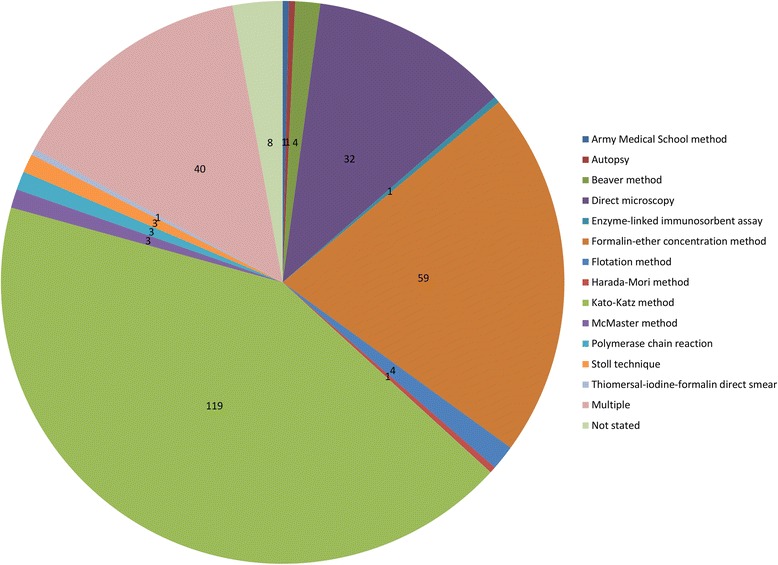
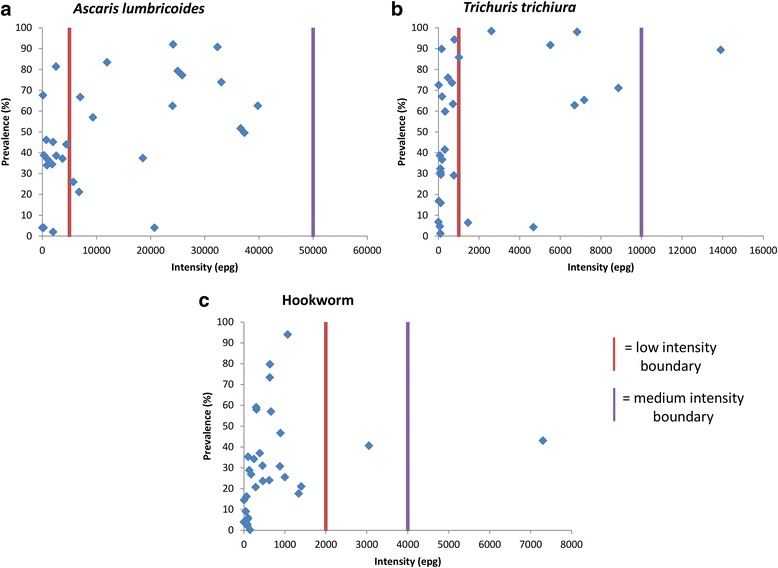
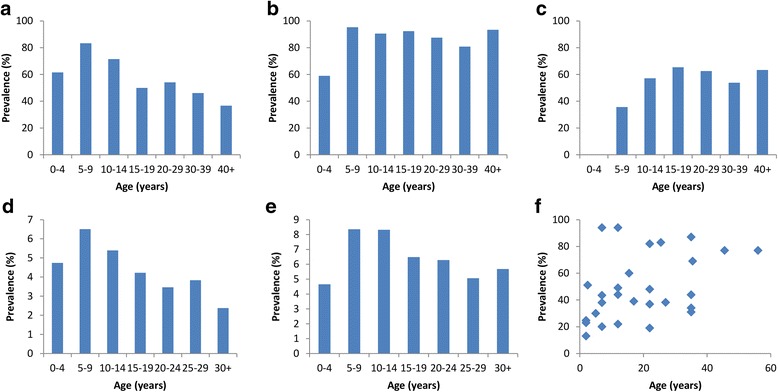
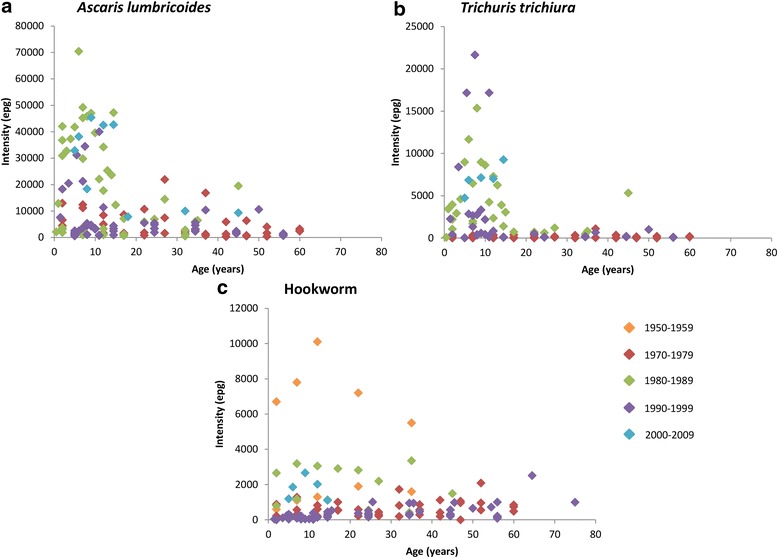
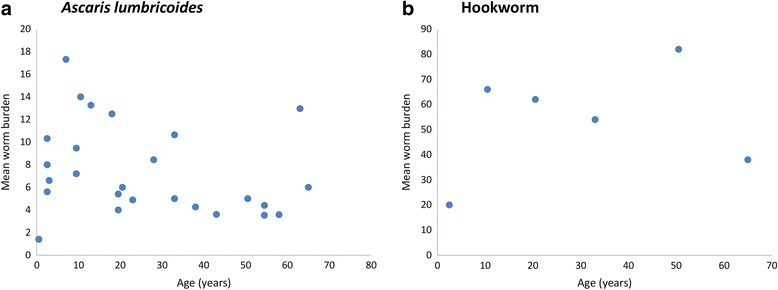
Soil-transmitted helminth (STH) infections of humans fall within the World Health Organization's (WHO) grouping termed the neglected tropical diseases (NTDs). It is estimated that they affect approximately 1.4 billion people worldwide. A significant proportion of these infections are in the population of Southeast Asia. This review analyses published data on STH prevalence and intensity in Southeast Asia over the time period of 1900 to the present to describe age related patterns in these epidemiological measures. This is with a focus on the four major parasite species affecting humans; namely Ascaris lumbricoides, Trichuris trichiura and the hookworms; Necator americanus and Ancylostoma duodenale. Data were also collected on the diagnostic methods used in the published surveys and how the studies were designed to facilitate comparative analyses of recorded patterns and changes therein over time. PubMed, Google Scholar, EMBASE, ISI Web of Science, Cochrane Database of Systematic Reviews and the Global Atlas of Helminth Infections search engines were used to identify studies on STH in Southeast Asia with the search based on the major key words, and variants on, "soil-transmitted helminth" "Ascaris" "Trichuris" "hookworm" and the country name. A total of 280 studies satisfied the inclusion criteria from 11 Southeast Asian countries; Brunei, Cambodia, Indonesia, Lao People's Democratic Republic (Lao PDR), Malaysia, Myanmar, Philippines, Singapore, Thailand, Timor-Leste and Vietnam. It was concluded that the epidemiological patterns of STH infection by age and species mix in Southeast Asia are similar to those reported in other parts of the world. In the published studies there were a large number of different diagnostic methods used with differing sensitivities and specificities, which makes comparison of the results both within and between countries difficult. There is a clear requirement to standardise the methods of both STH diagnosis in faecal material and how the intensity of infection is recorded and reported in future STH research and in monitoring and evaluation (M&E) of the impact of continuing and expanding mass drug administration (MDA) programmes.
人类土壤传播的蠕虫(STH)感染属于世界卫生组织(WHO)归类的被忽视热带病(NTDs)。据估计,全球约有14亿人受其影响。这些感染中有很大一部分发生在东南亚人口中。本综述分析了1900年至现在这段时间内东南亚关于STH流行率和感染强度的已发表数据,以描述这些流行病学指标中与年龄相关的模式。重点关注影响人类的四种主要寄生虫物种,即蛔虫、鞭虫和钩虫(美洲板口线虫和十二指肠钩口线虫)。还收集了已发表调查中使用的诊断方法以及研究设计方式的数据,以便对记录的模式及其随时间的变化进行比较分析。使用PubMed、谷歌学术、EMBASE、科学引文索引(ISI)网络版、Cochrane系统评价数据库和全球蠕虫感染地图搜索引擎,根据主要关键词以及“土壤传播的蠕虫”“蛔虫”“鞭虫”“钩虫”和国家名称的变体,搜索东南亚关于STH的研究。共有来自11个东南亚国家(文莱、柬埔寨、印度尼西亚、老挝人民民主共和国、马来西亚、缅甸、菲律宾、新加坡、泰国、东帝汶和越南)的280项研究符合纳入标准。得出的结论是,东南亚STH感染按年龄和物种组合的流行病学模式与世界其他地区报告的模式相似。在已发表的研究中,使用了大量不同的诊断方法,其敏感性和特异性各不相同,这使得在国家内部和国家之间比较结果变得困难。显然需要规范粪便中STH诊断方法以及未来STH研究以及持续和扩大大规模药物给药(MDA)计划影响的监测和评价(M&E)中感染强度的记录和报告方法。