Heyn Holger, Vidal Enrique, Ferreira Humberto J, Vizoso Miguel, Sayols Sergi, Gomez Antonio, Moran Sebastian, Boque-Sastre Raquel, Guil Sonia, Martinez-Cardus Anna, Lin Charles Y, Royo Romina, Sanchez-Mut Jose V, Martinez Ramon, Gut Marta, Torrents David, Orozco Modesto, Gut Ivo, Young Richard A, Esteller Manel
Cancer Epigenetics and Biology Program (PEBC), Bellvitge Biomedical Research Institute (IDIBELL), 08908 L'Hospitalet de Llobregat, Barcelona, Catalonia, Spain.
Whitehead Institute for Biomedical Research, 9 Cambridge Center, Cambridge, MA, 02142, USA.
Genome Biol. 2016 Jan 26;17:11. doi: 10.1186/s13059-016-0879-2.
One of the hallmarks of cancer is the disruption of gene expression patterns. Many molecular lesions contribute to this phenotype, and the importance of aberrant DNA methylation profiles is increasingly recognized. Much of the research effort in this area has examined proximal promoter regions and epigenetic alterations at other loci are not well characterized.
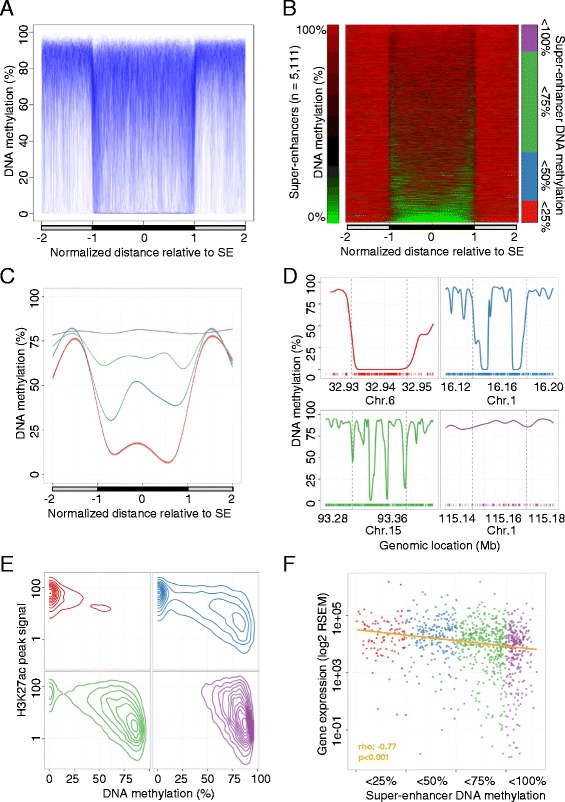
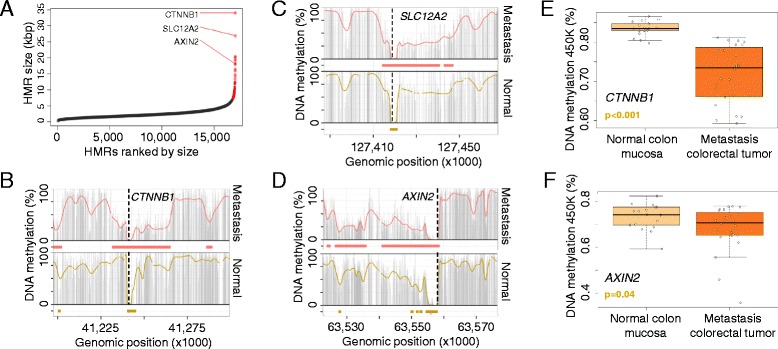
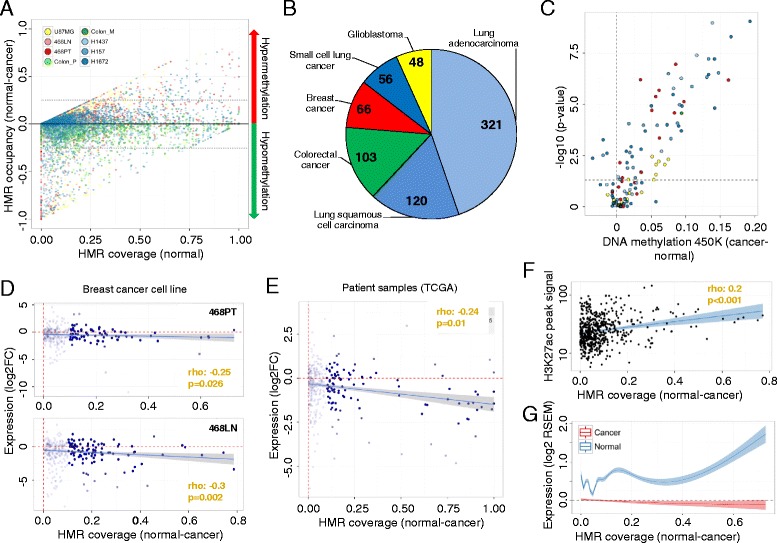
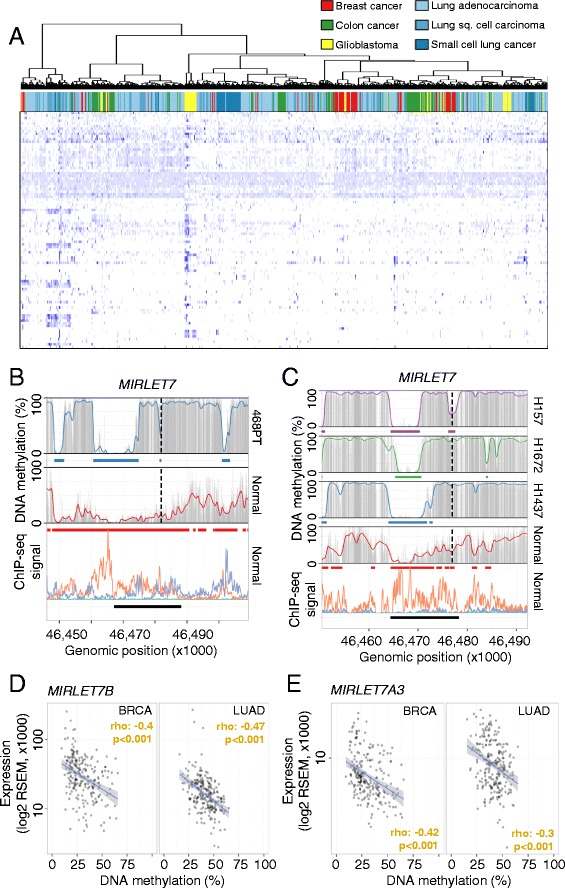
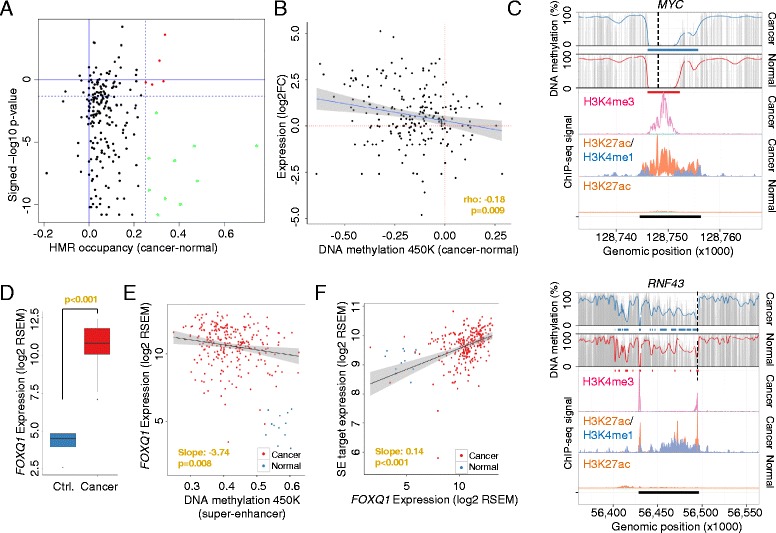
Using whole genome bisulfite sequencing to examine uncharted regions of the epigenome, we identify a type of far-reaching DNA methylation alteration in cancer cells of the distal regulatory sequences described as super-enhancers. Human tumors undergo a shift in super-enhancer DNA methylation profiles that is associated with the transcriptional silencing or the overactivation of the corresponding target genes. Intriguingly, we observe locally active fractions of super-enhancers detectable through hypomethylated regions that suggest spatial variability within the large enhancer clusters. Functionally, the DNA methylomes obtained suggest that transcription factors contribute to this local activity of super-enhancers and that trans-acting factors modulate DNA methylation profiles with impact on transforming processes during carcinogenesis.
We develop an extensive catalogue of human DNA methylomes at base resolution to better understand the regulatory functions of DNA methylation beyond those of proximal promoter gene regions. CpG methylation status in normal cells points to locally active regulatory sites at super-enhancers, which are targeted by specific aberrant DNA methylation events in cancer, with putative effects on the expression of downstream genes.
癌症的标志之一是基因表达模式的紊乱。许多分子损伤导致了这种表型,并且异常DNA甲基化谱的重要性日益得到认可。该领域的许多研究工作都集中在近端启动子区域,而其他位点的表观遗传改变尚未得到充分表征。
我们使用全基因组亚硫酸氢盐测序来检测表观基因组中未被探索的区域,在被称为超级增强子的远端调控序列的癌细胞中发现了一种影响深远的DNA甲基化改变类型。人类肿瘤的超级增强子DNA甲基化谱发生了转变,这与相应靶基因的转录沉默或过度激活有关。有趣的是,我们观察到通过低甲基化区域可检测到的超级增强子的局部活性部分,这表明在大型增强子簇内存在空间变异性。在功能上,所获得的DNA甲基化组表明转录因子促成了超级增强子的这种局部活性,并且反式作用因子调节DNA甲基化谱,对致癌过程中的转化过程产生影响。
我们以碱基分辨率建立了一份广泛的人类DNA甲基化组目录,以更好地理解DNA甲基化在近端启动子基因区域之外的调控功能。正常细胞中的CpG甲基化状态指向超级增强子处的局部活性调控位点,这些位点在癌症中受到特定异常DNA甲基化事件的影响,可能对下游基因的表达产生影响。