Maya-Mendoza Apolinar, Bartek Jiri, Jackson Dean A, Streuli Charles H
a Faculty of Life Sciences and Wellcome Trust Center for Cell-Matrix Research, University of Manchester , Manchester , United Kingdom.
b Department of Genome Integrity , Danish Cancer Society Research Center , Copenhagen , Denmark.
Cell Cycle. 2016;15(3):345-56. doi: 10.1080/15384101.2015.1121354.
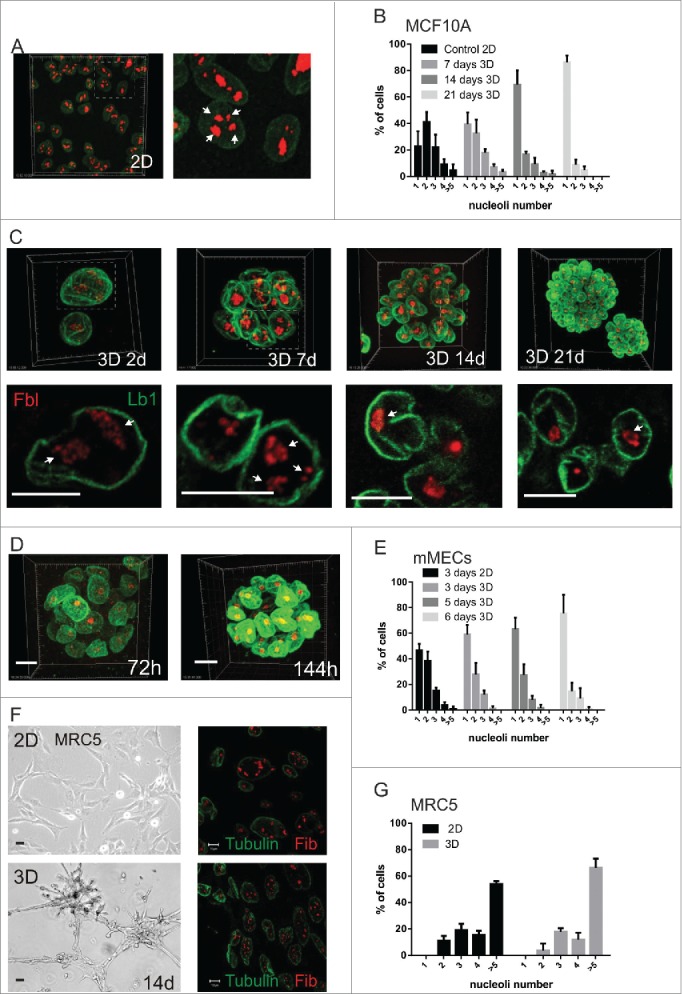
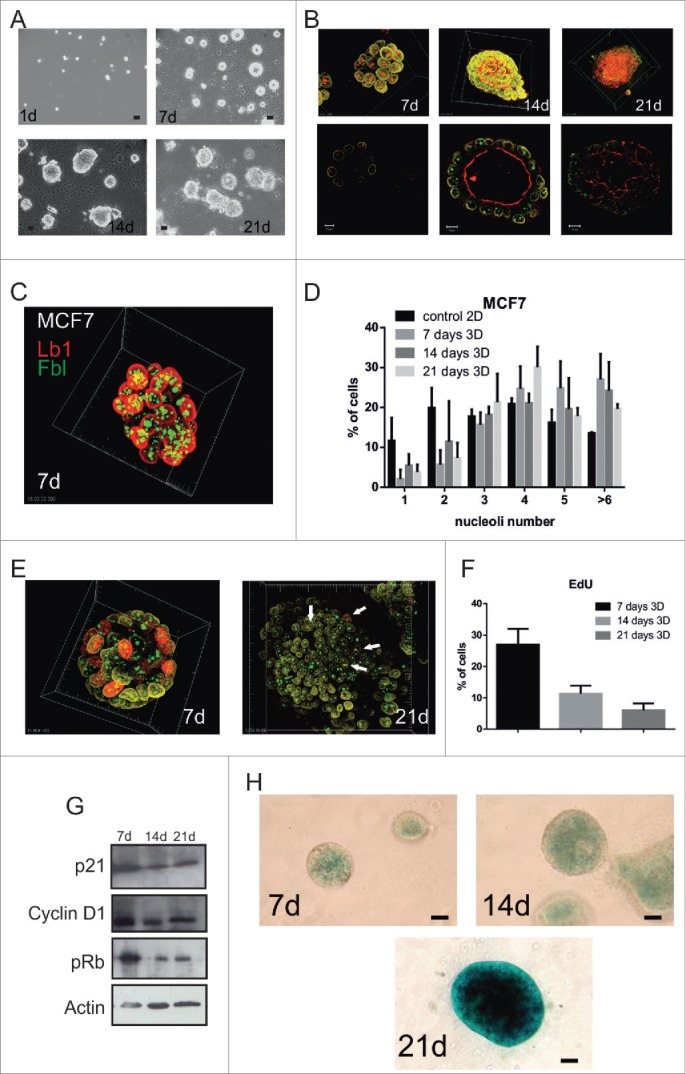
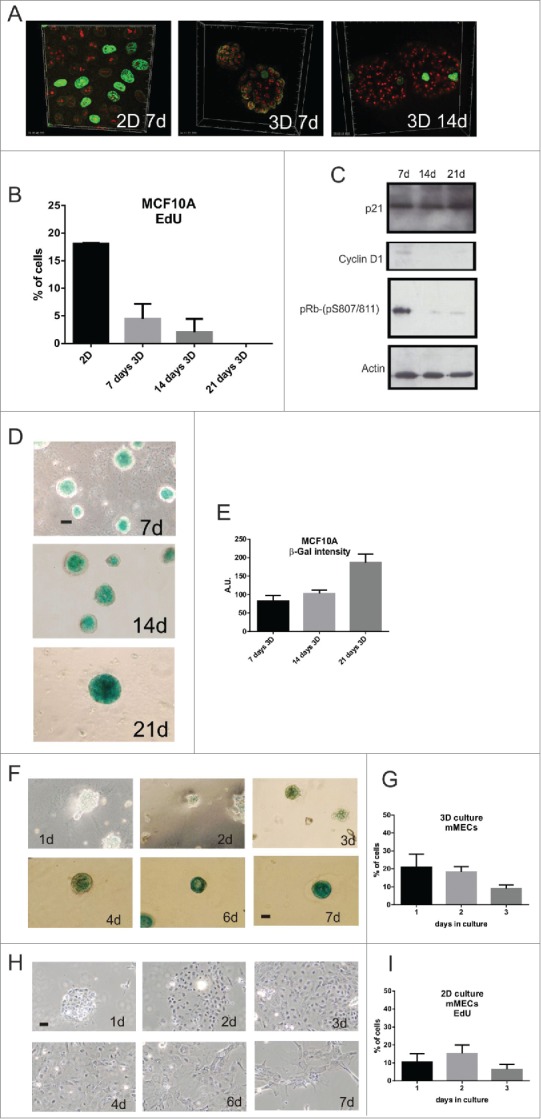
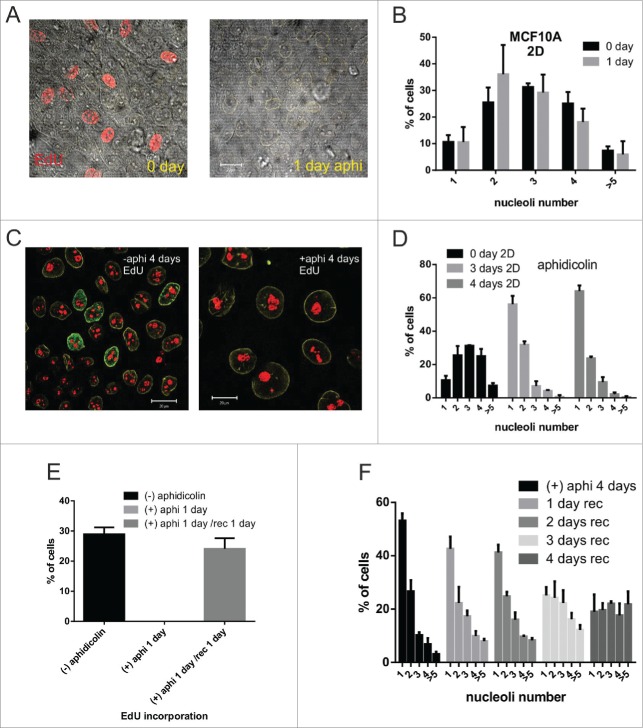
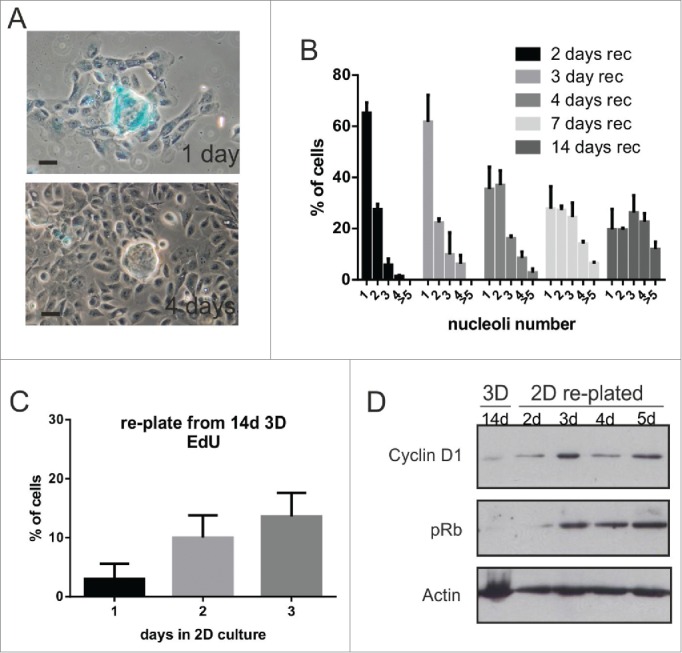
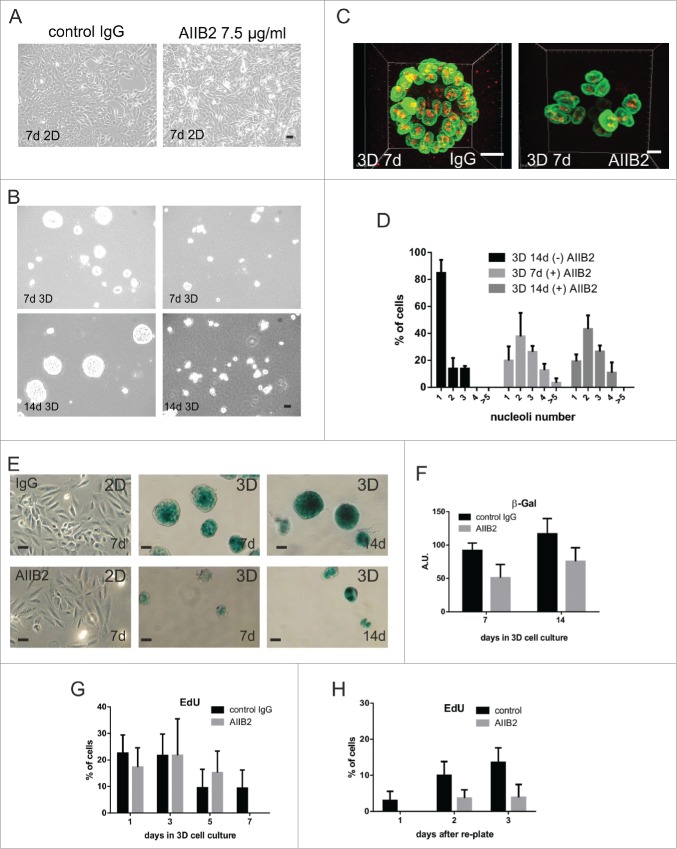
Defects in nuclear architecture occur in a variety of diseases, however the fundamental mechanisms that control the internal structure of nuclei are poorly defined. Here we reveal that the cellular microenvironment has a profound influence on the global internal organization of nuclei in breast epithelia. A 3D microenvironment induces a prolonged but reversible form of cell cycle arrest that features many of the classical markers of cell senescence. This unique form of arrest is dependent on signaling from the external microenvironment through β1-integrins. It is concomitant with alterations in nuclear architecture that characterize the withdrawal from cell proliferation. Unexpectedly, following prolonged cell cycle arrest in 3D, the senescence-like state and associated reprogramming of nuclear architecture are freely reversible on altering the dimensionality of the cellular microenvironment. Breast epithelia can therefore maintain a proliferative plasticity that correlates with nuclear remodelling. However, the changes in nuclear architecture are cell lineage-specific and do not occur in fibroblasts, and moreover they are overcome in breast cancer cells.
核结构缺陷在多种疾病中都会出现,然而,控制细胞核内部结构的基本机制仍不清楚。在此,我们揭示细胞微环境对乳腺上皮细胞核的整体内部组织有着深远影响。三维微环境诱导细胞周期出现一种持续但可逆的停滞形式,其具有许多细胞衰老的经典标志物。这种独特的停滞形式依赖于外部微环境通过β1整合素发出的信号。它伴随着核结构的改变,这些改变是细胞增殖停止的特征。出乎意料的是,在三维环境中细胞周期长时间停滞之后,当改变细胞微环境的维度时,类似衰老的状态以及相关的核结构重编程可自由逆转。因此,乳腺上皮细胞能够维持与核重塑相关的增殖可塑性。然而,核结构的变化具有细胞谱系特异性,在成纤维细胞中不会发生,而且在乳腺癌细胞中会被克服。