Quaranta N, Taliente S, Coppola F, Salonna I
UOC Otorinolaringoiatria Universitaria, Azienda Ospedaliero-Universitaria Policlinico di Bari, Italy.
Acta Otorhinolaryngol Ital. 2015 Oct;35(5):338-42. doi: 10.14639/0392-100X-590.
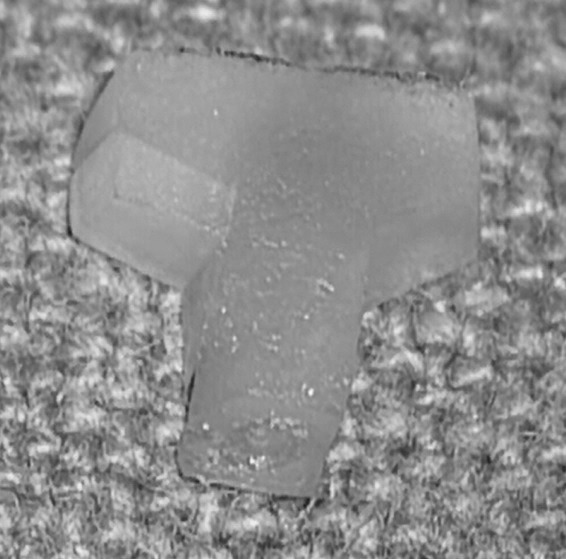
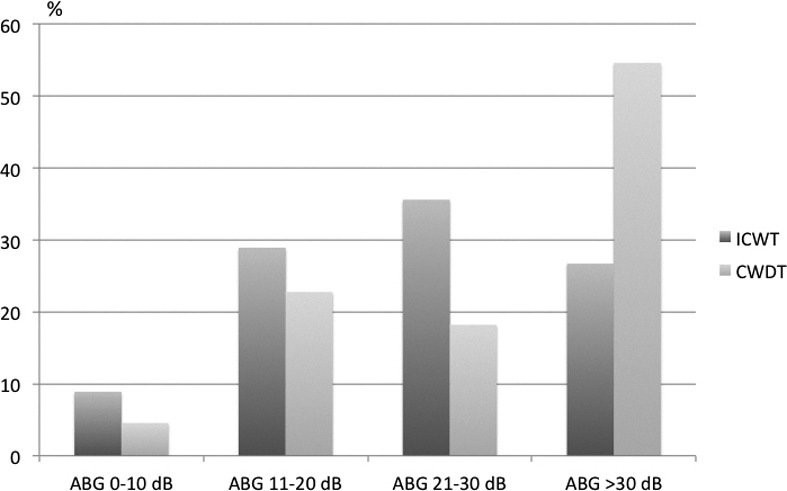
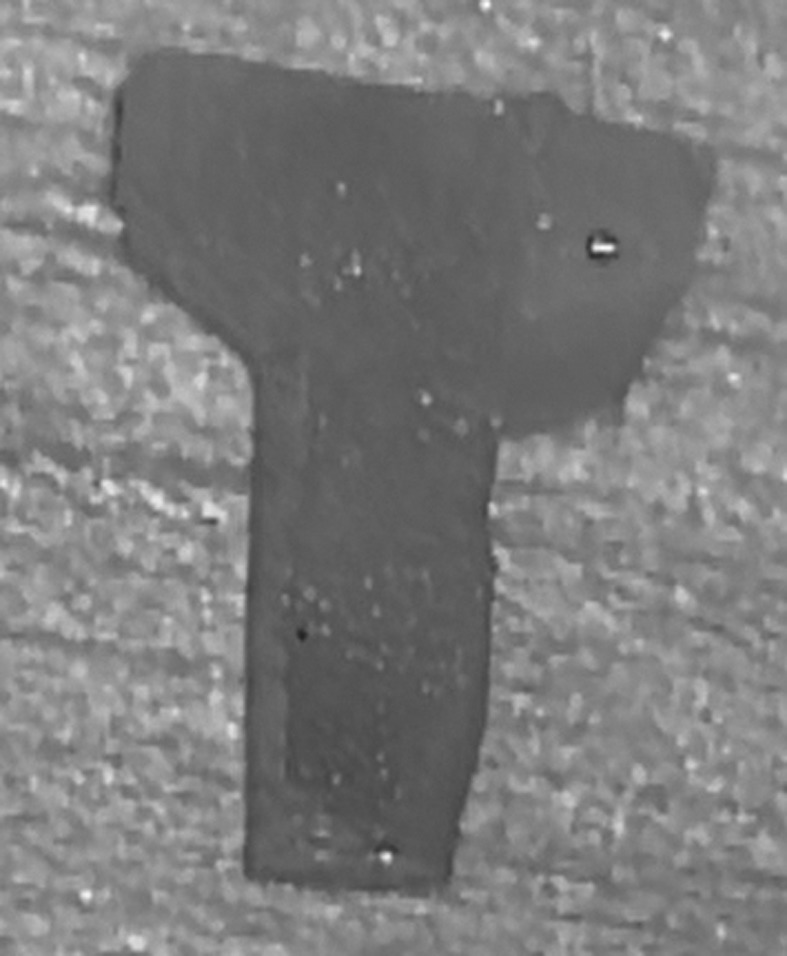
Cartilage tympanoplasty is an established procedure for tympanic membrane and attic reconstruction. Cartilage has been used as an ossiculoplasty material for many years. The aim of this study was to evaluate hearing results of costal cartilage prostheses in ossicular chain reconstruction procedures in subjects operated on for middle ear cholesteatoma and to determine the presence of prognostic factors. Candidates for this study were patients affected by middle ear cholesteatoma whose ossicular chain was reconstructed with a chondroprosthesis. 67 cases of ossiculoplasty with total (TORP) or partial (PORP) chondroprosthesis were performed between January 2011 and December 2013. Follow-up examination included micro-otoscopy and pure tone audiometry. The guidelines of the Committee on Hearing and Equilibrium of the American Academy of Otolaryngology Head and Neck Surgery were followed and pure-tone average (PTA) was calculated as the mean of 0.5, 1, 2 and 4 kHz thresholds. Statistical analysis was performed with ANOVA tests and regression models. Average air-bone gap (ABG) significantly improved from 39.2 dB HL (SD 9.1 dB HL) to 25.4 dB HL (SD 11 dB HL) (p < 0.001). Linear regression analysis showed that the only prognostic factor was the type of operation (p = 0.02). In fact, patients submitted to ICWT presented better post-operative ABG compared to CWDT. None of the other variables influenced the results. The present study proposes costal cartilage as material of choice when autologous ossicles are not available. The maintenance of the posterior canal wall was the only prognostic factor identified.
软骨鼓室成形术是一种成熟的鼓膜和上鼓室重建手术。多年来,软骨一直被用作听骨成形术的材料。本研究的目的是评估在接受中耳胆脂瘤手术的患者中,肋软骨假体在听骨链重建手术中的听力结果,并确定预后因素的存在。本研究的候选对象是患有中耳胆脂瘤且听骨链用软骨假体重建的患者。在2011年1月至2013年12月期间,进行了67例全听骨置换(TORP)或部分听骨置换(PORP)软骨假体的听骨成形术。随访检查包括显微耳镜检查和纯音听力测定。遵循美国耳鼻咽喉头颈外科学会听力与平衡委员会的指南,计算纯音平均听阈(PTA),取0.5、1、2和4kHz阈值的平均值。采用方差分析和回归模型进行统计分析。平均气骨导差(ABG)从39.2dB HL(标准差9.1dB HL)显著改善至25.4dB HL(标准差11dB HL)(p<0.001)。线性回归分析表明,唯一的预后因素是手术类型(p = 0.02)。事实上,与CWDT相比,接受ICWT的患者术后ABG更好。其他变量均未影响结果。本研究提出,在无法获得自体听小骨时,肋软骨是首选材料。后鼓室壁的保留是唯一确定的预后因素。