Wang He, Pan Meng, Ni Jinwen, Zhang Yanli, Zhang Yutao, Gao Shan, Liu Jin, Wang Zhe, Zhang Rong, He Huiming, Wu Buling, Duan Xiaohong
State Key Laboratory of Military Stomatology, Department of Oral Biology, Clinic of Oral Rare and Genetic Diseases, School of Stomatology, The Fourth Military Medical University, 145 West Changle Road, Xi'an, 710032, People's Republic of China.
Department of Stomatology, Nanfang Hospital, Guangzhou; College of Stomatology, Southern Medical University, Guangzhou, 510515, People's Republic of China.
Sci Rep. 2016 Feb 1;6:19971. doi: 10.1038/srep19971.
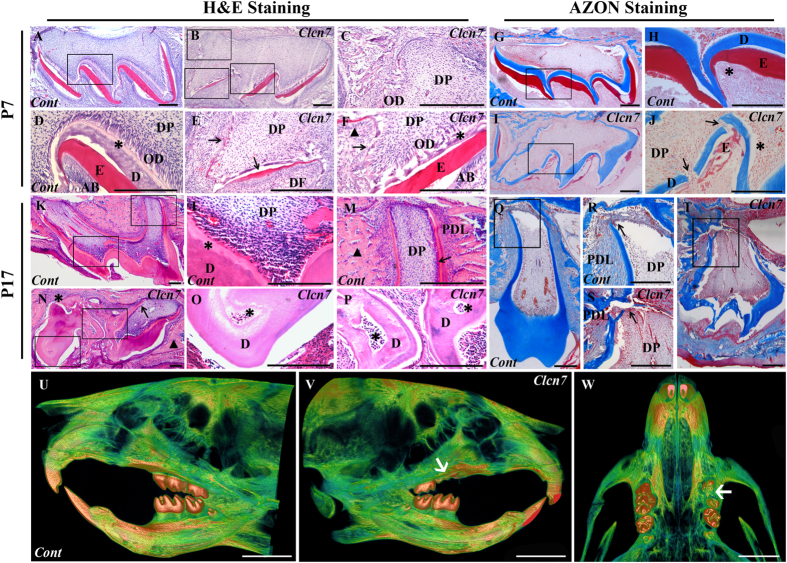
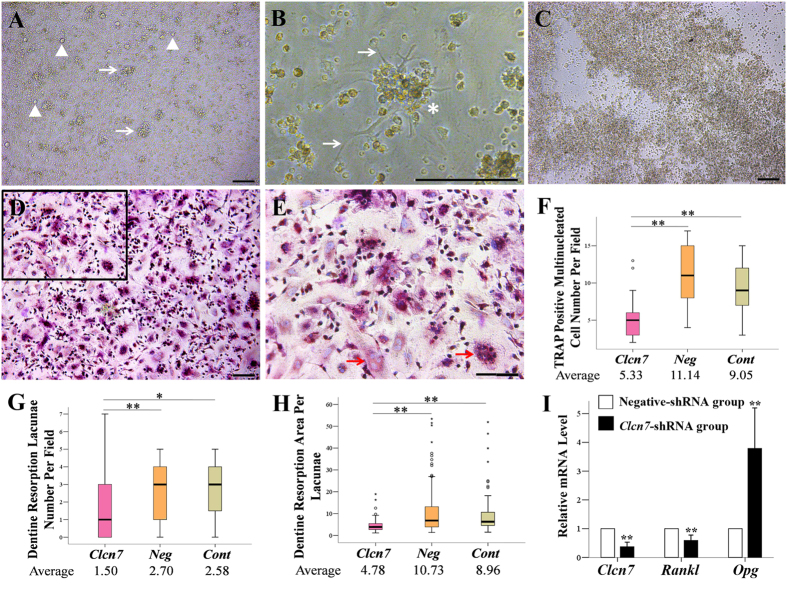
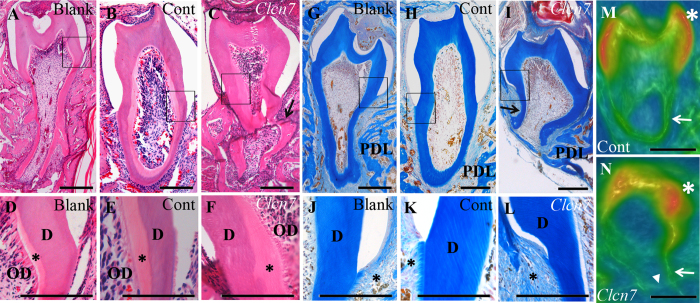
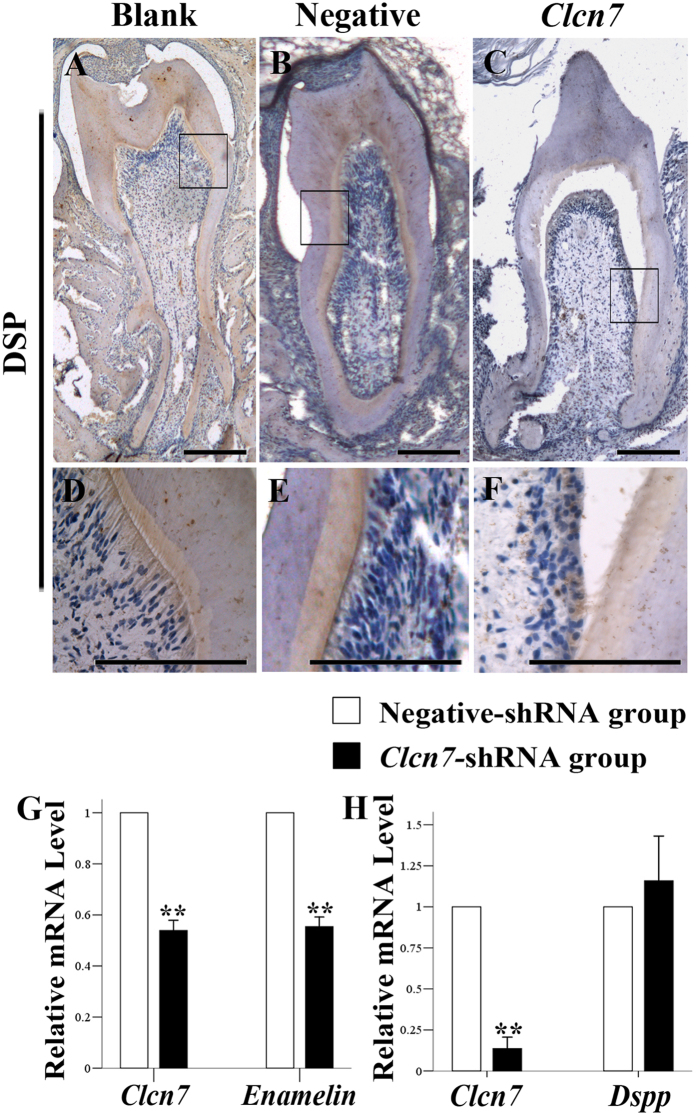
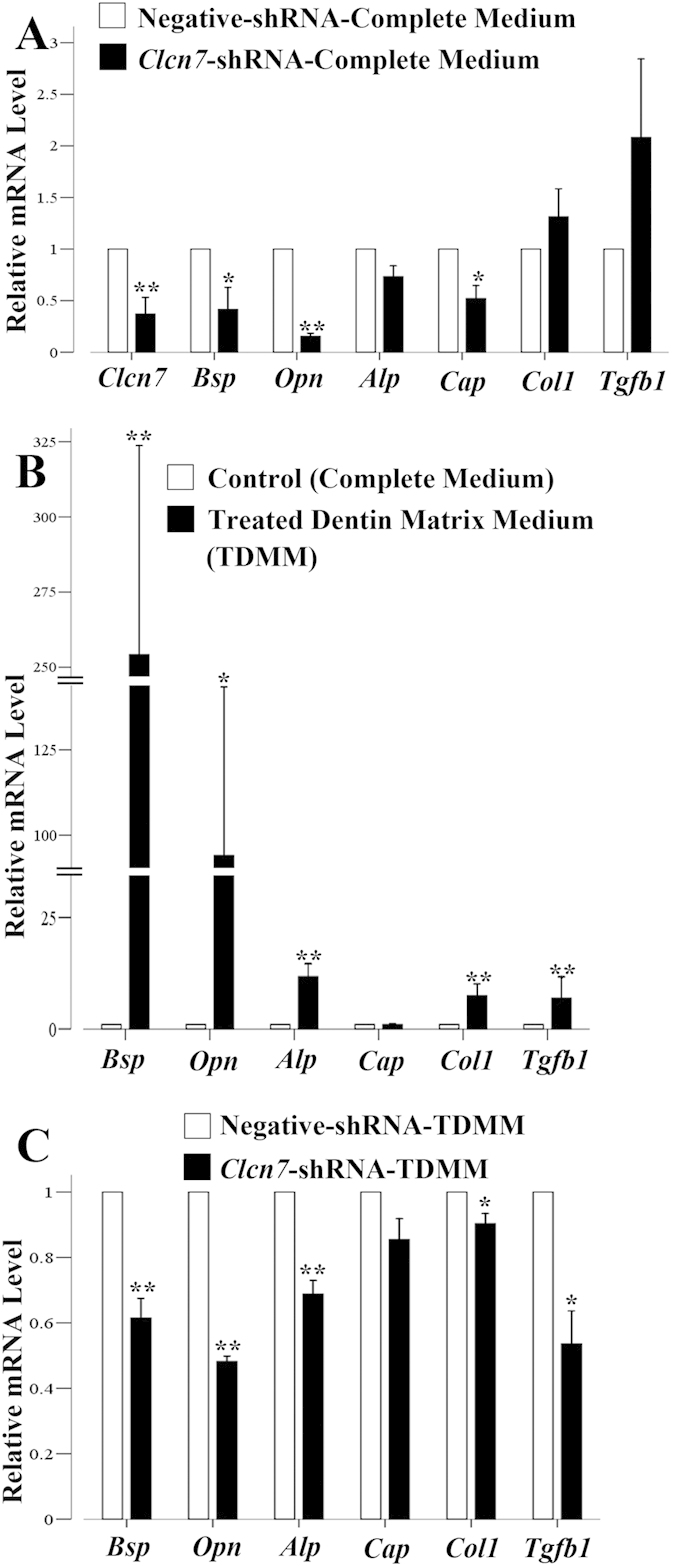
CLCN7 gene encodes the voltage gated chloride channel 7 (ClC-7) in humans. The mutations in CLCN7 have been associated with osteopetrosis in connection to the abnormal osteoclasts functions. Previously, we found that some osteopetrosis patients with CLCN7 mutations suffered from impacted teeth and root dysplasia. Here we set up two in vivo models under a normal or an osteoclast-poor environment to investigate how ClC-7 affects tooth development and tooth eruption. Firstly, chitosan-Clcn7-siRNA nanoparticles were injected around the first maxillary molar germ of newborn mice and caused the delay of tooth eruption and deformed tooth with root dysplasia. Secondly, E13.5 molar germs infected with Clcn7 shRNA lentivirus were transplanted under the kidney capsule and presented the abnormal changes in dentin structure, periodontal tissue and cementum. All these teeth changes have been reported in the patients with CLCN7 mutation. In vitro studies of ameloblasts, odontoblasts and dental follicle cells (DFCs) were conducted to explore the involved mechanism. We found that Clcn7 deficiency affect the differentiation of these cells, as well as the interaction between DFCs and osteoclasts through RANKL/OPG pathway. We conclude that ClC-7 may affect tooth development by directly targeting tooth cells, and regulate tooth eruption through DFC mediated osteoclast pathway.
CLCN7基因在人类中编码电压门控氯离子通道7(ClC-7)。CLCN7的突变与破骨细胞功能异常相关的骨质石化有关。此前,我们发现一些携带CLCN7突变的骨质石化患者患有阻生牙和牙根发育异常。在此,我们建立了两种体内模型,分别处于正常环境或破骨细胞缺乏的环境中,以研究ClC-7如何影响牙齿发育和萌出。首先,将壳聚糖-Clcn7-siRNA纳米颗粒注射到新生小鼠上颌第一磨牙牙胚周围,导致牙齿萌出延迟和牙根发育异常的牙齿变形。其次,将感染了Clcn7 shRNA慢病毒的E13.5牙胚移植到肾包膜下,出现了牙本质结构、牙周组织和牙骨质的异常变化。所有这些牙齿变化在携带CLCN7突变的患者中均有报道。对成釉细胞、成牙本质细胞和牙囊细胞(DFC)进行了体外研究,以探索其中涉及的机制。我们发现Clcn7缺陷会影响这些细胞的分化,以及DFC与破骨细胞之间通过RANKL/OPG途径的相互作用。我们得出结论,ClC-7可能通过直接作用于牙齿细胞影响牙齿发育,并通过DFC介导的破骨细胞途径调节牙齿萌出。