Chen Shuo, Sun Kai-Xuan, Liu Bo-Liang, Zong Zhi-Hong, Zhao Yang
Department of Gynecology, The First Affiliated Hospital of China Medical University, Shenyang, 110001, China.
Department of Biochemistry and Molecular Biology, College of Basic Medicine, China Medical University, Shenyang, 100013, China.
Mol Cancer. 2016 Feb 2;15:11. doi: 10.1186/s12943-016-0496-4.
Endometrial carcinoma (EC) is one of the most lethal gynecologic cancers. Patients frequently have regional or distant metastasis at diagnosis. MicroRNAs are small non-coding RNAs that participate in numerous biological processes. Recent studies have demonstrated that miR-505 is associated with several types of cancer; however, the expression and function of miR-505 have not been investigated in EC.
miR-505 expression in normal endometrial tissue, endometrial carcinomas were quantified by Quantitative reverse transcription PCR. The endometrial carcinoma cell lines HEC-1B and Ishikawa were each transfected with miR-505 or scrambled mimics, after which cell phenotype and expression of relevant molecules were assayed. Dual-luciferase reporter assay and a xenograft mouse model were used to examine miR-505 and its target gene TGF-α.
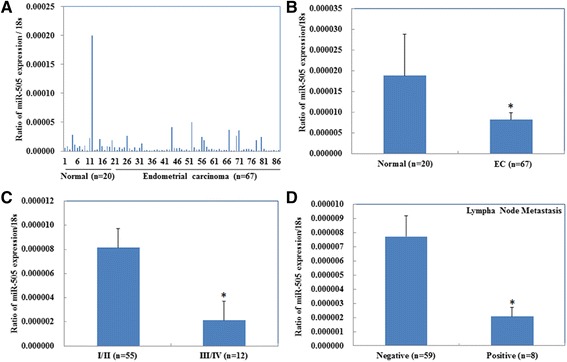
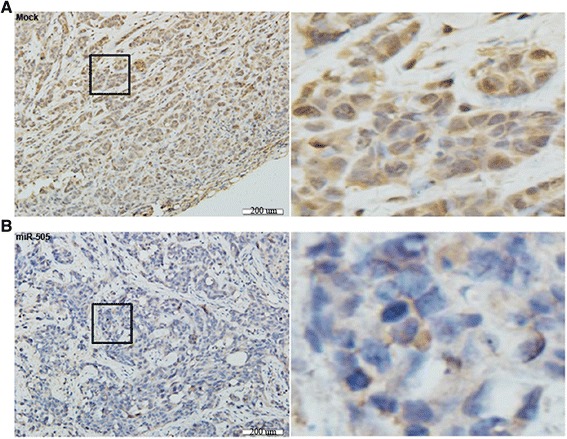
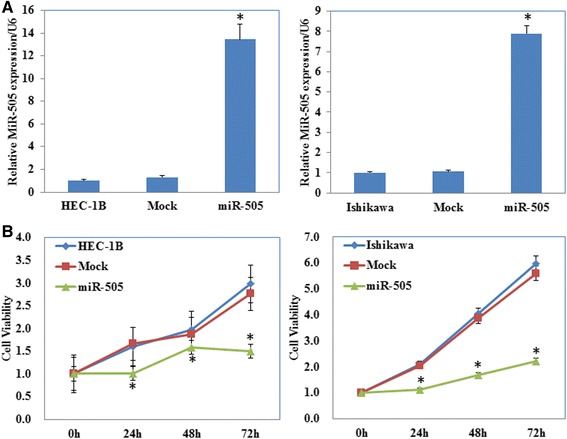
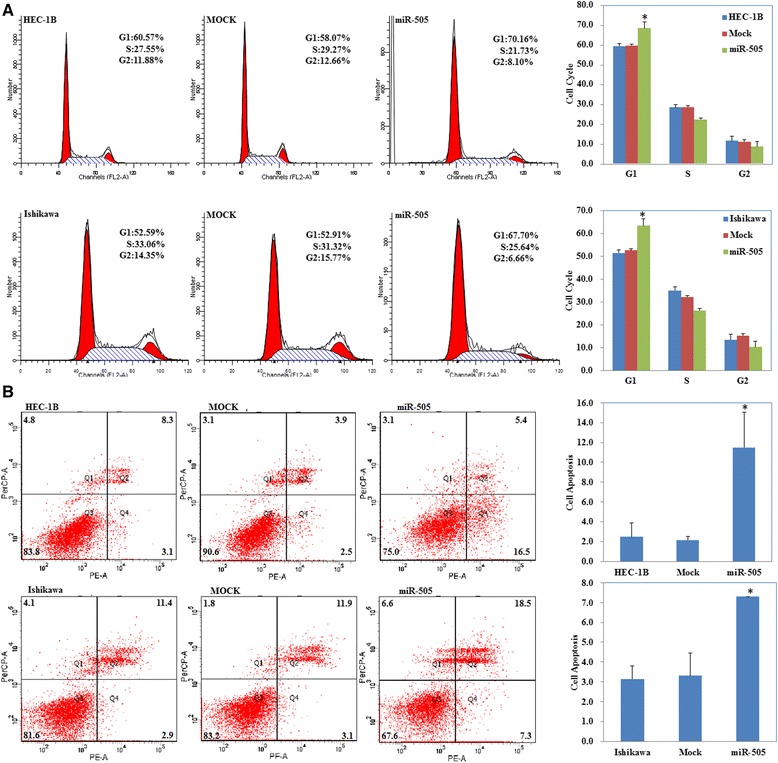
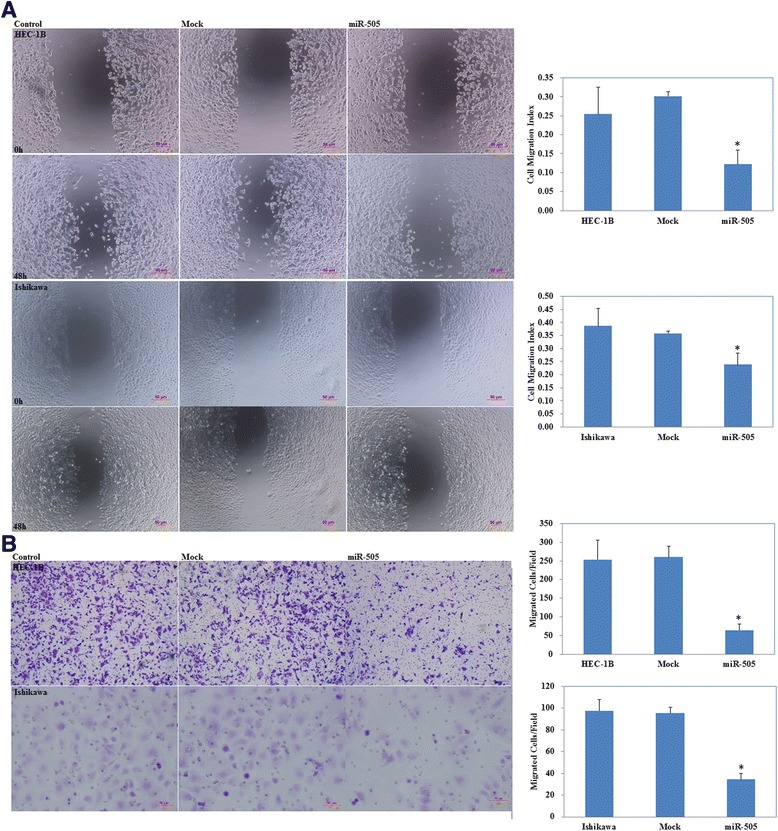
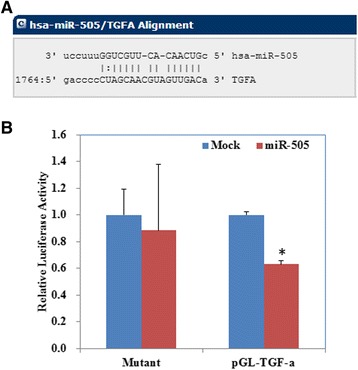
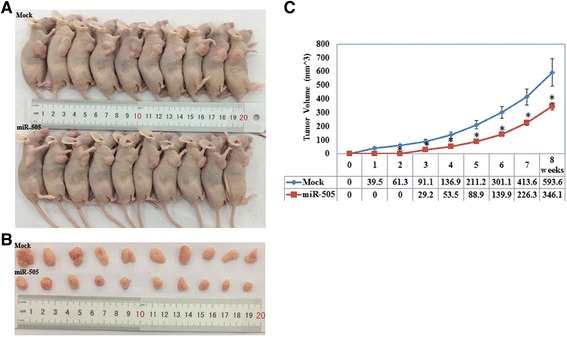
RT-PCR results demonstrated that miR-505 was significantly downregulated in human EC tissues compared to normal endometrial tissues. Besides, miR-505 expression was negatively associated with FIGO stage (stage I-II vs. III-IV), and lymph node metastasis (negative vs. positive). In vitro, overexpression of miR-505 significantly suppressed EC cell proliferation, increased apoptosis and reduced migratory and invasive activity. A miR-505 binding site was identified in the 3' untranslated region of TGF-α mRNA (TGFA) using miRNA target-detecting software; a dual luciferase reporter assay confirmed that miR-505 directly targets and regulates TGFA. RT-PCR and Western-blotting results indicated that overexpressing miR-505 reduced the expression of TGF-α and the TGF-α-regulated proteins MMP2, MMP9, CDK2, while induced Bax and cleaved-PARP expression in EC cells. In vivo, overexpression of miR-505 reduced the tumorigenicity and inhibited the growth of xenograft tumors in a mouse model of EC.
Taken together, this study demonstrates that miR-505 acts as tumor suppressor in EC by regulating TGF-α.
子宫内膜癌(EC)是最致命的妇科癌症之一。患者在确诊时经常出现区域或远处转移。微小RNA是参与众多生物学过程的小非编码RNA。最近的研究表明,miR-505与多种类型的癌症有关;然而,miR-505在EC中的表达和功能尚未得到研究。
通过定量逆转录PCR对正常子宫内膜组织、子宫内膜癌中miR-505的表达进行定量。子宫内膜癌细胞系HEC-1B和Ishikawa分别用miR-505或乱序模拟物转染,之后检测细胞表型和相关分子的表达。采用双荧光素酶报告基因检测法和异种移植小鼠模型检测miR-505及其靶基因TGF-α。
RT-PCR结果表明,与正常子宫内膜组织相比,miR-505在人EC组织中显著下调。此外,miR-505表达与国际妇产科联盟(FIGO)分期(I-II期与III-IV期)及淋巴结转移(阴性与阳性)呈负相关。在体外,miR-505的过表达显著抑制EC细胞增殖,增加细胞凋亡,并降低迁移和侵袭活性。使用miRNA靶点检测软件在TGF-α mRNA(TGFA)的3'非翻译区鉴定出一个miR-505结合位点;双荧光素酶报告基因检测证实miR-505直接靶向并调节TGFA。RT-PCR和蛋白质印迹结果表明,miR-505过表达降低了TGF-α以及TGF-α调节蛋白MMP2、MMP9、CDK2的表达,同时诱导了EC细胞中Bax和裂解的PARP表达。在体内,miR-505的过表达降低了EC小鼠模型中的肿瘤发生能力并抑制了异种移植肿瘤的生长。
综上所述,本研究表明miR-505通过调节TGF-α在EC中发挥肿瘤抑制作用。