Bouillez Audrey, Rajabi Hasan, Pitroda Sean, Jin Caining, Alam Maroof, Kharbanda Akriti, Tagde Ashujit, Wong Kwok-Kin, Kufe Donald
Dana-Farber Cancer Institute, Harvard Medical School, Boston, Massachusetts.
Department of Radiation and Cellular Oncology, University of Chicago, Chicago, Illinois.
Cancer Res. 2016 Mar 15;76(6):1538-48. doi: 10.1158/0008-5472.CAN-15-1804. Epub 2016 Feb 1.
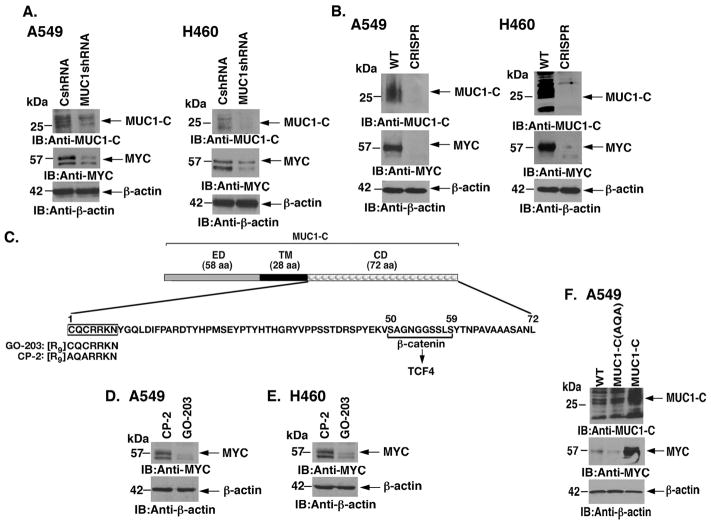
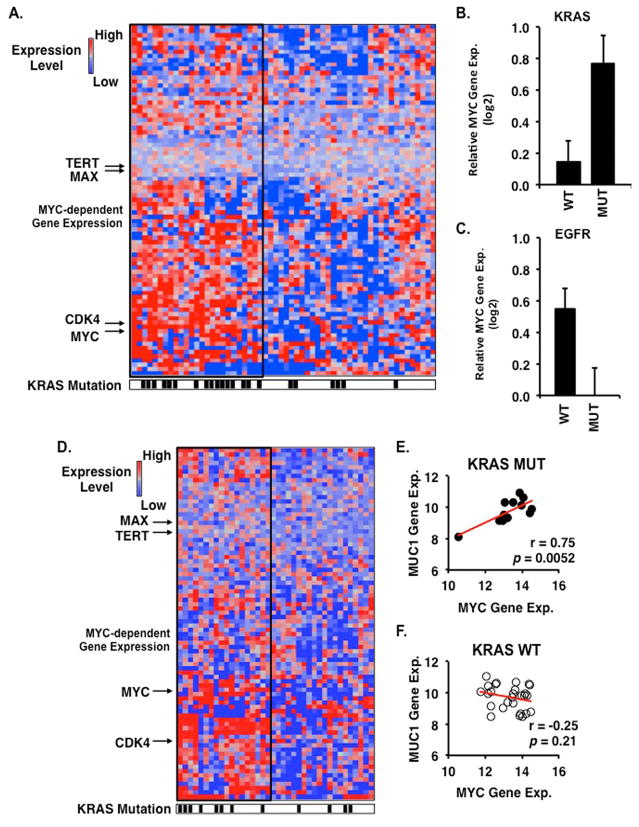
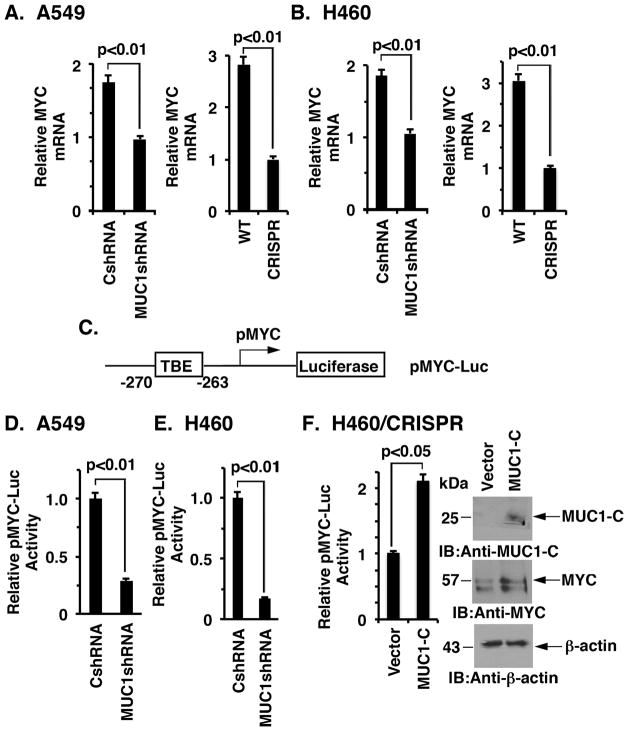
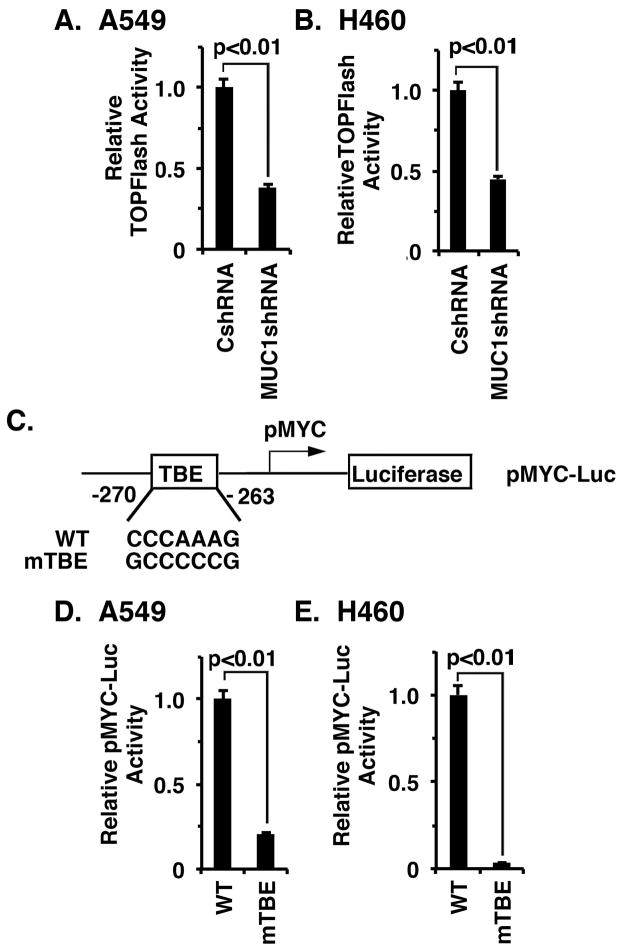
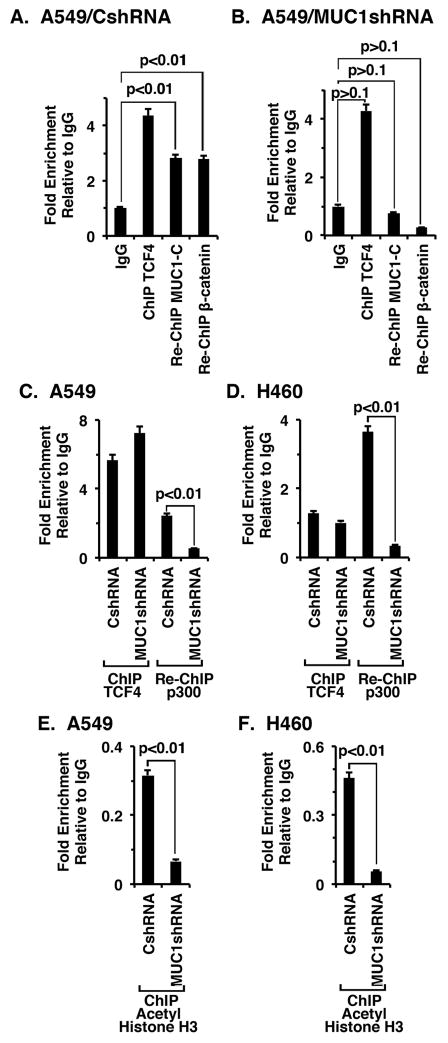
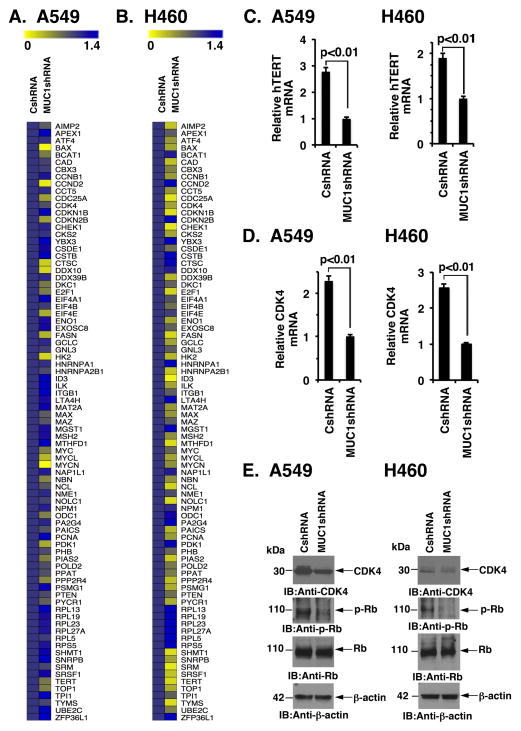
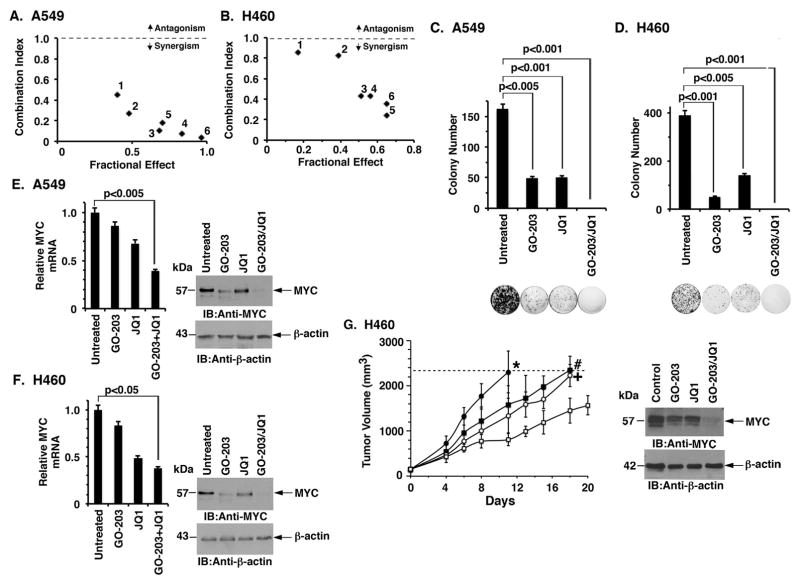
Dysregulation of MYC expression is a hallmark of cancer, but the development of agents that target MYC has remained challenging. The oncogenic MUC1-C transmembrane protein is, like MYC, aberrantly expressed in diverse human cancers. The present studies demonstrate that MUC1-C induces MYC expression in KRAS mutant non-small cell lung cancer (NSCLC) cells, an effect that can be suppressed by targeting MUC1-C via shRNA silencing, CRISPR editing, or pharmacologic inhibition with GO-203. MUC1-C activated the WNT/β-catenin (CTNNB1) pathway and promoted occupancy of MUC1-C/β-catenin/TCF4 complexes on the MYC promoter. MUC1-C also promoted the recruitment of the p300 histone acetylase (EP300) and, in turn, induced histone H3 acetylation and activation of MYC gene transcription. We also show that targeting MUC1-C decreased the expression of key MYC target genes essential for the growth and survival of NSCLC cells, such as TERT and CDK4. Based on these results, we found that the combination of GO-203 and the BET bromodomain inhibitor JQ1, which targets MYC transcription, synergistically suppressed MYC expression and cell survival in vitro as well as tumor xenograft growth. Furthermore, MUC1 expression significantly correlated with that of MYC and its target genes in human KRAS mutant NSCLC tumors. Taken together, these findings suggest a therapeutic approach for targeting MYC-dependent cancers and provide the framework for the ongoing clinical studies addressing the efficacy of MUC1-C inhibition in solid tumors.
MYC表达失调是癌症的一个标志,但开发靶向MYC的药物仍然具有挑战性。致癌性MUC1-C跨膜蛋白与MYC一样,在多种人类癌症中异常表达。目前的研究表明,MUC1-C在KRAS突变的非小细胞肺癌(NSCLC)细胞中诱导MYC表达,通过shRNA沉默、CRISPR编辑或用GO-203进行药理抑制来靶向MUC1-C可抑制这种作用。MUC1-C激活WNT/β-连环蛋白(CTNNB1)信号通路,并促进MUC1-C/β-连环蛋白/TCF4复合物在MYC启动子上的占据。MUC1-C还促进p300组蛋白乙酰转移酶(EP300)的募集,进而诱导组蛋白H3乙酰化并激活MYC基因转录。我们还表明,靶向MUC1-C可降低NSCLC细胞生长和存活所必需的关键MYC靶基因的表达,如TERT和CDK4。基于这些结果,我们发现GO-203与靶向MYC转录的BET溴结构域抑制剂JQ1联合使用,在体外协同抑制MYC表达和细胞存活以及肿瘤异种移植生长。此外,在人类KRAS突变的NSCLC肿瘤中,MUC1表达与MYC及其靶基因的表达显著相关。综上所述,这些发现提示了一种靶向MYC依赖性癌症的治疗方法,并为正在进行的关于MUC1-C抑制实体瘤疗效的临床研究提供了框架。