Nies Vera J M, Sancar Gencer, Liu Weilin, van Zutphen Tim, Struik Dicky, Yu Ruth T, Atkins Annette R, Evans Ronald M, Jonker Johan W, Downes Michael Robert
Center for Liver, Digestive and Metabolic Diseases, Department of Pediatrics, University Medical Center Groningen, University of Groningen , Groningen , Netherlands.
Gene Expression Laboratory, Salk Institute for Biological Studies , La Jolla, CA , USA.
Front Endocrinol (Lausanne). 2016 Jan 19;6:193. doi: 10.3389/fendo.2015.00193. eCollection 2015.
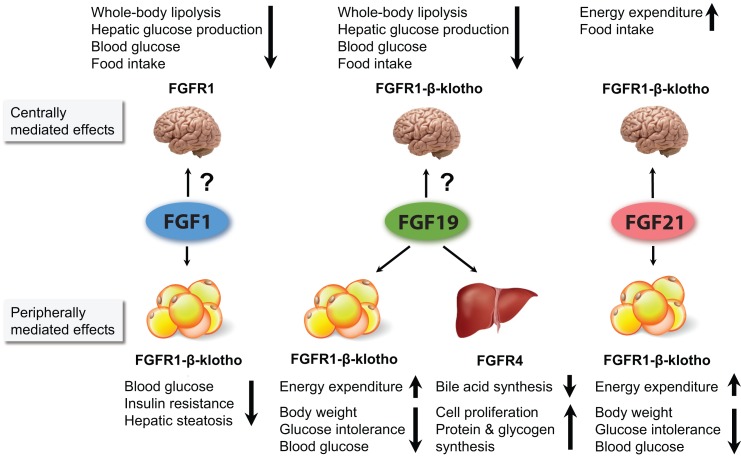
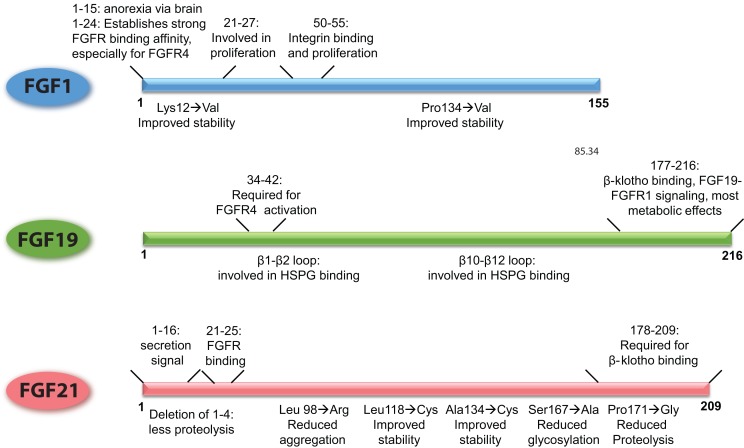
The prevalence of obesity is a growing health problem. Obesity is strongly associated with several comorbidities, such as non-alcoholic fatty liver disease, certain cancers, insulin resistance, and type 2 diabetes, which all reduce life expectancy and life quality. Several drugs have been put forward in order to treat these diseases, but many of them have detrimental side effects. The unexpected role of the family of fibroblast growth factors in the regulation of energy metabolism provides new approaches to the treatment of metabolic diseases and offers a valuable tool to gain more insight into metabolic regulation. The known beneficial effects of FGF19 and FGF21 on metabolism, together with recently discovered similar effects of FGF1 suggest that FGFs and their derivatives carry great potential as novel therapeutics to treat metabolic conditions. To facilitate the development of new therapies with improved targeting and minimal side effects, a better understanding of the molecular mechanism of action of FGFs is needed. In this review, we will discuss what is currently known about the physiological roles of FGF signaling in tissues important for metabolic homeostasis. In addition, we will discuss current concepts regarding their pharmacological properties and effector tissues in the context of metabolic disease. Also, the recent progress in the development of FGF variants will be reviewed. Our goal is to provide a comprehensive overview of the current concepts and consensuses regarding FGF signaling in metabolic health and disease and to provide starting points for the development of FGF-based therapies against metabolic conditions.
肥胖症的患病率是一个日益严重的健康问题。肥胖与多种合并症密切相关,如非酒精性脂肪性肝病、某些癌症、胰岛素抵抗和2型糖尿病,所有这些都会降低预期寿命和生活质量。为了治疗这些疾病,已经提出了几种药物,但其中许多都有有害的副作用。成纤维细胞生长因子家族在能量代谢调节中的意外作用为代谢疾病的治疗提供了新方法,并为更深入了解代谢调节提供了有价值的工具。FGF19和FGF21对代谢的已知有益作用,以及最近发现的FGF1的类似作用表明,FGF及其衍生物作为治疗代谢疾病的新型疗法具有巨大潜力。为了促进具有更好靶向性和最小副作用的新疗法的开发,需要更好地了解FGF的分子作用机制。在这篇综述中,我们将讨论目前已知的FGF信号在对代谢稳态重要的组织中的生理作用。此外,我们将讨论关于它们在代谢疾病背景下的药理特性和效应组织的当前概念。同时,还将综述FGF变体开发的最新进展。我们的目标是全面概述当前关于FGF信号在代谢健康和疾病中的概念和共识,并为开发基于FGF的代谢疾病治疗方法提供起点。