Webster Craig S, Luo Anna Y, Krägeloh Chris, Moir Fiona, Henning Marcus
Centre for Medical and Health Sciences Education and Department of Anaesthesiology, University of Auckland, Private Bag 92-019, Auckland 1142, New Zealand.
Centre for Medical and Health Sciences Education, University of Auckland, Auckland, New Zealand.
Prev Med Rep. 2015 Dec 23;3:103-12. doi: 10.1016/j.pmedr.2015.12.006. eCollection 2016 Jun.
The poor health consequences of stress are well recognized, and students in higher education may be at particular risk. Tai Chi integrates physical exercise with mindfulness techniques and seems well suited to relieve stress and related conditions.
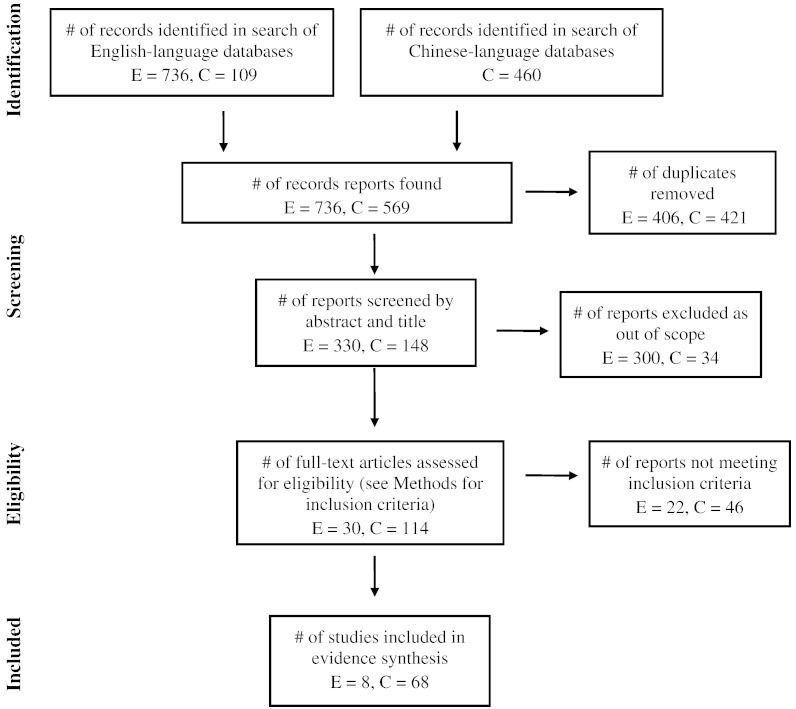
We conducted a systematic review of the health benefits of Tai Chi for students in higher education reported in the English and Chinese literature, using an evidence hierarchy approach, allowing the inclusion of studies additional to randomized controlled trials.
Sixty eight reports in Chinese and 8 in English were included - a combined study sample of 9263 participants. Eighty one health outcomes were extracted from reports, and assigned evidence scores according to the evidence hierarchy. Four primary and eight secondary outcomes were found. Tai Chi is likely to benefit participants by increasing flexibility, reducing symptoms of depression, decreasing anxiety, and improving interpersonal sensitivity (primary outcomes). Secondary outcomes include improved lung capacity, balance, 800/1000m run time, quality of sleep, symptoms of compulsion, somatization and phobia, and decreased hostility.
Our results show Tai Chi yields psychological and physical benefits, and should be considered by higher education institutions as a possible means to promote the physical and psychological well-being of their students.
压力对健康造成的不良后果已得到广泛认可,高等教育阶段的学生可能面临尤其高的风险。太极拳将体育锻炼与正念技巧相结合,似乎非常适合缓解压力及相关状况。
我们采用证据分级法,对英文和中文文献中报道的太极拳对高等教育阶段学生健康益处进行了系统综述,纳入了除随机对照试验之外的其他研究。
共纳入68篇中文报告和8篇英文报告,合并研究样本为9263名参与者。从报告中提取了81项健康指标,并根据证据分级法赋予证据分数。发现了4项主要结果和8项次要结果。太极拳可能通过增加柔韧性、减轻抑郁症状、降低焦虑以及提高人际敏感性(主要结果)使参与者受益。次要结果包括改善肺活量、平衡能力、800/1000米跑步用时、睡眠质量、强迫、躯体化和恐惧症状,以及降低敌意。
我们的结果表明,太极拳对身心健康有益,高等教育机构应考虑将其作为促进学生身心健康的一种可能手段。