Zhai Rong-Lin, Xu Fei, Zhang Pei, Zhang Wan-Li, Wang Hui, Wang Ji-Liang, Cai Kai-Lin, Long Yue-Ping, Lu Xiao-Ming, Tao Kai-Xiong, Wang Guo-Bin
From the Department of General Surgery, Union Hospital, Tongji Medical College, Huazhong University of Science and Technology, Wuhan, P.R. China.
Medicine (Baltimore). 2016 Feb;95(5):e2129. doi: 10.1097/MD.0000000000002129.
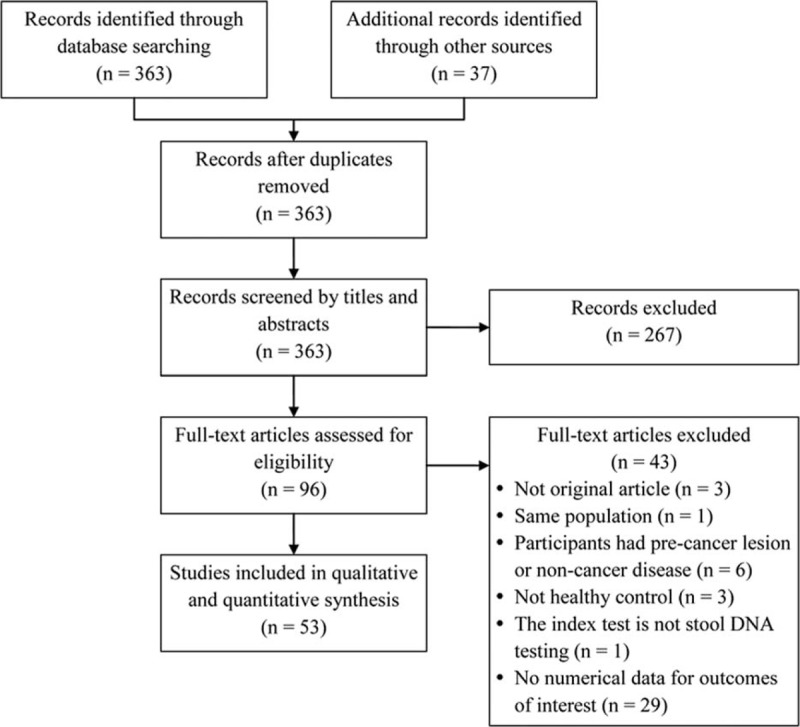
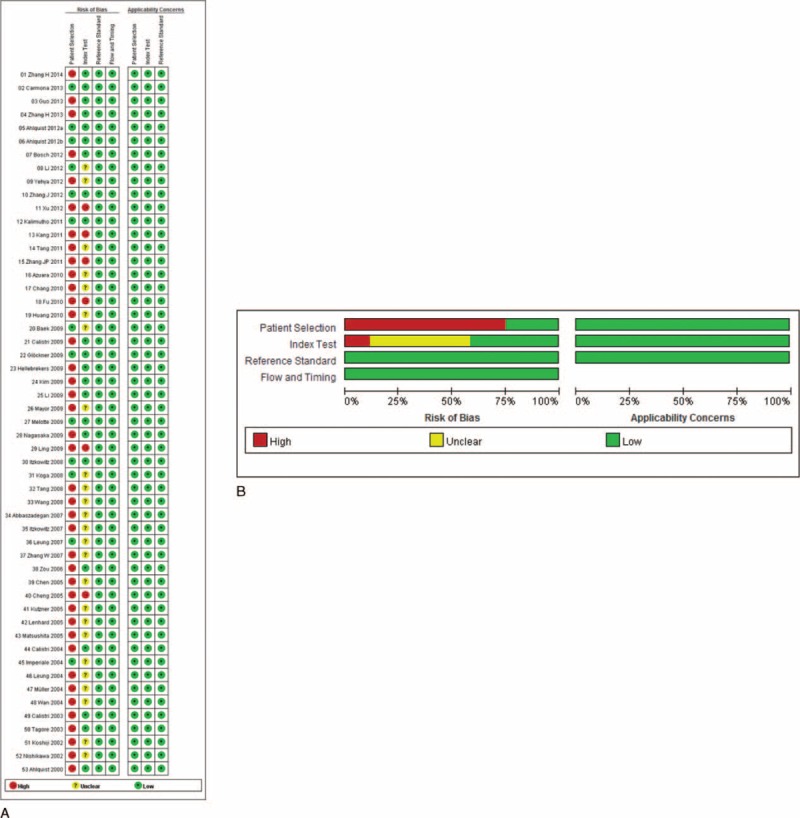
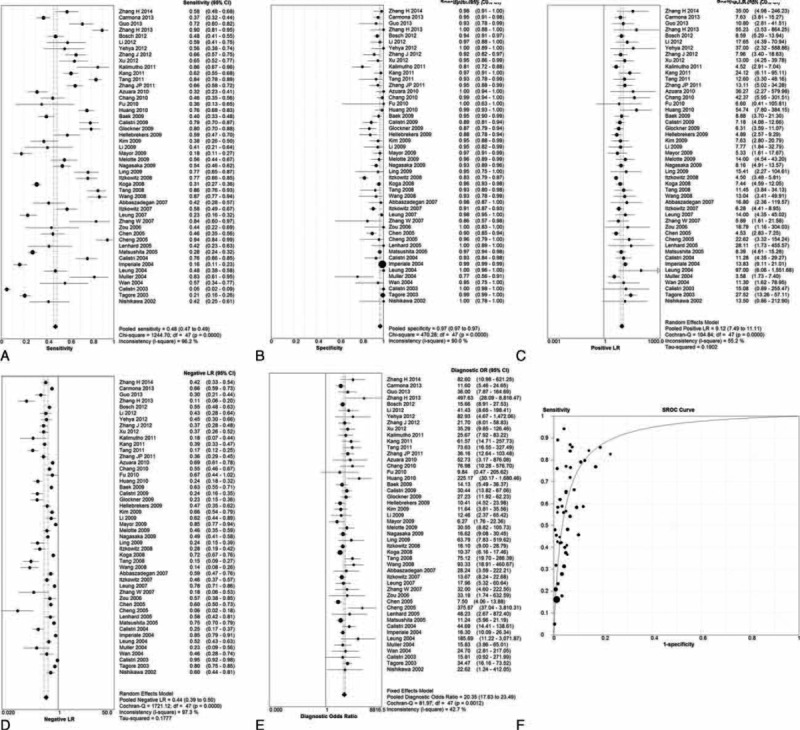
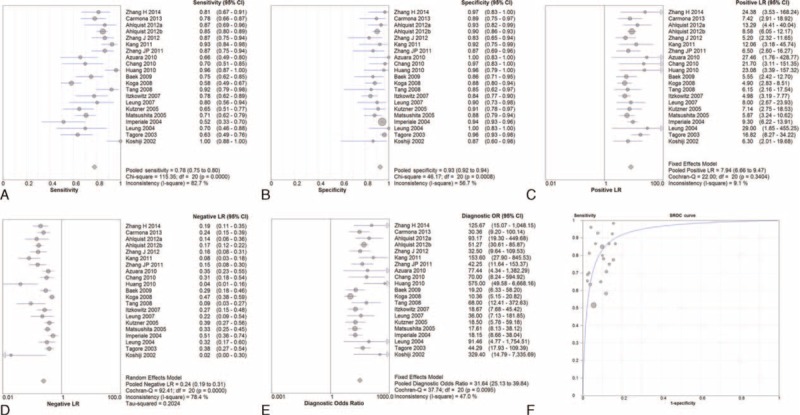
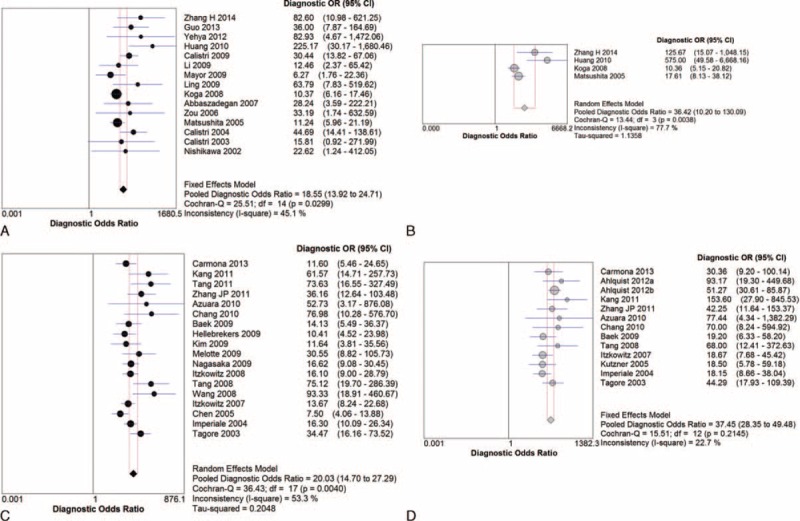
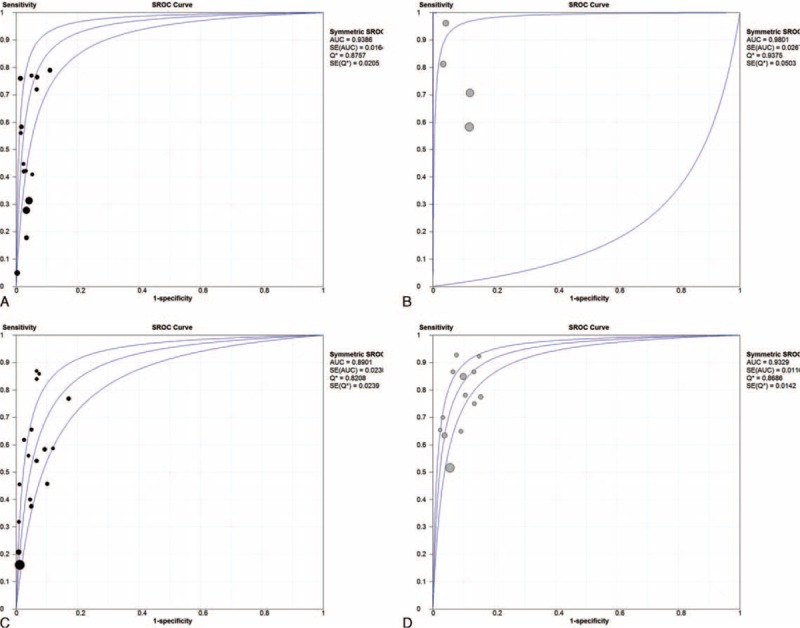
This meta-analysis was designed to evaluate the diagnostic performance of stool DNA testing for colorectal cancer (CRC) and compare the performance between single-gene and multiple-gene tests.MEDLINE, Cochrane, EMBASE databases were searched using keywords colorectal cancers, stool/fecal, sensitivity, specificity, DNA, and screening. Sensitivity analysis, quality assessments, and performance bias were performed for the included studies.Fifty-three studies were included in the analysis with a total sample size of 7524 patients. The studies were heterogeneous with regard to the genes being analyzed for fecal genetic biomarkers of CRC, as well as the laboratory methods being used for each assay. The sensitivity of the different assays ranged from 2% to 100% and the specificity ranged from 81% to 100%. The meta-analysis found that the pooled sensitivities for single- and multigene assays were 48.0% and 77.8%, respectively, while the pooled specificities were 97.0% and 92.7%. Receiver operator curves and diagnostic odds ratios showed no significant difference between both tests with regard to sensitivity or specificity.This meta-analysis revealed that using assays that evaluated multiple genes compared with single-gene assays did not increase the sensitivity or specificity of stool DNA testing in detecting CRC.
本荟萃分析旨在评估粪便DNA检测对结直肠癌(CRC)的诊断性能,并比较单基因检测和多基因检测之间的性能。使用关键词“结直肠癌”“粪便”“敏感性”“特异性”“DNA”和“筛查”检索MEDLINE、Cochrane、EMBASE数据库。对纳入的研究进行敏感性分析、质量评估和性能偏倚分析。53项研究纳入分析,总样本量为7524例患者。这些研究在用于CRC粪便遗传生物标志物分析的基因以及每种检测所使用的实验室方法方面存在异质性。不同检测的敏感性范围为2%至100%,特异性范围为81%至100%。荟萃分析发现,单基因检测和多基因检测的合并敏感性分别为48.0%和77.8%,而合并特异性分别为97.0%和92.7%。受试者工作特征曲线和诊断比值比显示,两种检测在敏感性或特异性方面无显著差异。本荟萃分析表明,与单基因检测相比,使用评估多个基因的检测方法并不能提高粪便DNA检测在检测CRC中的敏感性或特异性。