Harter Matthew R, Liu Cheng-Der, Shen Chih-Lung, Gonzalez-Hurtado Elsie, Zhang Zhi-Min, Xu Muyu, Martinez Ernest, Peng Chih-Wen, Song Jikui
Department of Biochemistry, University of California, Riverside, Riverside, California, United States of America.
Institute of Medical Sciences, Tzu Chi University, Hualien, Taiwan.
PLoS Pathog. 2016 Feb 4;12(2):e1005414. doi: 10.1371/journal.ppat.1005414. eCollection 2016 Feb.
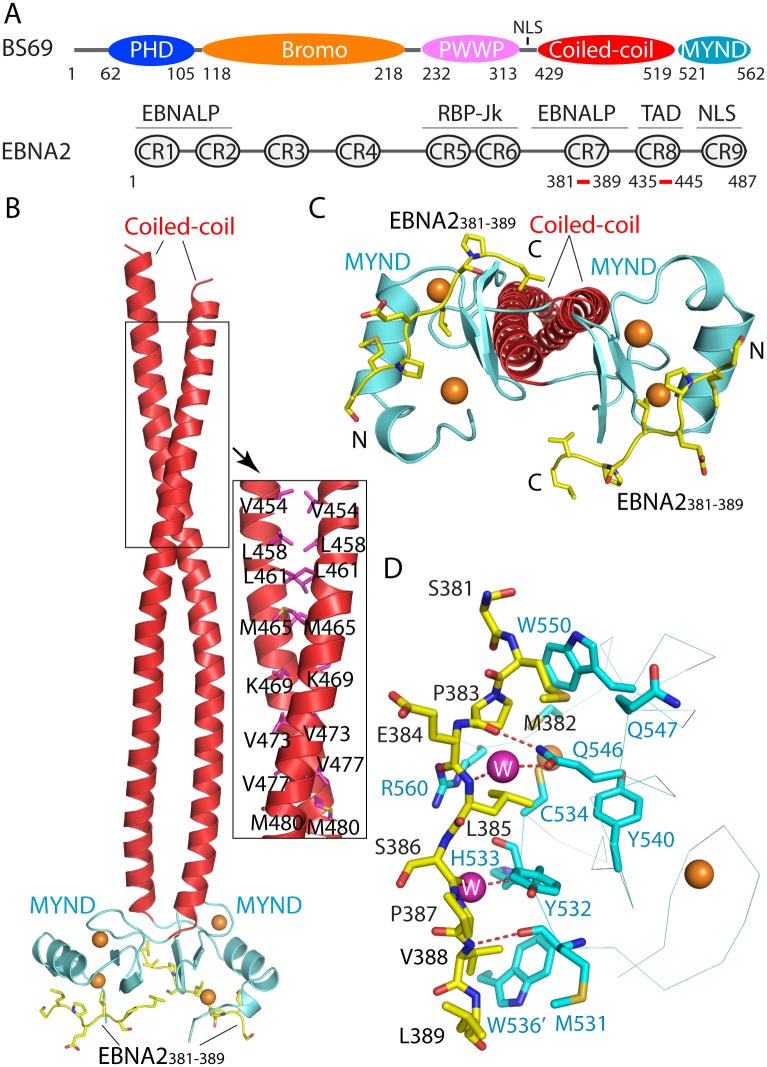
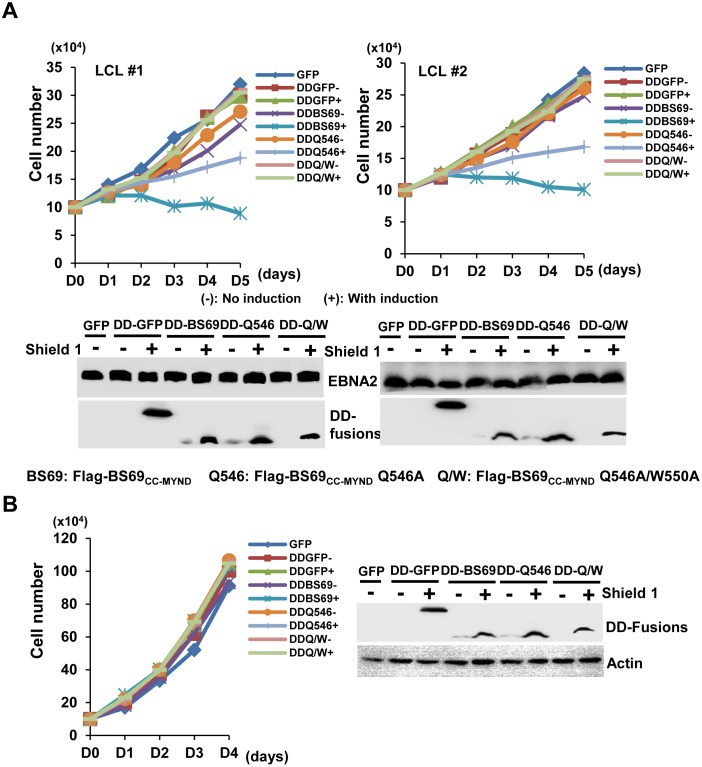
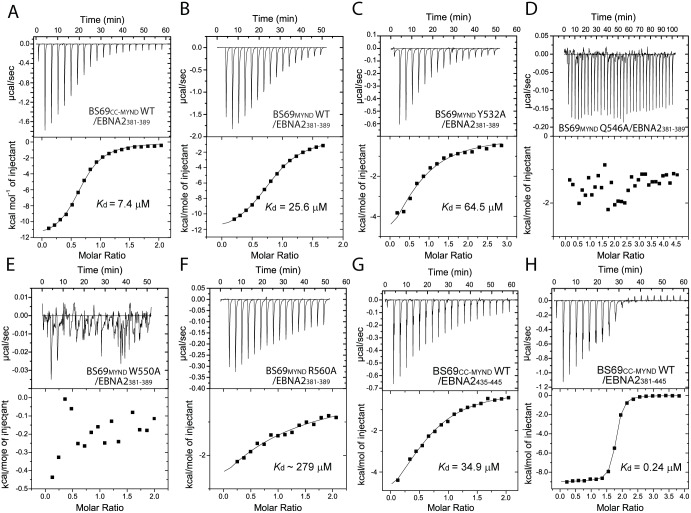
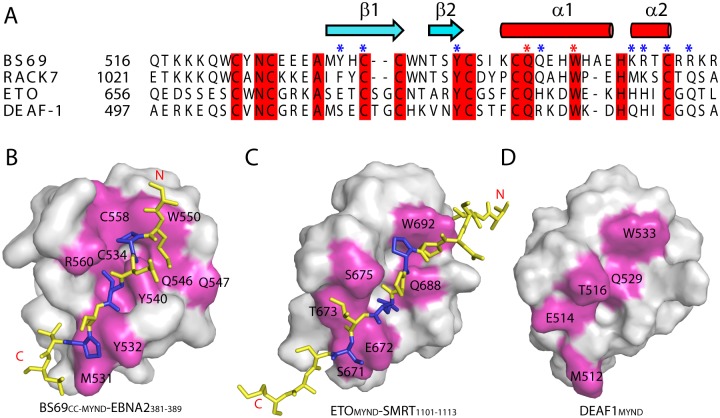
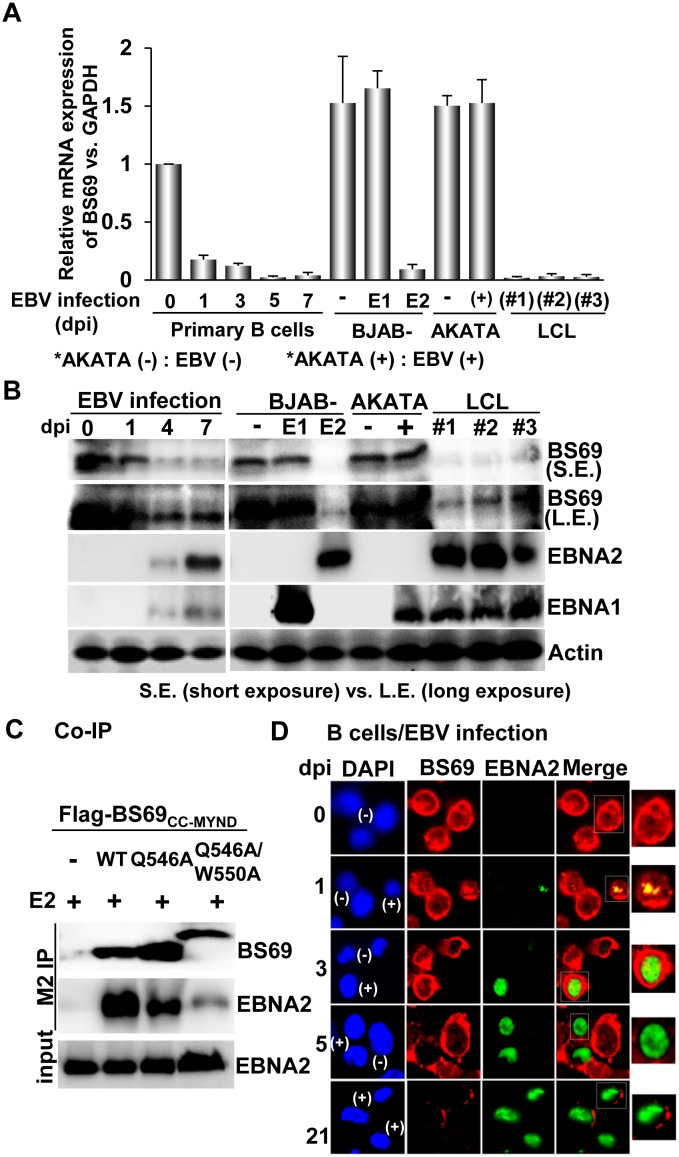
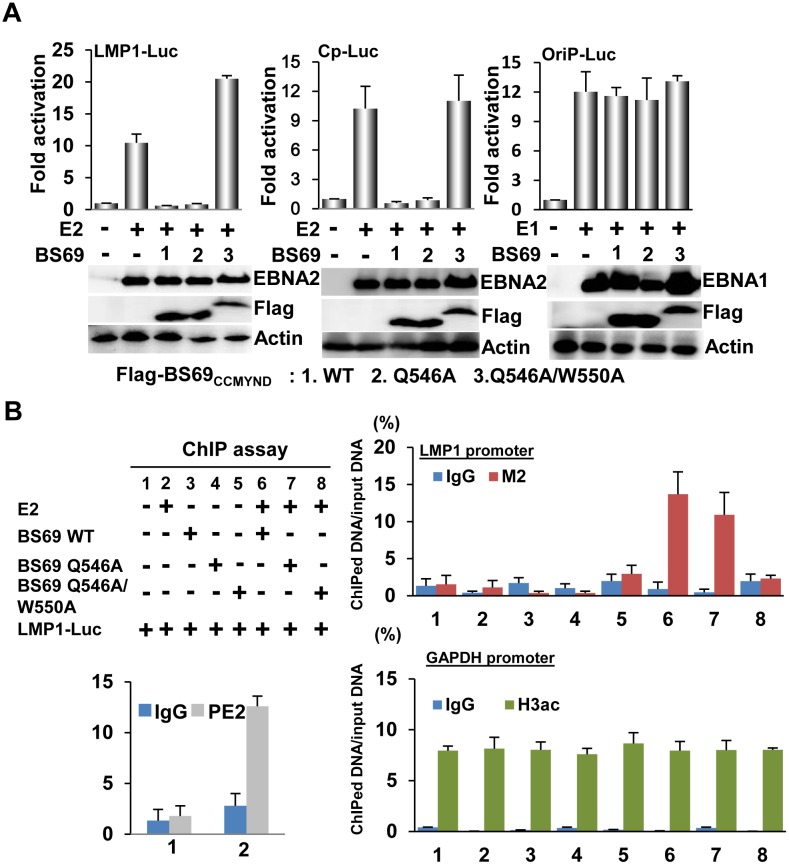
Epstein-Barr virus (EBV) nuclear antigen 2 (EBNA2) plays an important role in driving immortalization of EBV-infected B cells through regulating the expression of many viral and cellular genes. We report a structural study of the tumor suppressor BS69/ZMYND11 C-terminal region, comprised of tandem coiled-coil-MYND domains (BS69CC-MYND), in complex with an EBNA2 peptide containing a PXLXP motif. The coiled-coil domain of BS69 self-associates to bring two separate MYND domains in close proximity, thereby enhancing the BS69 MYND-EBNA2 interaction. ITC analysis of BS69CC-MYND with a C-terminal fragment of EBNA2 further suggests that the BS69CC-MYND homodimer synergistically binds to the two EBNA2 PXLXP motifs that are respectively located in the conserved regions CR7 and CR8. Furthermore, we showed that EBNA2 interacts with BS69 and down-regulates its expression at both mRNA and protein levels in EBV-infected B cells. Ectopic BS69CC-MYND is recruited to viral target promoters through interactions with EBNA2, inhibits EBNA2-mediated transcription activation, and impairs proliferation of lymphoblastoid cell lines (LCLs). Substitution of critical residues in the MYND domain impairs the BS69-EBNA2 interaction and abolishes the BS69 inhibition of the EBNA2-mediated transactivation and LCL proliferation. This study identifies the BS69 C-terminal domains as an inhibitor of EBNA2, which may have important implications in development of novel therapeutic strategies against EBV infection.
爱泼斯坦-巴尔病毒(EBV)核抗原2(EBNA2)通过调节许多病毒和细胞基因的表达,在驱动EBV感染的B细胞永生化过程中发挥重要作用。我们报告了肿瘤抑制因子BS69/ZMYND11 C末端区域的结构研究,该区域由串联的卷曲螺旋-MYND结构域(BS69CC-MYND)组成,与含有PXLXP基序的EBNA2肽形成复合物。BS69的卷曲螺旋结构域自我缔合,使两个独立的MYND结构域紧密靠近,从而增强BS69 MYND与EBNA2的相互作用。对BS69CC-MYND与EBNA2 C末端片段的等温滴定量热法(ITC)分析进一步表明,BS69CC-MYND同二聚体协同结合分别位于保守区域CR7和CR8的两个EBNA2 PXLXP基序。此外,我们发现EBNA2在EBV感染的B细胞中与BS69相互作用,并在mRNA和蛋白质水平下调其表达。异位表达的BS69CC-MYND通过与EBNA2相互作用被招募到病毒靶启动子上,抑制EBNA2介导的转录激活,并损害淋巴母细胞系(LCLs)的增殖。MYND结构域中关键残基的取代会损害BS69与EBNA2的相互作用,并消除BS69对EBNA2介导的反式激活和LCL增殖的抑制作用。本研究确定BS69 C末端结构域为EBNA2的抑制剂,这可能对开发针对EBV感染的新型治疗策略具有重要意义。