Department of Life Sciences, Tzu-Chi University, Hualien, Taiwan.
PLoS Pathog. 2012;8(12):e1003084. doi: 10.1371/journal.ppat.1003084. Epub 2012 Dec 13.
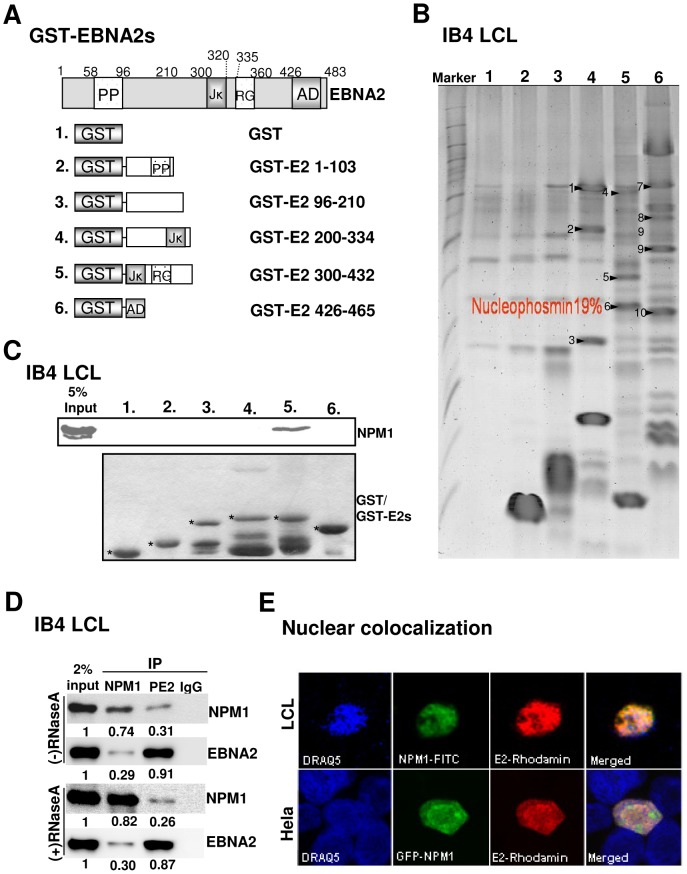
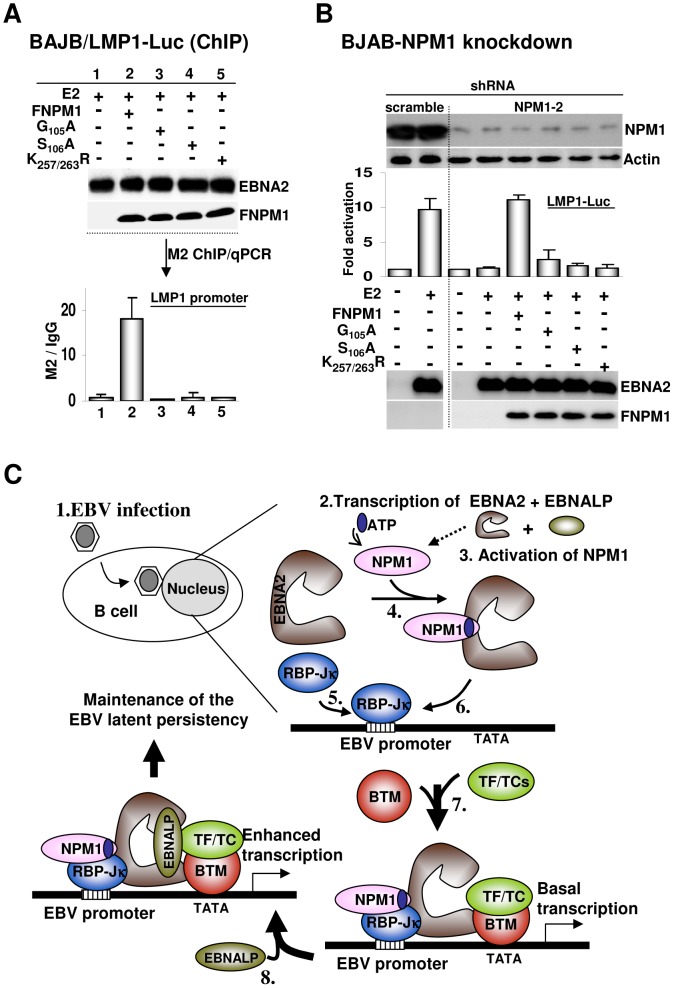
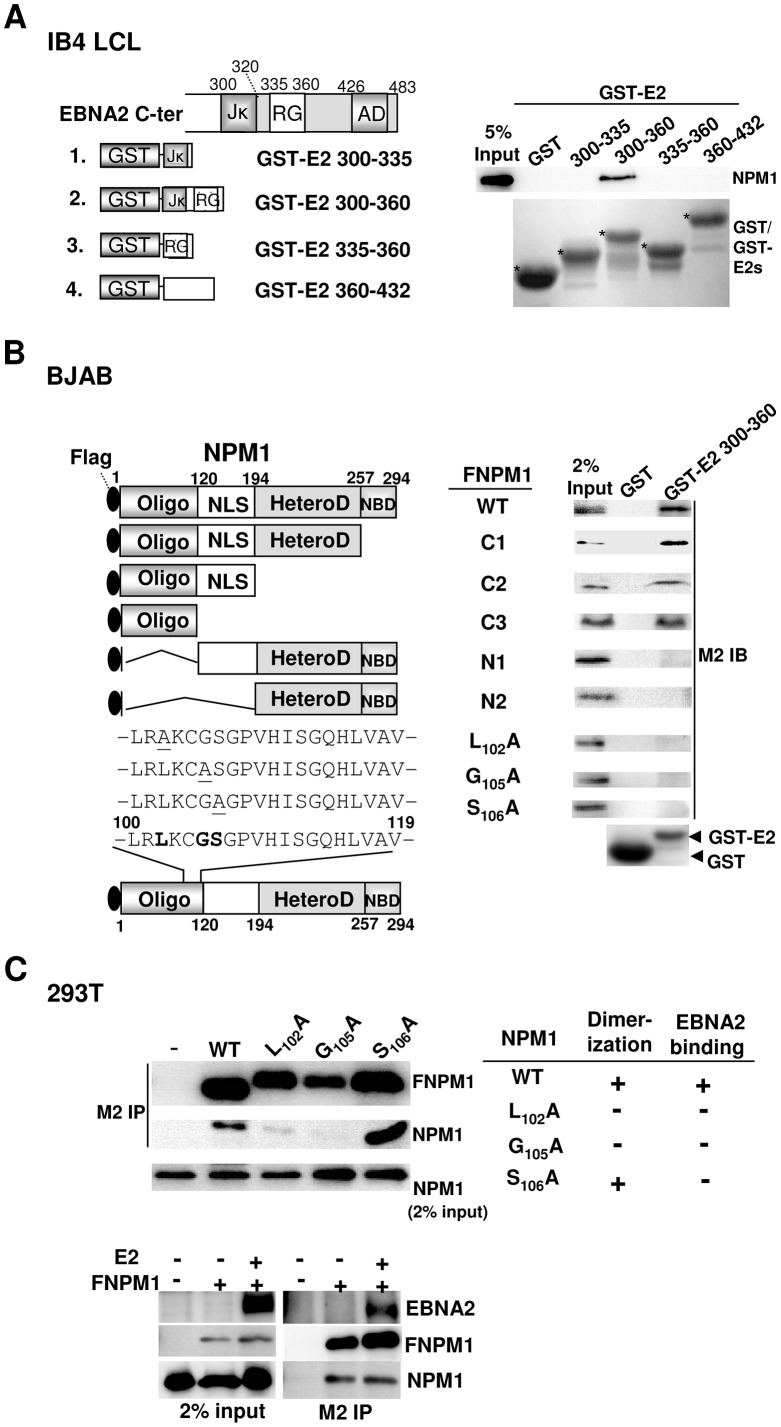
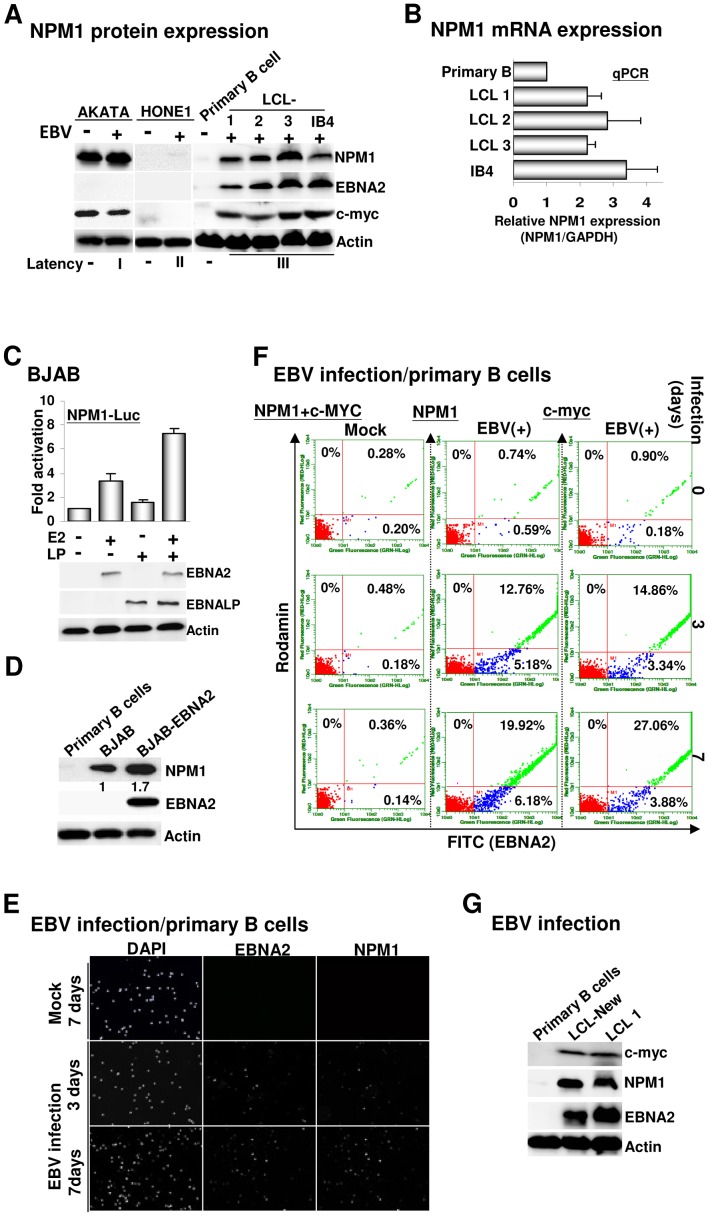
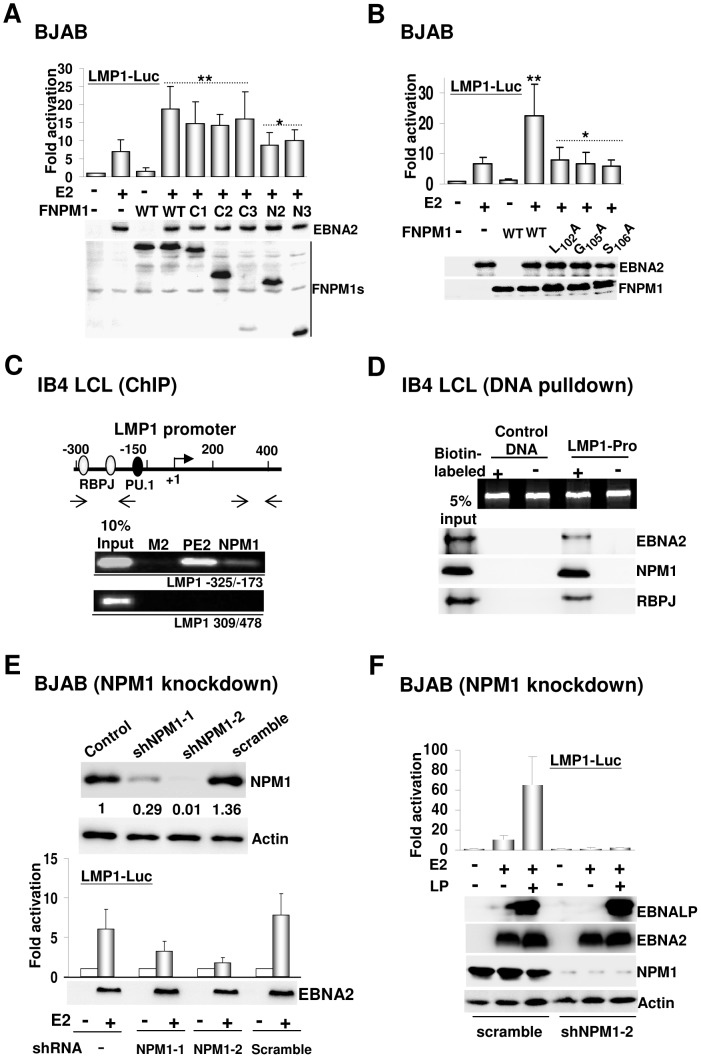
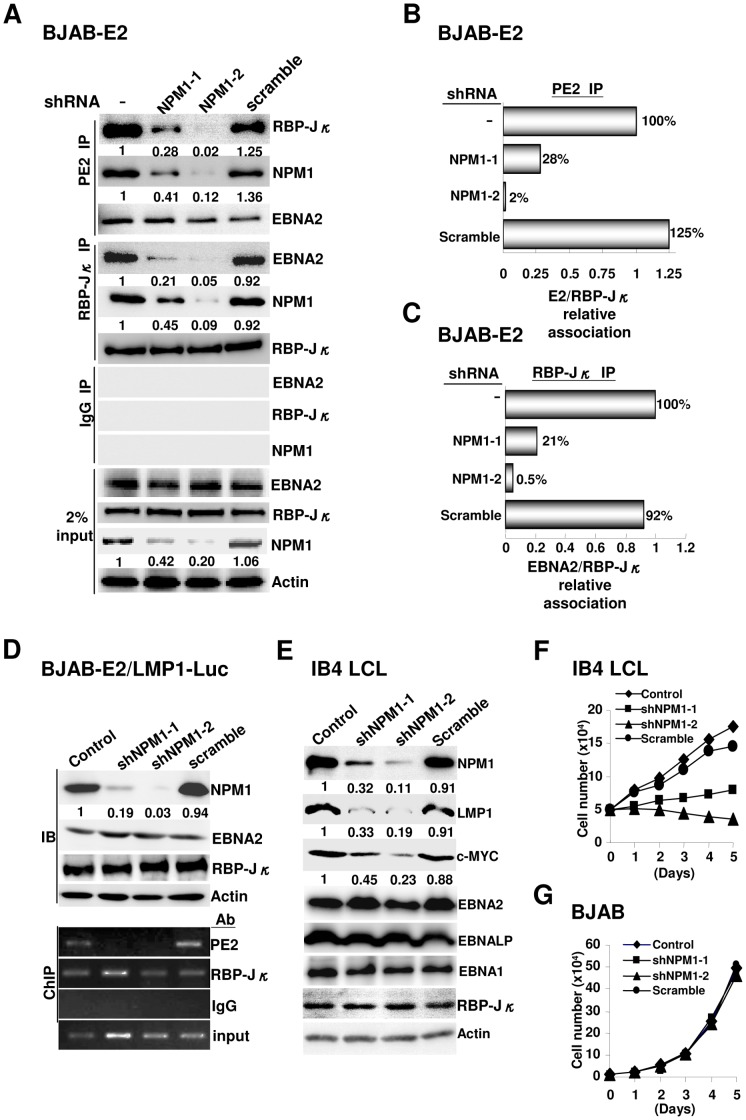
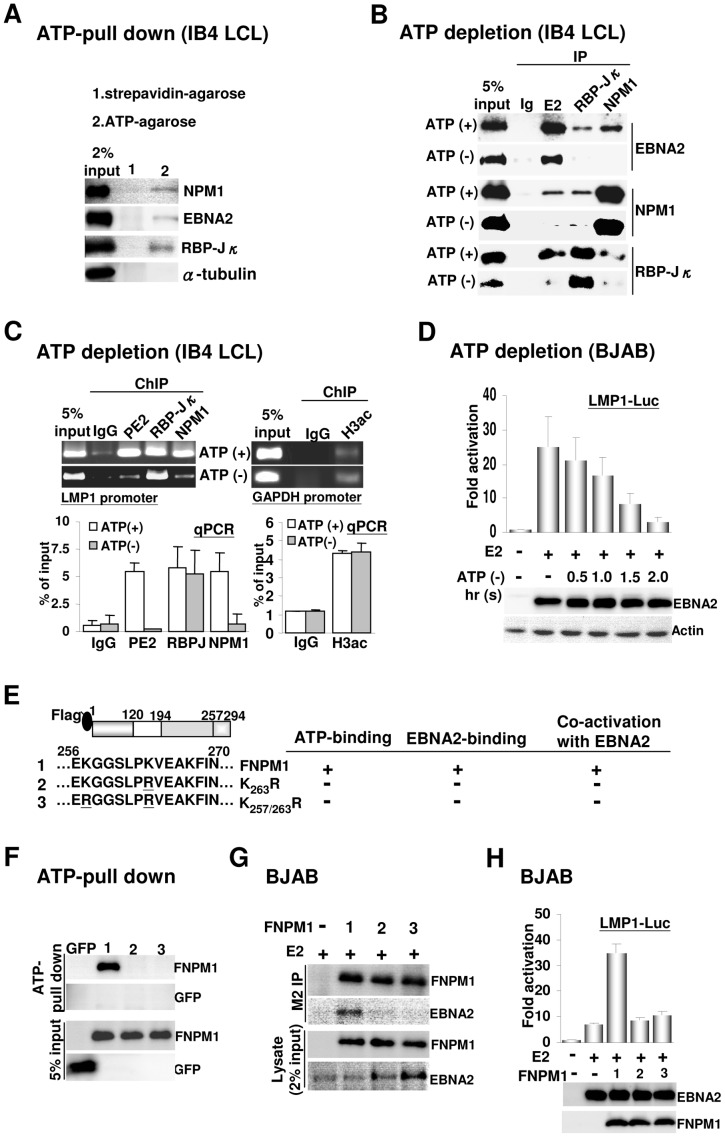
Epstein-Barr Virus (EBV) is an oncogenic γ-herpesvirus that capably establishes both latent and lytic modes of infection in host cells and causes malignant diseases in humans. Nuclear antigen 2 (EBNA2)-mediated transcription of both cellular and viral genes is essential for the establishment and maintenance of the EBV latency program in B lymphocytes. Here, we employed a protein affinity pull-down and LC-MS/MS analysis to identify nucleophosmin (NPM1) as one of the cellular proteins bound to EBNA2. Additionally, the specific domains that are responsible for protein-protein interactions were characterized as EBNA2 residues 300 to 360 and the oligomerization domain (OD) of NPM1. As in c-MYC, dramatic NPM1 expression was induced in EBV positively infected B cells after three days of viral infection, and both EBNA2 and EBNALP were implicated in the transactivation of the NPM1 promoter. Depletion of NPM1 with the lentivirus-expressed short-hairpin RNAs (shRNAs) effectively abrogated EBNA2-dependent transcription and transformation outgrowth of lymphoblastoid cells. Notably, the ATP-bound state of NPM1 was required to induce assembly of a protein complex containing EBNA2, RBP-Jκ, and NPM1 by stabilizing the interaction of EBNA2 with RBP-Jκ. In a NPM1-knockdown cell line, we demonstrated that an EBNA2-mediated transcription defect was fully restored by the ectopic expression of NPM1. Our findings highlight the essential role of NPM1 in chaperoning EBNA2 onto the latency-associated membrane protein 1 (LMP1) promoters, which is coordinated with the subsequent activation of transcriptional cascades through RBP-Jκ during EBV infection. These data advance our understanding of EBV pathology and further imply that NPM1 can be exploited as a therapeutic target for EBV-associated diseases.
EB 病毒(EBV)是一种致癌的γ疱疹病毒,能够在宿主细胞中建立潜伏和裂解感染两种模式,并在人类中引起恶性疾病。核抗原 2(EBNA2)介导的细胞和病毒基因的转录对于 EBV 在 B 淋巴细胞中建立和维持潜伏程序是必不可少的。在这里,我们采用蛋白质亲和下拉和 LC-MS/MS 分析鉴定核磷蛋白(NPM1)是与 EBNA2 结合的一种细胞蛋白。此外,负责蛋白质-蛋白质相互作用的特定结构域被鉴定为 EBNA2 残基 300 至 360 和 NPM1 的寡聚化结构域(OD)。与 c-MYC 一样,在 EBV 阳性感染的 B 细胞中,病毒感染后三天会强烈诱导 NPM1 表达,EBNA2 和 EBNALP 都参与了 NPM1 启动子的反式激活。用慢病毒表达的短发夹 RNA(shRNA)耗尽 NPM1 可有效阻断 EBNA2 依赖性转录和淋巴母细胞系的转化生长。值得注意的是,NPM1 的 ATP 结合状态通过稳定 EBNA2 与 RBP-Jκ 的相互作用,诱导包含 EBNA2、RBP-Jκ 和 NPM1 的蛋白质复合物的组装是必需的。在 NPM1 敲低细胞系中,我们证明通过 NPM1 的异位表达可以完全恢复 EBNA2 介导的转录缺陷。我们的研究结果突出了 NPM1 在将 EBNA2 引导到潜伏相关膜蛋白 1(LMP1)启动子上的重要作用,这与 EBV 感染过程中通过 RBP-Jκ 协调转录级联的后续激活是一致的。这些数据加深了我们对 EBV 病理学的理解,并进一步表明 NPM1 可作为 EBV 相关疾病的治疗靶点。