Qin Xu, Liu Jun Yao, Abdelsayed Rafik, Shi Xingming, Yu Jack C, Mozaffari Mahmood S, Baban Babak
Department of Oral Biology, Dental College of Georgia, Augusta University, Augusta, GA 30912 USA ; Department of Stomatology, Tongji Hospital, Tongji Medical College, Huazhong University of Science and Technology, Wuhan, 430030 China.
Department of Oral Biology, Dental College of Georgia, Augusta University, Augusta, GA 30912 USA.
EPMA J. 2016 Feb 5;7(1):3. doi: 10.1186/s13167-016-0052-8. eCollection 2015.
We recently showed that an imbalance between the pro-inflammatory cytokine, interleukin (IL)-17, and the developmental endothelial locus-1 (Del-1) likely contributes to inflammation and salivary gland abnormalities in Sjögren's syndrome (SS). The glucocorticoid-induced leucine zipper (GILZ) protein is a pivotal player in mediating the anti-inflammatory effects of glucocorticoids. However, its status and role in salivary gland inflammation and dysfunction in SS are not established. Thus, we tested the hypothesis that SS is associated with reduced GILZ expression, thereby contributing to Del-1/Il-17 imbalance and inflammation in salivary glands.
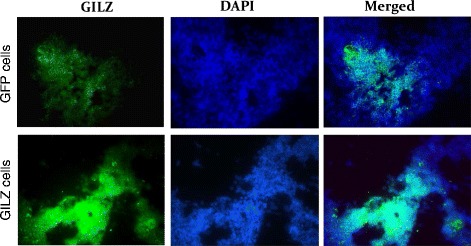
We utilized the nonobese diabetic (NOD) mice, a model of SS-like disease as well as lower-lip biopsy samples of subjects without or with a diagnosis of SS in association with immunostaining studies. These studies were complemented with in vitro and flow-cytometry studies whereby interleukin (IL)-23-treated salivary gland cells were co-cultured with GILZ-expressing cells or control cells; IL-23 is known to increase generation of IL-17.
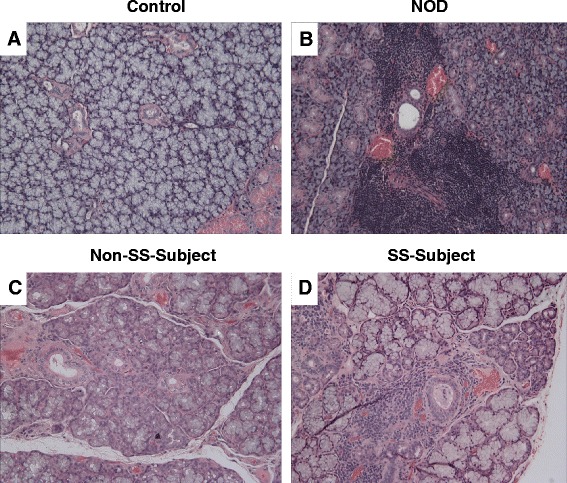
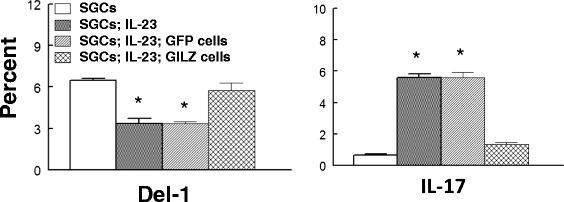
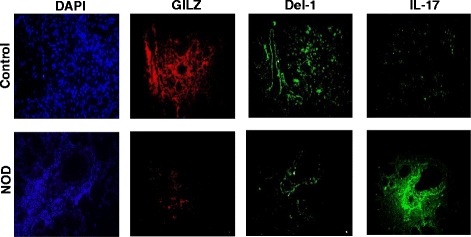
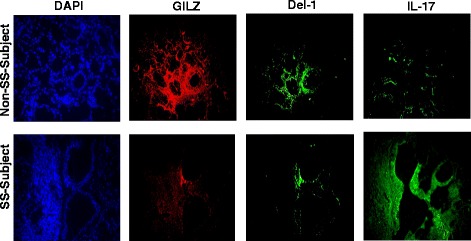
Salivary glands of NOD mice displayed marked leukocyte infiltration and reduced GILZ expression in association with increased IL-17 but decreased Del-1 expression. A similar pattern was observed for lower-lip biopsy samples of SS than non-SS subjects. Further, IL-23-treated salivary gland cells displayed marked increase in IL-17 but reduced Del-1 positive cells which were reversed with co-culturing with GILZ-expressing cells but not control cells. Collectively, the results are suggestive of dysregulation of GILZ playing a role in inflammation and associated Del-1/Il-17 imbalance in SS.
Complementing our demonstration of Del-1/IL-17 imbalance in salivary glands in SS, the present study has established the relevance and significance of GILZ as a novel predictive and prognostic molecular fingerprint for SS. Thus, assessment of minor salivary gland GILZ expression, in conjunction with Del-1/IL-17 imbalance, could potentially offer a more sensitive approach to help with diagnosis of SS, at early stage of the disease, than that based on leukocyte infiltration. Future studies should establish whether treatment with GILZ ameliorates signs and symptoms of salivary malfunction of SS for which effective treatment options remain elusive.
我们最近发现,促炎细胞因子白细胞介素(IL)-17与发育性内皮位点-1(Del-1)之间的失衡可能导致干燥综合征(SS)的炎症和唾液腺异常。糖皮质激素诱导的亮氨酸拉链(GILZ)蛋白是介导糖皮质激素抗炎作用的关键因子。然而,其在SS唾液腺炎症和功能障碍中的状态和作用尚未明确。因此,我们验证了以下假设:SS与GILZ表达降低有关,从而导致Del-1/IL-17失衡和唾液腺炎症。
我们利用非肥胖糖尿病(NOD)小鼠(一种SS样疾病模型)以及未诊断或已诊断为SS的受试者的下唇活检样本进行免疫染色研究。这些研究通过体外和流式细胞术研究得到补充,即将白细胞介素(IL)-23处理的唾液腺细胞与表达GILZ的细胞或对照细胞共培养;已知IL-23可增加IL-17的生成。
NOD小鼠的唾液腺显示出明显的白细胞浸润,GILZ表达降低,同时IL-17增加而Del-1表达减少。与非SS受试者相比,SS患者的下唇活检样本也观察到类似的模式。此外,IL-23处理的唾液腺细胞中IL-17明显增加,但Del-1阳性细胞减少,与表达GILZ的细胞共培养可逆转这种情况,而与对照细胞共培养则不能。总体而言,结果表明GILZ失调在SS的炎症以及相关的Del-1/IL-17失衡中起作用。
本研究补充了我们关于SS唾液腺中Del-1/IL-17失衡的论证,确立了GILZ作为SS一种新的预测和预后分子指纹的相关性和重要性。因此,与基于白细胞浸润的方法相比,结合Del-1/IL-17失衡评估小唾液腺GILZ表达,可能为在疾病早期帮助诊断SS提供一种更敏感的方法。未来的研究应确定用GILZ治疗是否能改善SS唾液功能障碍的体征和症状,目前针对SS仍缺乏有效的治疗选择。