Kraemer William J, Ratamess Nicholas A, Hymer Wesley C, Nindl Bradley C, Fragala Maren S
Department of Human Sciences, The Ohio State University, Columbus, OH, United States.
Department of Health and Exercise Science, The College of New Jersey, Ewing, NJ, United States.
Front Endocrinol (Lausanne). 2020 Feb 25;11:33. doi: 10.3389/fendo.2020.00033. eCollection 2020.
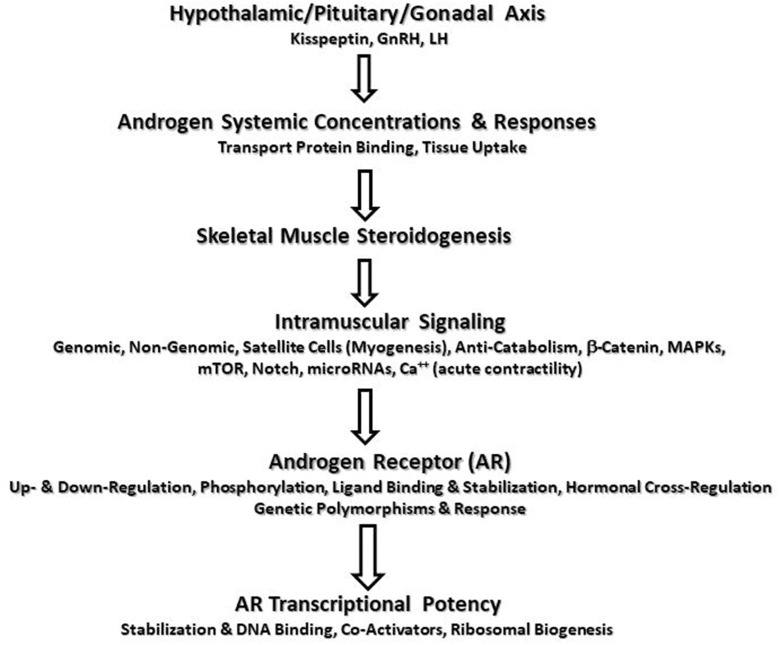
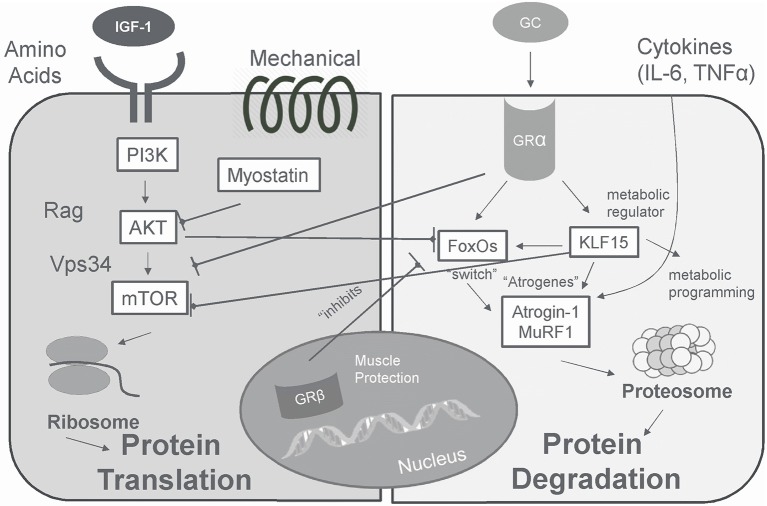
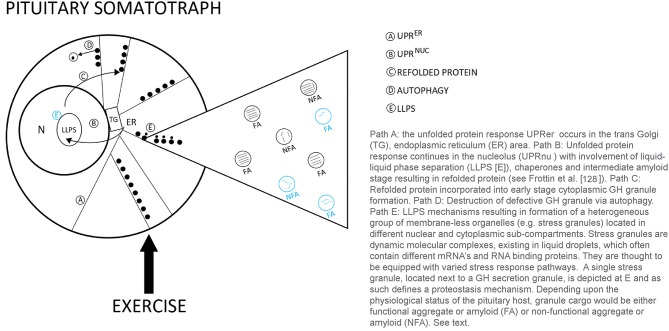
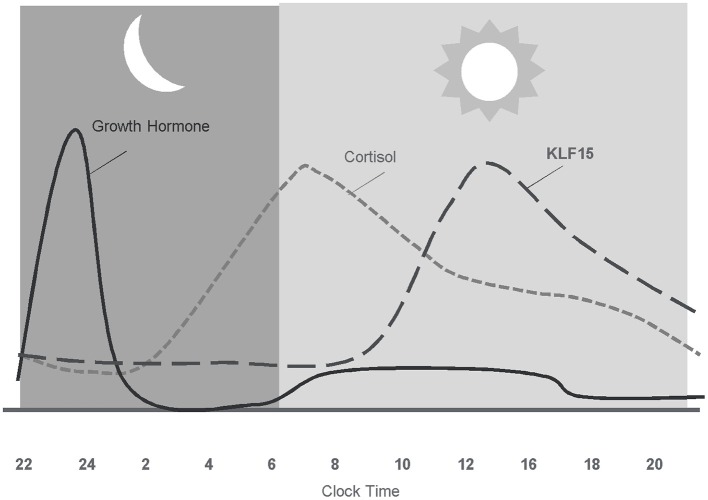
Hormones are largely responsible for the integrated communication of several physiological systems responsible for modulating cellular growth and development. Although the specific hormonal influence must be considered within the context of the entire endocrine system and its relationship with other physiological systems, three key hormones are considered the "anabolic giants" in cellular growth and repair: testosterone, the growth hormone superfamily, and the insulin-like growth factor (IGF) superfamily. In addition to these anabolic hormones, glucocorticoids, mainly cortisol must also be considered because of their profound opposing influence on human skeletal muscle anabolism in many instances. This review presents emerging research on: (1) Testosterone signaling pathways, responses, and adaptations to resistance training; (2) Growth hormone: presents new complexity with exercise stress; (3) Current perspectives on IGF-I and physiological adaptations and complexity these hormones as related to training; and (4) Glucocorticoid roles in integrated communication for anabolic/catabolic signaling. Specifically, the review describes (1) Testosterone as the primary anabolic hormone, with an anabolic influence largely dictated primarily by genomic and possible non-genomic signaling, satellite cell activation, interaction with other anabolic signaling pathways, upregulation or downregulation of the androgen receptor, and potential roles in co-activators and transcriptional activity; (2) Differential influences of growth hormones depending on the "type" of the hormone being assayed and the magnitude of the physiological stress; (3) The exquisite regulation of IGF-1 by a family of binding proteins (IGFBPs 1-6), which can either stimulate or inhibit biological action depending on binding; and (4) Circadian patterning and newly discovered variants of glucocorticoid isoforms largely dictating glucocorticoid sensitivity and catabolic, muscle sparing, or pathological influence. The downstream integrated anabolic and catabolic mechanisms of these hormones not only affect the ability of skeletal muscle to generate force; they also have implications for pharmaceutical treatments, aging, and prevalent chronic conditions such as metabolic syndrome, insulin resistance, and hypertension. Thus, advances in our understanding of hormones that impact anabolic: catabolic processes have relevance for athletes and the general population, alike.
激素在很大程度上负责多个生理系统的整合通讯,这些生理系统负责调节细胞的生长和发育。尽管特定激素的影响必须在整个内分泌系统及其与其他生理系统关系的背景下加以考虑,但有三种关键激素被视为细胞生长和修复中的“合成代谢巨头”:睾酮、生长激素超家族和胰岛素样生长因子(IGF)超家族。除了这些合成代谢激素外,糖皮质激素(主要是皮质醇)也必须予以考虑,因为在许多情况下,它们对人体骨骼肌合成代谢有着深远的相反影响。本综述介绍了以下方面的新研究:(1)睾酮信号通路、反应以及对阻力训练的适应性;(2)生长激素:运动应激带来新的复杂性;(3)关于IGF-I以及这些激素与训练相关的生理适应性和复杂性的当前观点;(4)糖皮质激素在合成代谢/分解代谢信号整合通讯中的作用。具体而言,该综述描述了:(1)睾酮作为主要的合成代谢激素,其合成代谢影响主要由基因组和可能的非基因组信号、卫星细胞激活、与其他合成代谢信号通路的相互作用、雄激素受体的上调或下调以及在共激活因子和转录活性中的潜在作用所决定;(2)生长激素根据所检测激素的“类型”和生理应激的程度产生不同影响;(3)一类结合蛋白(IGFBPs 1 - 6)对IGF-1的精细调节,其根据结合情况可刺激或抑制生物学作用;(4)昼夜节律模式以及新发现的糖皮质激素异构体变体在很大程度上决定了糖皮质激素的敏感性以及分解代谢、肌肉保护或病理影响。这些激素的下游整合合成代谢和分解代谢机制不仅影响骨骼肌产生力量的能力;它们还对药物治疗、衰老以及诸如代谢综合征、胰岛素抵抗和高血压等常见慢性病有影响。因此,我们对影响合成代谢:分解代谢过程的激素的理解进展对运动员和普通人群都具有重要意义。