Fu Xin, Xie Fang-Nan, Dong Ping, Li Qiu-Chen, Yu Guang-Yan, Xiao Ran
Research Center of Plastic Surgery Hospital, Chinese Academy of Medical Sciences and Peking Union Medical College, 33 Ba Da Chu Road, Beijing, 100144, PR China.
Department of Oral and Maxillofacial Surgery, Peking University School of Stomatology, 22 Zhong Guan Cun South St., Beijing, 100081, PR China.
PLoS One. 2016 Feb 9;11(2):e0148819. doi: 10.1371/journal.pone.0148819. eCollection 2016.
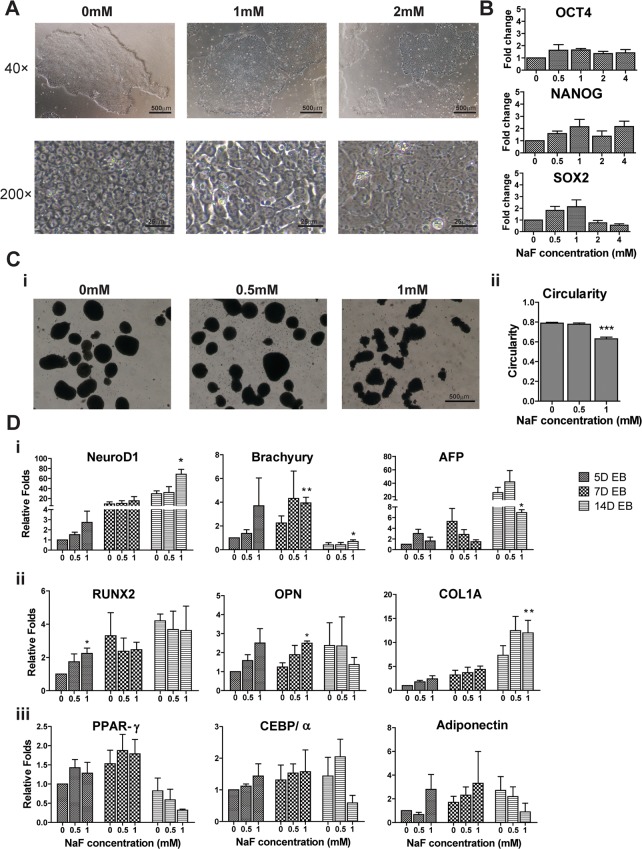
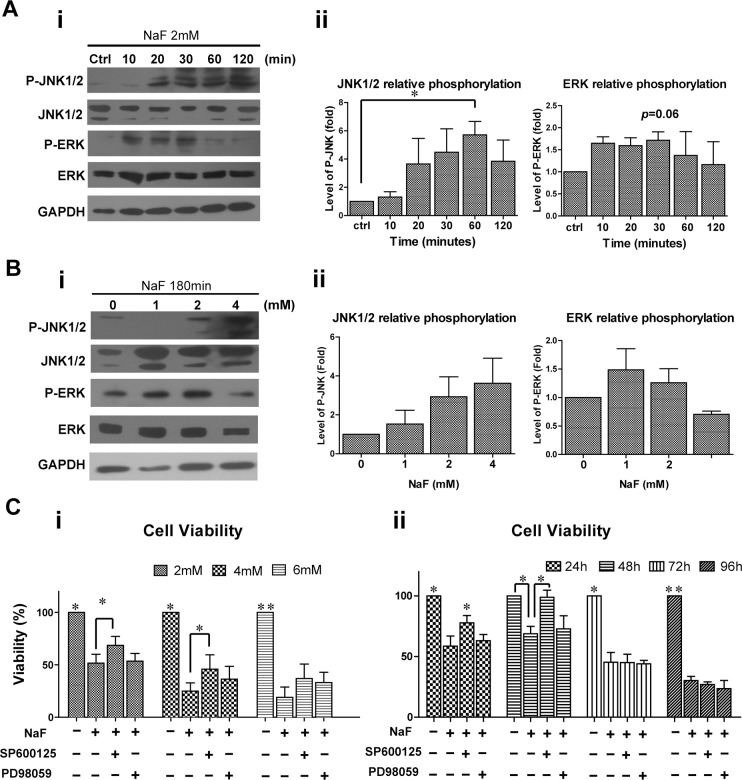
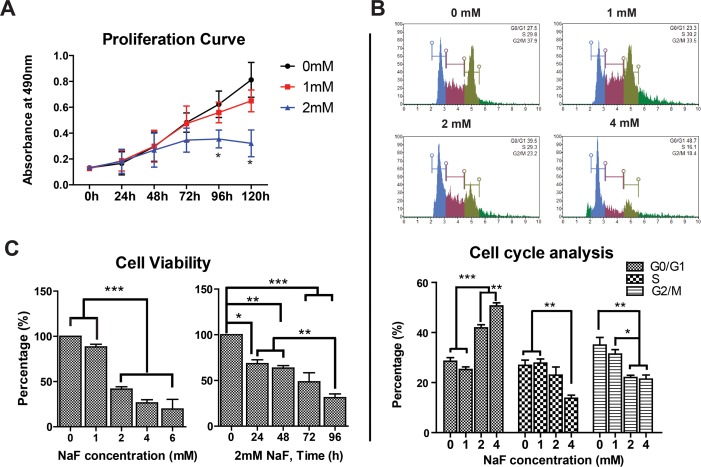
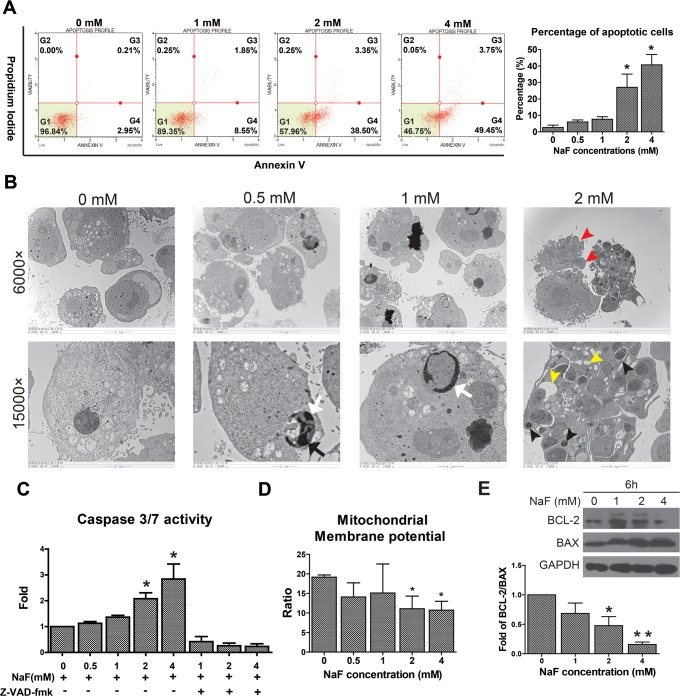
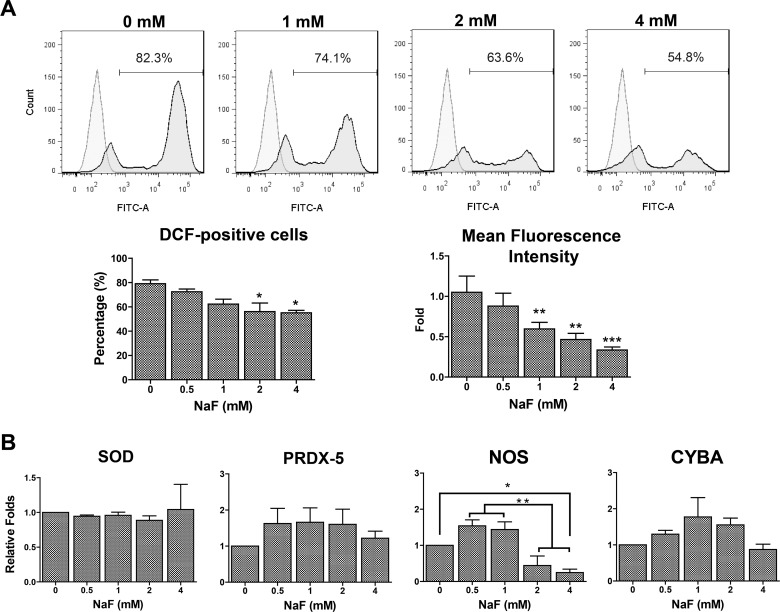
Fluoride is a ubiquitous natural substance that is often used in dental products to prevent dental caries. The biphasic actions of fluoride imply that excessive systemic exposure to fluoride can cause harmful effects on embryonic development in both animal models and humans. However, insufficient information is available on the effects of fluoride on human embryonic stem cells (hESCs), which is a novel in vitro humanized model for analyzing the embryotoxicities of chemical compounds. Therefore, we investigated the effects of sodium fluoride (NaF) on the proliferation, differentiation and viability of H9 hESCs. For the first time, we showed that 1 mM NaF did not significantly affect the proliferation of hESCs but did disturb the gene expression patterns of hESCs during embryoid body (EB) differentiation. Higher doses of NaF (2 mM and above) markedly decreased the viability and proliferation of hESCs. The mode and underlying mechanism of high-dose NaF-induced cell death were further investigated by assessing the sub-cellular morphology, mitochondrial membrane potential (MMP), caspase activities, cellular reactive oxygen species (ROS) levels and activation of mitogen-activated protein kinases (MAPKs). High-dose NaF caused the death of hESCs via apoptosis in a caspase-mediated but ROS-independent pathway, coupled with an increase in the phospho-c-Jun N-terminal kinase (p-JNK) levels. Pretreatment with a p-JNK-specific inhibitor (SP600125) could effectively protect hESCs from NaF-induced cell death in a concentration- and time-dependent manner. These findings suggest that NaF might interfere with early human embryogenesis by disturbing the specification of the three germ layers as well as osteogenic lineage commitment and that high-dose NaF could cause apoptosis through a JNK-dependent pathway in hESCs.
氟化物是一种普遍存在的天然物质,常用于牙科产品中预防龋齿。氟化物的双相作用意味着,在动物模型和人类中,过量的全身性氟暴露会对胚胎发育产生有害影响。然而,关于氟化物对人类胚胎干细胞(hESC)的影响,目前可用信息不足,而hESC是一种用于分析化合物胚胎毒性的新型体外人源化模型。因此,我们研究了氟化钠(NaF)对H9 hESC增殖、分化和活力的影响。我们首次表明,1 mM NaF不会显著影响hESC的增殖,但会在胚状体(EB)分化过程中干扰hESC的基因表达模式。更高剂量的NaF(2 mM及以上)显著降低了hESC的活力和增殖。通过评估亚细胞形态、线粒体膜电位(MMP)、半胱天冬酶活性、细胞活性氧(ROS)水平以及丝裂原活化蛋白激酶(MAPK)的激活,进一步研究了高剂量NaF诱导细胞死亡的方式和潜在机制。高剂量NaF通过半胱天冬酶介导但不依赖ROS的途径导致hESC凋亡,同时磷酸化c-Jun氨基末端激酶(p-JNK)水平升高。用p-JNK特异性抑制剂(SP600125)预处理可以浓度和时间依赖性方式有效保护hESC免受NaF诱导的细胞死亡。这些发现表明,NaF可能通过干扰三个胚层的特化以及成骨谱系定向来干扰人类早期胚胎发育,并且高剂量NaF可通过hESC中依赖JNK的途径导致凋亡。