Verma Sharad, Grover Sonam, Tyagi Chetna, Goyal Sukriti, Jamal Salma, Singh Aditi, Grover Abhinav
School of Biotechnology, Jawaharlal Nehru University, New Delhi, India.
Kusuma School of Biological Sciences, Indian Institute of Technology Delhi, New Delhi, India.
PLoS One. 2016 Feb 10;11(2):e0149014. doi: 10.1371/journal.pone.0149014. eCollection 2016.
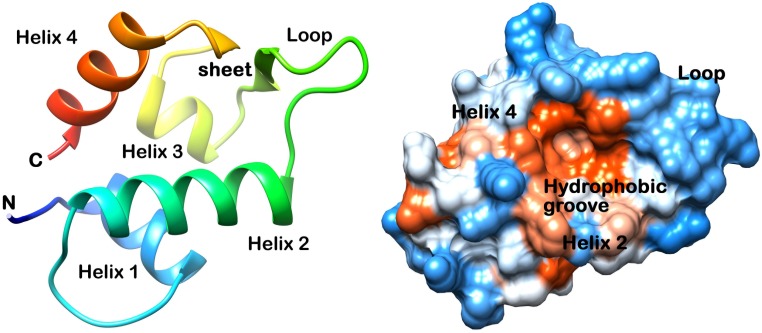
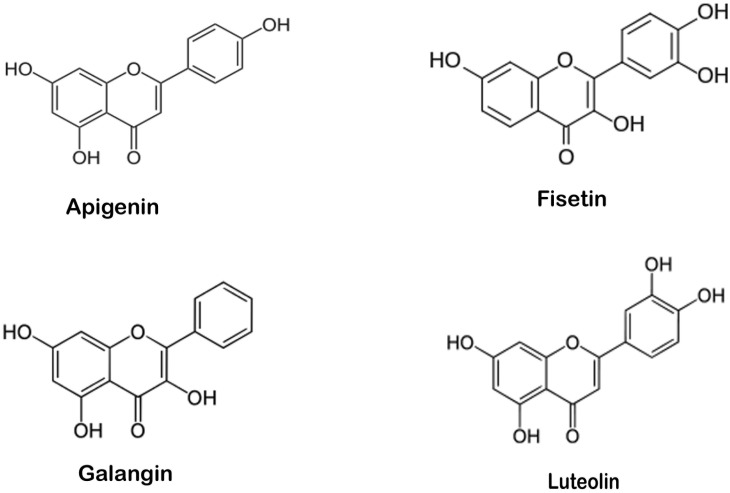
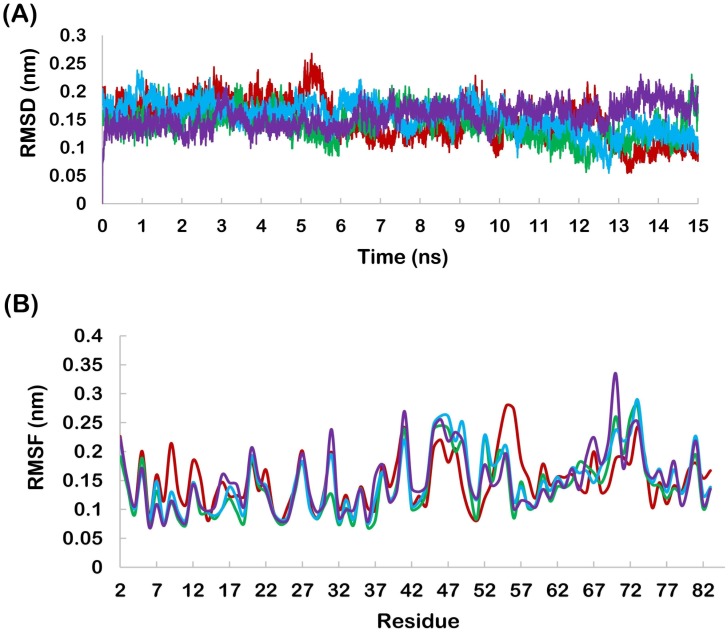
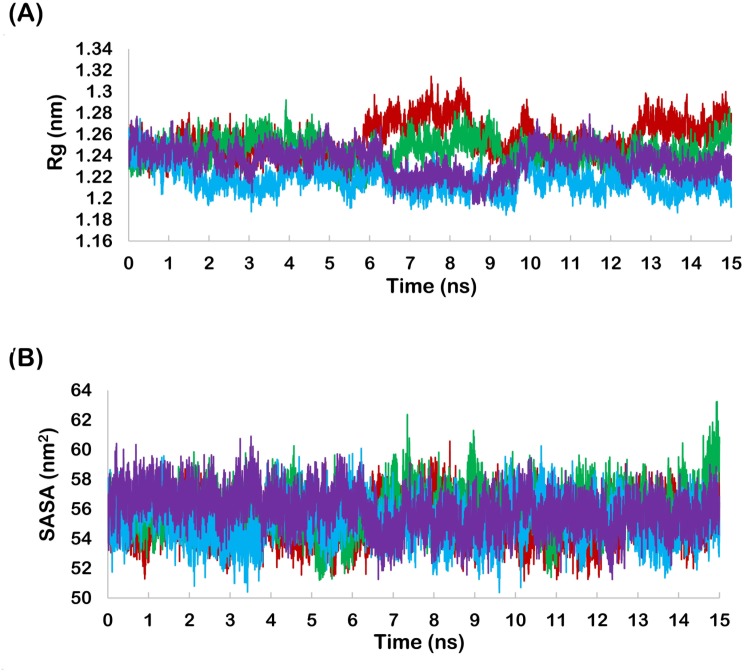
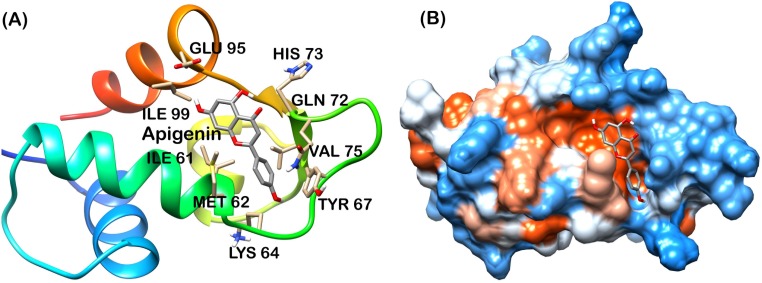
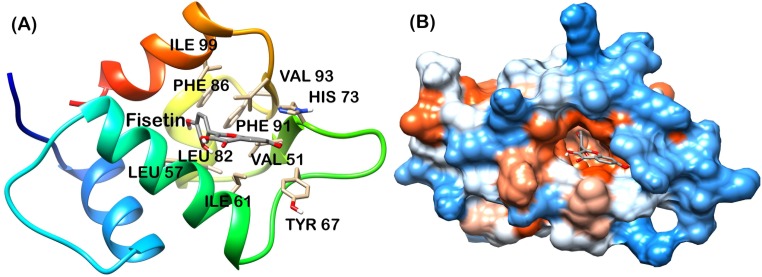
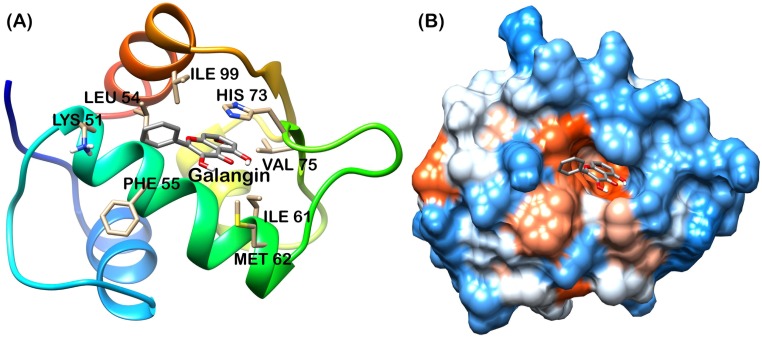
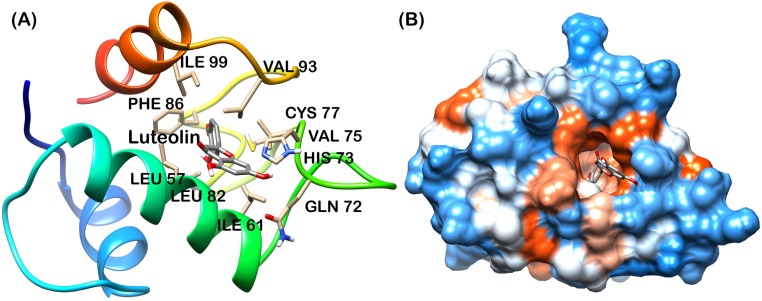
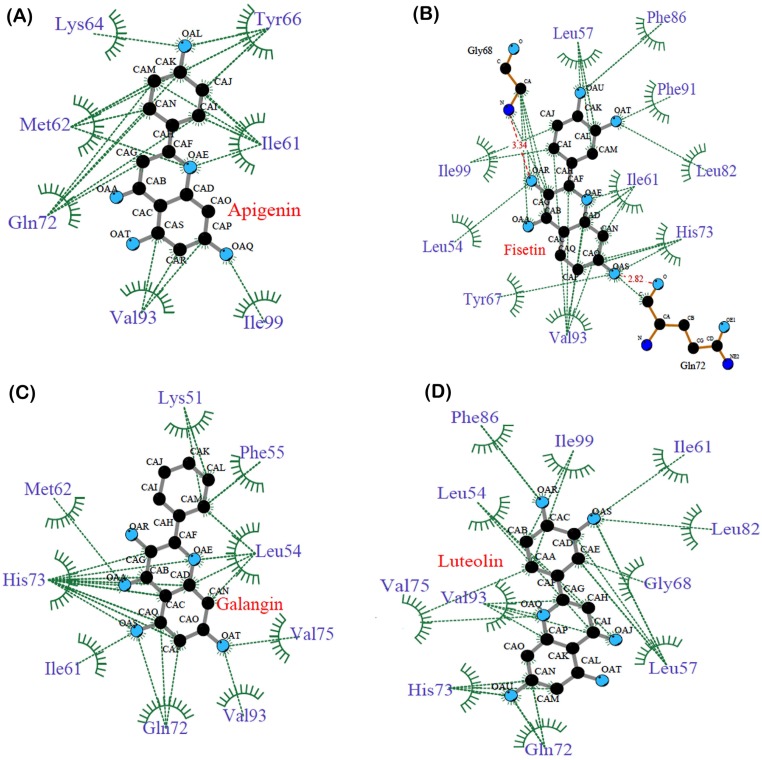
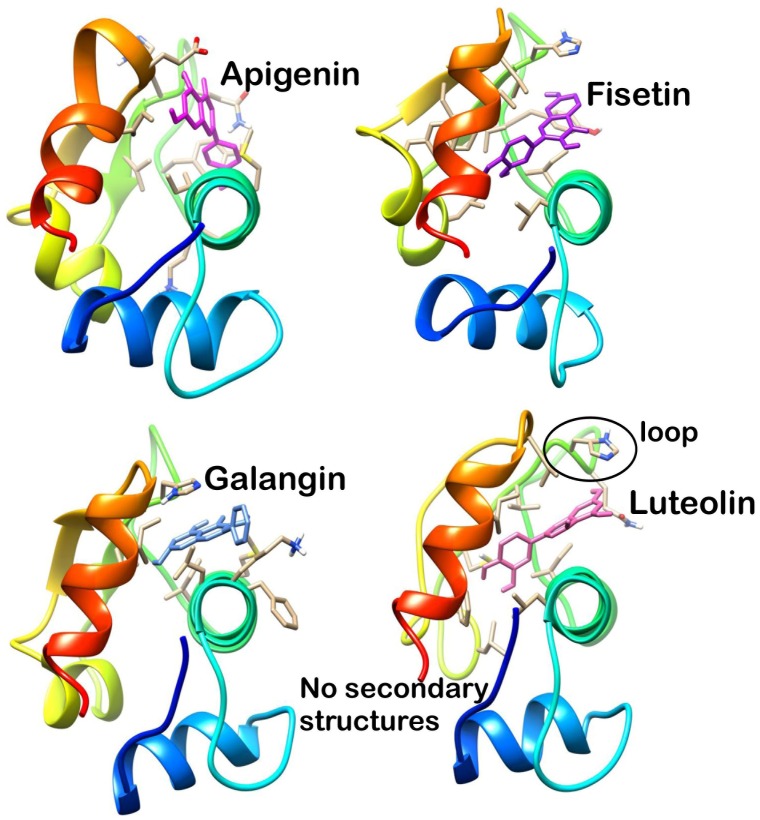
p53, a tumor suppressor protein, has been proven to regulate the cell cycle, apoptosis, and DNA repair to prevent malignant transformation. MDM2 regulates activity of p53 and inhibits its binding to DNA. In the present study, we elucidated the MDM2 inhibition potential of polyphenols (Apigenin, Fisetin, Galangin and Luteolin) by MD simulation and MM/PBSA free energy calculations. All polyphenols bind to hydrophobic groove of MDM2 and the binding was found to be stable throughout MD simulation. Luteolin showed the highest negative binding free energy value of -173.80 kJ/mol followed by Fisetin with value of -172.25 kJ/mol. It was found by free energy calculations, that hydrophobic interactions (vdW energy) have major contribution in binding free energy.
p53是一种肿瘤抑制蛋白,已被证明可调节细胞周期、细胞凋亡和DNA修复,以防止恶性转化。MDM2调节p53的活性并抑制其与DNA的结合。在本研究中,我们通过分子动力学(MD)模拟和MM/PBSA自由能计算阐明了多酚类物质(芹菜素、非瑟酮、高良姜素和木犀草素)对MDM2的抑制潜力。所有多酚类物质均与MDM2的疏水凹槽结合,并且在整个分子动力学模拟过程中发现这种结合是稳定的。木犀草素显示出最高的负结合自由能值,为-173.80 kJ/mol,其次是非瑟酮,其值为-172.25 kJ/mol。通过自由能计算发现,疏水相互作用(范德华力能量)在结合自由能中起主要作用。