Arnette Christopher, Frye Keyada, Kaverina Irina
Department of Cell and Developmental Biology, Vanderbilt University Medical Center, Nashville, Tennessee, United States of America.
PLoS One. 2016 Feb 11;11(2):e0148996. doi: 10.1371/journal.pone.0148996. eCollection 2016.
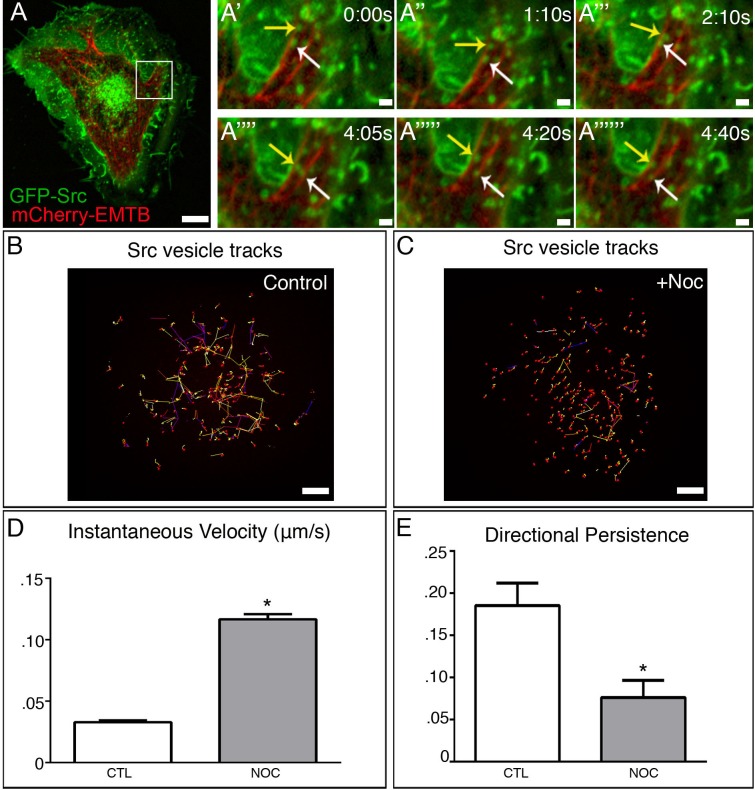
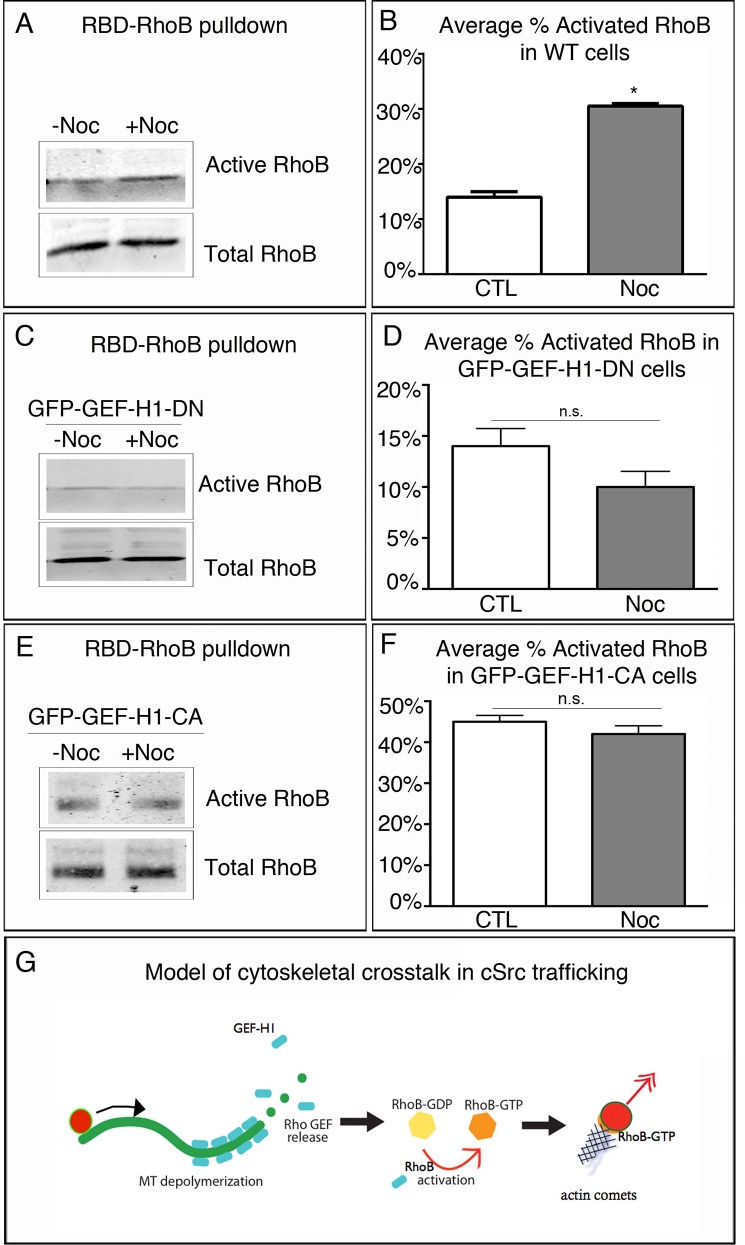
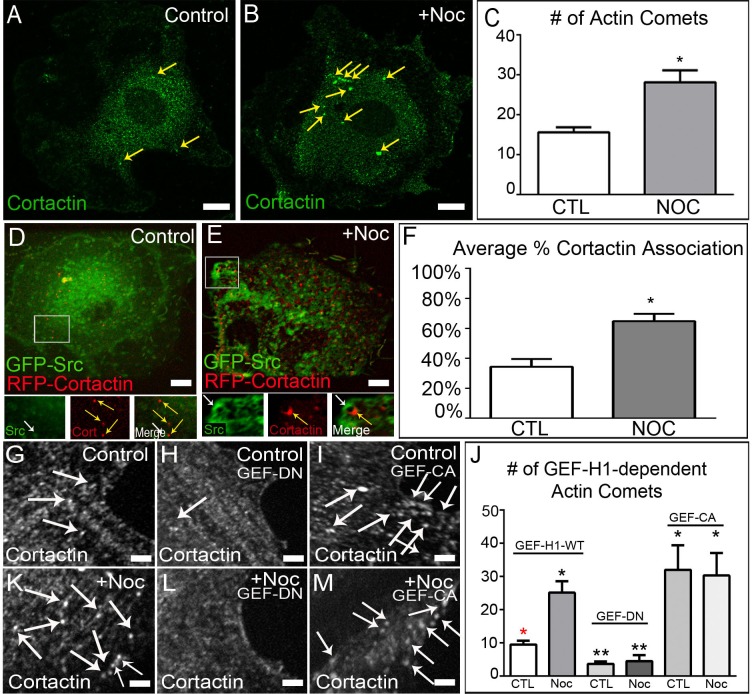
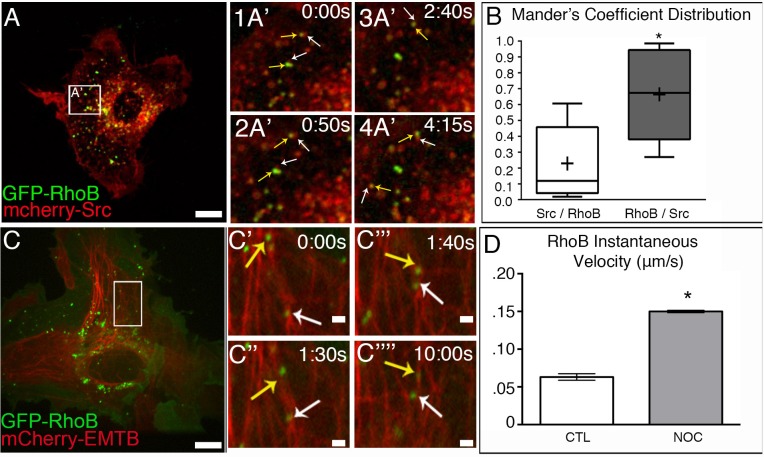
The proto-oncogene c-Src is involved in a variety of signaling processes. Therefore, c-Src spatiotemporal localization is critical for interaction with downstream targets. However, the mechanisms regulating this localization have remained elusive. Previous studies have shown that c-Src trafficking is a microtubule-dependent process that facilitates c-Src turnover in neuronal growth cones. As such, microtubule depolymerization lead to the inhibition of c-Src recycling. Alternatively, c-Src trafficking was also shown to be regulated by RhoB-dependent actin polymerization. Our results show that c-Src vesicles primarily exhibit microtubule-dependent trafficking; however, microtubule depolymerization does not inhibit vesicle movement. Instead, vesicular movement becomes both faster and less directional. This movement was associated with actin polymerization directly at c-Src vesicle membranes. Interestingly, it has been shown previously that c-Src delivery is an actin polymerization-dependent process that relies on small GTPase RhoB at c-Src vesicles. In agreement with this finding, microtubule depolymerization induced significant activation of RhoB, together with actin comet tail formation. These effects occurred downstream of GTP-exchange factor, GEF-H1, which was released from depolymerizing MTs. Accordingly, GEF-H1 activity was necessary for actin comet tail formation at the Src vesicles. Our results indicate that regulation of c-Src trafficking requires both microtubules and actin polymerization, and that GEF-H1 coordinates c-Src trafficking, acting as a molecular switch between these two mechanisms.
原癌基因c-Src参与多种信号传导过程。因此,c-Src的时空定位对于与下游靶点的相互作用至关重要。然而,调节这种定位的机制仍不清楚。先前的研究表明,c-Src的运输是一个依赖微管的过程,有助于c-Src在神经元生长锥中的周转。因此,微管解聚会导致c-Src循环的抑制。另外,c-Src的运输也被证明受RhoB依赖的肌动蛋白聚合作用调节。我们的结果表明,c-Src囊泡主要表现出依赖微管的运输;然而,微管解聚并不抑制囊泡运动。相反,囊泡运动变得更快且方向性更弱。这种运动与c-Src囊泡膜上直接的肌动蛋白聚合作用相关。有趣的是,先前已表明c-Src的递送是一个依赖肌动蛋白聚合的过程,在c-Src囊泡处依赖小GTP酶RhoB。与这一发现一致,微管解聚诱导了RhoB的显著激活,同时形成肌动蛋白彗尾。这些效应发生在从解聚的微管释放的鸟苷酸交换因子GEF-H1的下游。因此,GEF-H1的活性对于Src囊泡处肌动蛋白彗尾的形成是必需的。我们的结果表明,c-Src运输的调节需要微管和肌动蛋白聚合作用,并且GEF-H1协调c-Src运输,作为这两种机制之间的分子开关。